


Introduction: Why the Virginia Insurance Marketplace Matters Now
For leaders in healthcare, big changes often mean big chances. This is especially true in 2026 for state health insurance marketplaces. One key example is the Virginia Insurance Marketplace. It’s not just a place where people buy health plans. It’s also a vital area for top business people, insurance companies, and health tech firms. Understanding this marketplace well is key for anyone wanting to make smart moves in the health world.

Today, many business leaders are looking closely at the Virginia market. They want to find new chances to grow their business. They also need to understand the rules and risks involved. Knowing how to pick the right partners and suppliers, especially those using new technology, is very important. For 2026, about 371,000 Virginians signed up for plans during the open enrollment period on January 30, showing how active this market is Virginians are feeling the effects of spiking health insurance premiums. This marketplace is where many Virginians get their private health insurance, often with help to pay for it. If you want to learn more about what is private insurance and how it differs from public programs in 2026, that information can help set the stage.
This guide will give you a clear, fact-based plan to understand the Virginia Insurance Marketplace. We will look at how it works, who the main players are, the latest technology being used, and new ways to find success. This will help you make good choices for your business in this important and changing market. To stay updated on all the broader changes in healthcare tech, especially with AI, consider subscribing to The AI Newsletter Worth Reading.
To fully understand how to make a mark in the Virginia health world, it’s vital to know how the Virginia Insurance Marketplace is set up and who the main players are. This is a big deal for businesses that want to provide new health solutions and technologies.
Virginia’s Own Marketplace
First, let’s talk about the marketplace itself. Unlike some states that use the federal HealthCare.gov website, Virginia runs its very own state-based marketplace. It’s called Virginia’s Insurance Marketplace and has been in charge since plan year 2024, no longer using HealthCare.gov. This means Virginia has more power over its health insurance market. It can set its own rules for how plans are sold, how long people have to sign up, and the types of technology used to manage everything. For 2026, Virginia’s official health insurance exchange is the only place residents can get special help with paying for individual plans, such as premium tax credits or cost-sharing reductions Virginia Health Insurance Marketplace 2026: Enrollment Guide.
Who Are the Key Players?
A number of groups work together to make the Virginia Insurance Marketplace run smoothly:
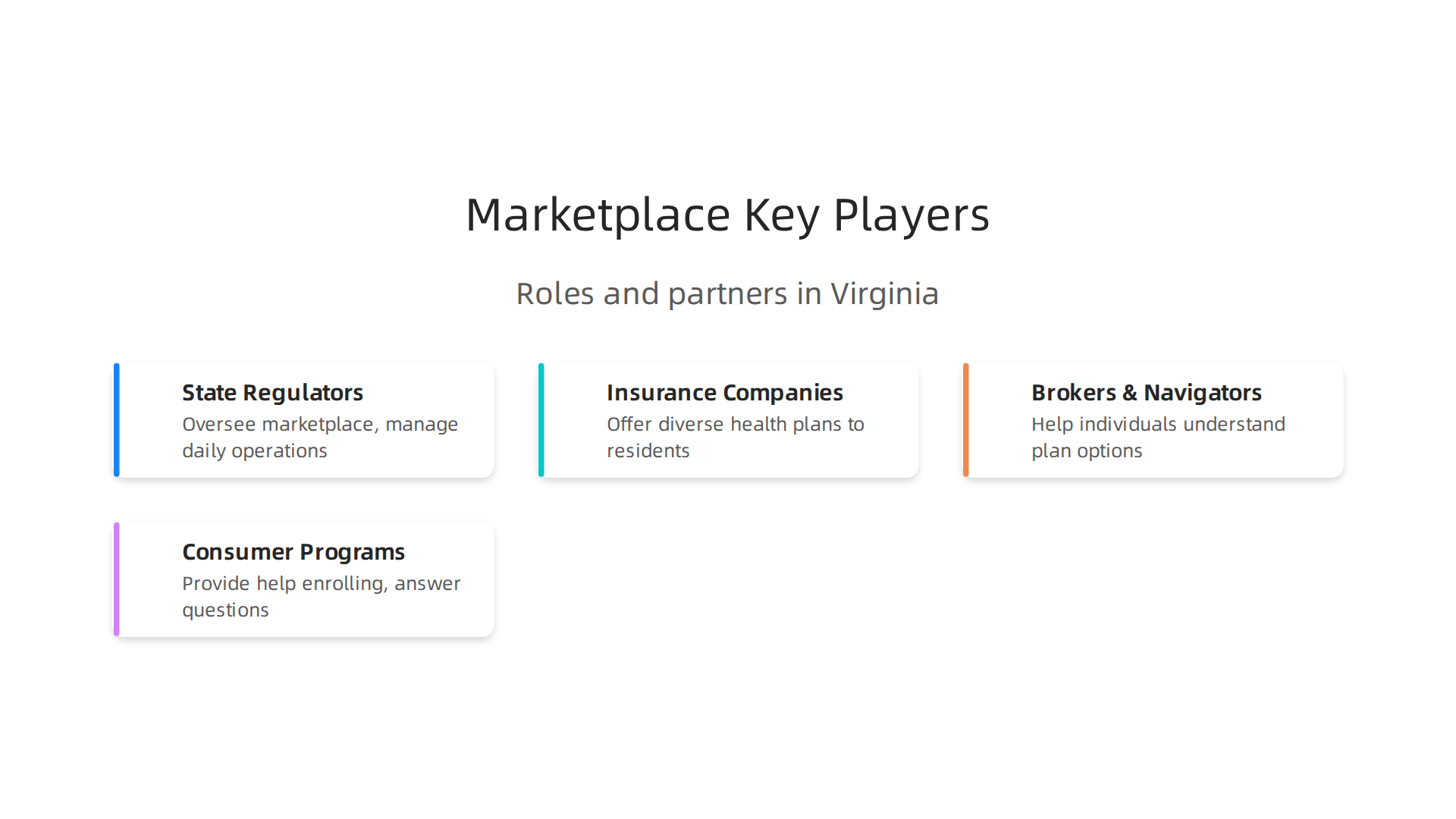
- State Regulators: The main body overseeing the marketplace is the State Corporation Commission (SCC). Inside the SCC, there’s a special division called the Health Benefit Exchange. This division has a director and a team of employees who work to manage the marketplace every day. You can learn more about how the Health Benefit Exchange operates in its Annual Report of the Health Benefit Exchange.
- Insurance Companies (Carriers): These are the businesses that offer health plans. For 2026, there are eight different insurance companies competing to offer plans on the Virginia exchange Virginia Health Insurance Marketplace Guide. This offers people more choices for their health coverage.
- Brokers and Navigators: These are people or groups who help individuals and families understand their options and sign up for plans. They play a very important role in helping people find the best health insurance for their needs. If you’re a health tech company, understanding how an insurance broker helps health tech companies navigate rising 2026 costs can be very useful.
- Consumer Assistance Programs: Virginia also has help centers for people with questions or those who need help enrolling. For example, customers can call a Consumer Assistance Center for help with their plans Existing Customers | Virginia’s Insurance Marketplace.
What This Means for Healthtech Vendors
The way the Virginia Insurance Marketplace is designed creates special chances for health technology (healthtech) companies.
- Direct Engagement: Since Virginia has its own marketplace, healthtech vendors often deal directly with state officials and the marketplace’s own teams. This is different from a federal system, where you might deal with a larger, more complex federal agency. This setup means that a strong understanding of state needs and direct partnerships are key.
- Specific Procurement: Healthtech companies looking to sell their services or tools (like digital health platforms, enrollment software, or data analysis systems) need to learn Virginia’s specific rules for buying things. This can be different from state to state, for example, it might be different from rules in a state like
texas health insurancemarkets. - Tailored Solutions: Vendors have a chance to offer solutions that are perfectly suited to the Virginia Insurance Marketplace. This could include new tools for managing applications, helping people choose plans, or processing forms like the
healthcare marketplace 1095-athat people get for tax purposes. Focusing on how technology can improve patient care and make operations more efficient for Virginia’s unique setup is a smart move. Staying on top of healthcare technology trends 2026 reshape medicine and patient care is important for these specialized solutions. - Go-to-Market Strategy: For healthtech firms, your plan for entering this market should involve getting to know the State Corporation Commission and the Health Benefit Exchange division well. Building relationships and showing how your technology can help meet Virginia’s specific healthcare goals will be very helpful. This focus on local needs is crucial for success.
The way the Virginia’s Insurance Marketplace works is deeply shaped by bigger rules and how it connects with other health programs. For healthtech companies, knowing these details is key to success in 2026.
Federal Rules and Virginia’s Own Twist
The Affordable Care Act (ACA) is a federal law that sets the basic rules for health insurance marketplaces across the country. Even though Virginia runs its own marketplace, it still follows the main ideas of the ACA. This means health plans offered on the Virginia Insurance Marketplace must cover a set of "essential health benefits," like doctor visits, hospital stays, and prescription drugs.
However, Virginia gets to decide some things on its own. For example, it sets rules for how easy it is for people to see doctors and specialists who are part of their plan, which is called "network adequacy." The state has specific rules about how close doctors need to be and how long people should wait for appointments. For 2026, the Virginia Health Benefit Exchange has shared detailed guidance on these network adequacy requirements for health plans Administrative Letter 2025-01 – Virginia’s Insurance Marketplace. This local control is different from states that use the federal HealthCare.gov system, or even from state-specific rules you might find for Texas Medical Board regulations 2026.
Medicaid and Marketplace: Working Together
Virginia has also expanded its Medicaid program, which is a state and federal program that provides health coverage to low-income adults, families, and children. In Virginia, this program is called "Cardinal Care." Many people who might not be able to afford a plan on the Virginia Insurance Marketplace can get help through Cardinal Care.
Sometimes, people move between Cardinal Care and the Virginia Insurance Marketplace if their income changes. The state has systems in place to make these moves as smooth as possible. Healthtech solutions that can help manage these transitions, like tools that check eligibility or connect data between programs, are very valuable. The Department of Medical Assistance Services (DMAS) in Virginia outlines its plans for Medicaid programs, including updates that affect how providers operate and how members receive care Unified Regulatory Plan of the Department of Medical Assistance Services. Understanding the differences between public programs like Cardinal Care and what is private insurance and how it differs from public programs in 2026 is very important for healthtech companies operating in this space.
Rules for Healthtech Vendors and Health Plans
For healthtech vendors and insurance companies, following Virginia’s rules is a must. These rules cover everything from how health data is kept safe to how new tools are approved for use.
This includes:
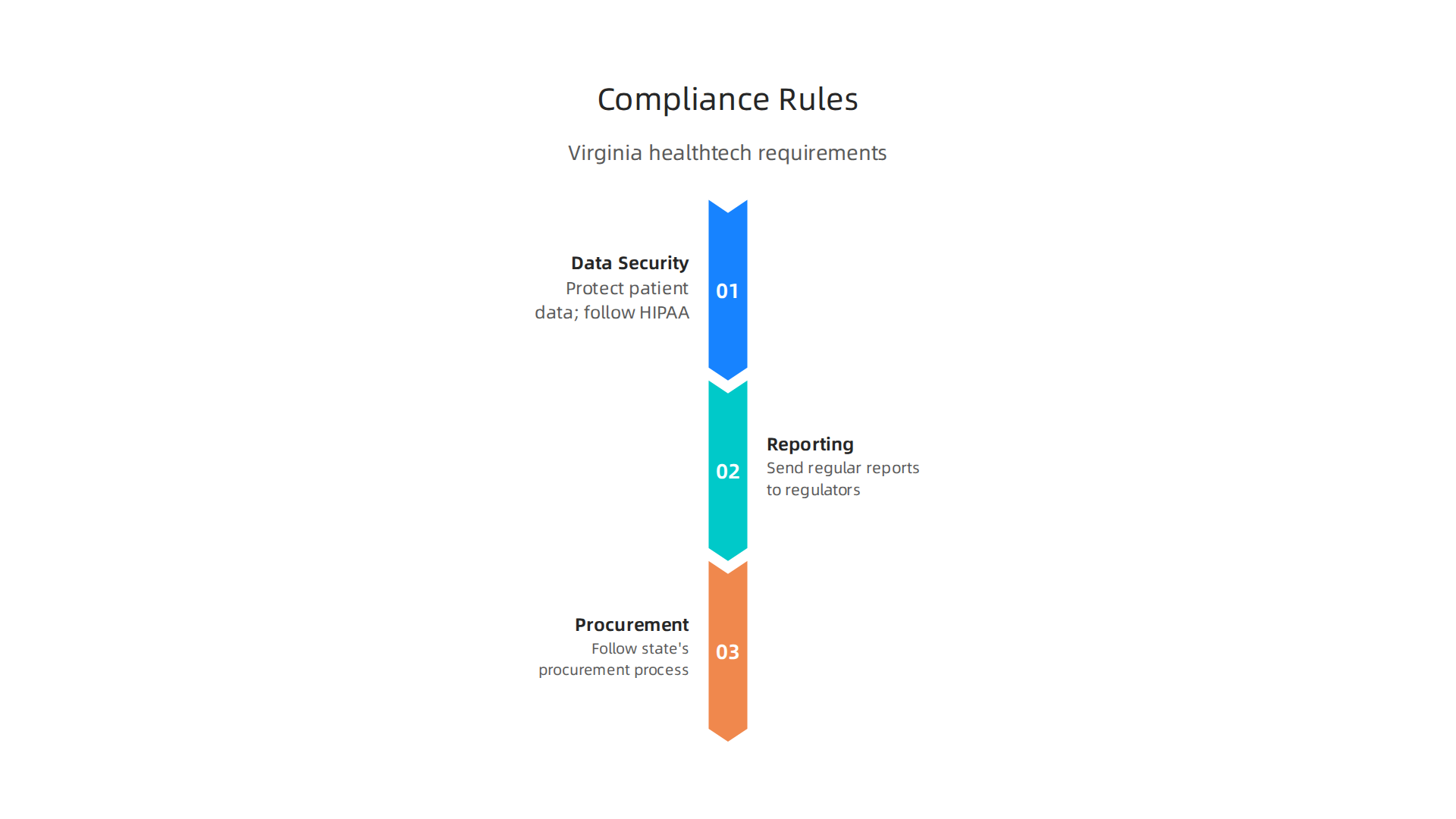
- Data Security: Keeping patient information private and secure is a top priority. Companies must follow strict federal and state laws, like HIPAA, to protect sensitive data.
- Reporting: Health plans and other players in the virginia insurance marketplace need to send regular reports to state regulators. This can include information on enrollment, claims, and the quality of care. Healthtech can help collect and prepare this data, including important tax forms like the healthcare marketplace 1095-a that individuals receive.
- Procurement: When the state needs new technology or services, it has a clear process for buying them. Healthtech companies must understand these specific procurement steps to successfully offer their products to the Virginia Insurance Marketplace or related state programs.
Staying updated on these rules and trends is critical for anyone in healthtech. For a deeper dive into the world of AI and technology trends that are shaping healthcare and other industries, consider subscribing to The AI Newsletter Worth Reading. This newsletter offers clear, daily insights that can help you navigate complex markets like Virginia’s.
Following Virginia’s rules is important, but what truly matters is who is buying health coverage. Understanding enrollment helps healthtech companies make smart choices about their products and services. In 2026, the Virginia Insurance Marketplace shows some interesting changes in who is signing up and what kind of plans they choose.
Who is Getting Covered in Virginia?
During the 2026 Open Enrollment Period, about 371,000 Virginians signed up for plans on the Virginia Insurance Marketplace. However, this number dropped to around 298,000 by mid-June, meaning many people did not keep their plans after the main enrollment period Virginians are feeling the effects of spiking health insurance premiums.
This year, total enrollment saw a decrease. Compared to the previous year, preliminary estimates showed about a 20,000 household drop in enrollment during the same time in 2026 Open enrollment in Virginia’s health insurance marketplace is lagging. Overall, major medical plan enrollment dropped by almost 5% year over year State-based Exchanges.
Age and Plan Choices
When we look at who is enrolling, there have been some shifts:
- Age Groups: Enrollment went down across all age groups from 2025 to 2026. People aged 26-44 saw the biggest drop HEALTH BENEFIT EXCHANGE ADVISORY COMMITTEE.
- Plan Types: More Virginians chose Bronze plans in 2026. These plans usually have lower monthly costs but mean you pay more out of your own pocket when you get care More Virginians opt for Bronze health plan as marketplace premiums increase. This change might be due to rising health insurance costs, making people look for cheaper options.
For healthtech companies, knowing these trends helps them design products that fit what people can afford and what they need.

It also helps them understand how consumers choose their best health insurance plan for 2026.
Market Changes and How People Switch Plans
The Virginia Insurance Marketplace saw a 4% decrease in overall enrollment from 2025 to 2026 Virginia: VA Marketplace posts detailed 2026 OEP data…. This decline shows that the market is changing. Some people are leaving the marketplace, while others are switching plans. The state reported that about 69,335 new people joined the marketplace in the previous year’s open enrollment, meaning they had not had coverage through the marketplace before Annual Report of the Health Benefit Exchange.
Rising health insurance costs are a big reason why people might switch plans or leave the marketplace entirely. When premiums go up, people often look for ways to save money, even if it means picking a plan with higher deductibles or fewer benefits.
Getting the Word Out and Helping People Enroll
Open enrollment periods are specific times each year when people can sign up for health insurance. During these times, the Virginia Insurance Marketplace works hard to tell people about their options. They use different ways to reach people, like ads and helpers called "assisters" or "brokers." These helpers play a big role in explaining the plans and guiding people through the sign-up process. Their influence helps people understand every health benefits model for 2026 and find the right coverage. Knowing when and how people enroll is key for healthtech companies that want to offer tools or services to these consumers.
Now, let’s talk about what goes on behind the scenes to make the Virginia Insurance Marketplace run smoothly. It is not just about people signing up. It is also about the special computer systems and how they all work together. These systems are super important for helping people get health coverage and for showing them their options.
The Core Technology Behind the Marketplace
The Virginia Insurance Marketplace relies on a few key computer systems to do its job. These include:
- Eligibility and Enrollment Platforms: These are the main systems where people apply and find out if they can get help paying for insurance. They also handle the actual sign-up process. States put a lot of thought into designing these systems to meet their specific needs, often creating a "no wrong door" approach so people can easily apply for health programs Designing an Eligibility Determination System and Expanding Health Coverage through Marketplace Facilitated Enrollment Programs.
- Carrier Integrations: The marketplace needs to talk to all the different insurance companies that offer plans. This means sending them information about who has signed up and what plans they picked.
- Data Exchange Standards: To make sure all these systems can "talk" to each other, they use special rules for sharing information. This includes things like APIs (Application Programming Interfaces) which are like digital connectors. The Centers for Medicare & Medicaid Services (CMS) even has a specific Marketplace API that provides data on plans and coverage Marketplace API – CMS Developer Tools and Marketplace API Specification – CMS Developer Tools. This is how data about plan benefits, provider networks, and costs get exchanged. In 2026, many healthcare software companies are adopting API-first approaches using standards like FHIR (Fast Healthcare Interoperability Resources) for eligibility data Insurance Eligibility Verification: EDI and API Guide – Invene.
Common Integration Challenges
Connecting all these different systems is not always easy. Healthtech companies often run into problems like:
- Real-time Eligibility: Imagine someone needs to know right away if they are covered for a doctor’s visit. The systems need to update this information super fast.
- Data Matching: Making sure that Jane Smith in the marketplace system is the same Jane Smith in the insurance company’s system can be tricky, especially with similar names or old addresses.
- Security: Protecting people’s private health information is a huge deal. All data exchanges must be very secure, often requiring things like strong encryption and audit trails Healthcare API Integration Best Practices: A Complete Guide.
- Interoperability: This big word just means that different systems need to understand each other’s data, no matter how they were built. New rules, like the CMS-0057-F Prior Authorization Rule, are pushing for more standardized APIs to help with this, especially for things like prior authorizations and data exchange for plans like Medicaid and Medicare Advantage CMS-0057-F Prior Auth Rule: FHIR APIs and Integraiton Strategy. Keeping up with these changes is important for health plans. You can learn more about this in our article on The 2026 Playbook for Technology Integration for Health Plans.
These challenges affect everyone, from the Virginia Insurance Marketplace to even how a company might handle a healthcare marketplace 1095-A form for tax purposes.
Vendor Evaluation Checklist for Digital Health Teams
For healthtech companies and digital health teams looking for partners or building their own systems, here is a simple checklist:
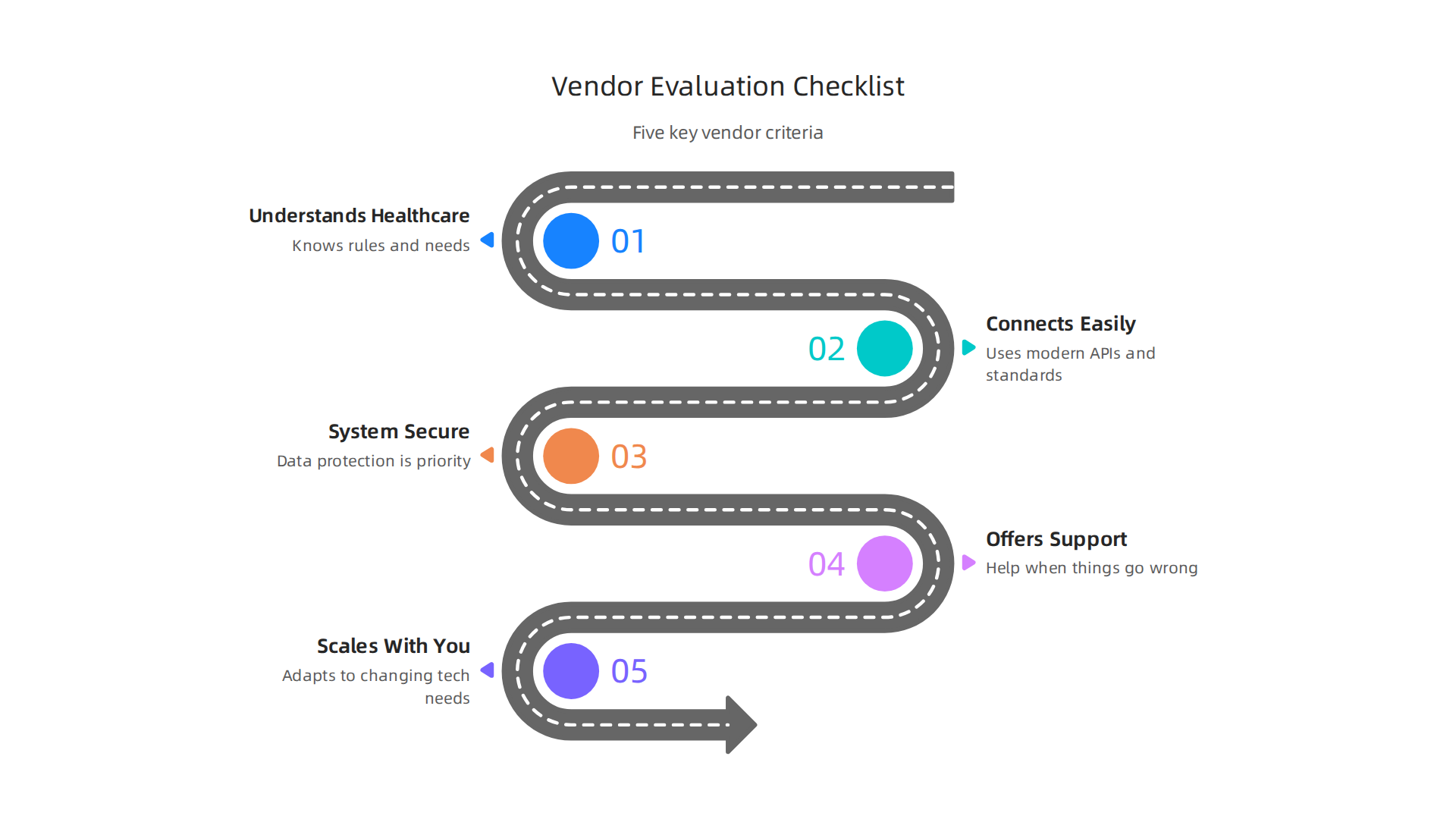
- Does the vendor understand healthcare? They should know the rules and needs of the health insurance world.
- Can their system connect easily? Look for solutions that use modern APIs and follow industry standards to avoid future headaches. For example, some systems offer "Enhanced Direct Enrollment" (EDE) which allows direct integration with federal exchange applications CMS EDE: What You Need to Know Before Implementation in 2026.
- Is their system secure? Data protection is not optional.
- Do they offer good support? You will need help when things go wrong or when you want to add new features.
- Can they grow with you? As the marketplace changes, your technology needs will too.
Staying updated on these tech challenges and solutions is key for success. If you’re keen to understand how artificial intelligence is playing a bigger role in making these systems smarter and more efficient, you’ll find The AI Newsletter Worth Reading offers clear daily updates. This helps healthtech leaders in Virginia and beyond keep an eye on how technology can help improve the entire healthcare experience.
Now, let’s switch gears from the computer systems that power the Virginia Insurance Marketplace to how health plans actually connect people with doctors and hospitals. It’s really about who is "in" and who is "out" of an insurance company’s network. This part is super important because it decides where people can go for their medical care.
Provider Networks & Access: Contracting, Narrow Networks, and Patient Access Implications
Every health plan offered on the Virginia Insurance Marketplace has a network of doctors, specialists, and hospitals. These are the places you can go to get care without paying a lot extra. How these networks are put together really changes how easy it is for people to find a doctor and get the care they need. The rules for how wide or small these networks can be are set by the state. For example, Virginia has clear standards for how far people should have to travel to see a doctor or get to a hospital Administrative Letter 2025-01 – Virginia’s Insurance Marketplace.
What Are Narrow Networks?
Sometimes, health plans create "narrow networks." This means they work with a smaller group of doctors and hospitals. Why do they do this? Usually, it’s to offer plans that cost less. When an insurance company makes a special deal with a smaller group of providers, they can often get better prices, and then pass those savings to you through lower monthly payments. But there’s a trade-off. While these plans might save you money, you might have fewer choices for doctors. This can be a big concern for patient access, especially in rural areas or for people who need very specific types of care.
Important Contracting Trends
Hospitals and big health systems pay close attention to how insurance companies build their networks. Here are some key trends they look at:
- Narrow Networks: As mentioned, these can limit patient choice but reduce costs. Health plans list the providers they work with in their provider directory, like the ones shown in the Cardinal Care Managed Care Contract – Virginia Medicaid.
- Tiering: Some plans group doctors and hospitals into "tiers." You might pay less if you see a doctor in a "preferred" tier and more for doctors in other tiers. This encourages people to use certain providers.
- Value-Based Arrangements: In 2026, more and more insurance companies are paying doctors and hospitals based on how healthy their patients are, not just how many services they provide. This pushes healthcare providers to focus on giving good care that keeps people well.
For someone looking for health coverage, understanding what is private health insurance and how these networks operate is key to choosing the right plan. If you are still trying to choose your coverage, you can learn more about how to Choose Your Best Health Insurance Plan for 2026.
Impact on Patient Access
The design of provider networks directly impacts how easily people can get to a doctor or hospital.

If a network is too small, people might have to travel far, wait longer for appointments, or not be able to see their preferred specialists. This is why the Virginia Insurance Marketplace and other state marketplaces set rules for network adequacy. They want to make sure people have reasonable access to care. Health plans selling on the marketplace must tell the state which providers are in their networks QHP Landscape Instructions PY2026 Individual Medical.
What Procurement Teams Look For
When hospitals or health systems think about joining an insurance network, their procurement teams check a few things:
- Patient Volume: How many new patients will this partnership bring?
- Payment Models: Do the payment terms make sense for the services they provide?
- Data Sharing: Can they easily share patient information in a safe way?
- Reputation: What is the insurance company’s reputation with patients and providers?
Understanding these relationships is important not only for the Virginia Insurance Marketplace but also for other marketplaces, like when people are looking for Carriers | Virginia’s Insurance Marketplace plans. Knowing how these pieces fit together helps ensure people get good care and that the healthcare system works smoothly.
When insurance companies look at the Virginia Insurance Marketplace, they have to think very carefully about how they create their health plans.

It’s a bit like designing a new product for a store. They need to make sure the plans are good enough for people to want them, but also that they can make enough money to cover the costs of healthcare. This includes everything from how the plans are built to how they get them out to the public.
Product Design for the Marketplace
Insurance companies design different types of plans to meet different needs and budgets. These plans are often put into "metal tiers" like Bronze, Silver, Gold, and Platinum. Each tier means something different for how much you pay each month (your premium) and how much you pay when you actually get care (like deductibles and copays).
- Bronze plans usually have lower monthly payments but you pay more out of your own pocket when you need care. In 2026, many people in Virginia chose Bronze plans due to increasing premiums for other options.
- Silver plans offer a good balance of monthly payments and costs when you get care. They also come with extra savings if you qualify for help paying for your healthcare.
- Gold and Platinum plans have higher monthly payments but cover more of your medical costs, so you pay less when you see a doctor or go to the hospital.
When designing these plans, insurers also decide what benefits to include, like mental health services, prescription drug coverage, or special programs for managing long-term health problems. They balance what people need with what they can afford to offer. Learning about these different plans can help you understand what is private health insurance and how it differs from public programs in 2026.
Pricing and Underwriting Practices
Setting the right price for a health plan is a tricky business. Insurance companies look at a lot of information, like how healthy people in Virginia tend to be and how much medical care they use. This helps them guess how much they might have to pay out in claims. This process is called underwriting. They also have to think about what other insurance companies are charging on the Virginia Insurance Marketplace. If their prices are too high, people won’t buy their plans. If they’re too low, they might lose money.
In 2026, the cost of healthcare and rising premiums have been a concern for many Virginians. This means that insurers must be very strategic with their pricing to stay competitive while still covering their costs.
Market Entry Tactics
For insurance companies, getting their plans into the Virginia Insurance Marketplace or growing their share of the market involves smart tactics.
- Using Technology: Many insurers use special tools, like the Marketplace API Specification, which helps them connect their systems directly to the state’s marketplace. This makes it easier for people to enroll and for the insurance company to manage information. These connections are super important for things like eligibility checks and enrollment. This is part of the 2026 playbook for technology integration for health plans.
- Marketing and Outreach: They also work to let people know about their plans through ads, online tools, and community events. They often partner with brokers and navigators who can help people understand their options and sign up.
- Customer Service: Good customer service is key for keeping current members happy and attracting new ones.
In today’s fast-changing world, understanding these different strategies is crucial for both insurance companies and the people buying health plans. Staying informed about how technology shapes the healthcare landscape is a big advantage.
If you’re interested in keeping up with the latest advancements in AI and technology that are changing healthcare, you should consider getting The AI Newsletter Worth Reading from The Deep View Newsletter.
The Virginia Insurance Marketplace is always changing. If we look ahead, we can see big shifts in how the government handles healthcare and how new technologies like AI are making things different. These changes bring fresh chances for companies and people who invest in healthcare.
Policy Shifts Shaping the Marketplace
Government decisions play a huge part in how the Virginia insurance marketplace works. For example, in 2026, many Virginians have felt the impact of rising health insurance costs because federal money that helped lower premiums ended in late 2025. This has led to higher monthly payments for many people signing up for insurance plans.
To help with this, Virginia is working on its own solutions. The state has created a new fund called the Virginia Health Insurance Affordability Fund. This fund, which has $150 million, is meant to help lower monthly premiums for some Virginians who buy their coverage through the state’s marketplace according to WHRO. Decisions made by the Virginia General Assembly also guide how these rules change and what new programs start up. People interested in policy should stay updated with discussions like the 2026 Virginia General Assembly Session Debrief.
Also, important things like who is allowed to get health plans and what benefits are offered can change based on federal rules. This includes rules about eligibility and how subsidies work. For example, some federal changes are affecting Virginia Marketplace Eligibility and Enrollment.
Tech Trends and Vendor Opportunities
Technology is quickly changing how the virginia insurance marketplace operates. One of the biggest trends is using Artificial Intelligence, or AI. AI-driven tools can make signing up for health insurance much easier and faster. They can also help find fraud and make sure people qualify for the right plans.
Many healthcare companies are looking for ways to use AI to improve their services. This creates chances for businesses that offer smart tools for:
- Better Enrollment: Using AI to guide people through choosing a plan on the virginia insurance marketplace.
- Spotting Problems: AI can help find unusual patterns that might mean fraud or mistakes.
- Checking Eligibility: Making sure people quickly get approved for the help they need.
These tools are part of a bigger picture of healthcare technology trends for 2026. Companies that can build or provide these kinds of smart solutions will find many opportunities. It’s clear that 94% of health plans are adopting AI in health insurance in 2026 to improve how they work.
Where to Invest in Virginia’s Health Tech
For leaders and investors, Virginia’s health tech space offers exciting possibilities. With the state making its own marketplace, there’s a strong need for new ideas and tools. Here are some areas to consider:
- Companies that improve the customer experience: Think about tools that make it easier for people to understand and use their health benefits.
- AI-focused solutions: Investing in companies that create smart software for insurance processes, like the enrollment help mentioned above.
- Data safety and smart analysis: As more healthcare information goes digital, tools that protect data and help make sense of it are very important.
- Support for new state policies: Companies that can help health plans adjust to Virginia’s specific laws and programs.
The state itself is looking to support innovation. Virginia aims to speed up how new technologies move into the marketplace and help startups grow, as highlighted in the Virginia Innovation Partnership Authority FY2026 goals. This means there’s a good environment for new health tech ideas to flourish, offering a chance for smart investments to make a real difference in healthcare.
Summary
This article explains how Virginia’s state-based health insurance marketplace operates in 2026 and why it matters for insurers, healthtech vendors, providers, and investors. It describes the marketplace’s governance under the State Corporation Commission and Health Benefit Exchange, who the main players are, and recent enrollment trends (about 371,000 signups in open enrollment with mid‑year declines). The guide covers how Virginia’s local rules—network adequacy, procurement, reporting, and Medicaid interactions (Cardinal Care)—create both constraints and opportunities. It also outlines the marketplace’s core technology stack, common API and data challenges, and a vendor evaluation checklist for selling into the state. Finally, it reviews product design and pricing strategies insurers use, policy shifts like the new affordability fund, and where AI and digital tools present the clearest investment and market-entry opportunities. Readers will finish knowing how to evaluate partnerships, build compliant integrations, and target solutions that meet Virginia’s specific needs.