


Why technology integration is a strategic imperative for health plans today
In 2026, health plans face a big challenge: they need to update their technology to keep up with new times. This isn’t just about getting new computers or software. It’s about changing how everything works together. Imagine trying to build a new, fast car while still using parts from an old model and following many strict rules. That’s a bit like what healthcare brands are dealing with right now.
The main problem is finding a way to bring in new digital tools without breaking old systems. On top of that, there are many new rules about how health information should be shared. For example, the Centers for Medicare & Medicaid Services (CMS) has new rules about sharing health data easily between different systems.
These "interoperability" rules, like CMS-0057-F, mean that health plans must use new ways to share information and handle approvals faster, starting in 2026 and becoming fully required by 2027 for some parts. This means companies like Alliant Health Plans need to make sure their technology can talk to other systems smoothly and quickly Overview of the 2026 CMS Interoperability Standards and Prior….
These new rules are not just suggestions. They are laws that health plans must follow. They also need to report how fast they are approving things, starting in March 2026 Healthcare Regulations 2026: What’s Changing for Data Sharing and …. This pressure to modernize comes with many challenges, including making sure patient information stays private and safe. All these changes make it tough for health plans to update their systems.
This article will help leaders and digital health teams understand how to make good choices about new technology.

We will give you a clear plan to look at your options, understand the risks, and use new tools to make your health plan work better. Many companies, from smaller startups to larger players like Cohere Health, are looking at how technology trends transform their services. You can learn more about how technology is changing the industry in our guide to technology trends transforming private health insurance plans in 2026.
Staying on top of these fast changes, especially with AI and other new tech, is super important. If you want daily updates and deep insights into how AI is shaping the healthcare world, we recommend you get more information.
Get clear daily AI updates from The Deep View Newsletter. The AI Newsletter Worth Reading

1) Where payers are investing now: priorities for 2026
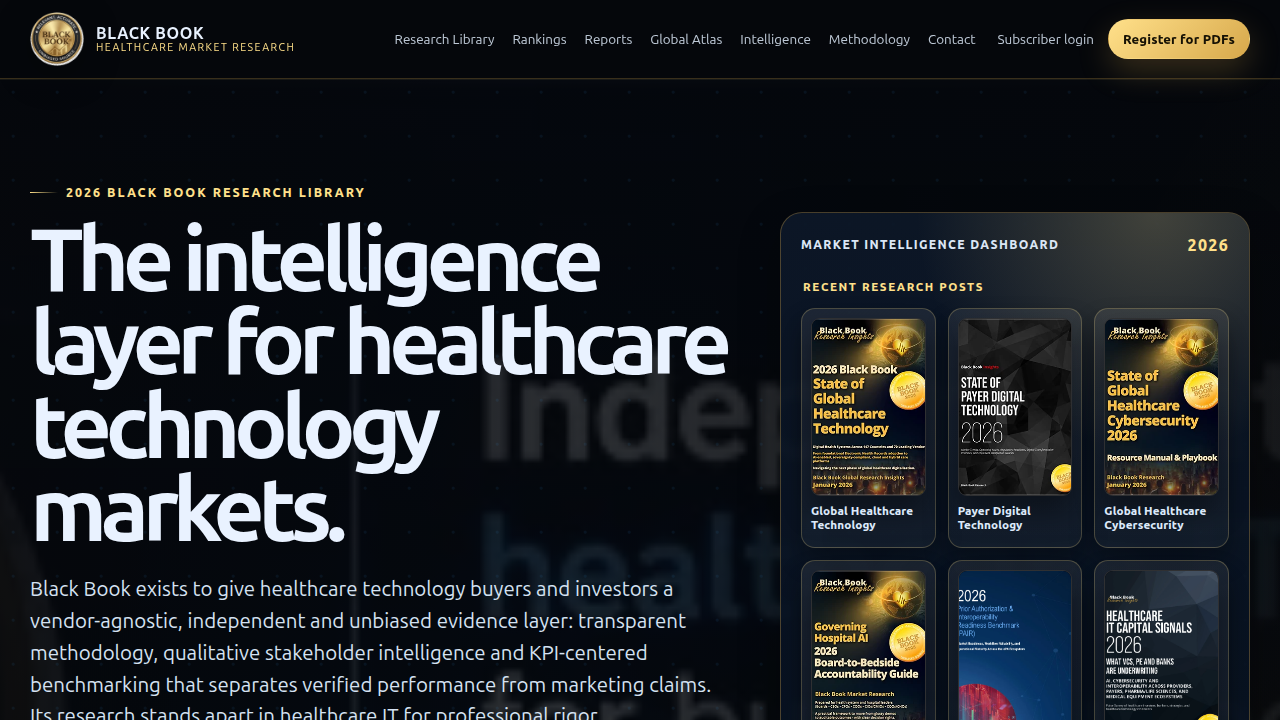
To keep up with all the new rules and changes, health plans are putting their money into key technology areas in 2026. They want to make things run smoother, keep costs down, and give members a better experience. A report by Black Book Research shows us where health plans are focusing their investments this year Download the 2026 State of Payer Digital Technology Report.
Here are some of the main areas where healthcare brands are investing:
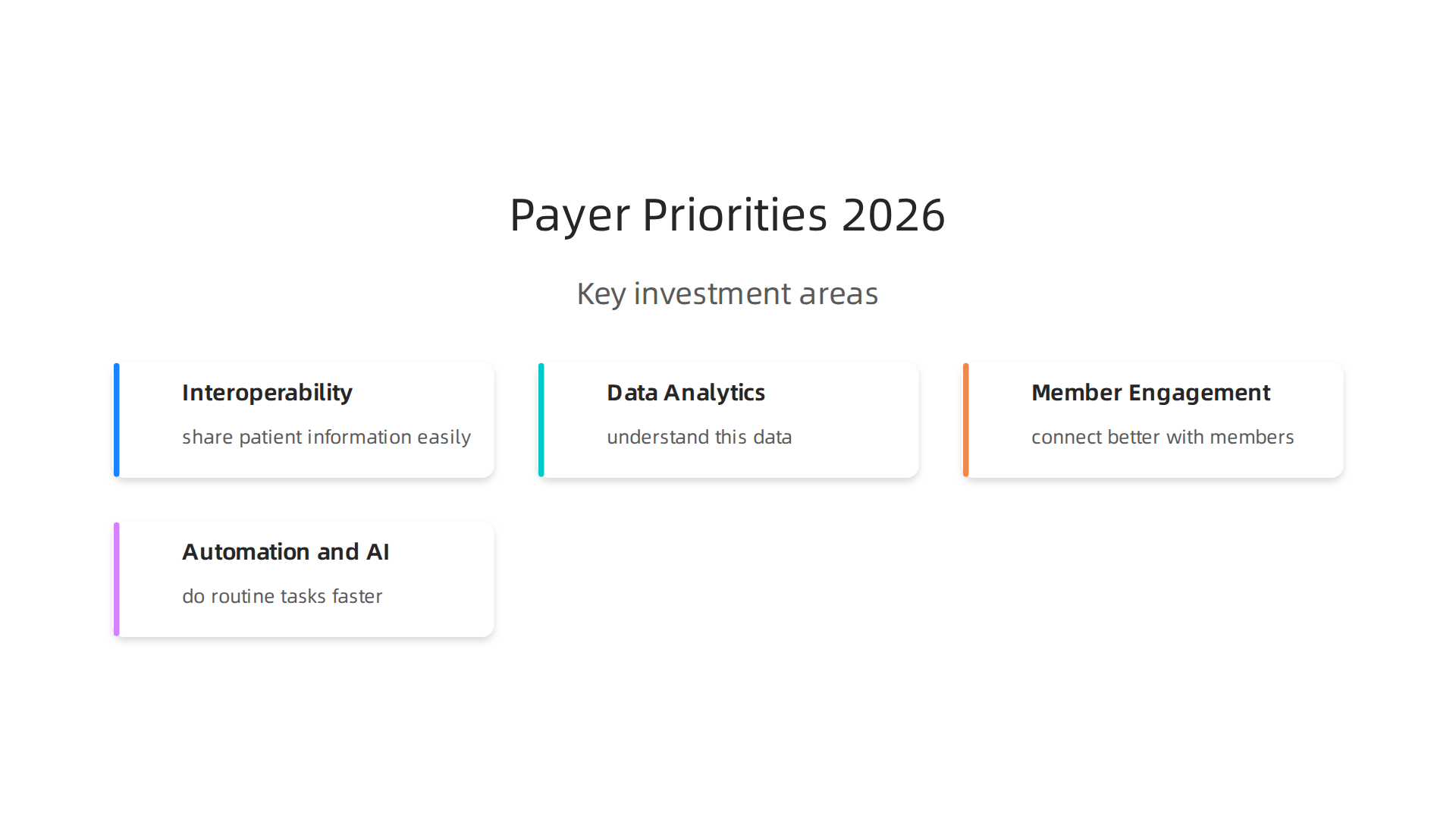
- Interoperability: This is about making sure different computer systems can talk to each other and share patient information easily. It’s a big deal because new government rules require it. Health plans like Alliant Health Plans need to invest here to make sure they can share data and get approvals done fast.
- Data Analytics: Plans are collecting lots of information. But just having data isn’t enough. They need tools to understand this data. This helps them find ways to improve care, spot problems, and make smarter business choices.
- Member Engagement Platforms: These are tools that help health plans connect better with their members. Think of apps or websites where members can find doctors, check their benefits, or get health tips. Making it easy for members to use these tools means they are more likely to stay healthy and happy with their plan.
- Automation and AI: Many health plans are using smart computer programs to do routine tasks faster, like processing claims or answering simple questions. This frees up staff to help with more complex issues. In fact, nearly 80% of health plans prefer to buy or partner for AI tools rather than building them themselves Nearly 80% of Health Plans Now Prefer Vendor-Built AI …. Companies like Cohere Health are using AI to streamline prior authorizations, making processes quicker and more transparent. You can learn more about why so many health plans are using AI in our guide on why 94% of health plans are adopting AI in health insurance in 2026.
Investment Differences Among Health Plans
Not all health plans invest in the same way. What a big national plan focuses on might be different from a smaller, local plan.
- Large National Plans: Big players like UnitedHealthcare or Anthem often have large budgets. They might invest in huge, complex systems that can handle millions of members and many different services. Their goal is often to stay ahead of the curve and find new ways to offer services across many states.
- Regional Plans: Companies like Alliant Health Plans or Harvard Pilgrim Health Care serve specific areas. They might focus on technology that helps them connect deeply with their local communities and providers. For them, making sure their digital tools work well with local clinics and hospitals is key. They also want to provide great service that feels personal.
- Third-Party Administrators (TPAs): These companies handle claims and other services for other health plans or employers. Their investments often go into making their back-office operations super efficient with automation and advanced software. This helps them process things quickly and accurately for their clients.
No matter the size, health plans are all working to protect how much money they make, improve the member experience, and gain an edge over other companies Executive Report – medinsight.com. It’s a busy time for healthcare brands as they try to balance new rules, changing member needs, and the exciting possibilities of new technology. Knowing how to unlock healthcare growth with digital health platforms in 2026 is more important than ever.
The need for health plans to connect their systems smoothly with doctors, hospitals, and other healthcare brands is bigger than ever. This is called interoperability. To make sure all these different computer systems can talk to each other, they need a common language and set of rules. This is where technical foundations like FHIR, HL7, and data models come in.
What are FHIR, HL7, and Data Models?
Imagine healthcare information is like puzzle pieces from many different boxes. Before, each health plan or doctor’s office had their own unique puzzle pieces. It was really hard to put them together.
- HL7: This is like the group that decided to make new, standard puzzle pieces that everyone can use. Health Level Seven International (HL7) is a global group that creates rules for how health information should be shared.
- FHIR: Pronounced "fire," Fast Healthcare Interoperability Resources (FHIR) is a special standard made by HL7 Fast Healthcare Interoperability Resources – Wikipedia. It’s like the agreed-upon design for those standard puzzle pieces. FHIR uses "resources" as basic building blocks for all healthcare information. These resources are like small, easy-to-understand packages of data. For example, there’s a "Patient" resource for patient info, an "Observation" resource for test results, and a "Coverage" resource for insurance details The Fast Health Interoperability Resources (FHIR) Standard – PMC. You can even find many different types of resources that cover everything from billing to care plans Resourcelist – FHIR v6.0.0-ballot4.
- APIs: APIs, or Application Programming Interfaces, are like the special doors that let different computer systems send and receive these FHIR puzzle pieces. They make it possible for a health plan like Alliant Health Plans to share information safely and quickly with a doctor’s office.
- Common Data Models: These are like blueprints that show how all the FHIR resources should be put together in a standard way. For health plans in the US, there’s a special guide called "US Core." This guide helps make sure that all FHIR systems in the country work in a similar way, making data sharing even smoother FHIR® – Fast Healthcare Interoperability Resources® – About. These models help ensure that when a healthcare brand sends patient data, the receiving system understands it perfectly.
If you’d like a visual way to understand these resources, take a look at this explanation of 12 FHIR Resources Everyone Should Know!.
Why These Technical Foundations Matter for Health Plans in 2026
These standards are super important for health plans in 2026, especially when they work with different vendors and healthcare partners.
- Easier Vendor Integrations: When health plans use FHIR and APIs, it’s much easier to connect new tools and services from different companies. For example, a company like Cohere Health, which helps with prior authorizations, can connect to many different health plans more simply if everyone uses FHIR. This saves time and money.
- Better Data Normalization: Because everyone uses the same "puzzle pieces" and "blueprints," all the data starts to look the same. This means health plans get clearer, more reliable information.
- Stronger Analytics Pipelines: With normalized data, health plans can use their data analytics tools much better. They can spot trends, understand member needs, and improve care more easily. This helps them make smarter decisions.
- Meeting New Rules: New government rules often require health plans to share information more openly. FHIR and APIs are key tools to help plans meet these rules. For example, health plans need to be ready for FHIR rules about provider directories How Health Plans Can Prepare for FHIR Provider Directory ….
By building on these strong technical foundations, healthcare brands can make sure their systems are ready for today’s needs and tomorrow’s changes. It helps them serve their members better and work more closely with all the different parts of the healthcare world. To dive deeper into how digital changes are impacting the health sector, you can explore more about public health data standards: building smarter systems for 2026.
Staying on top of these technical shifts, especially with the rise of AI, is crucial.
If you want to keep up with how AI is changing healthcare and other fields, consider subscribing to The AI Newsletter Worth Reading. You’ll get clear daily AI updates.
Making healthcare data flow smoothly is a big step forward. But with more sharing comes a huge need for strong security and privacy. Health plans, like Alliant Health Plans or Harvard Pilgrim Health Care, must be very careful. They have to make sure that patient information is kept safe and private, and that all rules are followed.

In 2026, there are many important checks health plans must do before connecting their systems with others.
Key Rules and Checks
First, health plans need to understand the important laws and rules. In the US, the main one is HIPAA (Health Insurance Portability and Accountability Act). This law keeps patient health information safe. But the rules keep changing. For example, in 2026, there are new HIPAA updates that make sure patient privacy is even stronger, especially around certain types of reproductive healthcare data Healthcare Regulations 2026: What’s Changing for Data Sharing and Privacy. Also, health plans need to update their privacy notices by February 2026 HIPAA Updates for 2026: Compliance Deadlines and Actions.
The Centers for Medicare & Medicaid Services (CMS) also has important rules for health plans. The CMS Interoperability and Prior Authorization rule, finalized in 2024, means health plans need to use special APIs for sharing information and start reporting prior authorization details in 2026 Overview of the 2026 CMS Interoperability Standards and Prior …. These rules help make sure patients get care faster and data is shared better. For healthcare brands, staying on top of these changes is not just about following the law. It’s also about keeping trust with patients and partners.
How to Keep Data Safe: Technical Controls
Beyond understanding the rules, health plans must put strong technical protections in place.
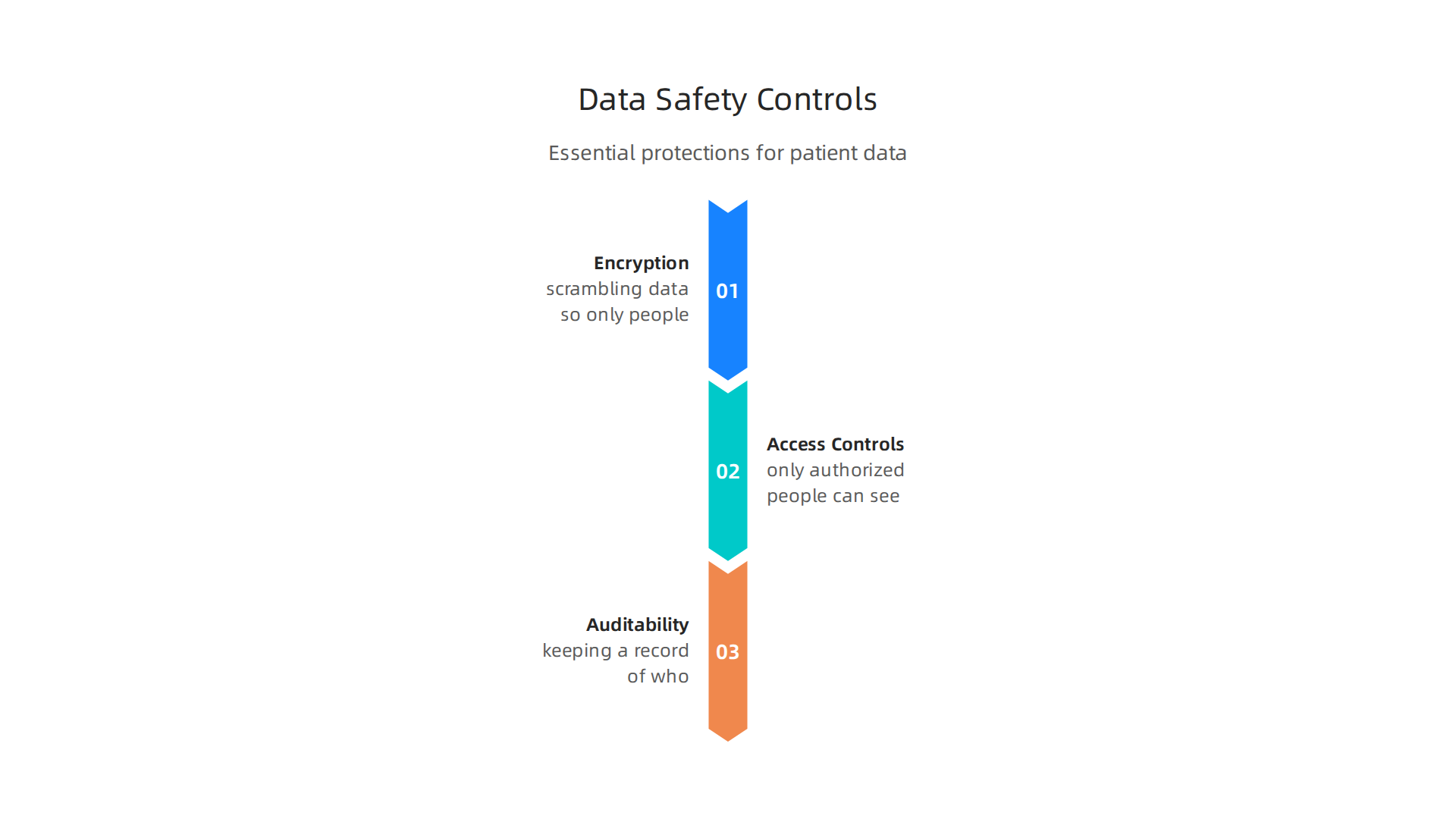
Think of these as digital locks and alarms for patient data.
- Encryption: This is like scrambling data so only people with the right key can read it. It’s a must-have for data that is being stored or sent between systems. New rules in 2026 are looking at making encryption mandatory for health data Data Interoperability: What’s Changing, What It Means, and ….
- Access Controls: This means making sure only authorized people can see or change patient data. Not everyone at a hospital or a health plan needs to see everything. Systems should have clear rules about who can access what.
- Auditability: This is about keeping a record of who accessed data and when. If something goes wrong, a health plan can look back at these records to see what happened. It’s like a security camera for data.
Working with Other Companies Safely
Health plans often work with many different companies, or vendors. For example, a company like Cohere Health might help with prior authorizations, or another vendor might manage claims. When a health plan connects its systems with these vendors, it must check their security very carefully. This means looking at how the vendor protects data, if they follow all the rules, and what their plans are if there’s a problem. Stricter rules about managing risks from third-party vendors are part of HIPAA updates for 2026 HIPAA Updates for 2026: Compliance Deadlines and Actions. Making sure that every partner, from big healthcare brands to small tech startups, meets these high standards is a core job for any health plan in 2026. This careful work helps avoid problems and keeps patient trust strong. To learn more about how technology is changing private health insurance plans, check out our insights on Technology trends transforming private health insurance plans in 2026.
Working with other companies safely is just the start. Health plans also need to pick the right business partners and make sure they get good value for their money. This is where smart choices about vendors, contracts, and what you get back from your spending (ROI) become super important in 2026.
Picking the Best Technology Partners
When health plans like Alliant Health Plans or Harvard Pilgrim Health Care look for tech help, they have many choices.
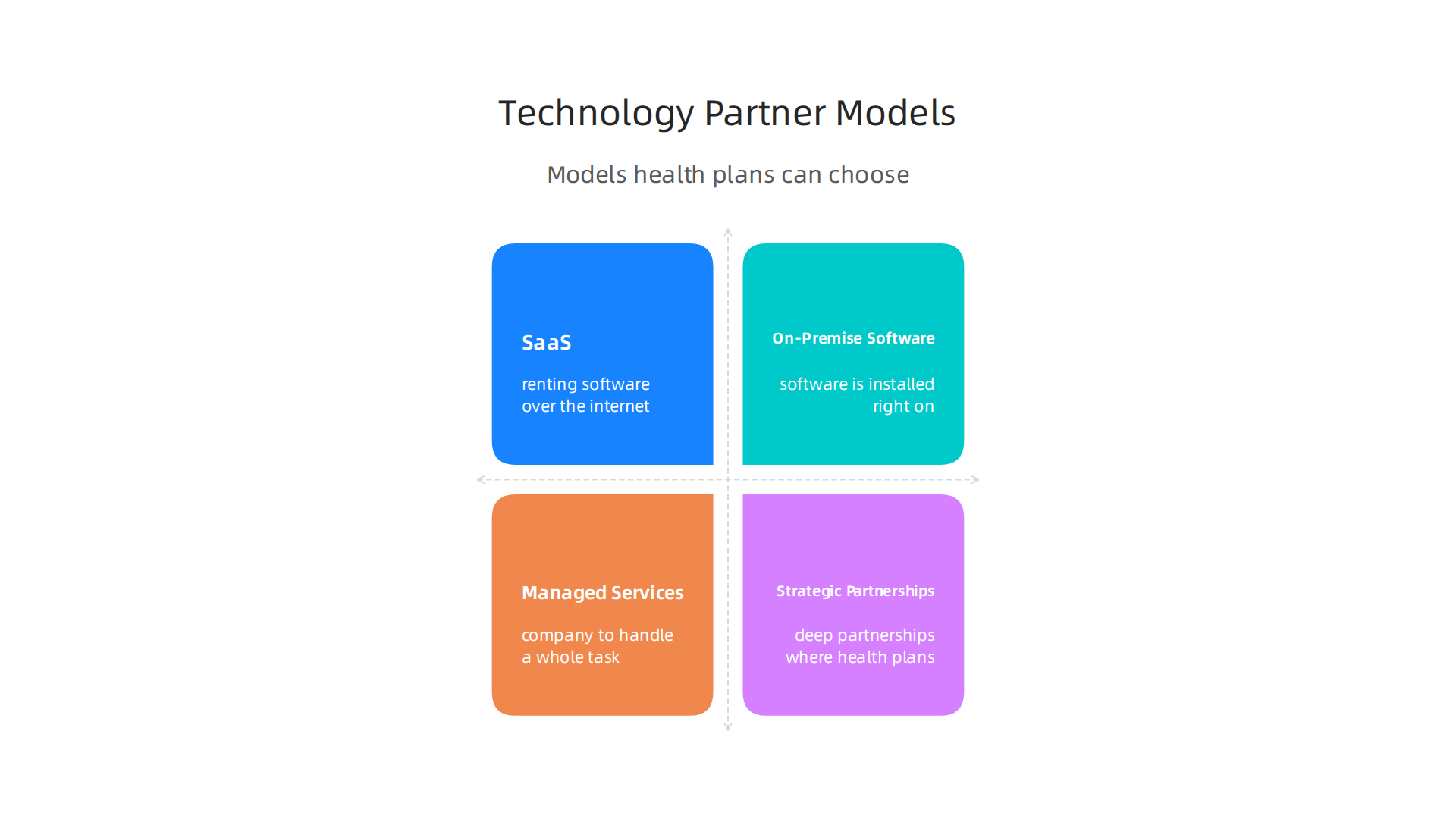
It’s like deciding whether to buy a car, rent one, or hire a driver. Each choice has its own good points and bad points.
- Software as a Service (SaaS): This is like renting software over the internet. You don’t own it, and another company handles all the tricky updates and maintenance. It’s often easier and quicker to start using. For example, a health plan might use a SaaS solution for patient communication or claims processing.
- On-Premise Software: This means the software is installed right on the health plan’s own computers and servers. The health plan has full control, but also has to do all the upkeep. This can be a big job.
- Managed Services: Sometimes, a health plan doesn’t just want software, but wants another company to handle a whole task for them. For example, they might hire a company to manage all their IT security or to process certain types of claims. This can be a good way to get expert help without hiring a whole new team.
- Strategic Partnerships: These are deep partnerships where health plans and other healthcare brands work very closely, often sharing goals and risks. For example, a health plan might partner with a company like Cohere Health to make prior authorizations smoother. These partnerships can help health plans improve patient care and save costs in new ways, especially as value-based care becomes more common in 2026 The future of value-based care relies on payer-provider ….
When choosing, health plans must look at what each option costs, how easy it is to connect with other systems, and how well it keeps patient data safe. They also need to think about how flexible the solution is and if it can grow with their needs. To explore different health benefit models, you can learn more in our guide on how to Understand every health benefits model for 2026.
Smart Contracts and What You Get Back
Once a health plan picks a partner, the next step is making a clear agreement, or contract. These contracts are more than just about how much money changes hands. They should be set up so that the vendor is rewarded when the health plan and its members do well. This means linking what the vendor gets paid to how much they help with important goals, called Key Performance Indicators (KPIs).
For example, a contract might say that a vendor gets paid more if they help lower hospital visits for members, or if patient happiness scores go up. This way, the vendor is encouraged to do their very best to help the health plan reach its goals, not just finish a task. This kind of shared success is key to making value-based care models work Payer-Provider Collaboration: Key Strategies for Success.
In 2026, many health plans are looking for partners who can help them with these new ways of working. They want to make sure that everyone involved is focused on improving patient care, managing costs, and making the healthcare experience better for everyone. Finding the right tools and knowing how to make smart agreements are big parts of being a successful health plan in today’s world. Staying informed about the latest tech and business models can be a challenge.
Get clear daily AI updates from The AI Newsletter Worth Reading.
After choosing the right partners and agreeing on smart contracts, the next big step for health plans is to actually put new technology into practice. This isn’t a "flip a switch" moment. It needs a clear plan, often called a playbook, to make sure everything works smoothly and safely.
A Step-by-Step Playbook for New Tech
When health plans like Alliant Health Plans bring in new technology, they usually don’t roll it out everywhere at once. Instead, they follow a careful, step-by-step approach. This often starts with small tests called "pilot projects."
A pilot project is like a mini-test of a new system or service in a small part of the organization. It lets the health plan see what works and what doesn’t without taking big risks. For a pilot to be good, it needs a clear goal, a plan for collecting information, and a way to tell if it’s successful or not. It also needs a set start and end time, along with clear roles for everyone involved Piloting digital technologies in a health or care service. This careful planning helps avoid problems later on and makes sure the technology can actually grow to help more people if it works well. You can learn more about running successful tests with this guide to running a successful healthcare technology pilot.
Once a pilot shows good results, health plans then think about how to expand it. This involves:
- Governance: Setting up clear rules and who is in charge of making decisions as the project grows. This helps keep things organized.
- Change Management: Helping employees and members get used to the new technology. This can mean training staff, explaining benefits to members, and addressing any worries people might have.
- Scaling Criteria: Having clear ideas about what success looks like when the technology is used by many more people. This means thinking about how well it integrates with other systems and if staff will truly adopt it Scaling HealthTech: From Hospital Pilot to Full Deployment.
Working Together Across Teams
Making new technology work in a health plan isn’t a job for just one team. It needs many different groups to work together.

Think about all the parts of a health plan:
- IT (Information Technology): These are the tech experts who make sure the software and systems run properly and connect with each other.
- Compliance: This team makes sure all new tech follows strict healthcare laws and rules, like those for patient privacy.
- Clinical: Doctors, nurses, and other care providers give important feedback on how new tools affect patient care and their daily work.
- Operations: This team looks at how the new tech changes how the health plan runs day-to-day, from processing claims to answering member questions.
Good teamwork across these groups is key for new technology to be put into action smoothly and with low risk. Leaders need to encourage collaboration between clinicians, IT teams, and even patients to make sure solutions fit real-world needs and challenges From Pilot to Practice: A Sociotechnical Perspective for … – PMC. For example, a digital health platform for members from a big health plan might need input from all these teams. By working together, healthcare brands can make sure that technology truly helps people and improves how healthcare is given. This kind of shared effort is a big part of creating a unified operational playbook that elevates health system performance for 2026.
Working together within a health plan is important, but true success in 2026 also means health plans and care providers must team up. This is called payer-provider collaboration. It’s especially vital for something called value-based care, where providers are paid based on how healthy their patients are, not just how many services they provide.
For this to work, information needs to flow easily between health plans and providers. Think about Alliant Health Plans, or even large organizations like Harvard Pilgrim Health Care. They need integrated data systems and shared digital platforms. These help them manage contracts where they share risks and rewards, and also run programs that help a whole group of people stay healthy. New rules in 2026, like the CMS Interoperability Standards, are pushing for better electronic sharing of health data to make this easier Overview of the 2026 CMS Interoperability Standards and Prior. These rules mean health plans must report on things like prior authorization more openly, starting in early 2026 Healthcare Regulations 2026: What’s Changing for Data Sharing and Privacy. This focus on open data means healthcare brands need to get serious about public health data standards.
One big goal is to align what everyone wants. Health plans want members to be healthy and costs to be low. Providers want to give good care. When these goals line up, everyone wins. Technology helps here too, making it possible to share patient updates and coordinate care better. This helps "close clinical loops," meaning patients get the right care at the right time. For example, a company like Cohere Health might offer tools that help payers and providers work better together. This kind of collaboration is a key strategy for success in modern healthcare Payer-Provider Collaboration: Key Strategies for Success. It helps health plans unlock healthcare growth with digital health platforms by making these partnerships stronger.
As healthcare gets more digital, understanding how AI plays a role in these changes is becoming very important. If you want to stay updated on how AI is changing healthcare and other big tech areas, you should consider getting The AI Newsletter Worth Reading from The Deep View Newsletter.
Once new technologies and ways of working are in place, it is super important to know if they are actually helping. This means we need to measure how well things are going. For health plans and care providers, figuring out what success looks like and how to track it is key.

Measuring Success: KPIs, Dashboards, and Continuous Governance
To see if new plans and partnerships are working, healthcare brands need clear ways to check their progress. These are called Key Performance Indicators, or KPIs. Think of KPIs as important scorecards that show you how well you are doing in different areas.
You need KPIs for three main areas:
- Clinical outcomes: This means looking at how healthy patients are getting. Are they feeling better? Are fewer people getting sick?
- Financial outcomes: This checks if the new ways of working are helping save money or use money more wisely.
- Member experience: This looks at how happy patients and members are with the care they receive. Are they getting good service? Is it easy to get help?
For any new digital health project, it is important to have clear goals and ways to measure if you are meeting them right from the start. For example, when piloting new digital tools, it is vital to set clear rules for success or failure Piloting digital technologies in a health or care service. Even big groups like Alliant Health Plans or Harvard Pilgrim Health Care use these kinds of goals to keep track.
Beyond just setting goals, you also need a strong "governance rhythm." This means regularly checking in on how things are going. It includes:
- Review meetings: Having regular meetings to talk about the KPIs and see what’s working and what’s not.
- Audit trails: Keeping good records of all changes and actions.
- Vendor scorecards: If you are working with outside companies, you need to check their performance too.
This careful watching and reviewing helps make sure that any new ideas grow and work well over time. A good governance plan helps everyone stay on track and supports strong performance across the entire health system the unified operational playbook elevates health system performance for 2026. It is all about making sure that digital changes really improve care and lead to better results digital transformation in large health systems elevates care and boosts roi. Having clear rules and shared performance checks can really help big projects succeed Best practices and challenges in executing large scale pilots for digital health in 2026.
Summary
Health plans in 2026 face urgent pressure to modernize technology not just for efficiency but to meet new interoperability mandates and rising member expectations. This article explains why integration is a strategic imperative, detailing where payers are investing—interoperability, analytics, member engagement, automation and AI—and how standards like FHIR, HL7 and APIs enable faster, safer data sharing. It covers legal and technical privacy checks, vendor selection models (SaaS, on‑premise, managed services), and how to structure value-driven contracts and pilot projects. You’ll learn a practical playbook for implementing new tools across IT, compliance, clinical and operations teams, plus how to measure success with clinical, financial and member-experience KPIs and maintain governance as solutions scale.