

Introduction: The Digital Crossroads in Clinical Care
Your patients need more complex care every year. And you are drowning in data, product demos, and vendor pitches. You know technology can help with palliative care, dementia care home care, and diagnostics. But adoption is slow. The workflows feel broken, and trust in new tools is low.
Here is the reality. In 2026, the global palliative care market is estimated at USD 165.27 billion, according to Mordor Intelligence. Yet around 56.8 million people worldwide need palliative care each year, and only about 14 percent receive it, based on research from the National Library of Medicine. That is a massive gap between what we can do and what we actually do.
Technology is stepping in. Telehospice is now a core part of modern hospice services. The hospice market itself is projected to reach USD 198.47 billion by 2034. Digital platforms that support palliative care technology are valued at USD 3.2 billion in 2026 and could hit USD 8.0 billion by 2035. AI tools are being tested for symptom tracking, nursing informatics, and even for helping nuclear medicine technologists interpret scans faster.
But here is the thing. Even with all this progress, healthcare leaders still face information overload. You need vetted, actionable insights to make smart strategic decisions. You cannot waste time chasing every shiny new device or software update.

That is exactly why this article exists. We will break down the current innovations in clinical care technology, the real-world implementation challenges, and the future directions that matter most. No fluff. Just evidence-based analysis you can use.
If you want to keep your finger on the pulse of healthtech every day without the noise, consider subscribing to a clear, daily briefing. For example, you can Subscribe Free to The Deep View Newsletter for simple daily AI updates that cut through the clutter.
First, let us look at what is actually working in the field right now and where the biggest bottlenecks remain.
Link to the senior care article for a deeper look at how new primary care models are changing the game for older adults who need ongoing support.
Palliative Care and the Digital Shift: Key Technologies and Trends
Now let’s get into the specific tools that are actually moving the needle in palliative care. The old model of waiting until a patient is in crisis before intervening is fading. New digital tools are helping clinicians step in earlier, adjust treatment faster, and keep patients comfortable at home longer.
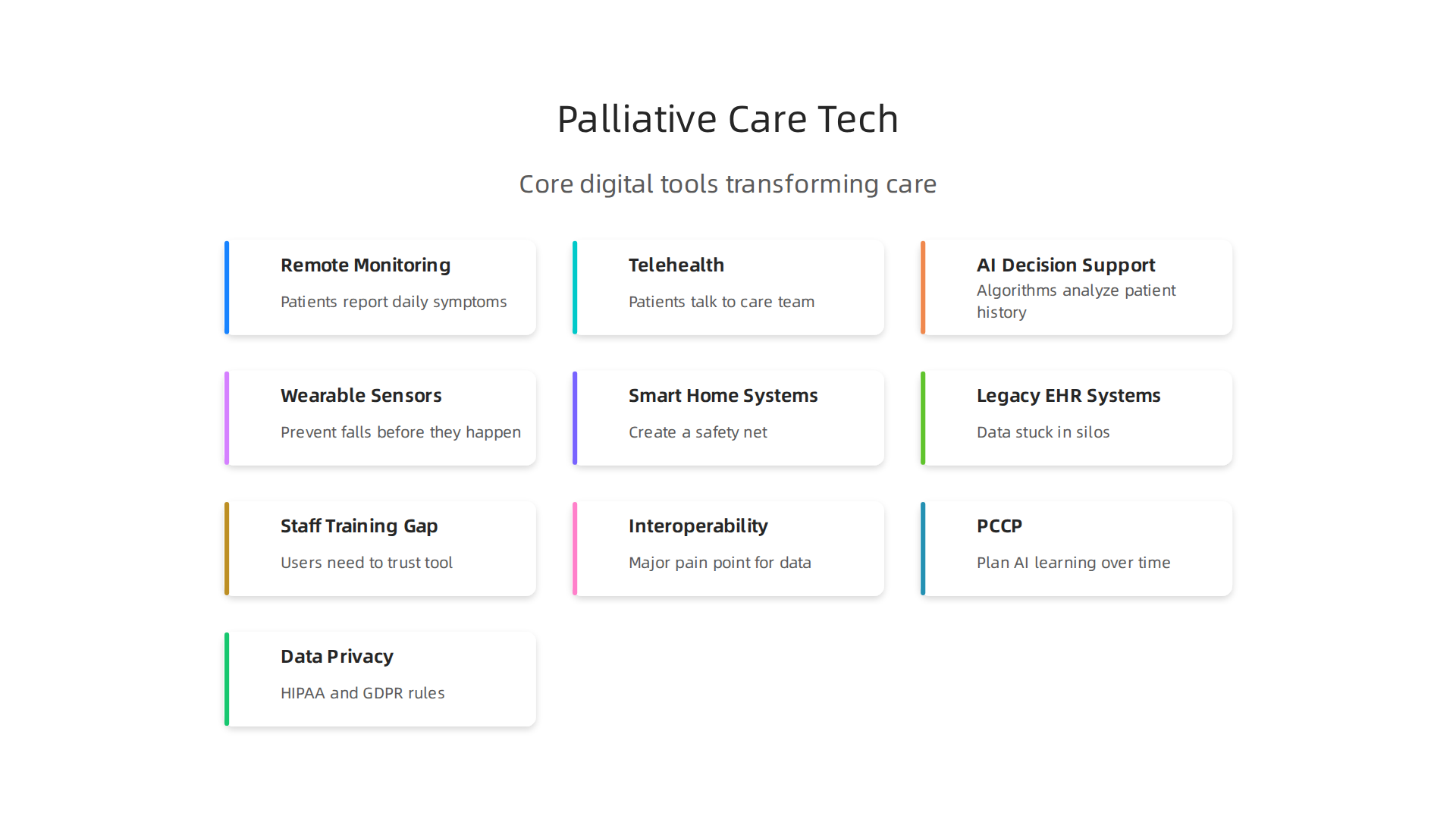
Remote symptom monitoring is one of the biggest shifts. Patients or their caregivers use simple devices or mobile apps to report pain levels, breathing trouble, nausea, and other symptoms every day. The data flows straight to the care team. If something changes, the team gets an alert and can act before the patient ends up in the ER. Pilot programs using this approach have shown fewer hospitalizations and better quality of life, according to a 2026 evaluation published in the Journal of Medical Internet Research. That study looked at a hospice-at-home model and found that timely digital check-ins made a real difference.
Telehealth and telehospice have become standard tools by 2026. Instead of driving an hour for a 15-minute checkup, patients can talk to their palliative care team from their living room.

The Center to Advance Palliative Care highlighted telemedicine as one of the top innovations shaping the field.
This is especially useful for people living in rural areas or those with limited mobility. Telehospice is now considered a cornerstone of modern hospice services, driven by the broad adoption of telehealth across healthcare.
AI-driven decision support is also entering the picture. Algorithms can analyze patient history, symptom trends, and lab results to suggest when a medication change might help or when it is time for a specialist consult. For example, some systems help predict pain spikes before they happen. The FDA has been updating its guidance for AI in medical devices, with a specific focus on predetermined change control plans for adaptive algorithms.
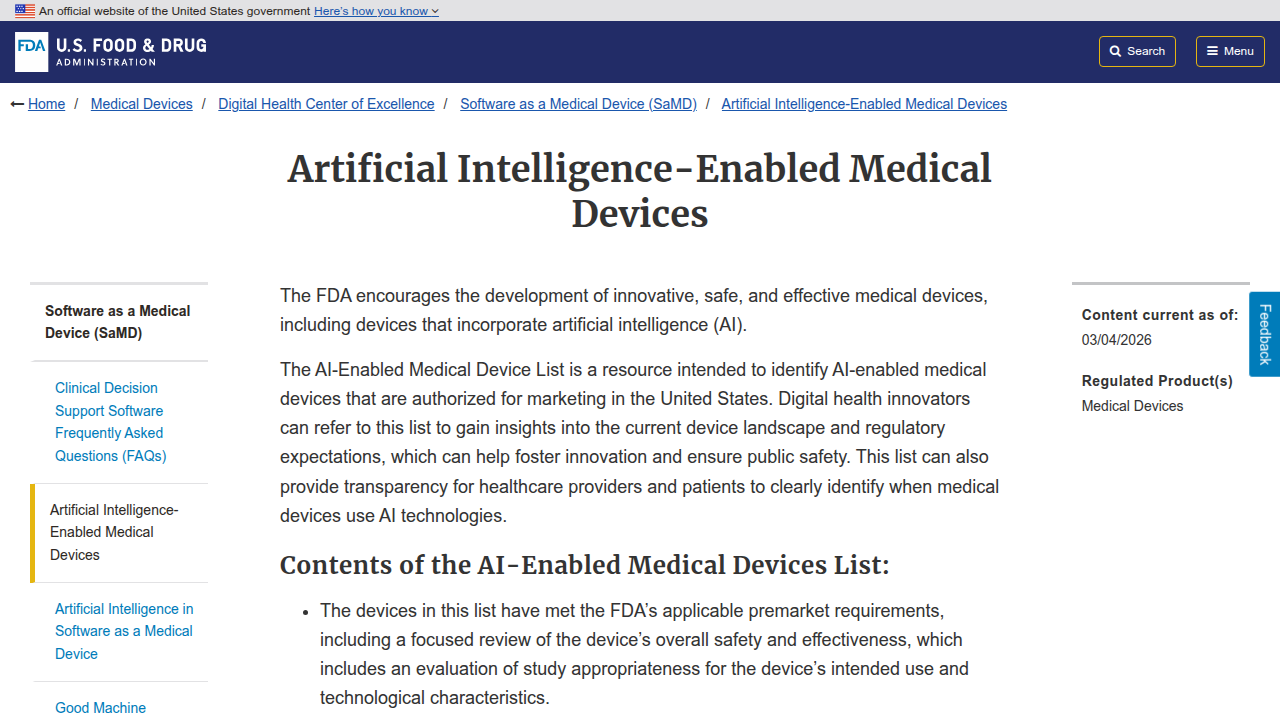
This means that as AI tools get smarter, regulators are creating clearer pathways for their safe use.
But here is the honest truth. Adoption of these technologies is still uneven. Many hospices and palliative care programs face reimbursement gaps that make it hard to pay for new digital tools. Some clinicians remain skeptical, worried that technology will replace the human touch that makes palliative care special. And integrating new platforms with existing electronic health record systems is a painful technical challenge that slows everything down.
Even with those hurdles, the evidence keeps building. A growing number of programs are proving that when you combine remote monitoring, telehealth, and smart alerts, patients spend less time in the hospital and more time doing what matters to them.
Want to stay ahead of these trends without wading through hundreds of news articles every day? Consider getting a simple daily briefing. Get Free Updates from The Deep View Newsletter for clear, concise AI and healthtech insights that busy leaders actually have time to read.
For a deeper look at how primary care models are also evolving to support older adults with complex needs, check out our article on innovative primary care tech and models reshaping senior care.
Dementia Care: How AI, Sensors, and Remote Monitoring Are Changing the Landscape
Caring for someone with dementia is hard. Really hard. Families often feel like they are always on edge, watching for falls, checking for agitation, and worrying about sleep problems. The burden on caregivers is huge. But here is the good news. Technology is stepping in to help in big ways.
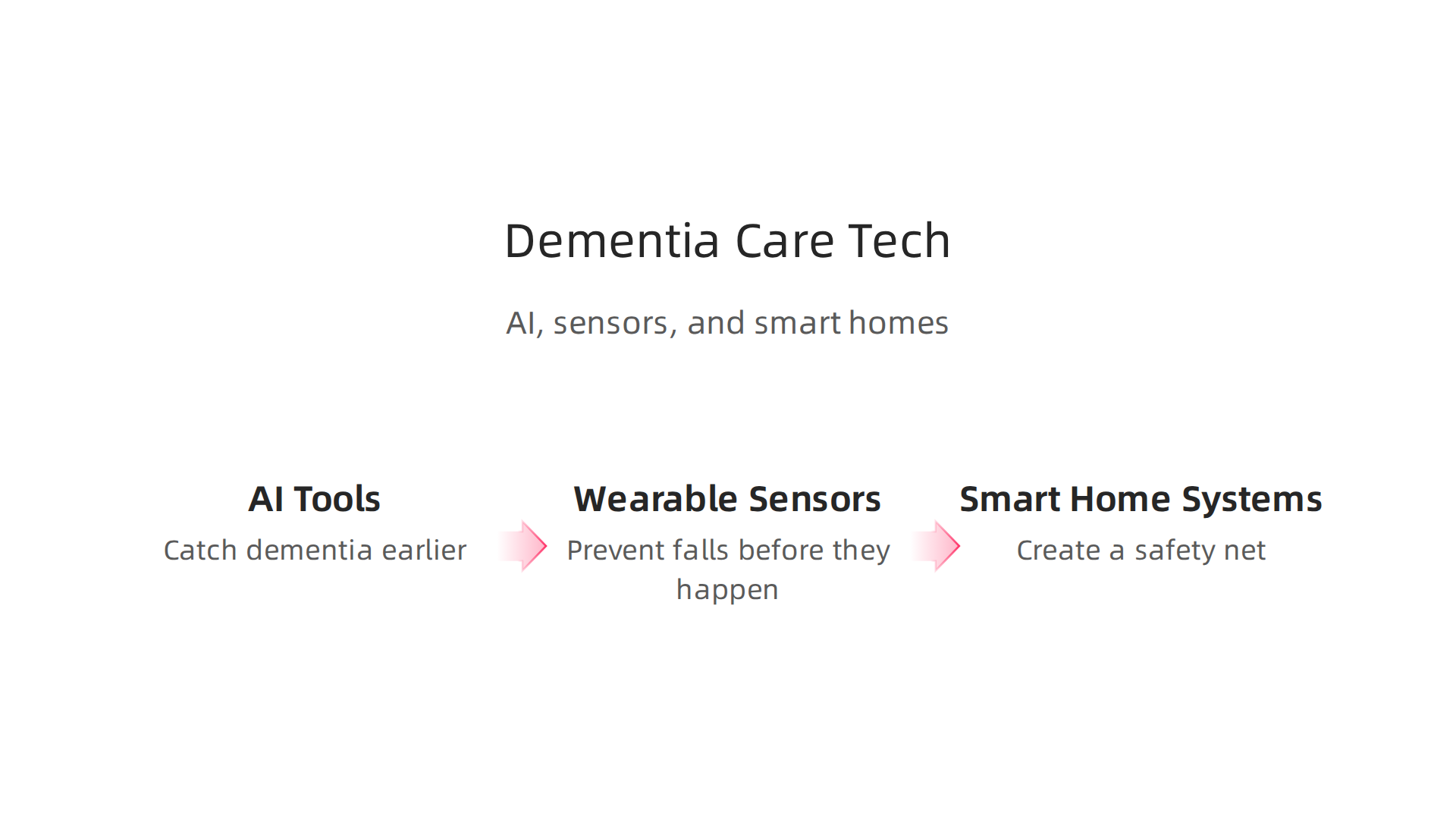
AI-powered tools are catching dementia earlier. Algorithms can now scan brain scans, speech patterns, and daily behavior to spot signs of cognitive decline years before a formal diagnosis. This early warning gives families and doctors a head start on planning. It also opens the door for treatments that work best when started early. A 2025 review in the Journal of Medical Internet Research looked at remote sensing technologies for Alzheimer’s disease and found that these tools can track changes in real time, making early detection more practical than ever Advancing Remote Monitoring for Patients With Alzheimer Disease.
Wearable sensors are preventing falls before they happen. Think of a small device worn on the wrist or ankle. It tracks movement, balance, and walking speed. If the person with dementia starts to move in an unsteady way, the sensor sends an alert to a caregiver’s phone. No more waiting for a crash in the middle of the night. Researchers at the University of California, Irvine are using AI and sensor technology to study agitation, sleep problems, and fall risk in dementia patients A new approach to dementia care. The goal is to predict falls hours or even days ahead.
Smart home systems are creating a safety net. Motion sensors, door monitors, and smart lights can learn a person’s daily routine. If something seems off, like a bathroom visit in the middle of the night that lasts too long, the system alerts a family member. One study from UC Berkeley showed that these "eye in the sky" sensors significantly lowered stress for caregivers of people with dementia Study finds sensor-based monitoring lowers caregiver anxiety. The technology lets people stay in their own homes longer instead of moving to a facility.
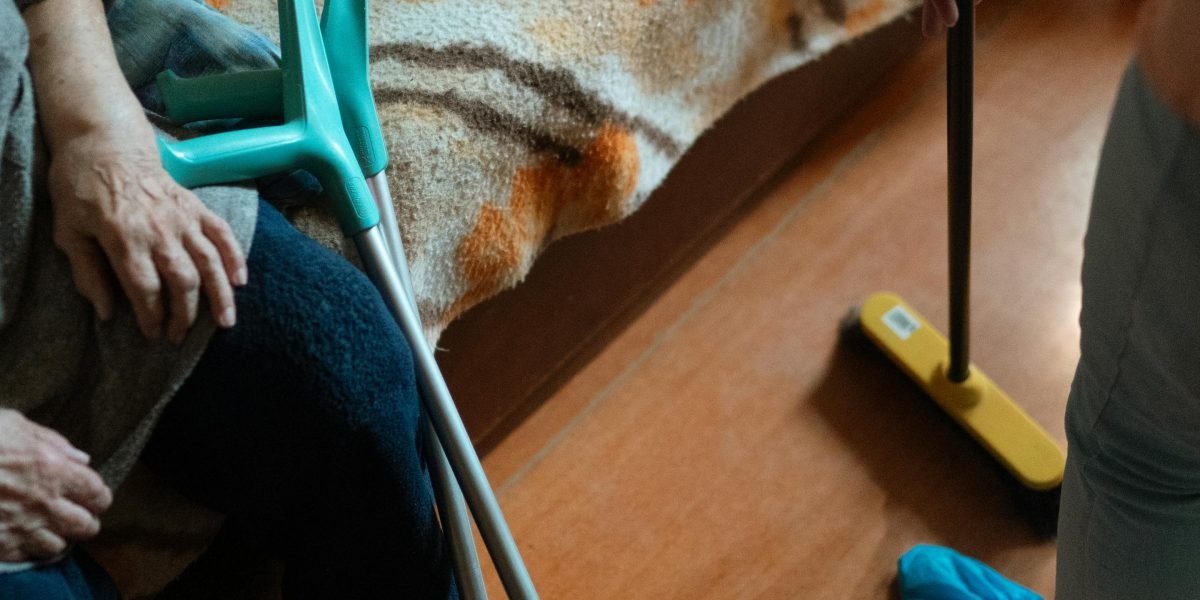
Real-world memory care facilities are already trying these tools. Early results show that residents wander less, sleep better, and need fewer emergency visits. The AI in elderly care market is expected to hit $44.61 billion in 2026, growing fast as more providers adopt these solutions AI In Elderly Care Market Size.
But there are real barriers. Many older adults are not comfortable with technology. And privacy concerns are huge. No one wants a camera watching them in their own bedroom. Researchers are working on ways to use sensors that protect privacy, like radar-based systems that detect motion without capturing images. Still, these concerns slow down adoption.
The bottom line is that these tools are not about replacing human caregivers. They are about giving caregivers a break and keeping people with dementia safer. For a closer look at how primary care models are also changing to support seniors with complex needs, check out our article on innovative primary care tech and models reshaping senior care.
If you want to keep up with the latest in healthtech, including dementia care innovations, without drowning in alerts and articles, try a simple daily briefing. Get Free Updates from The Deep View Newsletter. It gives you the most important AI and healthtech stories in just a few minutes each morning.
Diagnostics Innovation: From Point-of-Care to AI-Powered Imaging
We just saw how AI and sensors help with dementia care at home. But the real magic starts even earlier. It starts with finding problems fast. Diagnostics are getting a huge upgrade in 2026, and that is a big deal for people who need palliative care or are living with dementia.
Think about it. Right now, many conditions get caught late. A person with dementia might have a urinary tract infection that shows up as sudden confusion. By the time a lab test comes back, the person is already in the emergency room. That is where point-of-care testing changes everything. Small devices at the bedside can run blood tests, infection screens, and even basic scans in minutes. No waiting days for results. This speed is critical for dementia care home care situations where every minute of confusion is stressful for everyone.
AI-powered imaging is making scans smarter. Radiologists are swamped. But AI can help them spot problems faster. In early 2026, Aidoc got FDA clearance for a comprehensive AI system that handles multiple conditions in one CT scan Aidoc Secures FDA Clearance for Healthcare’s First Comprehensive Foundation Model AI. That means a single scan can check for bleeding, fractures, blockages, and more all at once. For an older adult with complex needs, this reduces the number of scans they need to sit through. Another company, DiA, received FDA clearance for an AI tool that helps ultrasound users capture high-quality images DiA Received FDA Clearance for New AI Software. These tools are not just cool tech. They help the nursing informatics teams who manage these devices and make sure the data flows into patient records.
Regulatory approvals are speeding up, but challenges remain. In the fourth quarter of 2025 alone, the FDA cleared 72 AI-enabled medical devices, and 76% of those were for radiology FDA Updates AI Authorization List. That is a lot of new tools hitting hospitals. But here is the thing. Not all of them talk to each other. Interoperability is still a big headache. A hospital might buy a great AI ultrasound tool, but if it cannot send results to the electronic health record, it is useless. Clinical validation also matters. Just because an AI gets FDA clearance does not mean it works perfectly in every hospital with different patient groups.
The digital healthcare shift means we must plan carefully. When a hospital adds point-of-care testing and AI imaging, the workflow changes. Nurses get more alerts. Radiologists get more flagged cases. Without smart planning, you end up with alert fatigue. That is dangerous. The goal is to make the tools fit the people, not the other way around.
For palliative care patients, faster diagnosis means less suffering. If a patient with advanced dementia has a lung infection, point-of-care testing can catch it in the room. AI imaging can confirm it in minutes. Treatment starts sooner. That is the kind of innovation that actually helps.
If you want to stay ahead of these fast-moving changes in diagnostics and digital health, you need a steady stream of clear, useful information. That is why we recommend the Get Free Updates from The Deep View Newsletter. It gives you a quick daily read on the most important AI and healthtech stories, so you never miss a key development.
Implementation Challenges: Workflow Integration, Data Silos, and Staff Training
All these new diagnostic tools sound great on paper. Faster scans. Earlier detection. Better care for people with serious conditions like palliative care patients. But here is the reality. Getting these tools to work inside a real hospital or a dementia care home care setting is hard. Really hard.
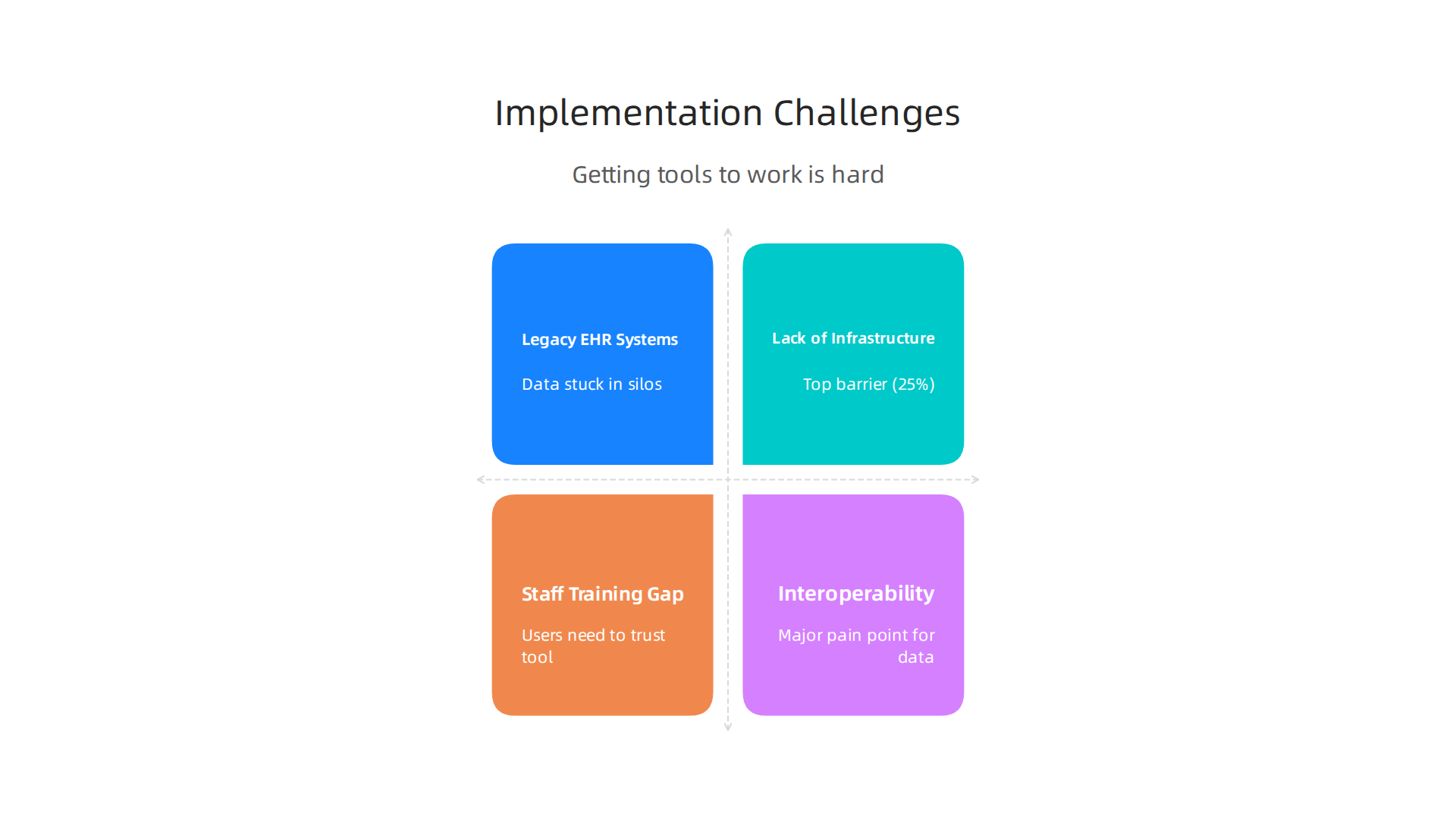
The biggest problem is that most hospitals still run on old electronic health record (EHR) systems. These legacy systems were not built to talk to new AI tools or point-of-care devices. So data gets stuck in silos. A nurse might run a quick bedside test, but the result cannot flow into the patient’s main chart. That means another clinician has to type it in manually. That takes time. And it leads to burnout.
A 2026 study found that lack of technical infrastructure (25%) and doubts about technology stability (24%) were the top barriers to digital health adoption Barriers and Facilitators of Digital Transformation in Health Care. For nursing informatics teams, this is a daily headache. They have to figure out how to connect new tools to old systems without breaking anything.

Staff training is another huge gap. When a hospital buys a fancy AI imaging tool, they often forget to train the people who use it. A nuclear medicine technologist might suddenly need to interpret AI suggestions on a scan. If no one teaches them how, they ignore the alerts. Or worse, they get alert fatigue and miss real problems. Resistance from experienced clinicians is common. They have seen new tech come and go. They need to trust the tool before they will use it.
Interoperability standards like HL7 FHIR can help. They create a common language for devices and records to share data. Some hospitals have set up dedicated innovation teams to manage these rollouts. But those teams need money and time. And in many places, resources are tight. A recent survey on progress toward interoperability showed that care transitions are still a major pain point Progress on Interoperability and Ongoing Improvements.
For the people working in digital healthcare, the lesson is simple. Buying the coolest new AI tool is not enough. You have to plan the whole workflow. You have to train everyone. And you have to make sure the data flows where it needs to go. Otherwise, even the best diagnostic innovation will sit on a shelf.
If you want to stay ahead of these integration challenges and learn how leading hospitals are solving them, you need reliable updates. Subscribe Free to The Deep View Newsletter for daily insights that cut through the noise.
Regulatory and Compliance Considerations for Clinical Tech Adoption
So you managed to connect your new AI tool to the old EHR system. You trained your team. The data flows. But now a new problem shows up. Is this tool even legal to use?
Here is the thing about digital healthcare. The rules are changing fast.
And if you work in palliative care or dementia care home care settings, you need to know what regulators expect before you hit that launch button.
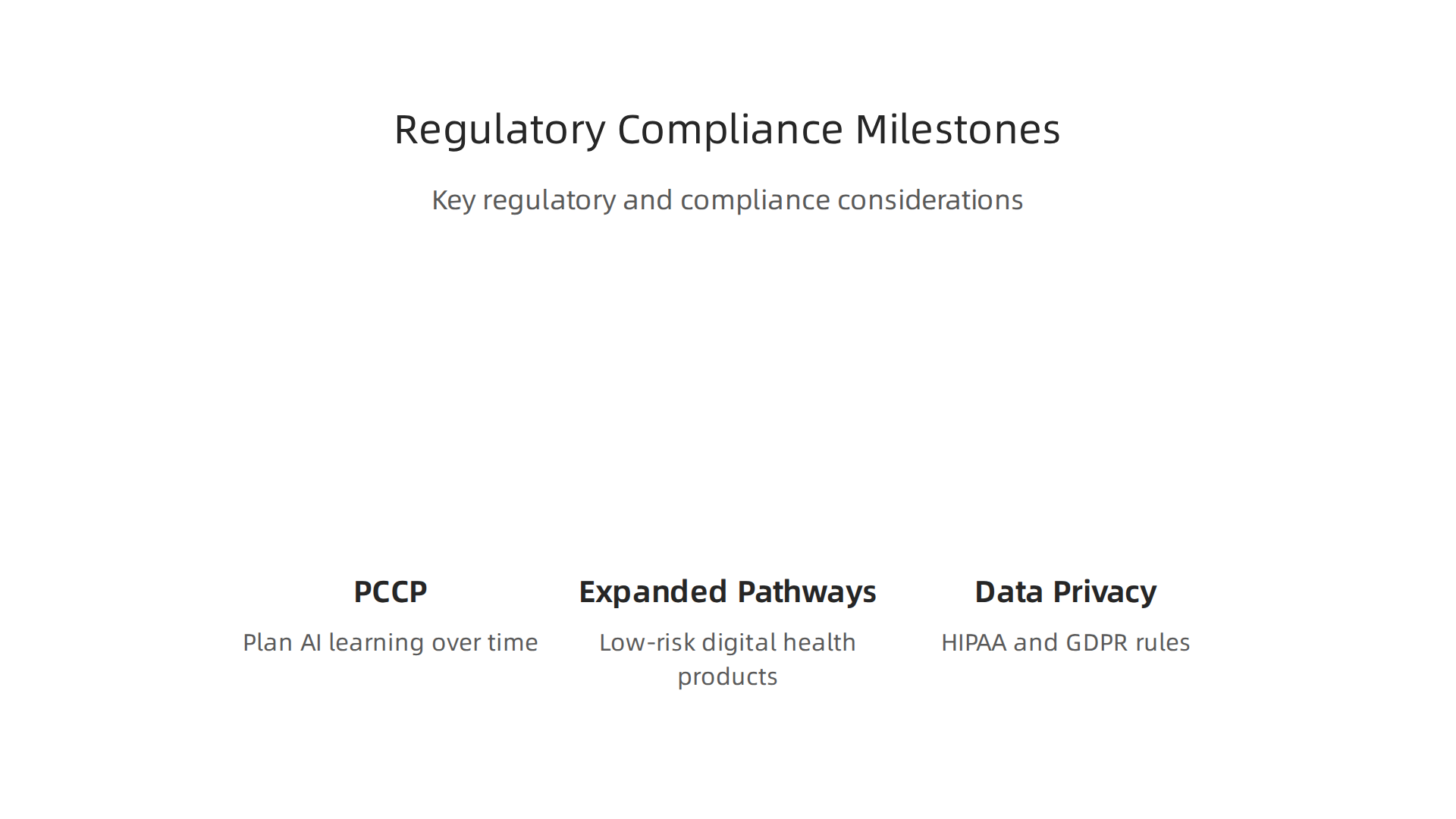
The FDA has been busy in 2026. They updated guidance for AI and machine learning tools that count as medical devices. One big change is the Predetermined Change Control Plan (PCCP). This lets companies plan ahead for how their AI will learn and improve over time. You include this plan in your first submission to the FDA FDA Digital Health Guidance: 2026 Requirements Overview. That is a smart move. It means you do not have to resubmit every single time your algorithm gets a little smarter.
The FDA also expanded pathways for low risk digital health products in early 2026 FDA’s 2026 Guidance Expands Pathway for Low-Risk Digital Health Products. That is good news for simple wellness tools. But caution is still essential. If your tool makes clinical decisions, the rules are tighter. The AI-Enabled Medical Device List shows which products have already been cleared. It is a useful reference if you are building something new.
Data privacy is another major layer. HIPAA in the US and GDPR in Europe set strict rules. If your remote monitoring tool collects patient data from a dementia care home care facility, that data must be encrypted, stored safely, and only shared with permission. A nuclear medicine technologist might upload a scan to an AI analysis platform. That platform must be HIPAA compliant. Otherwise, you face fines you do not want.
For nursing informatics teams, all of this means early planning pays off. Talk to regulators before you build. Get your clinical evidence strategy ready. A clear plan can cut months off your market entry timeline.
Want to keep up with these changing rules without spending hours digging through government websites? Get Free Updates from The Deep View Newsletter. They break down complex regulatory shifts into practical takeaways every day.
And if you want to see how other health systems are navigating digital transformation, check out this piece on innovative primary care tech and models reshaping senior care in 2026. It shows how compliance and innovation can work together.
Strategic Outlook: Investment, Partnerships, and Scaling in 2026
Once you have cleared the regulatory hurdles, the real work begins. How do you take a technology that works in one pilot site and spread it across an entire health system? How do you fund that growth? And how do you make sure the solution actually improves outcomes for patients in palliative care or dementia care home care?
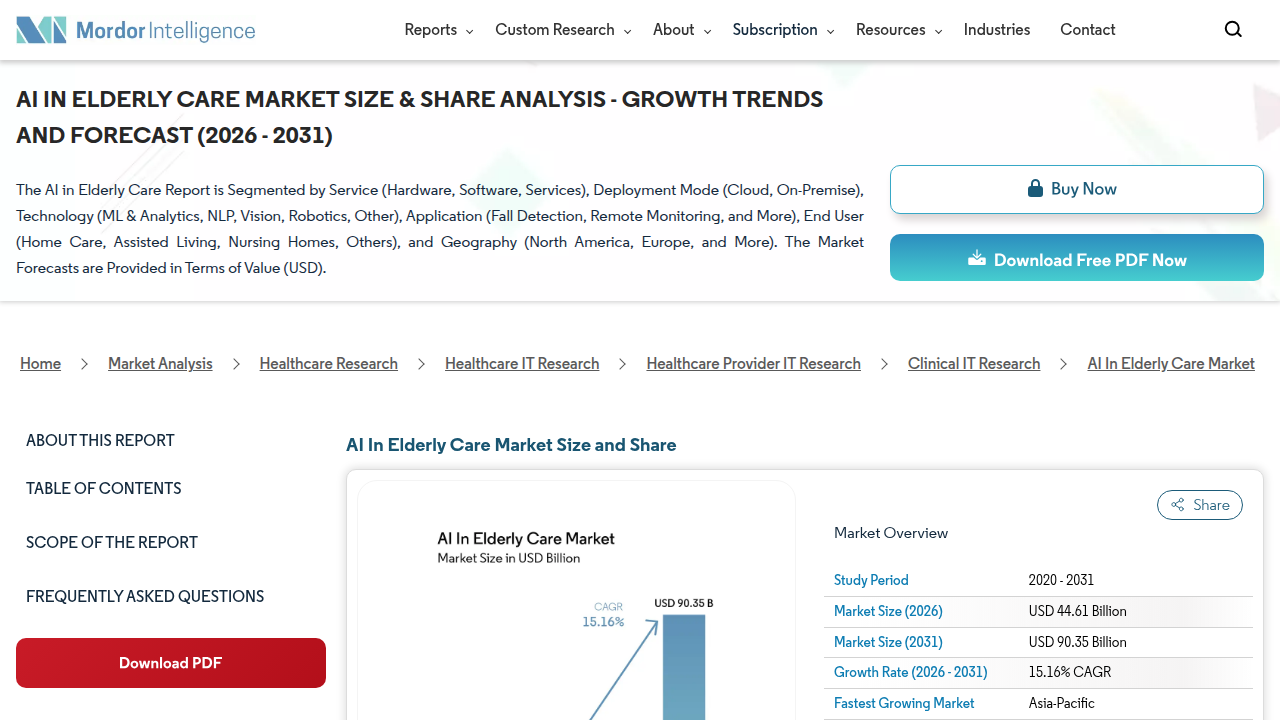
The investment landscape in 2026 is shifting. After a dip in 2022 and 2023, venture capital funding for health tech has rebounded. The AI in elderly care market is now worth USD 44.61 billion and is growing at 15.16% annually AI In Elderly Care Market Size Report 2026.
Investors are putting money into companies that show real clinical evidence and clear regulatory paths. The Bessemer State of Health AI 2026 report confirms that healthcare innovation is moving past the hype into actual impact State of Health AI 2026.
What kind of tech is getting funded? Remote monitoring tools for dementia patients are a big focus. A study in JMIR Aging looked at how remote sensing technologies improve outcomes for people with Alzheimer disease Advancing Remote Monitoring for Patients With Alzheimer Disease. Researchers at UCI School of Nursing are using AI and sensors to study agitation, sleep, and fall prevention A new approach to dementia care. Sensor based monitoring in homes has been shown to lower caregiver anxiety ‘Eye in the sky’ sensors reduce stress.
These tools matter a lot for palliative care. Palliative teams manage symptoms, coordinate care, and support families. Remote monitoring can reduce the need for frequent clinic visits and cut hospitalizations. That saves money and improves quality of life for both patients and caregivers The Impact of Artificial Intelligence in Reducing the Cost of Dementia.
Nursing informatics professionals are key here. You are the person who helps select the right platform, makes sure it talks to the EHR, and trains the clinical staff. Your role is becoming more strategic as technology becomes central to care delivery.
Partnerships are the most common path to scale right now. Health systems, payers, and tech startups are working together. A hospital might partner with a remote monitoring company to serve patients in a dementia care home care program. A payer might team up with a palliative care analytics startup to track outcomes and adjust reimbursements. These partnerships reduce risk and speed up deployment MedTech Investment Trends for 2026.
The next wave of digital healthcare innovation will focus on three things. First, predictive analytics that spot problems before they become emergencies. Second, integrated platforms that connect palliative care, primary care, and specialists in one system. Third, reimbursement models tied to outcomes, not just visits Latest Trends in HealthTech Investments for 2026.
Want to stay ahead of these trends? Subscribe Free to The Deep View Newsletter. You get practical AI and tech insights every day, written for people who make decisions in health tech.
And if you want real examples of how technology is reshaping senior care, read this piece on innovative primary care tech and models reshaping senior care in 2026.
Summary
This article surveys the practical digital innovations reshaping palliative care, dementia care, and diagnostics in 2026, focusing on what actually works versus the hype. It explains how remote symptom monitoring, telehospice, AI decision support, point-of-care tests, and AI-powered imaging are reducing hospital visits and improving quality of life, while also outlining persistent barriers like reimbursement gaps, EHR integration, staff training, and privacy concerns. The piece walks through regulatory shifts—such as FDA guidance for adaptive AI—and offers a strategic view on investment, partnerships, and scaling for health systems. Readers will come away with a clear sense of the technologies worth piloting, the implementation pitfalls to avoid, and the organizational steps needed to integrate these tools safely and effectively into clinical care.