


Medical abbreviations are short ways to write longer words or phrases. They are used a lot in hospitals and clinics to save time. But sometimes, these shortcuts can cause big problems if they are not understood correctly. This is why knowing the precise meaning of every abbreviation is super important in healthcare.
Think about the psa medical abbreviation. To many outside of medicine, "PSA" might make them think of a "Public Service Announcement." But in healthcare, PSA most often means Prostate-Specific Antigen. This is a protein that doctors check in blood tests to look for issues with the prostate gland, like prostate cancer or other conditions Source: PSA Test: Meaning, Screening, and Results Explained. Actually, the letters PSA can have more than 180 different meanings, from "Professional Services Automation" to "Pressure Sensitive Adhesive," as seen in general abbreviation lists Source: What does PSA stand for? – Abbreviations.com.
When a doctor or nurse writes PSA on a patient’s chart, it’s clear they mean Prostate-Specific Antigen. But what if someone misreads it or uses it in the wrong place? This can lead to serious mistakes. For example, if d/c medical abbreviation is meant to mean "discharge" (send home), but someone thinks it means "discontinue" (stop a medicine), that could harm a patient. The same goes for others like nph medical abbreviation (a type of insulin) or pcn medical abbreviation (penicillin, a drug). Even pvr medical abbreviation, often for "post-void residual" (how much urine is left after peeing), needs to be clear.
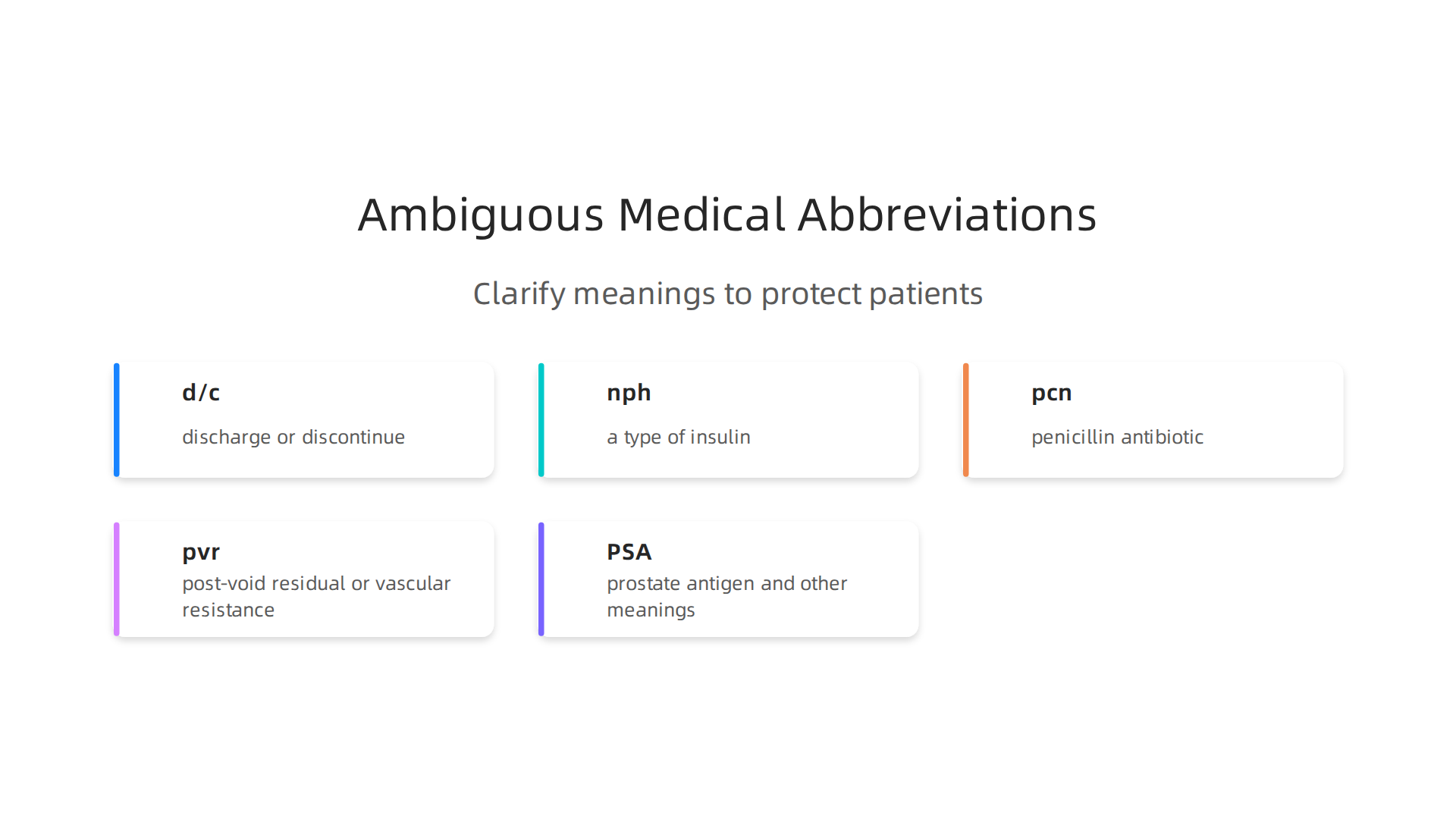
Mistakes from abbreviations can make workflow slower, cause bad talks between staff, and most importantly, put patients in danger.

It is very important for everyone in healthcare to be sure about what an abbreviation means. Understanding these shortcuts is a key part of making healthcare safe and efficient, especially as we use more technology in 2026. For more on this, you can learn about clarifying medical abbreviations for safer health tech systems.
To stay updated on how technology is making healthcare safer and more efficient, consider getting daily insights into AI and technology trends.
The AI Newsletter Worth Reading
What ‘PSA’ Means in Clinical Practice – Definitions and Context
While the psa medical abbreviation can mean many things in general, in hospitals and clinics, its most common and important meaning is "Prostate-Specific Antigen." This is a protein made by the prostate gland, which is part of the male body. Doctors test the levels of this protein in a man’s blood to help find prostate cancer or other problems with the prostate gland Prostate-Specific Antigen (PSA) Test – NCI. High levels of PSA in the blood can mean there is an issue that needs more checks Prostate-Specific Antigen (PSA) Test: Purpose & Results.
However, even within medicine, "PSA" can sometimes mean other things, though less often. For example, it could stand for Psoriatic Arthritis, a type of joint problem, or Posterior Spinal Artery. This shows why context is so important in healthcare Abbreviations, Acronyms, and Symbols – URMC.Rochester.edu. The meaning of an abbreviation can change based on a few key things:
- Specialty: What kind of doctor is using it? A doctor who focuses on male health (a urologist) will almost always mean Prostate-Specific Antigen when they say
PSA. But a doctor who treats joint problems (a rheumatologist) might usePsAfor Psoriatic Arthritis. - Document Type: Where is the abbreviation written? If it’s on a lab report for a blood test, it will likely be Prostate-Specific Antigen. If it’s in a patient’s notes about their joints, it might be Psoriatic Arthritis.
- Geography: Believe it or not, where you are in the world can also play a role. Medical guidelines and common practices for things like prostate cancer screening can be different from one country to another. For example, there are specific PSA Testing Clinical Guidelines used in Australia that might have slight differences from guidelines in other places in 2026.
This is why doctors and nurses must be extra careful. A d/c medical abbreviation could mean "discharge" (send a patient home) or "discontinue" (stop a medicine). A nph medical abbreviation is a type of insulin, and pcn medical abbreviation is penicillin. Even pvr medical abbreviation (post-void residual) has a very specific meaning. Misunderstanding any of these can have serious effects on patient care.
To make sure everyone is on the same page, clear guidelines and training are needed. For health tech leaders, thinking about how we define and use these terms is vital for good care. You can learn more about how technology helps with clear diagnostic steps by reading about Mastering Modern Diagnostic Work-ups for Precision Patient Care. It’s all about making sure that every medical term, especially shortcuts like the psa medical abbreviation, is understood perfectly to keep patients safe. This attention to detail helps create Precise Health Technology Definitions for Strategic Healthcare Management that are clear for everyone.
PSA as Prostate-Specific Antigen: clinical use, testing, and interpretation
As we learned, the psa medical abbreviation is often a shortcut for "Prostate-Specific Antigen" in hospitals and clinics. This is a very important protein that comes from the prostate gland, which is part of a man’s body. Doctors use a blood test to check the amount of this protein to help understand a man’s prostate health. This test plays a big role in finding prostate problems, watching them over time, and checking if treatments are working.
The Role of PSA Testing in Prostate Health
Doctors use the PSA test for a few main reasons:
- Screening: This means checking for prostate cancer in men who do not have symptoms. Deciding when and how often to screen depends on a man’s age, family history, and other health factors. Many health groups, like those in Australia, have specific guides for when to consider PSA screening in 2026, often focusing on men aged 50 to 69 years 2026 Guidelines for the Early Detection of Prostate Cancer …. These guidelines help doctors decide who might benefit most from the test.
- Diagnosis: If a man has symptoms that could mean prostate cancer, or if a doctor feels something unusual during a check-up, a PSA test might be done. A high PSA level can suggest that more tests are needed to find out if cancer is present. For example, PSA levels above 10 ng/mL mean there’s a higher chance of prostate cancer NCCN Guidelines Version 2.2026 for Prostate Cancer ….
- Monitoring: For men who have been treated for prostate cancer, regular PSA tests are used to see if the cancer has come back. It’s a key way to keep an eye on their health after treatment. It also helps doctors watch men with prostate conditions that are not cancer, like an enlarged prostate.
What Doctors Think About When Interpreting PSA Levels
Getting a PSA test result is just the first step. Doctors need to look at many things to understand what the numbers mean:
- Age of the Man: What’s considered a "normal" PSA level can change with age. Older men naturally tend to have slightly higher PSA levels. For instance, in 2026, some guidelines suggest that a PSA over 3 ng/mL needs more checks for men under 76, but for men 76 or older, it might be over 3 ng/mL or even higher RPLAB006 – Prostate Specific Antigen (PSA) Testing.
- Trends Over Time: A single PSA number is less helpful than seeing how PSA levels change over months or years. A rapid increase in PSA might be more concerning than a single high reading. Sometimes, if a PSA is moderately high, doctors might suggest doing the test again after a few weeks to be sure Diagnostic Evaluation – EAU Guidelines on Prostate Cancer.
- Other Factors: Many things besides cancer can make PSA levels go up. These include:
- Prostate Enlargement: A common condition where the prostate grows bigger.
- Prostate Infection or Inflammation: These can cause temporary rises in PSA.
- Recent Medical Procedures: Things like a prostate biopsy or even certain types of vigorous exercise can affect PSA levels temporarily.
- Medicines: Some medicines can also lower PSA levels, making them seem normal when they might not be.
- Assay Type: There are different kinds of PSA tests, and small differences in how they are done can affect the results. Doctors need to know which test was used to read the results correctly.
It is important to remember that a high PSA level does not always mean cancer, and a low PSA level does not always mean there is no cancer. Because of this, doctors must use their best judgment and consider all these factors when talking with a patient about their PSA results.

Clear communication about all medical abbreviations and test results is key to keeping patients safe. You can learn more about how accurate interpretations improve care by reading about Medical Abbreviations: Boost Patient Safety and Clinical Accuracy.
While PSA most often means "Prostate-Specific Antigen" in medical discussions, it’s important to know that this common psa medical abbreviation has other meanings too. In the fast-paced world of healthcare, many abbreviations are used, and sometimes the same letters can stand for different things. This can get confusing and, in some cases, even lead to mistakes if people aren’t careful.
Other Meanings of ‘PSA’ in Healthcare
Within hospitals and clinics, the letters PSA can stand for more than just prostate health. Here are a few examples of what else it might mean:
- Patient Safety Assessment: This refers to checking how safe a patient’s care is, looking for ways to prevent harm. In 2026, patient safety remains a top concern, and assessments help make sure healthcare is delivered without errors.
- Post-Surgical Assessment: After an operation, doctors and nurses do a
post-surgical assessmentto check on a patient’s recovery, pain levels, and any possible problems. - Psoriatic Arthritis: This is a type of arthritis that affects some people who have psoriasis, a skin condition.
- Posterior Spinal Artery: This is a blood vessel located near the spine.
You can see how many different things the same letters can mean! Medical records and conversations might use PSA in any of these ways, depending on the situation. Websites that track medical terms often list many definitions for PSA, highlighting this challenge What does PSA stand for? – Abbreviations.com.
When Non-Clinical Meanings Appear
Beyond strictly medical terms, PSA also has meanings outside of patient care, and sometimes these can pop up in a healthcare setting. The most common non-clinical meaning is:
- Public Service Announcement: This is a message shared with everyone to raise awareness about important topics, like healthy eating, staying safe, or preventing illness. For example, a hospital might run a TV ad that is a
public service announcementabout getting regular check-ups. Even though it’s not a direct medical term, it’s part of how healthcare groups talk to the public.
Imagine working in a busy hospital where a doctor says "check the PSA" to a nurse. Does it mean a blood test, a safety review, or something else? Clear communication is key. Just like psa medical abbreviation can be confusing, other abbreviations like d/c medical abbreviation (which can mean "discharge" or "discontinue"), nph medical abbreviation, pcn medical abbreviation, or pvr medical abbreviation also have multiple meanings that require careful attention.
Because of all these possible meanings, healthcare staff must always be clear about what they mean when using abbreviations. This helps avoid mix-ups that could affect a patient’s care. Making sure everyone understands medical shortcuts is a big step in keeping patients safe in 2026 and beyond. To learn more about how important it is to be clear with these terms, read about Clarifying Medical Abbreviations for Safer Health Tech Systems.
When medical staff come across a psa medical abbreviation or any other shortcut, they don’t just guess what it means. They use clever ways to figure out the right meaning, making sure patient care is safe and correct. This is called "disambiguation," which just means clearing up confusion.
Here’s how healthcare workers often know which PSA or other abbreviation is being used in common situations:
Context is King
The biggest clue is the situation itself, also known as context. Think of it like this: if you see a baseball bat, you know it’s for playing baseball, not for cooking. In healthcare, the context comes from many places:
- Where you see it: Is it on a lab report? A doctor’s note? A schedule? A lab report asking for a
PSAtest most likely means Prostate-Specific Antigen. But if it’s in a nurse’s daily notes, it might mean a Post-Surgical Assessment. - What kind of document it is: A form about patient safety would point to Patient Safety Assessment. A chart about skin conditions would suggest Psoriatic Arthritis.
- The medical specialty: If a urologist (a doctor for urinary and male reproductive systems) is talking about
PSA, they almost certainly mean the prostate test. A bone doctor might be talking about Psoriatic Arthritis. - Surrounding words: Often, other words in the sentence or paragraph give hints. For example, "patient reported increased PSA levels" clearly means the blood test.
Research shows that understanding the context is vital for correctly figuring out what medical abbreviations mean, helping to avoid mistakes that could hurt patients Interpretation and Misinterpretation of Medical Abbreviations.
Workflow Checkpoints and Smart Questions
Beyond just looking at the words, healthcare teams have steps in their daily work that help them avoid mix-ups.
- During Handoffs: When one nurse finishes their shift and another takes over, they "hand off" their patients. This means they talk about each patient’s condition, plans, and any important notes. This is a key time to be very clear. If an abbreviation like
d/c medical abbreviationis used, the receiving nurse might ask, "Does ‘d/c’ mean discharge the patient today, or discontinue this medication?" This quick question clears up any confusion. Good patient handoffs are super important for safety, and technology is helping to make them better in 2026. You can learn more about how technology and regulation are improving these vital moments in healthcare by reading about Transitions of care 2026 how technology regulation and strategy improve patient handoffs. - When Ordering or Giving Medications: For abbreviations like
nph medical abbreviation(a type of insulin) orpcn medical abbreviation(penicillin), it’s very important to confirm the full meaning. Hospitals often have strict rules about what abbreviations can and cannot be used, especially for medicines. Some abbreviations are even on a "do not use" list because they cause so many errors. - When Discussing Lab Results: If a doctor sees a
pvr medical abbreviation(which can mean "post-void residual" or "pulmonary vascular resistance"), they’d confirm the test type and what they are looking for.
How Technology Helps in 2026
Actually, technology is playing a big role in fixing this problem. In 2026, many hospitals use smart computer systems that can help figure out the meaning of abbreviations. These systems, often using Artificial Intelligence (AI), look at the whole sentence and patient record to guess the correct meaning. For example, if a system sees "PSA done, patient feeling better," and the patient has a history of prostate issues, the AI can often tell it means Prostate-Specific Antigen, not a Post-Surgical Assessment. These smart systems are helping to reduce errors caused by abbreviations Clinical Errors From Acronym Use in Electronic Health Record: A Review of NLP-Based Disambiguation Techniques – DOAJ.
By combining careful human work with smart technology, healthcare providers are getting much better at understanding medical abbreviations like PSA medical abbreviation, making patient care safer and more accurate every day.
Modern computer systems, especially Electronic Health Records (EHRs), are changing how healthcare workers deal with abbreviations. These systems are a big step up from just relying on human memory or paper notes. In 2026, EHRs are key tools that help make sure everyone understands medical shortcuts correctly, greatly improving patient safety.
How Modern EHRs Handle Abbreviations
Think of an EHR as a super smart helper for doctors and nurses. When a healthcare worker types an abbreviation like PSA medical abbreviation into a patient’s digital chart, the EHR can do several helpful things:
- Abbreviation Expansion: The system might automatically show the full meaning next to the short form. So, if a doctor types "PSA," the EHR could suggest "Prostate-Specific Antigen" or "Patient Safety Assessment" and let the doctor pick the right one. This way, there’s no guessing.
- Autocomplete and Suggestions: As someone types, the EHR can offer a list of possible full terms. This is similar to how your phone might guess what word you’re typing. For example, if a nurse types "d/c," the system could suggest "discharge" or "discontinue," making it clear what they mean.
- Contextual Clues: Just like humans use context, advanced EHRs use smart computer programs to look at the other words in the note and the patient’s medical history. If the patient has a heart problem, an abbreviation like
pvr medical abbreviationmight automatically expand to "pulmonary vascular resistance." If it’s about urine flow, it might suggest "post-void residual." This smart guessing helps a lot A Preliminary Study of Clinical Abbreviation Disambiguation in Real. - Decision Support: Some EHRs go even further. If a doctor is about to prescribe medicine and uses an abbreviation like
nph medical abbreviationfor insulin orpcn medical abbreviationfor penicillin, the system might pop up a warning or ask for a full spelling, especially if that abbreviation is on a "do not use" list. This extra check prevents dangerous mistakes.
Putting Smart Tools Together
EHRs are getting even better at understanding abbreviations by bringing in more smart tools.
- Built-in Dictionaries: Many EHRs now have special medical dictionaries built right in. These dictionaries contain thousands of abbreviations and their meanings. When a new term or meaning comes up, these dictionaries can be updated, making the system smarter over time.
- Clinical Decision Aids: These are like smart guides inside the EHR. They help healthcare workers make better choices by giving them important information right when they need it. For abbreviations, these aids can help confirm the correct meaning, especially for less common terms or those that have many different meanings.
These advancements in health technology, powered by things like AI, are redefining patient care in 2026 by making communication much clearer. You can learn more about how artificial intelligence is changing patient treatment by reading about the Medical Benefits of AI Redefining Patient Care in 2026.
With these powerful tools, EHRs are not just a place to store patient information. They are active partners in making sure every psa medical abbreviation and other shorthand is understood, leading to safer and more effective care.
For those interested in the cutting edge of AI in healthcare, staying informed is vital. Get clear daily AI updates by subscribing to The AI Newsletter Worth Reading.
Lab reports and order sets: best practices for clear abbreviation use
Beyond what smart EHRs do to help with abbreviations, how information is shown in lab reports and how doctors order tests and treatments are also very important. Clear rules for these areas help everyone understand medical information right, every time.
In 2026, healthcare centers are working hard to make sure lab results and orders are super clear. One way they do this is by using standardized labels. This means that instead of just seeing psa medical abbreviation or pvr medical abbreviation, a lab report will often show the full name: Prostate-Specific Antigen or Pulmonary Vascular Resistance. This takes away any doubt about what the numbers mean. Many places even have a special list of abbreviations that are approved for use and those that should be avoided because they can cause errors Policy and Procedure of Abbreviations of Medical Terms.
For doctors’ orders, sometimes called order sets, the goal is also to be very clear. If a doctor writes d/c medical abbreviation, the system might ask them to confirm if they mean "discharge" or "discontinue." This stops mistakes before they happen. Healthcare groups like ISMP Canada have "Do Not Use" lists for dangerous abbreviations to help keep patients safe Do Not Use: List of Dangerous Abbreviations, Symbols …. This is especially true for medicines. For example, using nph medical abbreviation for insulin or pcn medical abbreviation for penicillin might trigger a system alert, pushing the healthcare worker to write out the full drug name. Learning more about how to make sure patient care is precise can be found in our guide to mastering modern diagnostic work ups for precision patient care.
It’s also important how results are presented. Lab reports usually include specific reporting conventions. This means they clearly state the units of measurement (like mg/dL), the normal range for those results, and special codes that identify the exact test that was done. These extra details, sometimes called metadata, help clear up any confusion, even if an abbreviation is present. Sometimes, the way a test is named itself can be confusing, highlighting the need for clear guidelines What’s in a Name? Comparative Analysis of Laboratory Test Naming Guidelines as Applied to Common Confusing Test Names. By making sure all these pieces of information are always there and easy to understand, we move closer to a world where medical shortcuts never lead to errors. This commitment to clarity truly helps medical abbreviations boost patient safety and clinical accuracy.
Risks of misinterpreting ‘PSA’: patient safety, legal, and operational impacts
Even with the best efforts to be clear, when medical abbreviations are misunderstood, serious problems can happen. It’s like using a shortcut that accidentally sends you the wrong way. The simple psa medical abbreviation for Prostate-Specific Antigen, for example, could be confused if someone isn’t paying close attention, leading to big mistakes in patient care.
One of the biggest problems is when a patient’s safety is put at risk. If a test result for psa medical abbreviation is misunderstood, a doctor might miss signs of prostate cancer, or think a patient has cancer when they do not. This can lead to people getting the wrong tests, or even the wrong treatments, which can be very harmful. For example, knowing the correct levels for PSA testing is very important for early detection, and guidelines in 2026 are very clear about what levels might need more checking RPLAB006 – Prostate Specific Antigen (PSA) Testing. Mistakes with abbreviations are a known issue, with one study finding that nearly 5% of all medication errors over a two-year period were because of them Abbreviation use decreases effective clinical …. This shows how vital it is for healthcare teams to always be on the same page.
Think about other abbreviations too. If d/c medical abbreviation is written, it could mean "discharge" (send the patient home) or "discontinue" (stop a medicine). A mix-up here could mean a patient goes home too soon or keeps taking a medicine they no longer need. Similarly, confusing nph medical abbreviation (a type of insulin) or pcn medical abbreviation (penicillin) can cause serious harm, like giving a patient the wrong medicine or a medicine they are allergic to. Even abbreviations like pvr medical abbreviation (Pulmonary Vascular Resistance) could lead to wrong diagnoses if not fully understood, affecting how doctors treat heart and lung problems. Misinterpreting these shortcuts can even have tragic outcomes, like a patient dying due to a medication mix-up where "SA" was read as "short-acting" instead of "sustained-release" Recommendations for terminology, abbreviations and ….
Beyond patient safety, there are other big impacts.
- Operational Costs: When mistakes happen because of unclear abbreviations, it costs money and time. Doctors and nurses have to spend time figuring out what was meant. Patients might need more tests, extra stays in the hospital, or new treatments. This all adds up to higher costs for healthcare centers.
- Legal Problems: If a patient is harmed because of a medical abbreviation error, the hospital or healthcare worker could face lawsuits.

This is a very serious matter and can greatly damage trust. Even with "Do Not Use" lists for dangerous abbreviations, errors still happen, showing how tough this problem is The impact of abbreviations on patient safety. | PSNet.
- Trust and Reputation: When errors happen, patients and their families can lose trust in the healthcare system. This can hurt a hospital’s good name and make people less likely to seek care there.
In 2026, healthcare organizations are working hard to stop these problems. They want to make sure all medical communication is crystal clear. This includes using fewer abbreviations, and when they are used, making sure everyone knows exactly what they mean. For more on this topic, you can read about clarifying medical abbreviations for safer health tech systems.
Implementing standardized abbreviation policies and disambiguation workflows
To truly fix the problems caused by unclear medical abbreviations, healthcare places need strong rules. It’s not enough to just know that psa medical abbreviation can be confusing. We need clear plans to make sure everyone uses abbreviations the same way. These plans help keep patients safe and make sure healthcare runs smoothly.
One main part of these plans is having official lists.
- Approved Lists: These lists show all the abbreviations that are okay to use. For example, a hospital might have a list that clearly states "PSA" means Prostate-Specific Antigen, and nothing else. These lists help everyone know what is allowed. A good policy makes sure only these approved abbreviations are used in patient records Policy and Procedure of Abbreviations of Medical Terms.
- Forbidden Lists: Just as important are the "Do Not Use" lists. These include abbreviations that have caused problems in the past, like
d/c medical abbreviationwhich could mean "discharge" or "discontinue." The Joint Commission, a big group that checks healthcare quality, has a list of abbreviations that should not be used because they are risky Do Not Use List/Prohibited Abbreviations. This helps stop mistakes with medicines, like confusingnph medical abbreviation(a type of insulin) with something else, orpcn medical abbreviation(penicillin) for patients with allergies. - EHR Controls: Today, Electronic Health Records (EHRs) are a big help. These computer systems can be set up to warn staff if they use a forbidden abbreviation. They can even make people write out the full word instead. This helps catch mistakes before they hurt anyone. Many places have policies to avoid dangerous abbreviations in all communication related to medicine ACCROOF OF THE MONTH – Health PEI | Staff Resource Centre.
Making these changes stick takes effort. It’s called "change management."
- Training and Education: All healthcare workers need to learn about the new rules. Regular training helps everyone remember what’s on the approved and forbidden lists.

This is vital for new staff and for refreshing everyone’s memory.
- Adoption and Measurement: Hospitals need to check if the new rules are being followed. They can look at patient records to see if dangerous abbreviations are still being used. If there are still problems, they can offer more training or update the rules. Tools that can recognize and make sense of clinical abbreviations can also help in real-time A Preliminary Study of Clinical Abbreviation Disambiguation in Real ….
- Continuous Improvement: The world of medicine keeps changing. So, policies for abbreviations should also change. It’s important to keep updating the lists and training as new information comes out.
In 2026, technology is also helping a lot. Artificial intelligence (AI) is getting better at understanding language. It can help "disambiguate" abbreviations. This means AI can look at the words around an abbreviation like pvr medical abbreviation and figure out what it most likely means. This can make EHRs even smarter at preventing errors. You can learn more about how AI helps by reading about new technology in healthcare.
By having clear rules and using smart technology, we can make healthcare safer for everyone.
Want to stay informed on how AI is shaping the future of healthcare?
The AI Newsletter Worth Reading
Summary
This article explains why medical abbreviations matter and uses the example of PSA to show how the same shorthand can mean very different things depending on context. It describes PSA most often as Prostate‑Specific Antigen in clinical settings, but also lists other medical and nonmedical meanings to highlight the risk of misinterpretation. The piece covers how clinicians use document type, specialty, and surrounding words to disambiguate abbreviations, and it shows how modern EHRs and AI can expand terms, offer suggestions, and block dangerous shorthand. It reviews best practices for lab reports and order sets, the role of approved and forbidden abbreviation lists, and practical change-management steps—training, measurement, and continuous improvement. The article also outlines the patient-safety, legal, and cost consequences of errors and gives readers clear actions to reduce risk when they encounter ambiguous abbreviations.