


Why diagnostic work-ups matter now – scope, stakes, and what this guide delivers
Getting the right diagnosis is super important in healthcare.

It’s like doctors being good detectives, finding out exactly what’s going on inside a person’s body. These careful steps are called diagnostic work-ups. They are needed to make sure patients get the right help quickly.
In 2026, getting these work-ups right means better health for people and helps hospitals and clinics work better too. When doctors follow clear steps for finding out what’s wrong, it helps patients recover faster. For example, knowing the right way to do oncologic imaging work-ups for cancer is very important. This helps healthcare places save money and time, which means more people can get the care they need.
This guide will help leaders, doctors, and tech teams understand how to make these diagnostic steps the best they can be. We’ll cover everything from common tests to new smart tools like AI, which are changing healthcare technology trends in 2026. We’ll even look at the special care needed for a complete work ups healthcare bourbon approach to diagnostics, and how to avoid mistakes. After all, getting the diagnosis right means better health for everyone.
Want to stay updated on how smart tools are changing healthcare?
The AI Newsletter Worth Reading
Overview: Components of a modern diagnostic work-up
Good diagnostic work-ups have many important parts, like steps in a recipe. These steps help doctors figure out what’s going on with a patient. When done right, they make sure the patient gets the best care.
Here are the main parts of a good diagnostic work-up:
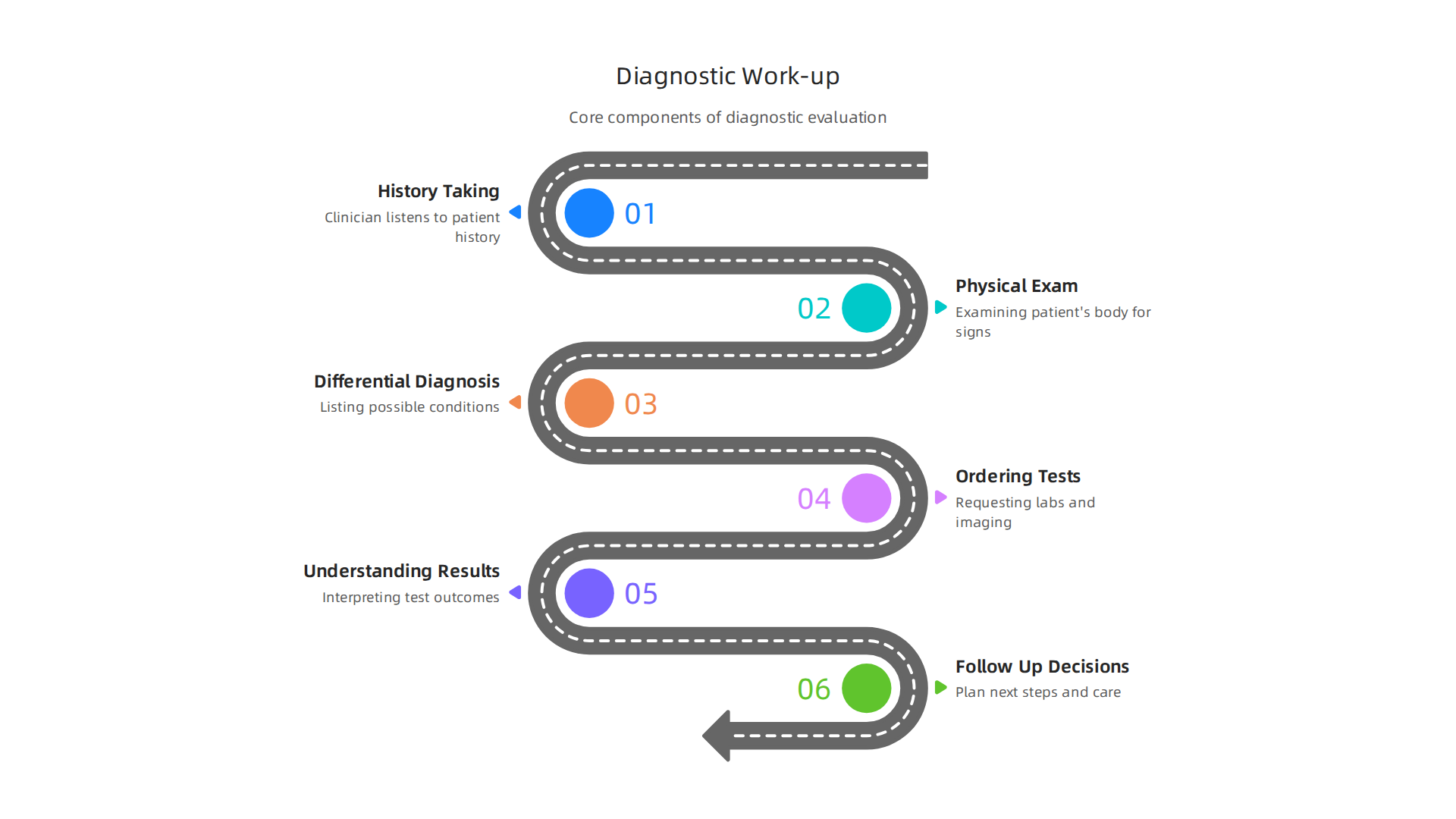
- Talking to the Patient (History-Taking): This is often the first step. Doctors listen carefully to the patient about how they feel, what hurts, and when it started. They might ask about past illnesses or family health problems. For example, if a patient has confusion or a change in their usual behavior, doctors will ask many questions to understand the situation better, gathering important facts for the diagnostic plan.
- Checking the Patient (Physical Exam): After talking, the doctor will check the patient’s body. They might listen to the heart, feel the tummy, or check reflexes. This helps them find clues about the problem. For instance, when looking at a patient with altered mental status, a doctor would do a careful physical exam to find important signs that could point to the cause Altered Mental Status – Inpatient Templates and Pearls.
- Thinking About Possible Problems (Differential Diagnosis): With all the information from talking and checking, doctors think of a list of possible health problems. It’s like being a detective with several suspects. They use their knowledge to narrow down the list.
- Ordering Tests: To confirm what’s wrong, doctors will order tests. These could be blood tests, X-rays, or other scans. For example, if someone has a problem like a blood clot in the lung, doctors follow clear guidelines to decide which tests, like a CT scan, are needed to confirm it 2026 PE Guidelines. For conditions like coronary heart disease (CHD medical abbreviation) or chronic lymphocytic leukemia (CLL medical abbreviation), specific tests are vital.
- Understanding Results (Interpretation): Once the tests are done, doctors look at the results. They figure out what the numbers and pictures mean for the patient’s health.
- Deciding Next Steps (Follow-up Decision Rules): Finally, based on everything they’ve learned, doctors decide the best way to help the patient. This might be medicine, a special diet, or more tests. This process is very important for all kinds of health issues, including polymyalgia rheumatica (PMR medical abbreviation).
How Work-Ups Change in Different Places
Diagnostic work-ups aren’t always the same. They change depending on where you are and how urgent the problem is:
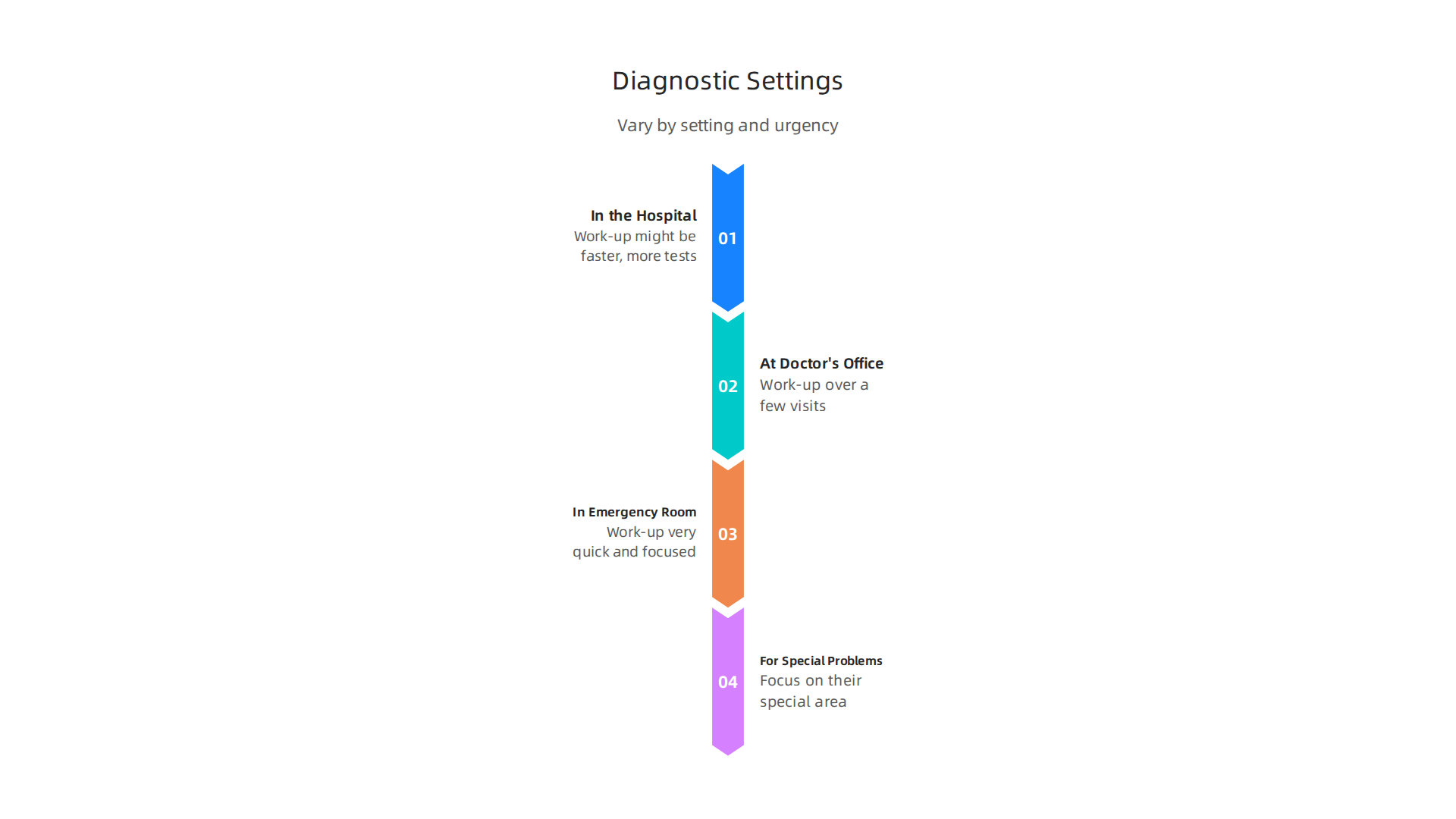
- In the Hospital (Inpatient): If someone is very sick and needs to stay in the hospital, the work-up might be faster and include more tests. This is because they need quick answers to start treatment.
- At the Doctor’s Office (Outpatient): For less urgent problems, the work-up can happen over a few visits. Doctors might start with simple tests and add more if needed.
- In the Emergency Room (Emergency): When someone has a sudden, serious problem, like chest pain, the work-up is very quick and focused. The goal is to find life-threatening issues right away.
- For Special Problems (Specialty Settings): If you see a heart doctor or a cancer doctor, their work-up will focus on their special area. They will use very specific tests for those kinds of problems.
No matter the setting, making sure these steps are well-designed is key. This helps doctors make the right diagnosis every time, which is part of a complete "work ups healthcare bourbon" approach to care. When doctors and other healthcare staff understand these parts, it helps them work together better. It also helps patients get the right care, especially when dealing with confusing medical terms. Learning about The Dangers Of Medical Abbreviations And Solutions For Patient Safety can help everyone involved.
Clinical roles and workflow: who does what during a work-up
After understanding the steps in a diagnostic work-up and how they change depending on the situation, let’s look at the people involved. Many different healthcare workers come together to make sure a patient gets the right diagnosis.

It’s like a team all working on the same puzzle. This teamwork is a big part of successful "work ups healthcare bourbon" efforts.
Here are the main roles and what they do:
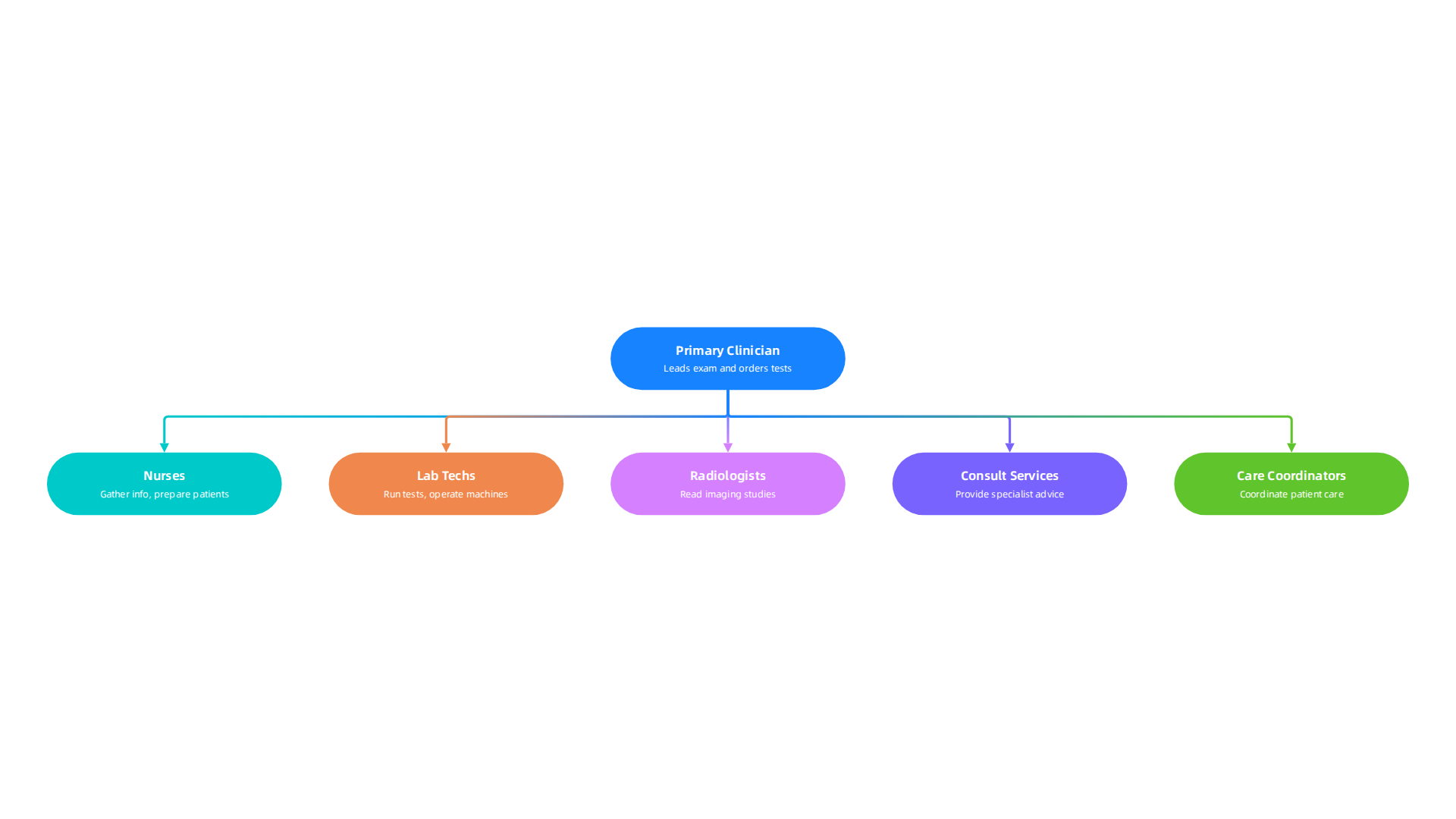
- Primary Clinician (Doctor or Nurse Practitioner): This person is often the leader of the work-up. They are the ones who first talk to the patient, do the physical exam, and think about the possible problems. They decide which tests are needed and then interpret the results. For complicated cases, they might consult other specialists.
- Nurses: Nurses play a very important part. They help gather information from the patient, prepare them for tests, and keep track of their condition. They also make sure the patient understands what is happening and help communicate between different doctors and departments.
- Lab and Diagnostic Technicians: These are the experts who run the tests. Lab techs handle blood, urine, and other samples to check for things like signs of chronic lymphocytic leukemia (CLL medical abbreviation) or other issues. Diagnostic techs operate machines for X-rays, CT scans, and ultrasounds. They make sure the images are clear for the doctors to review.
- Radiologists: These are doctors who specialize in reading images like X-rays, CTs, and MRIs. They look for clues in the pictures to help figure out what’s wrong. Their reports are crucial for conditions like coronary heart disease (CHD medical abbreviation) or to see if there’s a problem in the lungs.
- Consult Services: Sometimes, the primary clinician needs help from a specialist. For example, if a patient has a heart problem, a heart doctor might be called in. If it’s a bone or joint issue, a rheumatologist might help, especially for conditions like polymyalgia rheumatica (PMR medical abbreviation). These specialists give expert advice and sometimes suggest more specific tests.
- Care Coordinators: These people help patients move through the healthcare system smoothly. They might help schedule appointments, make sure all test results are gathered, and explain what comes next.
Where Things Can Get Tricky: Handoffs and Decisions
In any team effort, there are times when information passes from one person to another. These are called "handoffs." For example, when a patient moves from the emergency room to a hospital floor, the ER doctor gives all the patient’s information to the hospital nurse and doctor. This is a crucial moment. If information is not shared clearly, it can lead to delays or mistakes.
"Decision nodes" are points in the work-up where a choice must be made. For instance, deciding if a patient needs a CT scan right away or if a simpler test is enough. These decisions need good communication and clear guidelines. When these guidelines are well-followed, it helps avoid issues. New tools, including artificial intelligence (AI), are starting to help doctors and their teams with these decisions. In fact, AI is showing promise in improving how doctors make diagnoses, especially in reviewing medical images and patient data The Role of Artificial Intelligence in Revolutionizing Diagnosis. These new technologies are part of the larger Healthcare Technology Trends 2026 Reshape Medicine and Patient Care.
The goal of a good workflow is to make these handoffs and decision points as smooth as possible. When everyone knows their role and communicates well, patients get faster, safer, and better care.
Get clear daily AI updates from The AI Newsletter Worth Reading.
Common diagnostic pathways by presentation: examples and decision points
Now that we know who does what in a diagnostic work-up, let’s look at how doctors often approach common patient problems. These are like roadmaps that help healthcare teams figure out what’s wrong quickly and correctly. A good "work ups healthcare bourbon" process uses clear pathways to guide care.
Here are some common starting points for these pathways:
Chest Pain
When someone comes in with chest pain, it’s a serious matter because it could mean a problem with the heart. The first steps are often very quick.
- Quick Check-up: Doctors and nurses will check vital signs and do an electrocardiogram (ECG) right away. This test looks at the heart’s electrical activity. They’ll also ask many questions about the pain itself.
- Blood Tests: Blood tests are done to look for signs of heart muscle damage. Depending on the results and other factors, doctors decide if the patient needs more tests, like imaging, or if they can be sent home safely.
- Decision Points: One important decision is whether the pain is "cardiac," meaning related to the heart, or from something else. The pathway for chest pain aims to quickly find or rule out serious heart issues, like what the 2022 ACC Expert Consensus Decision Pathway helps guide. Sometimes, pathways also help decide if someone has coronary heart disease (CHD medical abbreviation). New guidelines are always coming out to help with these decisions, such as those from the AHA and other groups for chest pain evaluation.
Altered Mental Status
When someone’s mind isn’t working right or they are confused, doctors call it "altered mental status." This also needs fast action.
- Initial Assessment: The healthcare team will check basic things like breathing, blood pressure, and blood sugar. They’ll talk to family members to understand what’s normal for the patient and when things changed.
- Lab Work and Imaging: Many things can cause altered mental status, from infections to strokes. Doctors will order blood tests (like a complete blood count or CBC) and often imaging like a CT scan of the brain. These help find the reason for the change.
- Specific Pathways: There are specific ways to check for different causes. For example, if poisoning is suspected, doctors follow a pathway for toxic alcohol exposure. You can find more details about such care in Altered Mental Status inpatient templates and pearls.
Fever
Fever is a common sign of illness. When a fever is high or lasts a long time, it can signal a more serious problem.
- Finding the Source: Doctors will look for where the infection might be. This means checking the lungs, throat, and tummy. They will also ask about recent travel or sickness around others.
- Tests to Pinpoint: Blood and urine tests are standard. Sometimes, cultures are taken from blood or other body fluids to see what germs are causing the fever.
- Impact on Care: Well-designed pathways for fever help doctors decide quickly if antibiotics are needed or if the patient needs to stay in the hospital.
How Pathways Improve Healthcare
The way these pathways are set up really changes how fast and well patients get help.
- Better Test Use: Good pathways mean fewer unnecessary tests. This saves money and time. It also means patients aren’t exposed to tests they don’t need.
- Faster Diagnosis: When doctors follow a clear path, they can reach a diagnosis much faster. This is important because quicker diagnosis often means quicker treatment and better results. For example, getting lab results back quickly, known as turnaround time, is crucial. In January 2026, the average waiting time for many diagnostic tests was about 2.6 weeks, but for urgent tests, laboratories aim to respond much faster to avoid delays Diagnostic Waiting Times and Activity Report.
- Smoother Care After Diagnosis: Once a diagnosis is made, the pathway helps guide the next steps in treatment and follow-up care. This makes sure patients keep getting the right care. Improving how patients move from one care setting to another is a key area where technology, regulation, and strategy improve patient handoffs.
When hospitals and clinics use these clear diagnostic pathways, it helps everyone on the team work better together. This leads to safer and more effective care for all patients.
Moving from the pathways that guide decisions, let’s now look closer at the actual tools doctors use. These tools are tests that help doctors complete their "work ups healthcare bourbon" and figure out what’s going on inside the body. We’ll talk about lab tests, imaging, quick point-of-care tests, and even genetic tests. Each type has its own good points and things to watch out for.
Laboratory Tests
Lab tests are often the first step in understanding a patient’s health. These tests use blood, urine, or other body fluids to find clues.
- What they do well: Lab tests can check for many things, like infections, how well organs are working, or if there are signs of diseases such as coronary heart disease (known as CHD medical abbreviation). They give very detailed information.
- What’s tricky: Sometimes, samples need to be sent to a main lab, which can take time. This waiting period is called "turnaround time." For urgent lab tests, hospitals try to get results back very fast. In 2026, many labs were doing well with their turnaround times, according to a Pathology User Survey Report 2025/6. For all samples, the median turnaround time for lab results was about 4 hours and 38 minutes in one study from 2026, covering biochemistry and hematology tests specifically Turnaround Time of Laboratory Investigations and Factors.
- Reading the results: Doctors need to carefully look at the numbers. Sometimes, a test might seem off, but it’s normal for that person.
- Too many or too few? It’s a balance. Ordering too many tests can waste money and cause worry. Not ordering enough can miss important problems.
Imaging Tests
Imaging tests let doctors see inside your body without cutting you open. Think X-rays, CT scans, and MRIs.
- What they do well: These tests can show broken bones, tumors, or problems with organs. For example, they can help find issues like those related to a PTA medical abbreviation (meaning percutaneous transluminal angioplasty), which is a procedure that clears blockages in blood vessels, often diagnosed with imaging.
- What’s tricky: Imaging can be costly, and some tests use radiation. Also, getting an appointment for some imaging tests can mean waiting. The time from when a test is asked for to when it’s done can change a lot. For example, in October 2025, waiting times varied greatly for different types of imaging tests Diagnostic Imaging Dataset Statistical Release. Hospitals like those in Leicester, UK, measure their CT scan performance, doing about 2 to 2.5 scans per hour in early 2026 Decision/Approval Assurance X Update Which Group.
- Reading the results: Special doctors called radiologists are trained to read these images and find problems.
- When to use them: Doctors try to use imaging only when it’s really needed, to avoid unnecessary costs or radiation exposure.
Point-of-Care (POC) Testing
POC tests are fast tests done right where you are, like in a doctor’s office or even at home.
- What they do well: They give quick results. Imagine a quick blood sugar check for a person with diabetes or a flu test at the clinic. These tests usually give results in less than an hour, sometimes even within minutes. For near-POC tests, results can often be returned to the clinic within one day Evaluating the Clinical, Economic, and Societal Value of.
- What’s tricky: While fast, POC tests might not always be as detailed or precise as lab tests.
- Reading the results: The results are often simple to understand, but doctors still need to make sure they’re using the right test for the right situation.
Genomics (Genetic Testing)
Genomic tests look at your genes to find out about your health risks or how you might react to certain medicines.
- What they do well: These tests can find hidden dangers, like a higher chance of getting certain cancers, or help doctors choose the best treatment for you. This kind of testing is becoming more important for conditions like chronic lymphocytic leukemia (known as CLL medical abbreviation) or polymyalgia rheumatica (known as PMR medical abbreviation), where genetic factors can play a role.
- What’s tricky: Genomic tests can be expensive, and getting the results can take a long time. Also, understanding what the genetic information means can be very complex, often needing help from special genetic counselors.
- Reading the results: This is highly specialized work. The results can be hard to understand and can sometimes lead to tough choices.
Making the Best Use of Tests
No matter the type of test, making sure they are used wisely is key. Doctors and healthcare systems work to find the right balance, so patients get all the necessary tests without getting too many. This involves having clear rules for when to order tests and making sure all staff know these rules. Technology helps a lot in improving how tests are managed and ensuring that results are shared quickly and safely. Learning about new ways to use technology in healthcare can help improve how we use these diagnostic tools. For more details on the big picture, check out Healthcare Technology Trends 2026 Reshape Medicine and Patient Care. Using digital solutions can truly elevate care and boost efficiency, as seen in the Digital Transformation in Large Health Systems Elevates Care and Boosts ROI.
To stay on top of the latest advancements in AI and technology that are shaping the future of diagnostics and healthcare, don’t miss out. Get clear daily AI updates from The AI Newsletter Worth Reading.
Digital tools and smart computer programs are changing how doctors figure out what’s wrong with us. These new tools help doctors with their important patient work ups healthcare bourbon by making diagnostic tests faster and more exact. They come in different types, or "tranches," and are at different stages of being ready for everyday use.
Different Kinds of Digital Tools
Here are some ways digital tools and AI help in finding out what’s going on with your health:
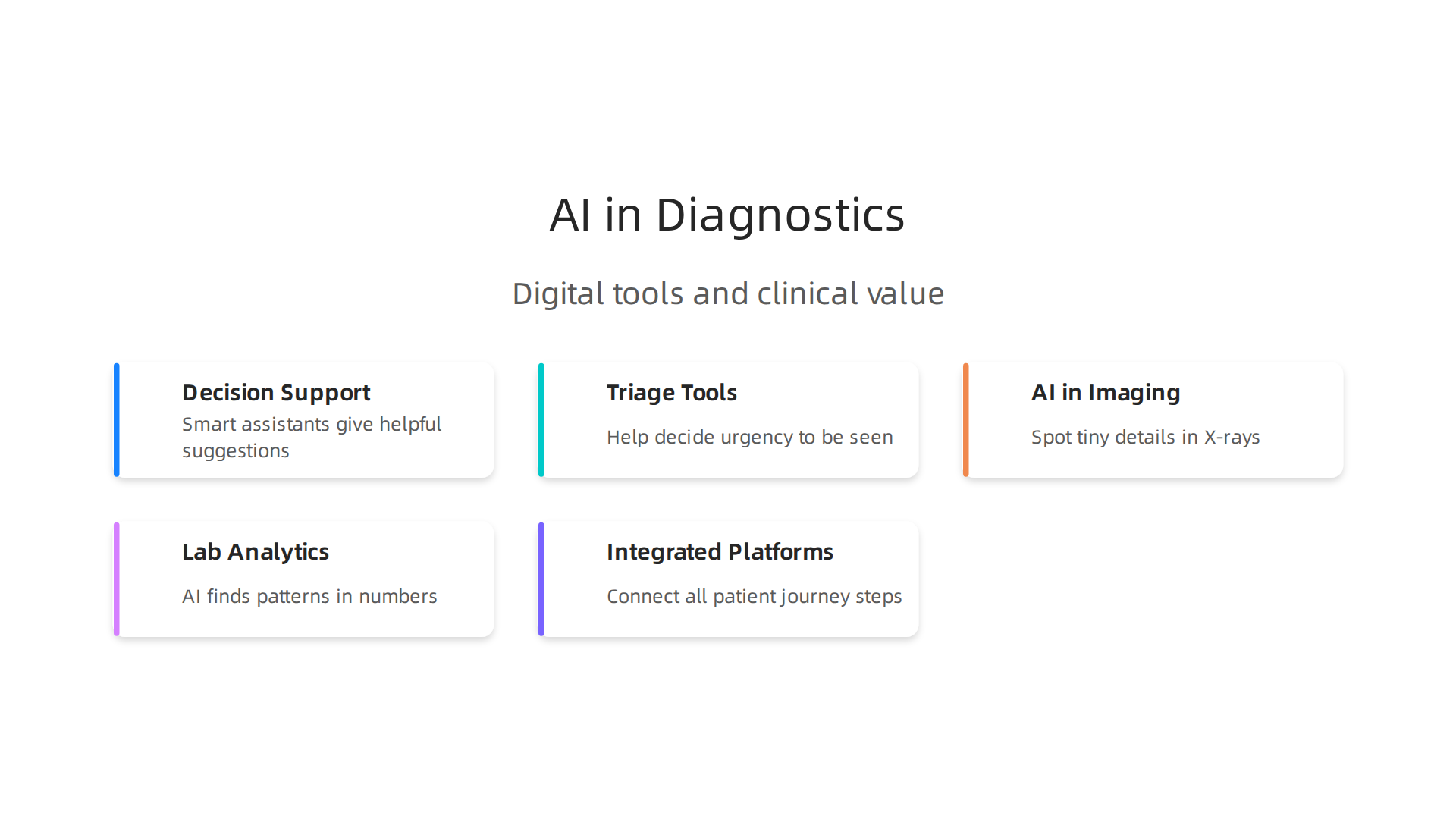
- Decision Support Systems: These are like smart assistants for doctors. They look at all your health information, like past illnesses, test results, and symptoms, and then give doctors helpful suggestions. This helps doctors make the best choices for your care.
- Triage Tools: When you go to a clinic or emergency room, these digital tools help decide how urgently you need to be seen. They quickly sort patients to make sure those who are most sick get help right away. Experts even have a special framework called TRIAGE to make sure these tools are reliable for real clinical use TRIAGE: Trustworthy Reporting and Assessment for Clinical Gain.
- AI in Imaging Analysis: This is a big one. Artificial intelligence can look at X-rays, CT scans, and MRI pictures. It can spot tiny details or problems that might be hard for a human eye to see. Many studies show that AI models are very good, sometimes even better than doctors, at finding issues in radiology images Artificial Intelligence in Clinical Decision-Making: A Systematic Review.
- Lab Analytics: After you give a blood or urine sample, AI can help look at the results. It can find patterns or risks in the numbers that might tell doctors more about your health. This helps connect all the small pieces of information. For more information on using technology to help healthcare operations, consider looking at New Technology in Healthcare: The 2026 Strategic Playbook for Leaders.
- Integrated Care-Pathway Platforms: These are big digital systems that connect all the steps of a patient’s journey, from tests to treatments and follow-up. They make sure that every doctor, nurse, and specialist involved in your care has the latest information.
How Ready Are These Tools?
Not all digital tools are at the same stage of development:
- Clinically Validated Tools: Some tools have been tested a lot and shown to work well and safely in real hospitals. These are used every day. In 2026, many reports showed how much AI is being studied in medicine, with over 500 clinical AI studies being reviewed by leading groups Medicine – hai.stanford.edu.
- Experimental Tools: Others are newer and still being tested. They show promise but need more study to make sure they are accurate and fit into how doctors work without causing new problems.
- What It Takes to Use Them: For these tools to truly help, hospitals need good quality patient data. The tools also need to fit smoothly into the way doctors and nurses already do their jobs. It’s also very important to have clear rules about how these smart tools are used and who is responsible for their results. Even with all the advances, more testing is needed to make sure AI tools can be used everywhere in healthcare and help everyone Advancements in Artificial Intelligence-Based Diagnostic Tools Used in Healthcare.
The goal is to use these digital tools to make diagnostic processes faster, more exact, and safer for everyone. Understanding the different kinds of tools and how ready they are helps healthcare leaders make smart choices about using them.
After we pick the right digital tools, the next big step is to bring them into our healthcare system smoothly.

This means making smart changes, checking how well things work, and making sure everything is safe. Thinking about the whole process for patient work ups healthcare bourbon requires a clear plan.
Implementing efficient work-ups: change management, measurement, and risk controls
Putting new tools to work in healthcare is like following a recipe. You need steps to make sure it comes out right. Here is how healthcare organizations can do it:
-
See Where You Stand First (Baseline Measurement)
Before changing anything, you need to know how things are right now. How long do patients usually wait for important tests? For example, in January 2026, the average waiting time for 15 common diagnostic tests in England was about 2.6 weeks Diagnostic Waiting Times and Activity Report. For laboratory tests, the time to get results can be around 4 hours and 38 minutes Turnaround Time of Laboratory Investigations and Factors. Knowing these numbers helps you see if new tools make things better. -
Plan How It Will Work (Design)
Next, draw out exactly how the new digital tools will fit into daily tasks. Who will use them? How will they connect with other computer systems? This step involves looking at the whole patient journey, from when a doctor orders a test to when the results come back. One case study showed that mapping the entire pathway was a key first step for understanding data collection and planning improvements Case study – Setting up an ‘implementation and governance …’. -
Try It Out Small (Piloting)
Don’t roll out new tools everywhere at once. Test them in a small group or department first. This helps find any problems early on without causing big trouble for everyone. It’s a chance to learn and fix things before going big. Studies are even looking into how well conversational AI works in real clinics Exploring the feasibility of conversational diagnostic AI in a …. -
Set the Rules (Governance)
This is very important. You need clear rules about how these new digital tools are used, who is in charge, and who is responsible if something goes wrong. A good plan makes sure everyone knows their role. For instance, a 2026 national model provides a practical guide for setting up clinical governance to ensure safety and quality 2026 National Model for Clinical Governance: Practical guide …. It also helps avoid mistakes, like misreading common terms such aschd medical abbreviationorcll medical abbreviation, by making sure the tools and staff communicate clearly. Good governance means setting up strict checkpoints. -
Grow It Bigger (Scale)
Once the small test works well and everyone understands the rules, you can slowly use the tools in more parts of the hospital or healthcare system. This careful growth helps keep things running smoothly. For more ideas on improving how health systems operate, check out The Unified Operational Playbook Elevates Health System Performance for 2026.
How We Measure Success
To know if these changes are truly helping with patient diagnostic work ups, we look at three main things:
- Timeliness: How quickly do patients get their tests and results? Faster times often mean faster care.
- Accuracy: Are the diagnoses correct? We need to make sure the digital tools help doctors be even more exact.
- Appropriateness: Are we doing the right tests for the right reasons? This helps avoid unneeded tests and saves time and money.
Keeping Things Safe and Under Control
Managing risks is key. This means always checking the tools, making sure they follow all the laws, and protecting patient information. It also involves making sure that medical terms, like pmr medical abbreviation or pta medical abbreviation, are used consistently and correctly by both humans and digital systems to prevent errors. Clear communication is a big part of patient safety. You can learn more about this by reading about The Dangers of Medical Abbreviations and Solutions for Patient Safety.
By following these steps, healthcare can make sure new digital tools truly improve how we find out what’s wrong and help patients get better, faster.
Want to stay informed about how AI is shaping the future of healthcare and beyond?
The AI Newsletter Worth Reading
Summary
This article explains why high-quality diagnostic work-ups are essential for better patient outcomes and more efficient health systems in 2026. It walks through the core components of a modern work-up—history, exam, differential, testing, interpretation, and follow-up—then shows how pathways differ by setting (ER, inpatient, outpatient, specialty). The guide outlines who’s involved (clinicians, nurses, lab techs, radiologists, care coordinators) and common pathways for chest pain, altered mental status, and fever. It compares test types (lab, imaging, point-of-care, genomics), explains where digital tools and AI add value, and gives practical steps for implementing technology safely: baseline measurement, design, piloting, governance, and scaling. The piece highlights measurable goals (timeliness, accuracy, appropriateness) and stresses risk controls like clear handoffs and avoiding unsafe abbreviations, so leaders can improve diagnostic speed, quality, and cost-effectiveness.