


In 2026, a big change is happening in healthcare. What was once only talked about in labs and research papers is now becoming real. Artificial intelligence, or AI, is moving from being just a cool idea to actually helping doctors, nurses, and other healthcare workers every single day.

Health leaders really need to understand the many medical benefits of AI to keep up.
These new AI tools, called AI-driven decision support systems, are like smart helpers for healthcare teams. They look at lots of information very quickly. This helps improve how fast and how well doctors can figure out what’s wrong with a patient. For example, AI can help a mammography technologist spot tricky signs in X-rays, making it easier to find problems early. Studies show that AI can be very good at helping with diagnostics, even as good as or better than human experts in some areas, especially in imaging and skin conditions. One review found that AI in point-of-care imaging showed promising diagnostic accuracy and could help shift tasks with minimal training needed, making healthcare more efficient AI in Point-of-Care Imaging for Clinical Decision Support.
The main reason for using AI is to make care better and more even across all hospitals and clinics. This means faster and more accurate diagnoses, which can lead to better treatment plans. It also helps make sure that every patient gets the same high level of care, no matter where they are. For those involved in the nursing process, AI can support consistent decision-making, ensuring that patient care plans follow best practices reliably. This helps medical staff use their time more wisely and focus on what patients need most.
To stay updated on the latest breakthroughs and practical applications of AI in healthcare, consider exploring a valuable resource.
The AI Newsletter Worth Reading
How AI changes diagnostic accuracy and clinical confidence
Building on the idea of AI as a smart helper, these systems are making a big difference in how doctors find out what’s wrong with patients. One of the clearest medical benefits of AI is how it improves diagnostic accuracy. This means getting the right diagnosis more often and more quickly, which is super important for good patient care.
When we talk about better diagnosis, two important words come up: sensitivity and specificity.
- Sensitivity means how good a test or tool is at finding real problems when they are actually there. A high sensitivity means fewer missed cases.
- Specificity means how good a test or tool is at correctly saying there is no problem when there truly isn’t one. High specificity means fewer false alarms.
In areas like imaging and looking at tissue samples (pathology), AI models are showing really strong results. For instance, in 2026, many studies highlight AI’s impressive performance in specialties like radiology and dermatology. AI models often show high sensitivity, up to 97%, and high specificity, up to 93%, in helping spot conditions in these areas. This level of accuracy can sometimes be just as good as, or even better than, what human doctors achieve alone, especially in reading medical images and examining skin conditions Artificial Intelligence in Clinical Decision-Making. This means AI can help make sure fewer diseases go unnoticed or are wrongly identified.
Beyond just accuracy, AI also makes a big difference in how confident doctors feel about their diagnoses.

Think of AI as an extra set of expert eyes. When a doctor gets a complex case, having an AI system review the information can act like a reliable second opinion. This helps doctors feel more sure about their decisions, especially in cases where the stakes are very high. When doctors are more confident, they can move forward with treatment plans more quickly and with less worry.
This newfound confidence doesn’t just come from better accuracy. AI also helps by handling some of the routine, time-consuming tasks. By taking over these parts of the job, AI reduces the amount of stress and mental effort doctors have to put in. This lets them focus more on the patient and the trickier parts of diagnosis.
However, it’s not all about the machines. While AI brings huge medical benefits of AI, the human touch remains key. Healthcare professionals still need proper training to use these AI tools effectively. A study from 2025 found that while AI clearly helps with accuracy and efficiency, concerns still exist about losing the "human touch" in care. The study also highlighted how important it is for all medical staff to get good training on AI to build their knowledge and trust in these new tools Clinical perspectives on AI integration: assessing readiness and …. This helps bridge the gap between advanced technology and practical patient care.
AI systems don’t just help doctors be more accurate. They also make healthcare much faster.
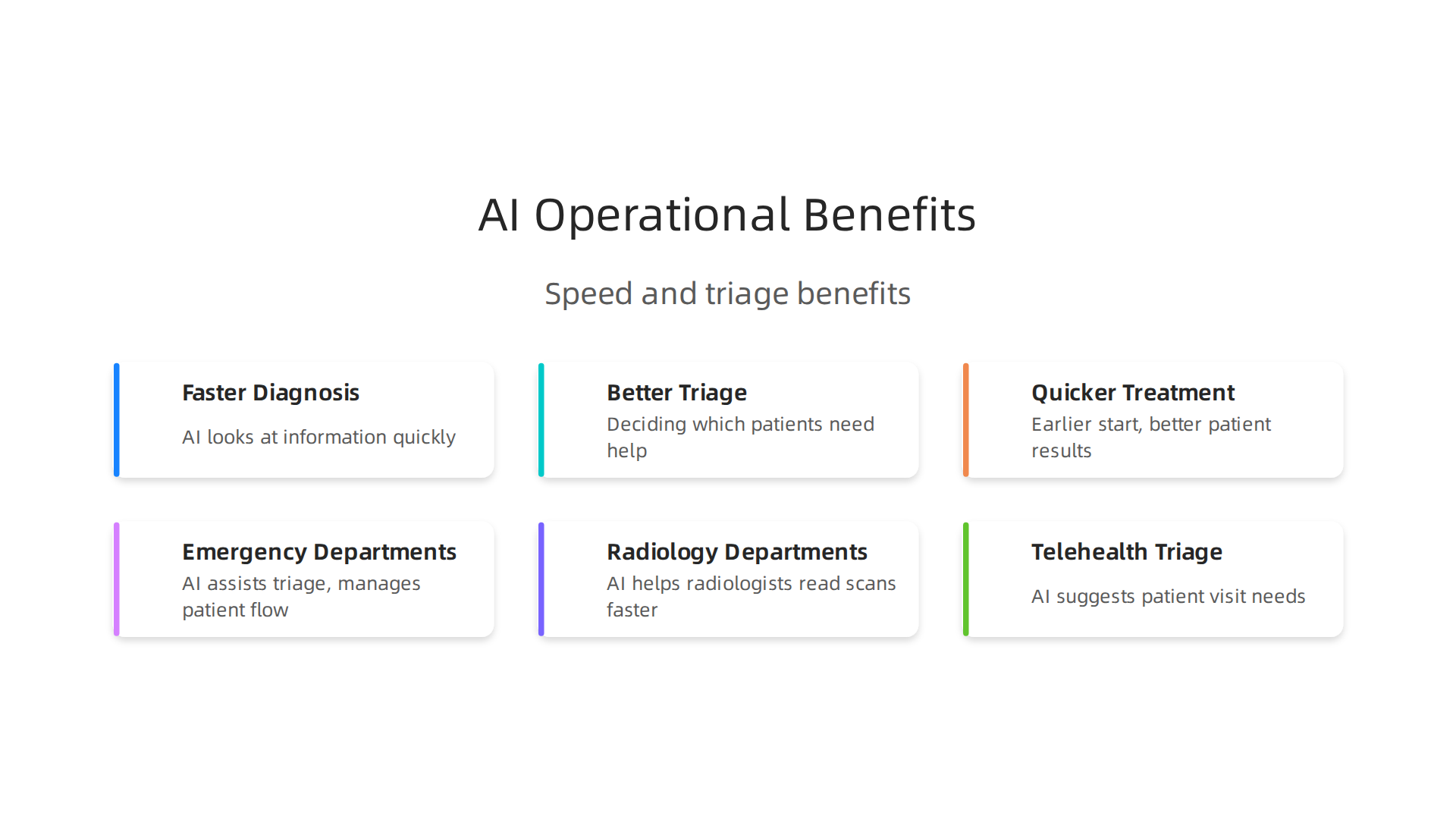
This speed brings many medical benefits of AI, especially in how quickly patients get diagnosed, how care is organized (triage), and how fast treatment can start.
Making Things Faster for Patients
Imagine going to the emergency room or needing a special scan. Time is often very important. AI helps cut down the waiting time in a few key ways:
- Faster Diagnosis: AI can look at lots of patient information very quickly. This includes scans like X-rays or MRI images, and even notes from doctors. By sifting through this data so fast, AI helps doctors get a diagnosis much sooner. For example, in radiology, AI can highlight problem areas in images, helping a
mammography technologistor radiologist review studies more efficiently. This quick check means patients can get results and a treatment plan without long delays. Integrating AI with electronic health record (EHR) systems helps speed up decision-making and data analysis AI in EHR Systems (2026): Use Cases, Costs & Guide. - Better Triage: Triage is about deciding which patients need help first. In busy places like emergency departments (EDs) or urgent care clinics, AI can quickly look at a patient’s symptoms and health history to figure out how serious their condition is. This helps nurses and doctors prioritize care, making sure the most critical patients get attention right away. Think of it like a smart sorting system for health. For insights into efficient patient care, you can learn more about Novant Health urgent care strategy.
- Quicker Treatment: When diagnosis is faster and triage is better, treatment can start sooner. This is a huge benefit because starting treatment early can lead to much better results for many health problems. For instance, in 2026, AI-integrated systems in hospitals are designed to make clinical workflows smooth. This means that once a problem is identified, the next steps for treatment can be planned and started without unnecessary delays AI-integrated clinical decision support systems for precision ….
How AI Helps Operations in Healthcare
These faster processes also have big effects on how hospitals and clinics run.
- Emergency Departments (EDs): With AI assisting in triage, EDs can manage patient flow better. This reduces overcrowding and ensures resources like beds and staff are used where they are most needed.
- Radiology Departments: AI helps radiologists read scans quicker. This means more patients can get their imaging done and reviewed in less time, reducing backlogs and speeding up overall care.
- Telehealth Triage Systems: For virtual doctor visits, AI can help patients quickly share their symptoms. The AI then suggests if they need an in-person visit, can wait for a virtual appointment, or if it’s an emergency. This makes telehealth even more useful and efficient.
AI doesn’t just improve specific tasks. It helps the whole nursing process by providing quick data and insights, allowing nurses to focus more on direct patient care. It also helps with the larger flow of patients through a hospital, impacting areas like surgery scheduling and the work of specialists such as anesthesiologist assistant programs in ensuring smooth operating room transitions. This constant drive for efficiency is a significant part of the overall mastering modern diagnostic work ups that technology helps achieve.
While AI offers many benefits to healthcare, making things faster and more accurate, it’s also very important to talk about the rules that keep it safe.

Just like any new tool in medicine, AI systems need clear guidelines to make sure they work correctly and don’t cause harm. This includes how they are approved for use and who is responsible if something goes wrong.
Regulatory Frameworks for Clinical AI
Governments and health groups are working hard to put rules in place for AI in medicine.
These rules help everyone understand how AI should be designed, tested, and used.
- In the United States, the FDA (Food and Drug Administration) plays a big role. The FDA looks at AI systems that are like medical devices. They classify these AI tools based on how risky they might be. For example, AI that helps with serious decisions, like diagnosing cancer, might need more checks than AI that just helps organize patient data. The FDA also has special guidelines for software that helps doctors make decisions, called Clinical Decision Support (CDS) software Clinical Decision Support Software Guidance. In 2026, the FDA continues to refine its approach, providing recommendations on using AI to support decisions about drug safety and quality Considerations for the Use of Artificial Intelligence. This ensures a strong focus on real-world safety even after approval How the FDA Regulates Clinical AI: From Approval to Real-World Safety.
- In Europe, the EU has strong rules like the Medical Device Regulation (EU MDR) and the Artificial Intelligence Act. These laws classify AI systems by how risky they are. AI used for diagnosis or treatment is often seen as high-risk, meaning it needs very strict testing and proof that it works well. You can find more details about these global rules in guides about Medical AI Compliance: Global Regulations & Approval.
- Patient Privacy is Key: No matter where AI is used, protecting patient information is critical. Laws like HIPAA in the US make sure that AI systems handle personal health data with great care, just like human doctors and nurses do. This means strong security measures are needed to keep sensitive health information safe AI Compliance in Healthcare: Key Requirements. Understanding these local and international regulations is crucial for any health system using new technology, including those guided by Texas Medical Board Regulations 2026.
Key Safety and Liability Risks
Even with rules, health systems must think about some important risks before using AI widely.
- Bias in AI: AI learns from data. If the data it learns from has unfair patterns or is missing information about certain groups of people, the AI might make unfair or wrong decisions for those groups. This is called bias, and it can affect patient care.
- Need for Human Oversight: AI tools are meant to help doctors, not replace them. It’s important to have trained healthcare professionals who can review AI’s suggestions and make the final decisions. This human check is a key safety net.
- Ongoing Monitoring: Once an AI system is in use, it needs to be watched closely. Over time, an AI’s performance might change because of new patient data or small shifts in how it works. This "drift" means continuous checking is needed to ensure the AI stays accurate and safe. This post-market surveillance is crucial for clinical AI, as explained in resources like Continuous assurance for AI-driven clinical decision support systems.
- Who is Responsible?: If an AI system makes a mistake that harms a patient, who is at fault? Is it the developer of the AI, the hospital that uses it, or the doctor who followed its advice? These questions about liability are complex and health systems need clear plans in place.
Looking at these regulatory and safety issues helps ensure that the many medical benefits of AI are brought to patients in a careful and trustworthy way. It’s all about making sure these smart tools are used for good.
Stay informed about the fast-changing world of AI in healthcare and beyond. Get clear daily AI updates by subscribing to The AI Newsletter Worth Reading.
After making sure that AI in medicine is safe and follows rules, the next big step is to actually put these smart tools into daily hospital work. This means smoothly bringing AI into Electronic Health Records (EHRs) and other systems doctors and nurses use every day. The goal is to use the great medical benefits of AI to help care for patients better, without making things more complicated for busy healthcare workers.
Integrating AI into EHRs and clinical workflows: practical best practices
Bringing AI into how doctors and nurses work needs careful planning. We want AI to make their jobs easier, not add to their stress. Here are some key ways to do this right.
Making AI Part of the Daily Flow
For AI to truly help, it must fit right into the existing flow of patient care. This means AI tools should connect directly with Electronic Health Records (EHRs). EHRs are like digital folders that hold all of a patient’s health information. When AI links with EHRs, it can look at things like test results, past visits, and notes, and then offer helpful insights directly to the care team. This connection allows AI to automate tasks like documentation and give quick insights to help with decisions, leading to important clinical care technology innovations.
Healthcare organizations are focusing on making these systems work together, setting up a strong base for data sharing across different parts of a hospital AI-integrated clinical decision support systems for precision. In 2026, many EHR systems, like Epic and Cerner, use special tools to let third-party AI apps securely pull patient data and send back useful suggestions or alerts. This helps improve things like pediatric scheduling and pre-surgical checks 10 Clinical Decision Support System Examples That.
Speaking the Same Language: Interoperability and Data Quality
For AI to work well with EHRs, all the computer systems must be able to "talk" to each other. This is called interoperability. It means using common standards, like HL7 FHIR, so that different health apps and devices can share patient data easily and securely. Without good interoperability, AI can’t get all the information it needs, and its suggestions might not be as good. Many EHR companies now have ways for AI apps to link up and share information safely The Evolution of AI in Clinical Decision Support Systems.
Also, the information AI learns from must be very good. If the data in the EHR is messy or incomplete, the AI’s suggestions might be wrong. So, making sure data is clean, accurate, and complete is a big step for reliable AI performance. This also helps with the nursing process by making sure nurses have the best information to care for patients.
Avoiding Too Many Alarms: Reducing Alert Fatigue
One challenge with putting new tech into healthcare is "alert fatigue." This happens when doctors and nurses get too many alerts or pop-up messages from different systems. They might start to ignore them, which can be dangerous. For AI to be truly helpful, its insights need to be shown in a way that is clear, useful, and doesn’t overwhelm the user.
Best practices show that AI suggestions should be part of the regular workflow and not interrupt it too much. When AI tools are built right into the workflow, they are used more often than tools that are separate or cause interruptions EHR-Integrated Clinical Decision Support 2026. This way, AI acts as a smart assistant, offering help at just the right moment, rather than being a constant distraction. It’s also important to test new AI tools in a safe, practice setting first, before using them with real patients, to make sure they don’t cause unexpected problems Deploying AI-generated configuration changes.
By focusing on these practical steps, health systems can really make the most of the medical benefits of AI. This means AI can help improve patient care, make jobs easier for healthcare workers, and create a better health system for everyone.
The positive changes AI brings also mean that jobs in healthcare will shift. This isn’t about computers replacing people, but about AI helping doctors, nurses, and other medical staff do their jobs better and with less stress. It’s about making sure that the medical benefits of AI help everyone.
AI as a Helper, Not a Replacement
In 2026, AI is mainly seen as a tool that helps healthcare workers, freeing them up for more important patient care. For example, AI can take over many routine tasks that used to take a lot of time. Think about paperwork, scheduling, and organizing patient data. These administrative jobs often keep clinicians away from patients. Studies show that doctors spend nearly twice as much time on paperwork as they do directly helping patients How AI Will Shape the Future of Health Care In 2026.
With AI doing these tasks, healthcare professionals, like a mammography technologist or a nurse managing the nursing process, can spend more time focusing on what really matters: directly caring for people. Many clinicians globally report that AI saves them a lot of time, sometimes more than three full working weeks each year Philips Future Health Index 2026 Global Report. This means they can see more patients or give more detailed attention to those they already have.
New Roles and Skills Needed
As AI takes on certain tasks, new types of jobs and skills are becoming important.

It’s not just about using AI, but also about understanding it, making sure it works right, and overseeing its suggestions. This leads to new "hybrid" roles that mix medical knowledge with tech skills.
For example, we’re seeing a need for people who can check AI systems to ensure they are fair and accurate. There are also jobs for "AI informaticians" who help integrate AI tools smoothly into hospitals. While some worry that AI might make certain skills less important “I Wonder if my Years of Training and Expertise Will be Devalued by Machines”, the main idea is that AI helps shift tasks, not eliminate them. This shift often creates new kinds of jobs that require different skills, rather than replacing entire workforces OECD Artificial Intelligence Papers.
Training for the Future
Because AI is changing how healthcare works, training is super important. Many healthcare workers today feel they haven’t gotten enough training to use AI effectively. A global survey in 2026 found that most healthcare professionals feel their training for AI is not good enough or even missing AI saves clinicians time but most lack training, survey finds.
This means hospitals and schools need to offer more programs that teach people how to work with AI. This includes training for current staff and for students in fields like second degree nursing programs or even anesthesiologist assistant programs. These programs will help everyone understand how AI works, how to use it safely, and how to make the most of its many advantages. Experts say that comprehensive AI training is needed to close knowledge gaps and build trust Clinical perspectives on AI integration.
Want to stay informed on the latest AI advancements that are shaping healthcare?
Get clear daily AI updates from The AI Newsletter Worth Reading.
Measuring ROI: Cost-Effectiveness, Procurement Signals, and Value Realization
After making sure healthcare workers are well-trained to use new AI tools, the next big step is to see if these tools are truly helping. This means looking at the return on investment (ROI). It’s all about figuring out if the money and effort put into AI are bringing real benefits, both financially and in terms of patient care. In 2026, health systems need clear ways to measure the value of AI.
Tracking AI’s Financial Value
One main goal of using AI in healthcare is to save money or make more money.
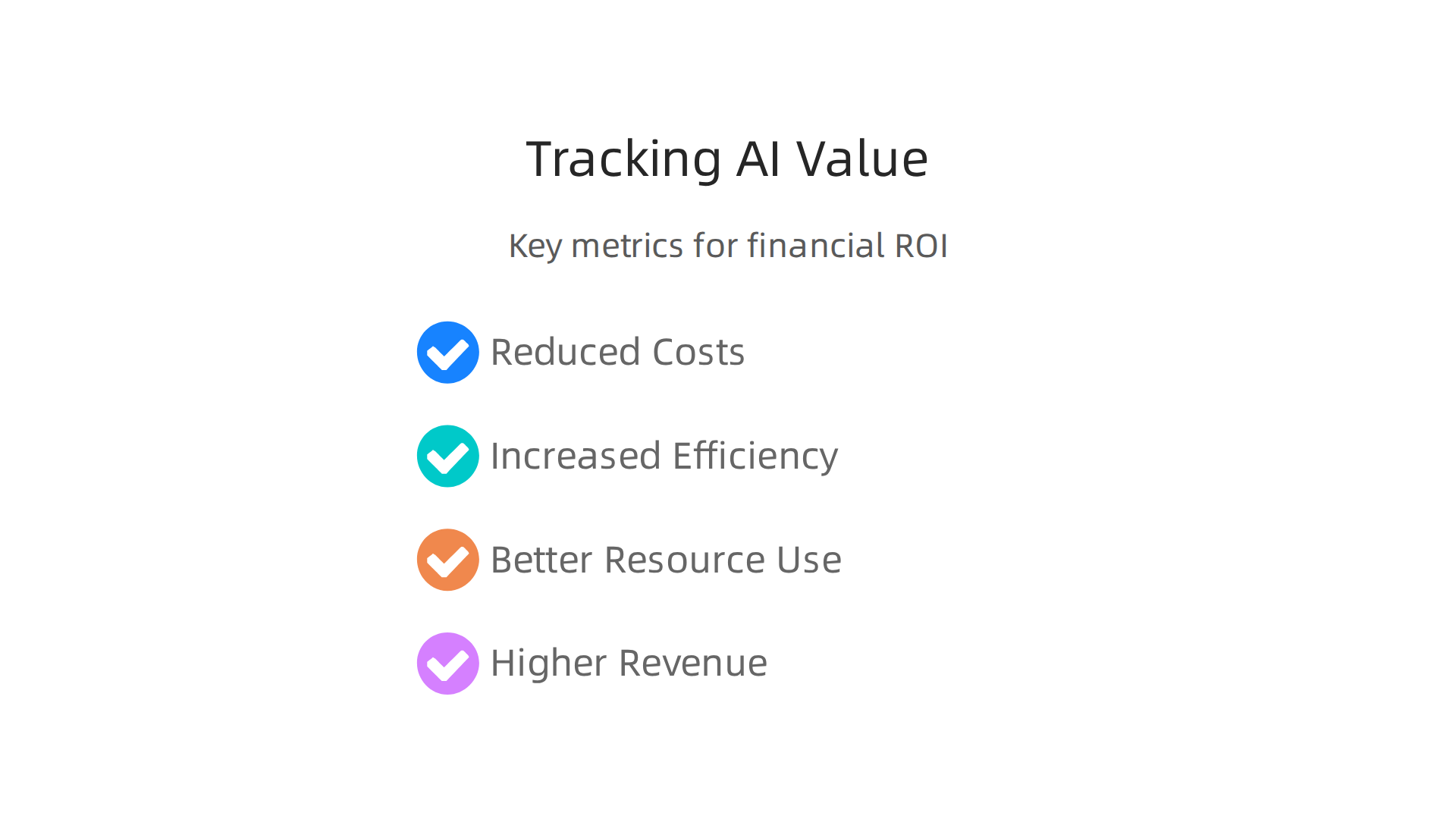
This can happen in a few ways. For example, AI can help reduce unnecessary tests or hospital stays. Some studies show that using AI for things like triage in the emergency room can increase revenue after it’s put in place AI-Based Triage Decision Support: Multisite Economic Study. Other research points to AI being able to lower Medicaid costs by millions of dollars each year by making care more efficient The Impact of Artificial Intelligence on Financial Systems in Healthcare.
Health systems should track things like:
- Reduced Costs: How much money is saved by AI making processes faster or stopping wasteful spending?
- Increased Efficiency: Are tasks like scheduling or data entry happening quicker, freeing up staff for other important work?
- Better Resource Use: Is AI helping manage beds, equipment, or staff more effectively?
- Higher Revenue: Does AI help bring in more patients or improve billing accuracy, leading to more income?
Overall, experts in 2026 believe that using AI can greatly reduce healthcare costs, especially in areas like diagnosis and treatment Economics of Artificial Intelligence in Healthcare: Diagnosis vs. Treatment.
Realizing Clinical Value
Beyond money, the medical benefits of AI also show up in better patient care. This is called clinical value. AI can help doctors and nurses make smarter choices, which leads to better results for patients. For example, AI helps improve how quickly and accurately problems are diagnosed. A systematic review found that AI tools often lead to lower costs and equal or better patient outcomes, especially in fields like oncology, heart care, and eye care Systematic review of cost effectiveness and budget impact of artificial intelligence in healthcare.
This means a mammography technologist might use AI to find issues sooner. Or nurses can use AI to improve the nursing process, making sure patients get the right care at the right time. When AI helps prevent issues or makes treatments more effective, it improves patient health, which is a huge part of its overall value. To understand the full picture, health leaders need to look at both the money saved and the improvements in patient well-being. This requires a clear strategic plan for new technology in healthcare. Find out more in New Technology in Healthcare: The 2026 Strategic Playbook for Leaders.
What to Ask AI Vendors
When health systems look to buy AI tools, they need to be smart buyers. It’s not enough for a vendor to say their AI is good. Buyers should ask for clear proof that the AI will deliver real value. Here are some key questions to ask:
- Has it been tested? Ask for studies or reports that show the AI has worked well in other hospitals or clinics. Look for solid research on its cost-effectiveness Unlocking the Value: Quantifying the Return on Investment.
- What are the exact benefits? The vendor should be able to show specific numbers on how their AI saves money or improves patient outcomes.
- How does it fit with our current systems? Make sure the AI can work smoothly with existing medical software and workflows.
- What training and support are offered? As we know from before, good training is key for success.
- How do you ensure fairness and safety? AI tools, like those used in anesthesiologist assistant programs for decision support, must be fair to all patients and completely safe.
By asking these types of questions, health systems can make sure they are investing in AI solutions that truly boost outcomes and give a good return on investment. This careful approach helps digital transformation in large health systems. Read more about this in Digital Transformation in Large Health Systems Elevates Care and Boosts ROI.
Summary
This article explains how AI-driven clinical decision support is moving from research into everyday healthcare in 2026, improving diagnostic accuracy, speeding triage and treatment, and streamlining operations across radiology, EDs, telehealth and nursing workflows. It covers concrete benefits—higher sensitivity and specificity in imaging, faster case review, and time savings for clinicians—while stressing that human oversight and training remain essential. The piece also walks through regulatory frameworks (FDA, EU rules, privacy laws), safety and liability risks like bias and model drift, and practical integration steps for EHRs including interoperability and data quality. Finally, it shows how to measure ROI, what procurement teams should ask vendors, and how workforce roles and training must evolve so health systems can deploy AI safely and realize clinical and financial value.