

Why the evolution of Medicare and major health plans matters now
In 2026, the world of healthcare is changing very fast. If you’re a leader in health technology, it’s super important to understand these changes. Why? Because how Medicare works and how big health insurance companies set their rules directly affects what new health tools and services get made.
Think about it this way: when Medicare policy shifts, or when a large group like kaiser foundation health plan changes its strategy, it creates new chances or challenges for healthtech. These big changes shape what kinds of tools doctors can use, what treatments patients can get, and where money for new technology goes. It’s not just Medicare. Other major medical health insurance plans and even aca healthcare also follow these trends. Understanding these shifts helps healthtech companies know what to build and how to grow.
For example, the latest 2026 Medicare Trustees Report shows how enrollment and spending are growing. These numbers impact everything, including how private plans work. In fact, Medicare Advantage plans are seeing big enrollment updates and key trends in 2026, which KFF has highlighted as important for the industry to watch Medicare Advantage in 2026: Enrollment Update and Key Trends. This means companies offering health plans, like a central health medicare plan or even specialized msi insurance, need to adapt.
This guide will give you a clear, easy-to-understand roadmap. We’ll look at how healthcare funding and rules have changed over time, where they are now in 2026, and what we expect to see in the near future. This way, healthtech leaders like you can make smart choices. Knowing how Medicare and other health plans are evolving is key to figuring out what Medicare covers in 2026 and how healthtech navigates payment changes.
To stay on top of daily tech changes that impact healthcare, consider getting fresh insights.
The AI Newsletter Worth Reading
A concise history: Medicare’s arc and the rise of large integrated plans
Let’s take a quick trip back in time to see how Medicare and large health plans grew to be what they are today in 2026.

Medicare started way back in 1965. It was created to help older Americans and some people with disabilities get healthcare. At first, it mainly offered two parts: Part A for hospital stays and Part B for doctor visits. Over the years, Medicare changed and grew a lot.
For example, when it first started, around 20 million people were in Medicare Part A for hospital care. Today, that number has grown hugely. By 2021, about 64 million people were enrolled in Medicare, and this number is expected to reach 77 million by 2029 [Medicare Data Hub]. Another big change was adding Part D in 2006, which helps with prescription drug costs. As Medicare expanded, so did the different ways people could get their care.
This is where private health plans started to play a bigger role. Back in 1985, only about 1.3 million people were in private plans that worked with Medicare. But this grew to 6.9 million by 2000, showing how popular these choices became [Medicare Advantage Enrollment Spending Overview]. These private options, called Medicare Advantage, are still very important today.
The growth of big health plans
As Medicare changed, so did the rest of the healthcare world. Large private companies that offer major medical health insurance also grew a lot. You can think of companies like kaiser foundation health plan as a good example. These big organizations often do more than just offer insurance. They sometimes own hospitals and doctor’s offices too, creating an integrated system where they handle both your health plan and your care. This kind of setup helps them manage costs and care quality.
Actually, the health insurance industry has seen a lot of changes. There’s been a trend called "consolidation," where many smaller companies join together or get bought by bigger ones. This means fewer, but much larger, companies now control a big part of the market [Trends and Consequences in Health Insurer Consolidation]. In some areas, these markets are "highly concentrated," meaning just a few big insurers have a lot of power [Consolidation in Health Care Markets RFI Response – HHS.gov].
This trend continued in 2026. Experts say that the healthcare industry is increasingly seeing "vertical integration," where insurance companies also take over parts of the care process, like pharmacies or doctor groups [Health care industry trend watch: Week of Feb. 9, 2026]. This allows them to control more of the healthcare journey, from deciding what’s covered to how much things cost.
How public programs differ from private plans
It’s important to know the difference between public programs and private plans.
- Public Programs: These are run by the government. Medicare is one example, covering people over 65 or with certain disabilities. Medicaid helps low-income families and individuals.
ACA healthcare, or the Affordable Care Act, also sets rules for health insurance marketplaces and helps more people get covered. These programs often have specific rules about who can join and what services they cover. - Private Plans: These are offered by private companies. While some, like a
central health medicare plan, work with Medicare, many others are standardmajor medical health insuranceyou might get through your job or buy on your own. Companies likekaiser foundation health planor those offeringmsi insurancefall into this group. They can have different types of plans, networks of doctors, and ways of managing your care. Understanding these differences is key for healthtech companies when they are designing solutions. It helps to know what is private insurance and how it differs from public programs in 2026.
Inside Kaiser Foundation Health Plan: structure, model, and market role
Now, let’s look closer at one of those big, integrated health plans we talked about: Kaiser Foundation Health Plan. It’s a great example of a unique way healthcare is offered to people. Unlike many insurance companies that just pay for your care, Kaiser does a lot more.
The Kaiser Foundation Health Plan is part of a larger system called Kaiser Permanente. This system works in a special way. It brings together a health plan, hospitals, and doctor groups all under one roof. Think of it like this:
- Kaiser Foundation Health Plan: This is the insurance part. It’s a not-for-profit company that offers health benefits to individuals and groups [KAISER FOUNDATION HEALTH PLAN, INC.,]. It acts as your
major medical health insuranceprovider. - Kaiser Foundation Hospitals: These are the hospitals and medical centers owned and run by Kaiser.
- Permanente Medical Groups: These are the doctors and other healthcare staff who work in Kaiser’s hospitals and clinics. They are often separate for-profit entities, but they work closely with the non-profit health plan and hospitals [Kaiser Permanente nonprofit and for-profit entities].
This "integrated delivery system" means Kaiser handles almost everything for your health. From your insurance plan to your doctor visits and hospital stays, it’s all connected. This way of working helps them keep an eye on costs and quality of care. For instance, in early 2026, the Kaiser system reported billions in operating revenues, showing its large scale [Kaiser Permanente and Risant Health Q1 2026 Financial Update]. As of the end of 2025, Kaiser Permanente and its partners cared for nearly 13.1 million members across many medical offices and hospitals [Kaiser Permanente and Risant Health Report 2025 Financial Results].
How Kaiser works with Medicare
Like many big health plans, Kaiser Foundation Health Plan also plays a big role in Medicare, especially with Medicare Advantage plans. These are private plans that work with Medicare to give people their Part A and Part B benefits, often adding more benefits like vision or dental care. Many people choose a central health medicare plan through Kaiser. For example, Kaiser offers a variety of Medicare health plans for 2026, allowing seniors to get their care within this integrated system [Kaiser Permanente Medicare health plans, 2026].
Being an integrated system helps Kaiser manage the care for its Medicare members effectively. It means the health plan, doctors, and hospitals are all aligned to provide services, which can make things smoother for patients. Healthtech companies that want to work with large health systems like Kaiser need to understand this unique setup. It changes how technology is bought and used, as these systems often prefer solutions that fit their integrated model for things like electronic health records and patient management tools. Learning about digital transformation in large health systems can be very helpful for such companies.
This model also means Kaiser Foundation Health Plan has special needs when it comes to technology. They look for solutions that can connect their health plan data with hospital records and doctor’s notes. This makes it easier to track a patient’s health journey and provide better care. Such big, integrated systems also offer various types of major medical health insurance, including plans for federal employees and those under ACA healthcare rules, in different regions like the Mid-Atlantic States or Northern California [Mid-Atlantic States Kaiser Foundation Health Plan] [Kaiser Permanente Northern California].
If you are a healthtech leader looking to understand more about the future of AI and technology in healthcare, you will find valuable insights.
The AI Newsletter Worth Reading
While Kaiser Foundation Health Plan shows how integrated health systems work within Medicare, it is important to remember that the entire Medicare program is always changing. New government rules and payment models constantly shape how health plans pay for care and what doctors focus on. These changes are known as Medicare policy reforms.
Medicare policy reforms and payment models shaping payer priorities
These policy reforms greatly affect how healthcare is paid for and delivered, pushing health plans to think differently.

Here are some key ways payment models are changing:
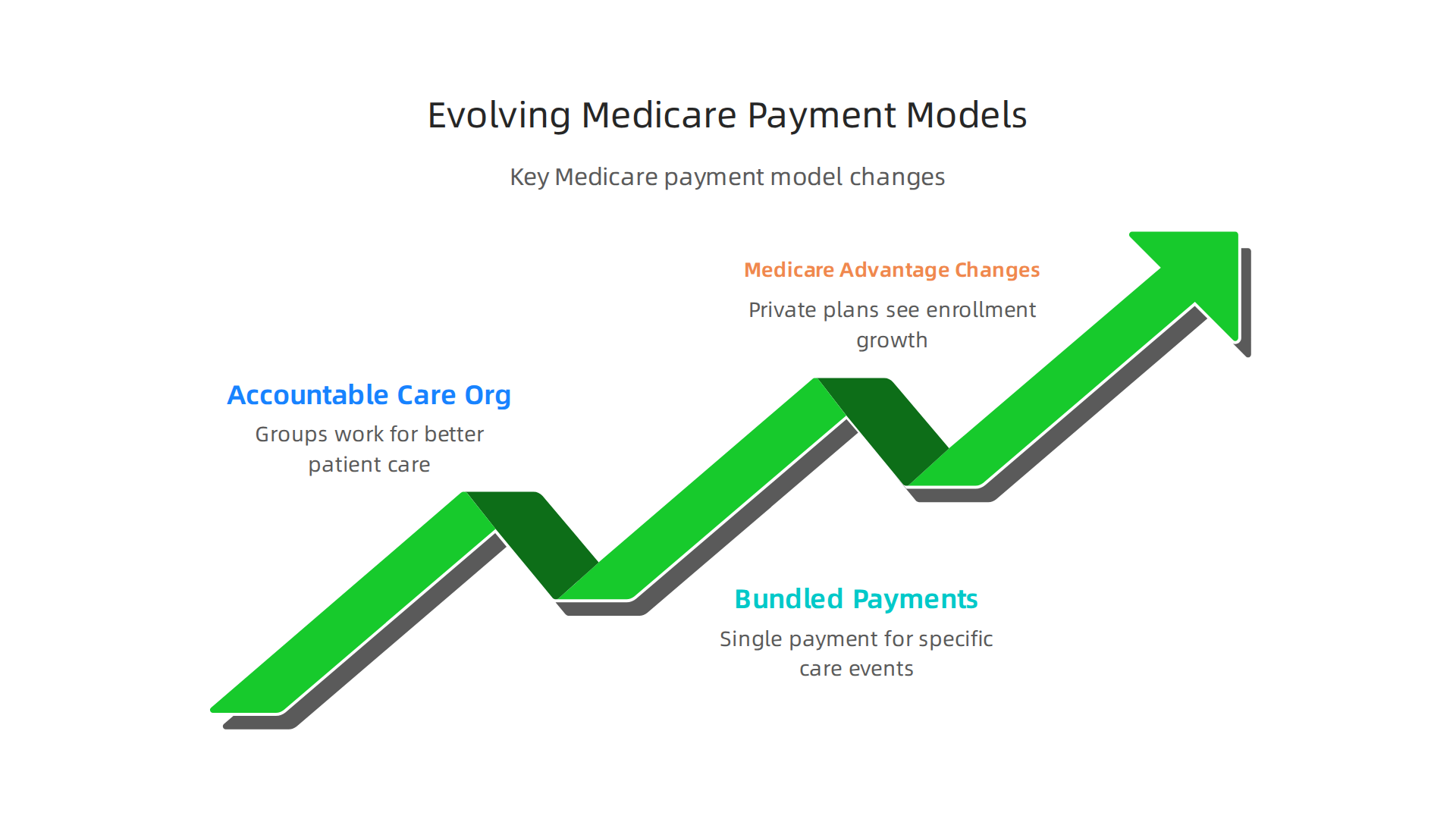
- Accountable Care Organizations (ACOs): Think of ACOs as groups of doctors, hospitals, and other healthcare providers who work together to give better care to their Medicare patients. They aim to keep patients healthy and avoid unneeded services. If they save money and meet quality goals, they can share in the savings with Medicare Medicare accountable care organization models. This moves away from paying for each service and instead pays for good outcomes.
- Bundled Payments: With bundled payments, providers get one single payment for all the care a patient needs for a specific event or condition, like a hip replacement surgery. This means all the doctors, the hospital, and even physical therapists work together under one payment. This encourages them to provide efficient and high-quality care to keep costs down and improve patient recovery.
- Medicare Advantage Changes: Private plans, like those offered by
Kaiser Foundation Health Planand othermajor medical health insuranceproviders under the Medicare Advantage program, are also seeing many changes. Enrollment in Medicare Advantage plans continues to grow, with about 37 million people expected to be in these plans by 2026 Medicare Advantage in 2026: Enrollment Update and Key …. These plans are often at the forefront of trying out new ways to pay for care and keep people healthy. For health tech leaders, understanding these shifts is key, as they directly impact what Medicare covers in 2026 and how healthtech navigates payment changes.
These evolving payment models create new reasons for health plans to focus on good patient outcomes, share financial risk with providers, and use data more smartly. For example, moving towards "value-based payment" means providers get paid more for better health results, not just for doing more tests or procedures Value-Based Payment in Medicare: Progress, Challenges, …. This also means health plans need better ways to track patient health over time, which requires strong data integration.
Regulatory shifts and healthtech strategies
Government rules and how Medicare pays for services directly affect how insurance companies, including those offering a central health medicare plan, buy new technology. If a new rule says health plans need to track patient health across different doctors, then those plans will look for tech tools that can help them do that.
These changes push health systems to invest in technology that can:
- Improve Outcomes: Tools that help doctors make better decisions or help patients manage their health from home.
- Manage Risk: Software that can predict which patients might need more care, helping plans manage costs better.
- Integrate Data: Systems that connect information from doctor visits, hospital stays, and health plans, giving a full picture of a patient’s health.
For healthtech companies, this means understanding these big policy changes is not just about rules, it is about knowing what problems health plans like Kaiser Foundation Health Plan are trying to solve. Companies that offer solutions for data analysis, patient engagement, or care coordination can find great opportunities here. It is all part of how healthcare technology trends for 2026 are reshaping medicine and patient care for everyone.
Medicare policy changes not only shape how care is paid for but also change how big health plans work with Medicare itself. This creates a mix of competition, special partnerships, and big company mergers. These interactions are very important for the future of health plans like Kaiser Foundation Health Plan and for everyone who needs major medical health insurance in 2026.
How Medicare and major plans interact: competition, partnerships, and market consolidation
Large health plans and Medicare work together in many ways, but they also compete. Here’s how:
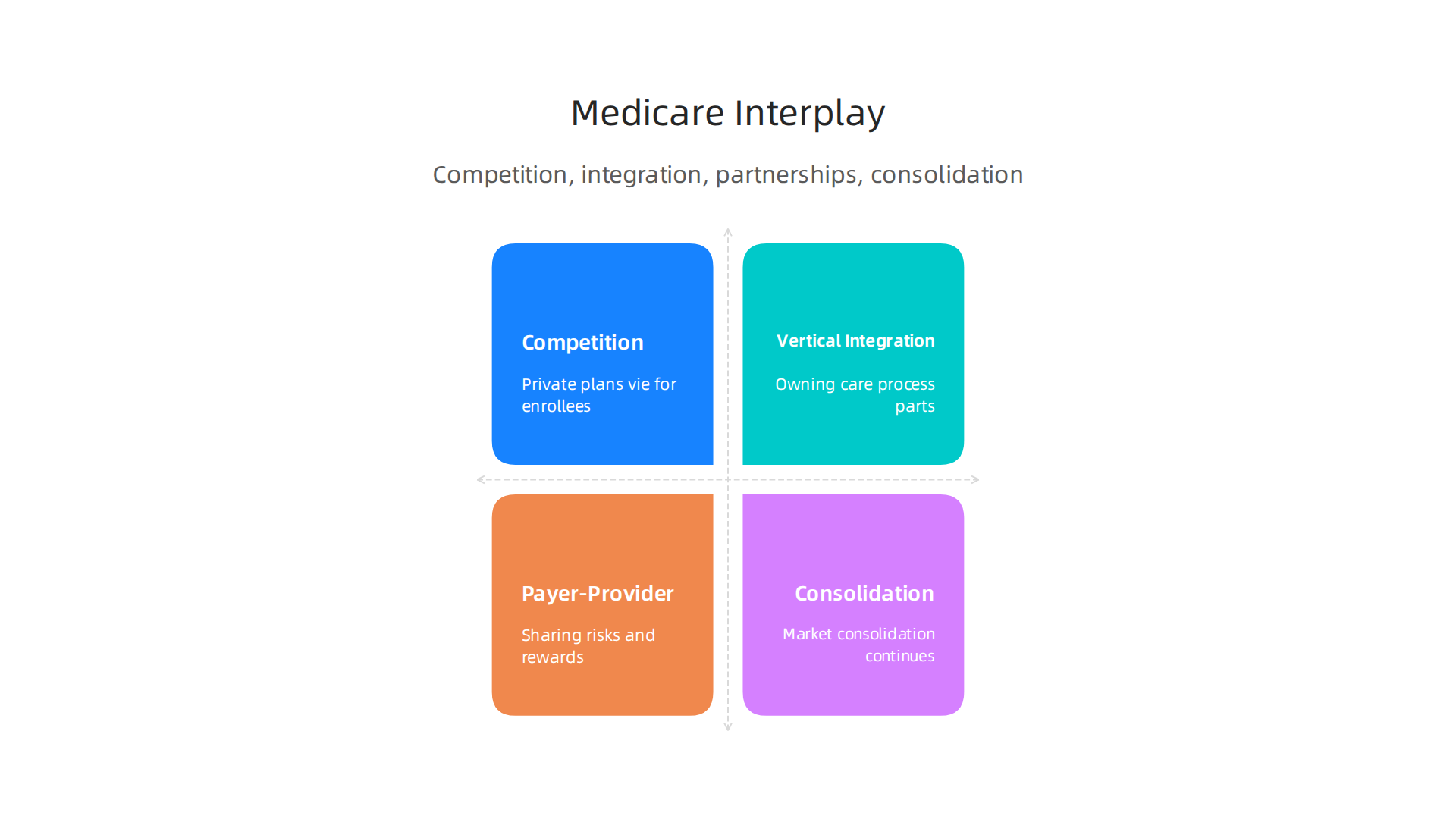
- Competition for Members: Medicare has two main parts. There is Original Medicare, run by the government. Then there is Medicare Advantage, which lets private companies like
Kaiser Foundation Health Planoffer plans. These private plans often offer extra benefits not found in Original Medicare, like vision or dental care. Because of this, private plans actively compete to get people to join their Medicare Advantage plans. This competition helps drive new services and better care options. - Vertical Integration: Some health plans choose to own different parts of the healthcare process. This is called vertical integration. For example, a company might own its own hospitals, doctor’s offices, and insurance plans all at once.
Kaiser Foundation Health Planis a well-known example of this model. This way, they can control costs and how care is given more closely. This approach can make care more joined up for patients, but it also changes how health plans interact with other providers. Lawmakers in 2026 are looking closely at how insurers owning many parts of healthcare affects things like pricing and making decisions about care Congressional Hearing Examines Vertical Integration, Prior …. - Payer-Provider Partnerships: Beyond full ownership, health plans and healthcare providers often team up. They create partnerships where they share financial risks and rewards. This means if patients get better and costs are managed well, both the plan and the providers can benefit. These partnerships are especially common as everyone moves towards value-based care, where payments are tied to patient health results.
Market Consolidation Effects
The healthcare industry has seen a lot of market consolidation. This is when larger health plans buy out smaller ones. This trend has been happening for decades Trends and Consequences in Health Insurer Consolidation. In 2026, many health insurance markets, including Medicare Advantage, are considered highly concentrated Business Economics and Pathology: Going Beyond the Basics. This means just a few big companies, like those offering a central health medicare plan or msi insurance, hold most of the power.
What does this mean for healthcare?
- Pricing Power: When there are fewer large companies, they can have more power to set prices. This can affect how much people pay for their health insurance and care.
- Negotiation Dynamics: Big health plans have more power when talking to drug companies, hospitals, and doctors about prices. This can lead to lower costs for the plan, but it also means less power for smaller providers.
- Technology Scaling: Bigger companies often have more money to invest in new technologies. This can help them use digital tools, AI, and other innovations across many hospitals and clinics, improving care for more people.
For health tech leaders, understanding these big shifts is crucial. It shows where the biggest players are spending their money and what problems they are trying to solve. Companies that can help major medical health insurance providers and integrated systems like Kaiser Foundation Health Plan manage their larger operations and data will find big opportunities. To keep up with these fast changes, staying informed on the latest trends is a must.
Get clear daily AI updates from The AI Newsletter Worth Reading.
Digital transformation: interoperability, data, and the tech stack for payers and Medicare programs
To truly manage big operations and data, health plans and Medicare programs are turning to powerful digital tools. This is part of a big change called digital transformation. It means using new technology to make things work better, faster, and more easily for everyone.
For health insurance companies and Medicare-aligned plans in 2026, some technology priorities are very important:
- Interoperability and FHIR: Imagine if all your doctors’ offices and your insurance company could easily share your health info. That’s what interoperability is about. A key part of this is something called FHIR (Fast Healthcare Interoperability Resources). This is a special language that different health computer systems can use to talk to each other. It helps share claims and clinical data more simply Proven Guide to Insurance-Healthcare Interoperability. This is super important because it helps everyone involved in your care get the right information quickly.
- Data and Analytics: Health plans collect a lot of data. Think about all the visits, tests, and medicines for people covered by a
central health medicare planormajor medical health insurance. Using special computer programs, they can look at all this data to find patterns.

This helps them understand what care works best, where costs can be managed, and how to keep people healthier.
- Care Management Platforms: These are systems that help health plans guide patients through their care journeys. For example, if someone has a long-term health issue, a care manager can use these platforms to keep track of their appointments, medicines, and progress. This makes sure patients get the right care at the right time.
- Patient Engagement Tools: These are apps or websites that help people take a more active role in their own health. They might let you see your test results, schedule appointments, or get reminders for your medicines. This helps people feel more connected to their care and manage their health better.
How Medicare rules drive new tech
Medicare has rules that make these technologies even more important. The government wants health plans to share information and focus on good patient results, not just how many services are provided.
- Reporting Requirements: Medicare needs plans to report a lot of data. This includes how well they manage care, how healthy their members are, and what costs are like. To do this well, health plans need strong data systems and analytics tools.
- Value-Based Contracts: These are special agreements where health plans like
Kaiser Foundation Health Planand providers get paid based on how healthy their patients become, not just how many services they offer. This pushes them to invest in technologies that help improve health outcomes. For example, they might use care management platforms to track patient progress more closely or use patient engagement tools to help members stay on track with their health goals.
In 2026, new rules from the Centers for Medicare and Medicaid Services (CMS), like CMS-0057-F, mean that health plans must have special FHIR-based systems working. These systems help share patient information for things like asking for approval before getting a service Why FHIR-First Development Is Non-Negotiable for Healthcare Apps in 2026. This means that many health plans, including those offering msi insurance, are quickly adopting these new ways of sharing data.
This big push for digital tools means new chances for companies that build health technology. They can help health plans meet these rules and offer better care. Learning how to put all these technologies together smartly is key for today’s health plans. To learn more about how technology can fit into these plans, check out this The 2026 Playbook for Technology Integration for Health Plans.
Scenarios ahead: what 2026–2030 could look like for Medicare, major plans, and healthtech strategy
Thinking about the next few years, from 2026 to 2030, shows us a healthcare world that keeps changing fast.
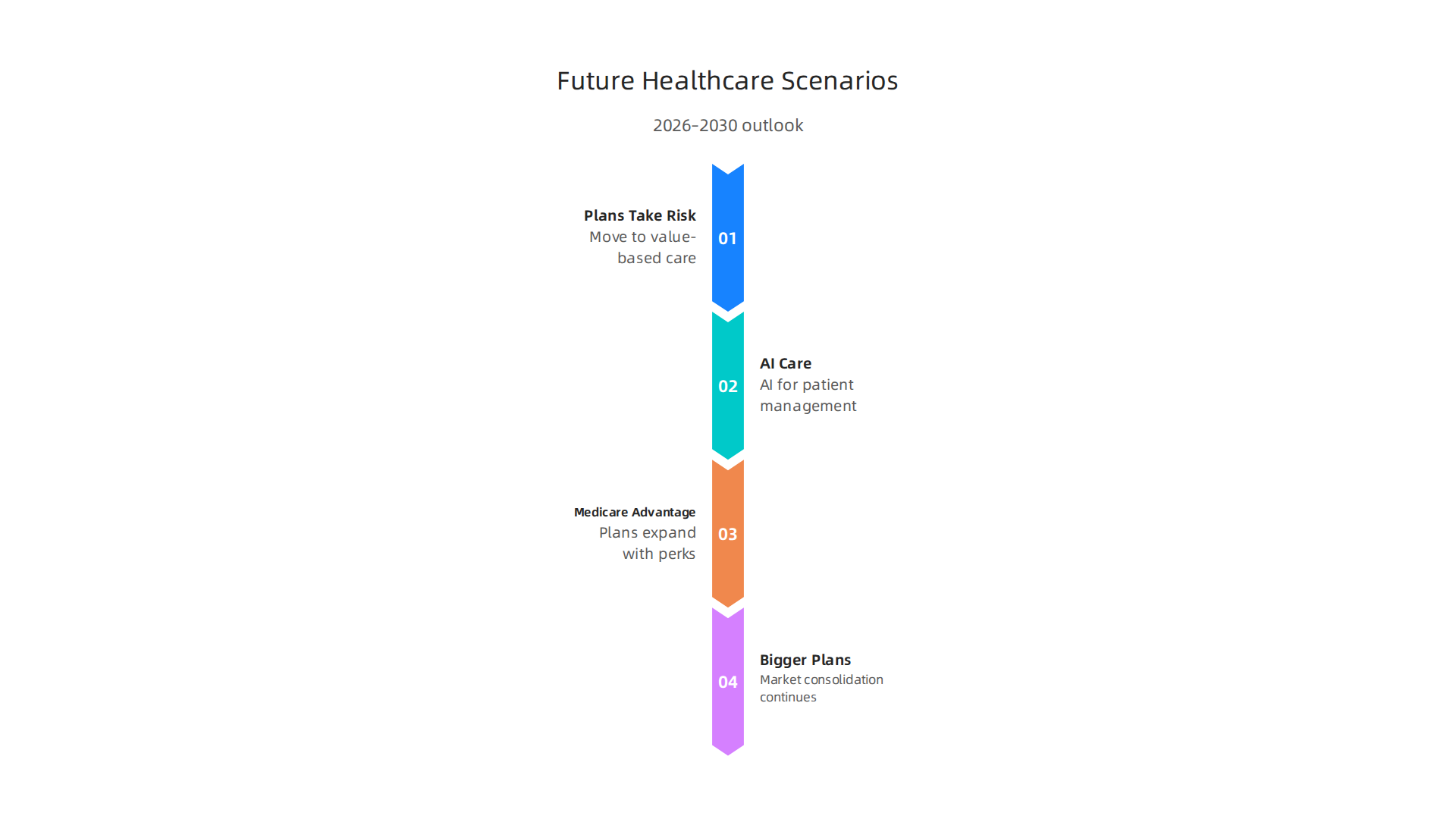
This will impact Medicare, big health plans, and companies that build health technology. We can expect new rules, different ways insurance companies work, and smarter technology all coming together.
Health plans take on more risk
One big change we’ll see is that health plans will take on more risk for keeping people healthy. This means they will get paid more when their members stay well and costs go down, rather than just paying for sick visits. This is part of a bigger move towards "value-based care."
For example, Accountable Care Organizations (ACOs), where doctors and hospitals work together, aim to save Medicare money and improve care. While their success has been mixed, these models are expected to grow and get better, especially as they integrate specialists more fully Policy solutions for integrating specialists into accountable care. This trend pushes health plans to really focus on patient outcomes. Experts suggest that value-based care will continue to grow, possibly reaching $1 trillion in value Investing in the new era of value-based care. This means traditional major medical health insurance and central health medicare plan options will likely have stronger ties to these performance-based models.
Smarter care with AI
Artificial intelligence (AI) will play a huge role in managing patient care. Imagine AI tools helping health plans figure out which patients need extra support to stay healthy, or making sure people with long-term conditions get the right care at the right time. AI-driven care management platforms can look at all the data we talked about earlier and help guide patients and their doctors. This is especially helpful for large organizations like kaiser foundation health plan, which manage many members.
Healthtech companies will focus on building AI tools that can predict health issues, personalize treatment plans, and make it easier for patients to connect with their care teams. These tools can also help manage the complex rules for msi insurance and aca healthcare plans, making sure everything runs smoothly.
For those eager to understand how AI is truly changing healthcare and other fields, staying informed is key. Get clear daily AI updates that cut through the noise.
The AI Newsletter Worth Reading
Medicare Advantage grows and changes
Medicare Advantage plans will keep growing and changing. These private plans offer Medicare benefits, often with extra perks like dental or vision care. The government will likely continue to refine the rules for these plans, pushing them to improve quality and lower costs. These plans have shown they can be efficient in bringing down health costs compared to traditional Medicare Potential “Savings” of Medicare: The Analysis of Medicare Advantage and Accountable Care Organizations. This focus on getting good results will make digital tools and data analytics even more important for plans like central health medicare plan and any major medical health insurance company offering Medicare Advantage options.
Bigger health plans
Another trend we’ll see is health plans getting bigger. This means more mergers and purchases between insurance companies and even between insurers and other healthcare providers, like doctors’ offices. This is called consolidation. Studies show that many health insurance markets are already highly concentrated, with a few big players Business Economics and Pathology: Going Beyond the Basics. This can change how healthtech companies work with these larger, more powerful partners.
What this means for healthtech
For companies building health technology, these next few years will bring both chances and challenges.
- Focus on value: Your technology must show it can improve patient health and save money.
- AI expertise: Knowing how to build and use AI safely and smartly will be a big plus.
- Work with big partners: Be ready to work with large, consolidated health plans and Medicare programs.
Understanding these shifts will help healthtech founders and product teams make smart choices about where to put their efforts. To learn more about how technology drives care, explore our guide on clinical care technology innovations.
Summary
This article explains why rapid changes in Medicare and major private plans matter for health technology leaders in 2026. It traces Medicare’s growth, the rise of Medicare Advantage and large integrated insurers, and uses Kaiser Foundation Health Plan as a model for how insurance, providers, and hospitals can operate together. The guide reviews shifting payment models (ACOs, bundled payments, value-based care), growing market consolidation, and new regulatory demands that push payers to invest in data, interoperability, and AI. It also outlines the payer technology priorities — FHIR-based data sharing, analytics, care-management platforms, and patient engagement — and shows how those priorities create opportunities for vendors. Finally, the article lays out plausible scenarios through 2030 and gives practical direction for product and strategy teams on where to focus development, partnerships, and go-to-market efforts.