


Medicare Part D helps pay for your prescription medicines. But understanding exactly what does Medicare Part D cover can be tricky. This is especially true if you or someone you care for needs long-term care. For many people in nursing homes or other care places, figuring out medicine costs under Part D can feel like a maze. Also, what about those really expensive drugs? How does Medicare handle them?
In 2026, there have been some important updates to Part D. For example, the most you’ll pay out-of-pocket for covered Part D drugs each year is $2,100 [Medicare and You Handbook 2026]
(https://www.medicare.gov/publications/10050-medicare-and-you.pdf). This change helps protect people from very high drug costs. However, Part D does not cover the actual costs of long-term care services, like help with daily tasks in a nursing home. It only covers the medicines you need while there. This distinction is key for those asking, does Medicare cover long term care itself? The answer is no, but it helps with drug costs within such settings.
This article will help make sense of it all.

We will clearly explain what does Medicare Part D cover, including how it works for people in different care settings. We will also look at how costs and enrollment work, step by step. Our goal is to give clear advice and actionable steps. This will help healthcare leaders and those buying health insurance make smart choices for patients and their own needs. Staying informed about these changes is key for anyone involved in managing health plans, from understanding general Medicare Part D policy 2026 changes for health tech leaders to planning for specific situations.
To stay on top of all the big changes and new ideas happening in healthcare technology, make sure you get The AI Newsletter Worth Reading.
To truly stay informed and grasp the full scope of what does Medicare Part D cover, it helps to understand its basic building blocks. Medicare Part D is not run directly by the government. Instead, it works through private insurance companies. These companies are called "plan sponsors" and are approved by Medicare to offer prescription drug coverage.
Each Part D plan has its own unique rules and a list of medicines it covers, known as a "formulary." This formulary shows which drugs are covered, and at what cost level (like generic versus brand name). You will also find that each plan works with certain pharmacies. These are called "pharmacy networks." To get the best prices, you generally need to use a pharmacy that is part of your plan’s network. In 2026, the Centers for Medicare & Medicaid Services (CMS) has continued to refine program instructions for Part D plans
to ensure they meet the needs of beneficiaries, including detailed guidance on plan design and benefits Final CY 2026 Part D Redesign Program Instructions. Understanding these specific details can help you choose the best plan.
How Part D Fits into the Larger Medicare Picture
Medicare has different parts, and Part D is just one piece of the puzzle.
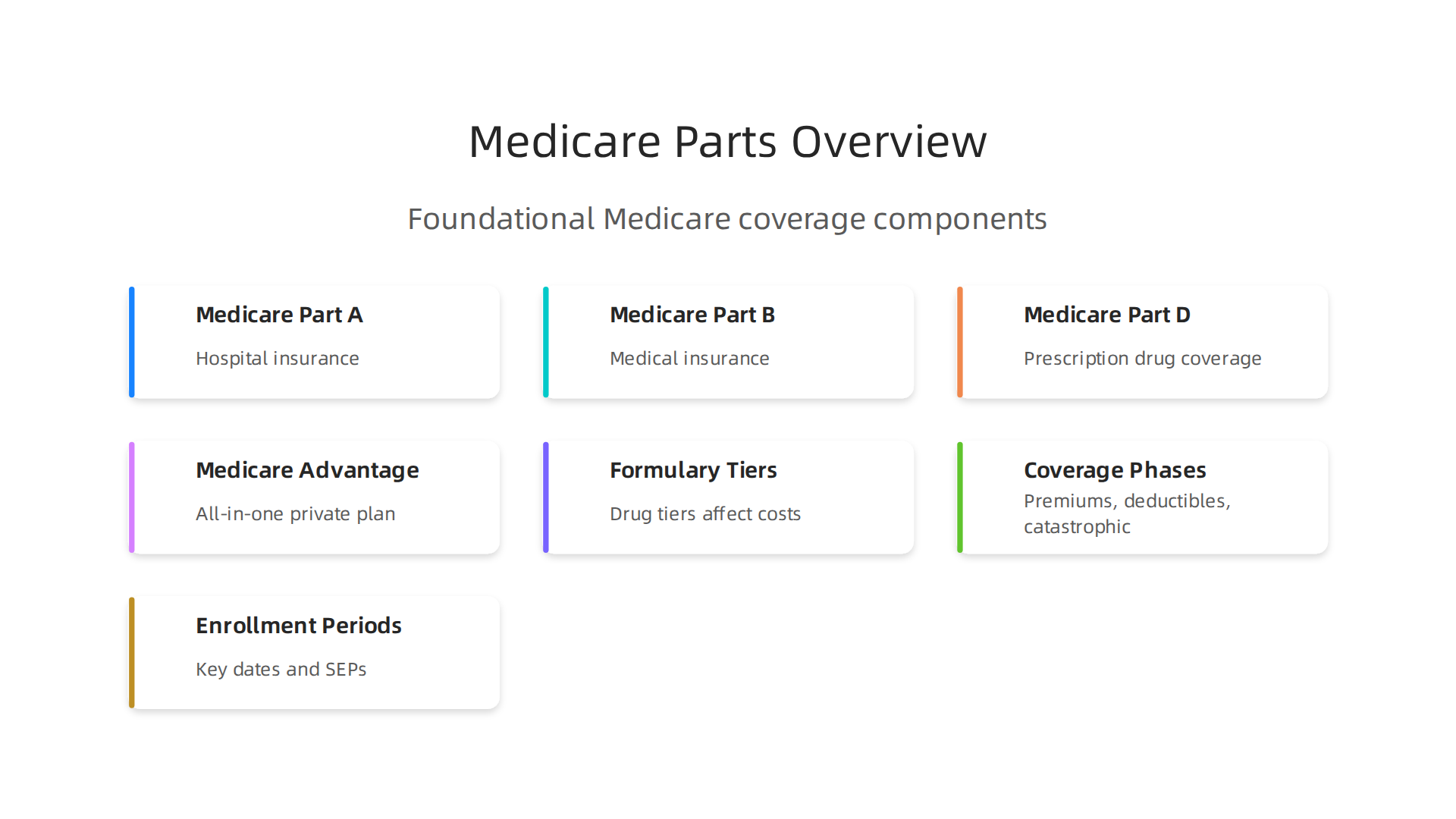
- Medicare Part A (Hospital Insurance): This part helps pay for care you get in a hospital, skilled nursing facility, hospice care, and some home health services.
- Medicare Part B (Medical Insurance): This part helps pay for doctor visits, outpatient care, medical supplies, and preventive services.
Together, Part A and Part B make up what is called Original Medicare. Part D adds prescription drug coverage to Original Medicare. Many people choose to get their health insurance from private companies, even for public programs like Medicare. For a deeper look into the differences, you can read more about what is private insurance and how it differs from public programs in 2026.
Some people get their Medicare benefits through a Medicare Advantage plan (also known as Part C). These plans are offered by private companies and often include Part A, Part B, and Part D coverage all in one plan. If you have a Medicare Advantage plan that includes drug coverage, you generally do not need to buy a separate Part D plan. Companies like Aetna Medicare Plans for 2026 offer these combined plans.
So, when you ask what does Medicare Part D cover, remember it’s mainly about helping with prescription drug costs. It works with other parts of Medicare to give you more complete health care coverage. Knowing how these parts fit together is key to managing your health expenses. For more information on who pays what for Medicare Part D in 2026, a helpful guide explains the different phases of coverage, including the deductible and catastrophic coverage Who Pays What for Medicare Part D in 2026: A Guide. This helps show how costs are shared between you, your plan, and Medicare throughout the year.
Knowing how different parts of Medicare work is really important for handling your health costs. Now, let’s dig into the main reason you might choose Part D: what medicines it actually helps pay for. Understanding this helps you answer the big question: what does Medicare Part D cover for your specific needs?
What Part D Covers: Covered Drugs, Formularies & Exceptions
Each Medicare Part D plan has its own special list of drugs it covers. This list is called a "formulary." Think of it like a menu. On this menu, drugs are usually grouped into different levels, or "tiers."
How much you pay depends on which tier your medicine is in.
- Tier 1: Generic Drugs. These are usually the cheapest. They are copies of brand-name drugs but cost much less.
- Tier 2: Preferred Brand-Name Drugs. These are brand-name medicines that the plan prefers. They cost more than generics but less than non-preferred brands.
- Tier 3: Non-Preferred Brand-Name Drugs. These are also brand-name drugs, but they cost more than preferred ones.
- Tier 4/5: Specialty Drugs. These are often very expensive drugs used for complex health problems. They can have special rules about how you get them.
It’s important to check your plan’s formulary every year, as it can change. Your official Medicare and You Handbook 2026 can help explain general coverage. You can also read about Medicare Part D policy 2026 changes for health tech leaders to understand shifts in drug coverage rules.
Sometimes, a drug you need might not be on your plan’s formulary, or it might have special rules. This is where exceptions and appeals come in.
- Prior Authorization: For some drugs, your doctor needs to get approval from your plan before you can get the medicine. This is like asking for permission first.
- Step Therapy: Your plan might ask you to try a less costly drug first. If that drug doesn’t work, then they might cover a more expensive one.
- Exceptions: If a drug isn’t covered or has these rules, your doctor can ask your plan for an exception. This means they are asking the plan to cover it even if it’s not usually covered, because your health needs it.
- Appeals: If your plan says no to an exception, you have the right to appeal their decision. This means you can ask them to look at your case again.
What Part D Generally Does Not Cover
While Part D covers many prescription drugs, it does not cover everything. Here are some common types of drugs and services that Part D usually does not cover:
- Over-the-counter (OTC) drugs: These are medicines you can buy without a prescription, like pain relievers or cold medicine from a regular store shelf.
- Drugs for weight loss or gain: Medicines mainly used for looking better, like diet pills.
- Fertility drugs: Drugs used to help you get pregnant.
- Drugs for cosmetic purposes: Medicines used to change your appearance.
- Erectile dysfunction drugs: Like Viagra, these are often not covered or have special limits.
- Long-term care services: A common misunderstanding is whether does medicare cover long term care. Part D is strictly for prescription drugs, not for things like nursing home stays or help with daily tasks over a long time.
Knowing what is and isn’t covered helps you avoid surprises. It’s smart to talk with your doctor and your plan if you have any questions about specific medicines.
A big change in 2026 is that there’s now a cap on how much you’ll have to pay out-of-pocket for Part D drugs. Once your out-of-pocket costs reach $2,100 in 2026, you won’t have to pay any more for covered Part D drugs for the rest of the year What’s new for Medicare Part D in 2026?. This offers much greater peace of mind about drug costs.
Understanding all these rules can be a lot. If you’re someone who likes to stay up-to-date on all the latest changes in healthcare and technology, especially as AI continues to shape the future, you might find our newsletter helpful.
Get clear daily AI updates from The AI Newsletter Worth Reading.
Learning about what Medicare Part D covers is just one part of the puzzle. The next big thing to understand is how much it actually costs you. Medicare Part D has different cost parts and phases that kick in throughout the year.
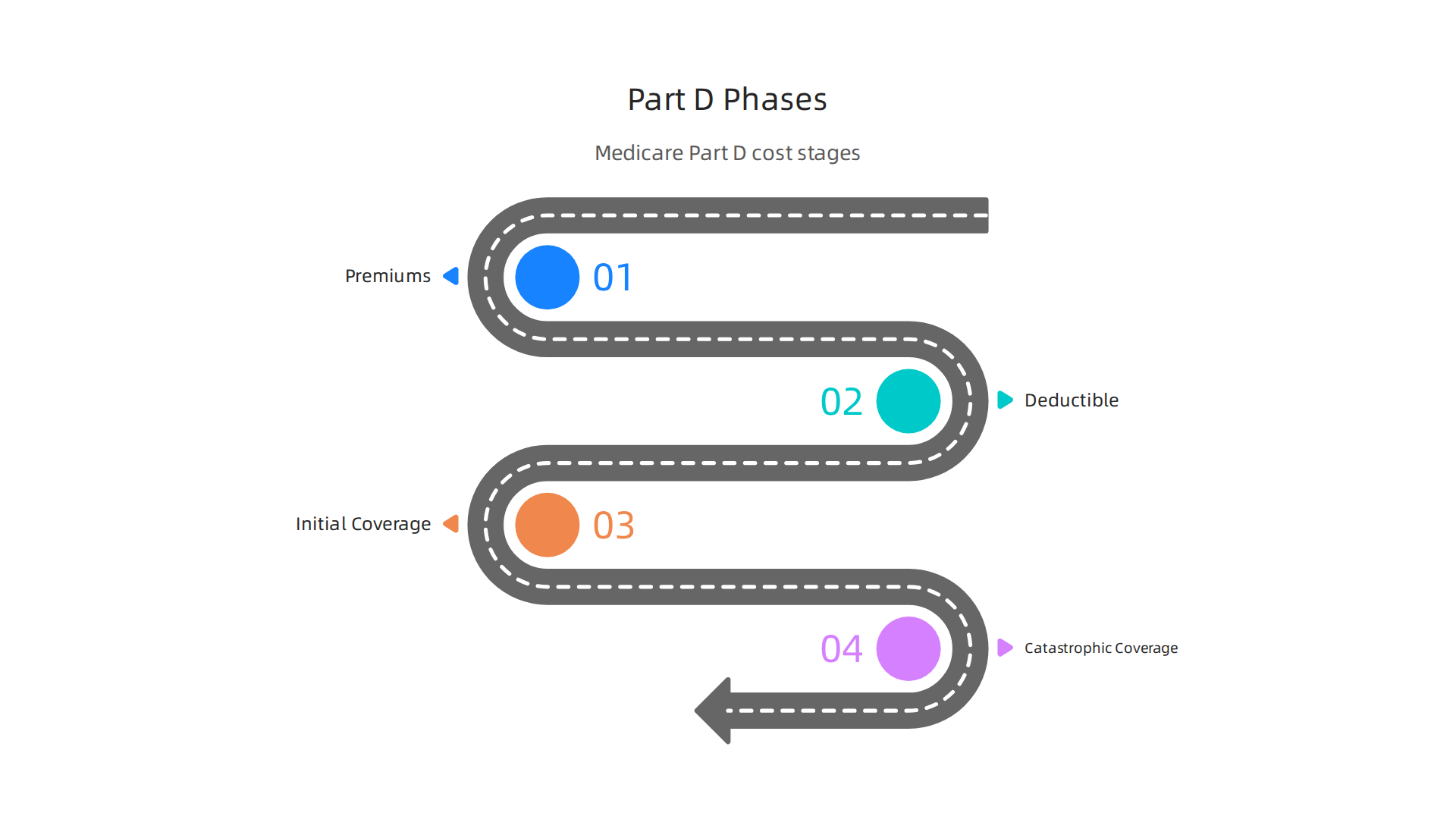
Knowing these can help you better manage your budget for prescription drugs.
Costs & Coverage Phases: Premiums, Deductibles, the Coverage Gap and Out-of-Pocket Exposure
First, let’s talk about premiums. A premium is a regular payment, usually monthly, that you pay for your Medicare Part D plan. This is like a membership fee to have the insurance. How much your premium is depends on the plan you choose.
After your premium, the first cost you might meet is the deductible. This is the amount you have to pay out of your own pocket for your medicines before your plan starts to help pay. For 2026, no Medicare drug plan can have a deductible higher than $615 [How much does Medicare drug coverage cost?]
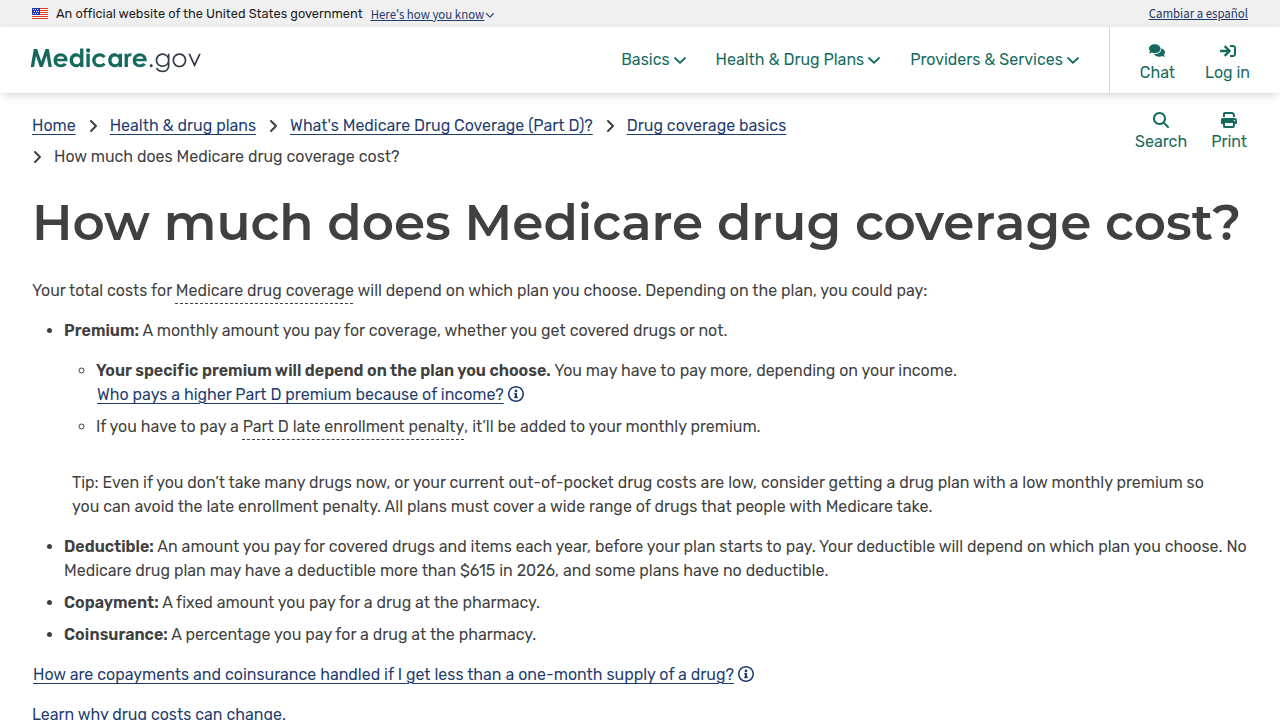
(https://www.medicare.gov/health-drug-plans/part-d/basics/costs). Every dollar you spend on covered drugs during this phase counts toward meeting your deductible.
Once you’ve paid your deductible, you enter the Initial Coverage Phase. In this phase, your Part D plan starts to pay its share of your drug costs, and you pay a copay or coinsurance (a percentage of the cost). For example, if your plan covers 75% of a generic drug, you pay the remaining 25%. This phase continues until your total drug costs (what you and your plan have paid together) reach a certain amount.
A big change in Medicare Part D for 2026 is that the old "coverage gap," also known as the "donut hole," is mostly gone. This means that after your deductible and initial coverage, you won’t fall into a gap where you used to pay much more for your drugs. Instead, you move straight into a phase with much better protection for your wallet.
This improved protection comes from a new out-of-pocket spending cap. For 2026, once your total out-of-pocket costs for covered Part D drugs reach $2,100, you enter the Catastrophic Coverage Phase. The good news is, in this phase, you pay $0 for your covered prescription drugs for the rest of the year Medicare Part D 2026: Costs, Cap, Formularies. This $2,100 cap means you have a clear limit on how much you’ll spend on medicines each year, which offers a lot of peace of mind. Both generic and brand-name drugs count towards this cap A guide to 2026 Medicare Part D.
This cap is a major benefit, especially for people who need expensive specialty drugs. These medicines can cost a lot, and without a cap, a person’s drug costs could quickly get out of control. With the $2,100 limit, even if you need very pricey drugs, you know your spending is capped. This can make a big difference for your overall health budget. Understanding these phases helps clarify what does Medicare Part D cover not just in terms of drugs, but also in terms of financial protection. For more specific details on how different plans are structured, you might find it useful to check out articles like Navigating Humana Medicare Plans in 2026 to see how individual health insurance plans handle these costs.
Beyond understanding how much Medicare Part D plans cost, it is super important to know when and how to sign up. Missing the right time can mean higher costs or even going without needed medicines. Figuring out when to join is a big part of knowing what does Medicare Part D cover for you.

Medicare has special times each year when you can sign up for or change your Part D plan.
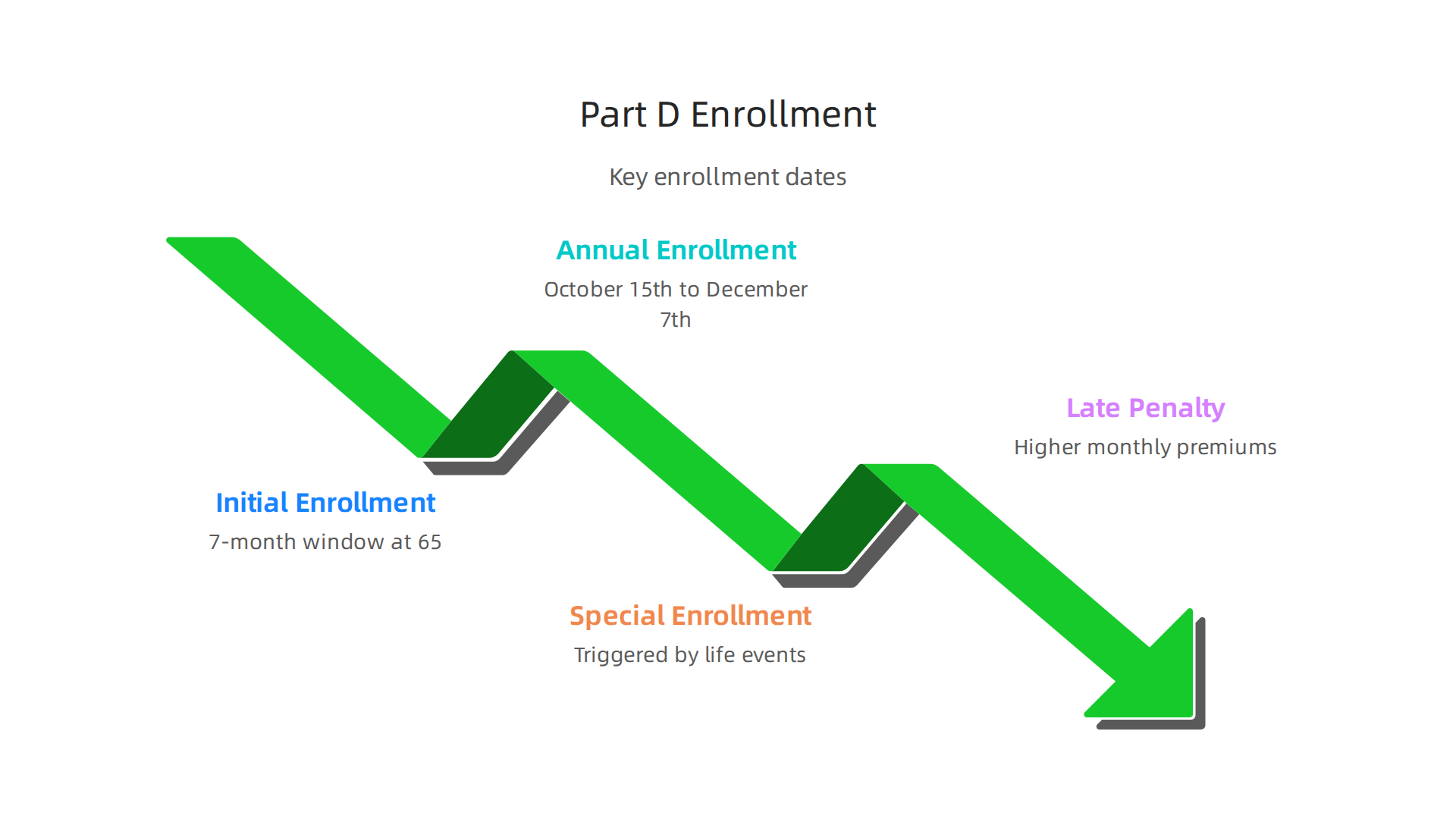
Let’s look at the main ones.
Initial Enrollment Period (IEP)
This is your first chance to get Medicare Part D. It happens when you first become eligible for Medicare. For most people, this is when they turn 65. The Initial Enrollment Period is a seven-month window. It starts three months before your 65th birthday, includes the month you turn 65, and ends three months after your birthday Joining a plan. For example, if your birthday is in July, your window would be April 1st to October 31st. If you get Medicare because of a disability, your IEP is similar, but it’s linked to when your Medicare benefits start CY 2026 CD Enrollment and Disenrollment Guidance (PDF). It’s wise to sign up during this time to avoid problems later.
Annual Enrollment Period (AEP)
Even if you already have Medicare Part D, you can make changes every year during the Annual Enrollment Period. This period runs from October 15th to December 7th. During this time, you can:
- Join a Medicare Part D plan.
- Switch from one Part D plan to another.
- Drop your Part D coverage.
Any changes you make during the AEP will start on January 1st of the next year Choosing your drug coverage during Medicare open enrollment. This is a great time to check if your current plan still offers the best coverage for the medicines you take, or if a different plan would be better. For instance, you might compare plans available in your area like those from Sendero health plans or Security health plan, if offered in your state, perhaps even looking into details about health insurance California options if you live there.
Special Enrollment Periods (SEPs)
Sometimes, life throws you a curveball. That’s where Special Enrollment Periods come in. These are times outside of the usual enrollment windows when you can join, switch, or drop your Part D plan. They happen if you have certain life events. Some common reasons for a SEP include:
- Moving to a new area where your current plan is not offered.
- Losing other creditable drug coverage (like from an employer).
- Changes in your financial situation, like qualifying for Extra Help with drug costs.
- Moving into or out of a long-term care facility.
You typically have a set amount of time, often two months, to make changes during a SEP after the event happens Special Enrollment Periods. It’s important to act fast if you qualify for one.
The Impact of Missing Enrollment
Not signing up for Medicare Part D when you’re first eligible can lead to a late enrollment penalty. This means you might pay a higher monthly premium for your Part D coverage, sometimes for as long as you have the plan. This penalty can make medicines more costly in the long run. For hospitals and long-term care operators, understanding these enrollment periods and potential penalties is critical. It directly affects the patient populations they serve, ensuring patients can afford their prescription drugs and that the facility receives proper payment for services. For more on the big picture, you can learn about Medicare Part D Policy 2026 Changes For Health Tech Leaders.
While Medicare Part D covers prescription drugs, it generally does not cover long-term care itself. However, ensuring patients have drug coverage is a key part of managing their overall health, especially for those in long-term care settings. Staying on top of these enrollment rules helps everyone manage their health and money better.
To keep up with the latest changes in health technology and how it affects things like Medicare, make sure you get regular updates.
The AI Newsletter Worth Reading
Understanding the enrollment periods for Medicare Part D is a great start. Now, let’s see how Part D fits with other major parts of Medicare, like Medicare Advantage and Medigap. Knowing these differences is key to figuring out what does Medicare Part D cover for you in the bigger picture of your health insurance.
Differences in Drug Coverage: Medicare Advantage vs. Standalone Part D
When you think about Medicare Part D, you usually think about a plan that just covers your prescription drugs. This is called a Prescription Drug Plan (PDP), also known as a standalone Part D plan. You get these plans if you have Original Medicare (Part A and Part B).
However, many people choose a Medicare Advantage (MA) plan, also known as Medicare Part C. Many Medicare Advantage plans come bundled with prescription drug coverage. These are called Medicare Advantage Prescription Drug plans, or MAPDs. If you pick an MAPD plan, you get your medical and hospital benefits, plus your drug coverage, all from one private insurance company MAPD vs. PDP: Which Medicare Drug Coverage Is Right ….
Here is a simple rule: You cannot have both a standalone Part D plan (PDP) and a Medicare Advantage plan that includes drug coverage (MAPD) at the same time. If you enroll in an MAPD, you’ll get your prescription benefits through that plan. Research in 2026 shows that many MAPD plans often have lower monthly premiums for drug coverage compared to standalone Part D plans, which can be an important factor for many people The Uncertain Future of Medicare’s Stand-Alone …. For more details on choosing the right Medicare path, you might find it helpful to read about Navigating Humana Medicare plans in 2026 for smarter coverage.
Medigap’s Role in Prescription Drug Coverage
Then there’s Medigap, which is also known as Medicare Supplement Insurance. Medigap plans help pay for some costs that Original Medicare doesn’t cover, like deductibles, copayments, and coinsurance. Think of it as extra help with your Original Medicare bills.
Here’s an important point: Medigap plans do not cover prescription drugs. If you have Original Medicare and a Medigap plan, and you want drug coverage, you must enroll in a separate, standalone Medicare Part D plan (PDP). You cannot get Medigap if you are in a Medicare Advantage plan. These two types of insurance simply don’t work together MAPD vs. PDP: Which Medicare Drug Coverage Is Right …. Also, remember that Medicare generally does not cover long-term care itself, whether you have Part D, Medicare Advantage, or Medigap.
In short, your path to prescription drug coverage depends on your main Medicare choice:
- Original Medicare + Medigap: You would need to add a standalone Part D plan for your medicines.
- Medicare Advantage (MAPD): Your prescription drug coverage is usually included in your plan. You wouldn’t need a separate Part D plan or a Medigap policy.
Understanding these connections helps you clearly see what does Medicare Part D cover and how it fits into your overall health benefits package.
Understanding how Medicare Parts A, B, C, and D work together is super helpful. Now, let’s look at a special situation: what happens to prescription drug coverage for people who live in nursing homes or other care facilities?

This is important for understanding what does Medicare Part D cover in these settings.
Coverage for Long-Term Care & Institutionalized Beneficiaries
First, it’s key to know that regular Medicare, including Part D, does not cover long-term care itself. This means Medicare generally won’t pay for your room, meals, or personal care if you live in a nursing home or assisted living facility for an extended time. So, the question, "does Medicare cover long term care" is usually answered with a "no" for the care itself.
However, if you live in one of these facilities, your Medicare Part D plan still covers your prescription drugs, just like it would if you were living at home. The difference is often in how those drugs are given out and billed.
For people in nursing homes or other institutions, Part D plans work closely with the facility’s pharmacy. This often involves special agreements called Long-Term Care Pharmacy Arrangements (LPAs). These agreements help make sure that residents get their medicines on time and that the billing is handled correctly between the facility, the pharmacy, and the Part D plan. These systems are designed to make medication administration smooth and safe for everyone involved.
It’s also important to know about special enrollment times for people moving into or out of these facilities. There’s an "Open Enrollment Period for Institutionalized Individuals (OEPI)" that allows people to make changes to their Part D plan more easily if they are moving to or from a nursing home or other setting where they receive care Medicare Prescription Drug Eligibility and Enrollment. This helps ensure that drug coverage keeps up with a person’s changing living situation. Smooth transitions of care are very important to make sure there are no gaps in receiving needed medications.
Knowing these details helps clarify what does Medicare Part D cover for those needing institutional care, especially when it comes to getting their daily medicines without a hitch.
Stay informed on the latest trends in healthcare technology, which often impact how services like Part D are managed. Get clear daily AI updates from The AI Newsletter Worth Reading.
Choosing the right Medicare Part D plan is a big decision.
After understanding what does Medicare Part D cover, especially for those in care facilities, the next step is to pick a plan that best fits your needs. This choice involves looking at several important things, not just the monthly fee.
How to Evaluate Part D Plans
When you’re trying to figure out what does Medicare Part D cover for you, here are the main things to check:
- Formulary Fit: This is the list of drugs the plan covers. You need to make sure all your current medications are on this list. If a drug isn’t on the plan’s formulary, it means you’ll pay full price for it, or you’ll have to ask your doctor to switch you to a different drug. Also, check which "tier" your drugs are in, as this changes how much you pay for each one.
- Network Adequacy: Make sure your preferred pharmacies are part of the plan’s network. This helps you get your medicines easily and often at a lower cost.
- Prior Authorization Burden: Some plans require extra steps, like prior authorization, for certain drugs. This means your doctor needs to get approval from the plan before you can fill the prescription. It’s good to know if your important medications will need this extra step.
- Total Cost of Care: Don’t just look at the monthly premium. You need to think about the total cost over a year. This includes the deductible, copays, and any other fees. For 2026, the standard Part D deductible is $615 before the plan starts paying its share A Current Snapshot of the Medicare Part D Prescription Drug Benefit. Some plans might have a higher premium but lower copays, saving you money in the long run if you take many medications. Experts say to compare plans based on your actual drug list and total yearly costs, not just the premium Best Medicare Part D Drug Plans for 2026.
Tools and Strategies for Choosing Your Plan
The best tool for comparing Part D plans is the official Medicare Plan Finder on Medicare.gov.
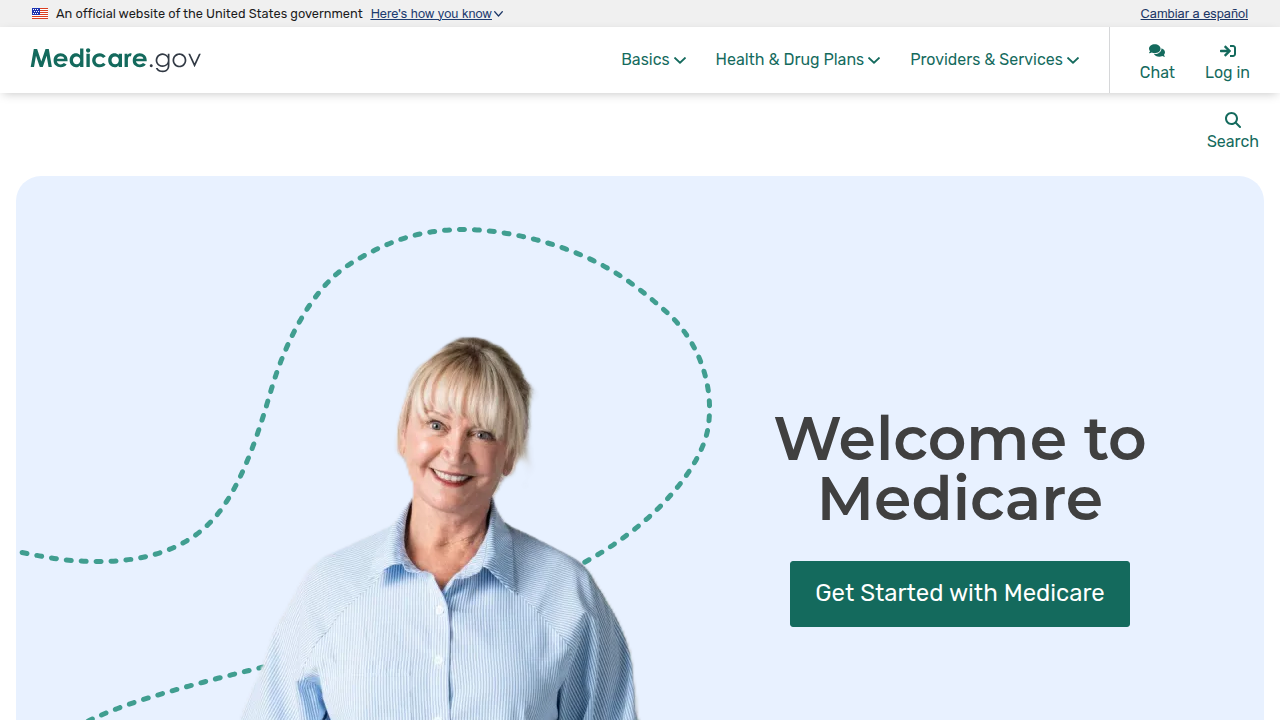
This tool lets you put in your exact list of drugs and your preferred pharmacy to see which plan offers the lowest overall cost for you. You can even watch a guide on How to Find the Right 2026 Medicare Part D Plan! to walk you through the steps. For more details on recent updates that might affect your choice, learn about Medicare Part D policy 2026 changes.
For bigger groups, like health systems, payers, or teams that buy health plans for many people, the process is a bit different. They often use advanced data tools and work with vendors to pick the best plans or help patients make choices. Companies like Sendero Health Plans or Security Health Plan might offer special plans or insights based on their patient populations. These organizations look at wide-ranging data to understand the most effective options for their members. They even use new technologies like AI to improve how they manage health insurance benefits for members, which you can read more about in Why 94% of health plans are adopting AI in health insurance in 2026. Whether you are an individual in California looking for health insurance or a large health system, carefully choosing a Medicare Part D plan is important for managing healthcare costs and getting the medications you need.
Summary
This article explains what Medicare Part D covers, how the program works in 2026, and why those details matter for people, caregivers, and health leaders. It walks through how Part D is delivered by private plan sponsors, how formularies and pharmacy networks affect costs, and the common rules—like prior authorization, step therapy, and appeals. The guide details the 2026 changes, including the new $2,100 out-of-pocket cap, standard deductibles and phases of coverage, and special rules for people in nursing homes or institutional settings. Readers will learn when and how to enroll, how Part D interacts with Medicare Advantage and Medigap, and practical steps to pick the right plan for their medications and budget.