


Introduction
If you work in health tech, you already know the feeling. You have a great product that could help patients and save money. But then you hit a wall of state regulations that feel impossible to untangle.

That wall is especially tall in Texas.
The Texas Medical Board (TMB) acts as the main gatekeeper for healthcare technology in the second most populous state in the U.S. And in 2026, the stakes are higher than ever. The TMB oversees everything from telemedicine rules to how doctors use AI tools. If you do not understand how this board operates, your product launch could stall or worse, you could face serious penalties.
Consider this. In 2025 alone, the TMB opened 1,557 formal investigations into healthcare providers across the state. That number comes from the board’s own March 2025 DPRC materials. And disciplinary actions remain a regular part of the board’s work, with suspensions and restrictions continuing into FY 2026 as detailed in the TMB’s March 2026 minutes.
So what does this mean for health tech leaders?
It means you cannot afford to treat the Texas Medical Board as just another government agency. It actively shapes how healthcare systems adopt new tools. Whether you are building a telemedicine platform, a diagnostic AI, or a patient data app, the TMB sets the rules of the road.
And you are not just dealing with one state. The fl department of health, the texas board of nursing, and other state regulators each have their own requirements. The complexity can feel overwhelming.
But here is the good news. This article gives you a clear, data-driven look at how the Texas Medical Board works in 2026. You will learn about recent policy shifts, real examples of enforcement, and practical steps you can take to stay compliant. The goal is simple. Help you impact healthcare positively without getting caught off guard by regulatory surprises.
Technology is moving fast. You need to know which state rules matter most for your business. Let’s start by understanding what the TMB actually does and why it matters for health innovation.
If you want to stay ahead of these regulatory changes, subscribe to The Deep View Newsletter for daily AI and health tech updates.

Next up, we will break down the TMB’s structure and how it connects to other state boards like the texas board of nursing. This will help you see the full picture of overlapping rules.
The Texas Medical Board’s Expanding Role in Health Tech Oversight
So what exactly does the Texas Medical Board do that affects your health tech product? It goes beyond just licensing doctors. In 2026, the TMB is actively shaping how healthcare systems adopt new technology.
Think of the TMB as the rule maker for how physicians practice medicine in Texas. That includes telemedicine. It includes how doctors use AI tools. And it includes any digital health platform that touches patient care.
Recent laws like SB 670 and HB 1616 have given the TMB more authority over digital health tools and AI-assisted diagnostics. This means if you build a tool that helps a doctor diagnose, prescribe, or treat, the TMB wants to make sure those tools meet professional standards.
The board is not just sitting back. Far from it. According to the TMB’s own data, the board is actively enforcing these rules. In FY 2026 alone, the TMB has already issued temporary suspensions and final disciplinary actions against multiple providers, as shown in the March 2026 DPRC minutes.
Why does this matter for you? Because the TMB’s enforcement priorities tell you where the risks are. They are watching telemedicine patient relationships. They are watching how AI recommendations are used. They are watching data privacy.
Here is the reality. Health tech companies often focus on building a great product. But if that product does not fit within the TMB’s rules, you could face serious problems. The TMB has a long history of taking disciplinary actions against physicians who misuse technology or bypass proper standards.
Your job is to make sure your technology helps doctors stay compliant, not create risk.
This is where understanding the full regulatory picture helps. The TMB works alongside other state boards like the texas board of nursing. And if you sell across state lines, you also need to watch the fl department of health and others.
For a deeper look at how AI is transforming health plans and the regulatory challenges that come with it, check out our article on why 94% of health plans are adopting AI in health insurance in 2026.
Staying on top of these board actions is tough. But you do not have to do it alone. Get clear daily updates on AI and health tech regulation with The Deep View Newsletter. It saves you hours of research.
Next, we will look at how the TMB actually investigates and disciplines providers. This will help you spot red flags before they become problems.
Key Regulatory Frameworks Shaping Health Tech in Texas
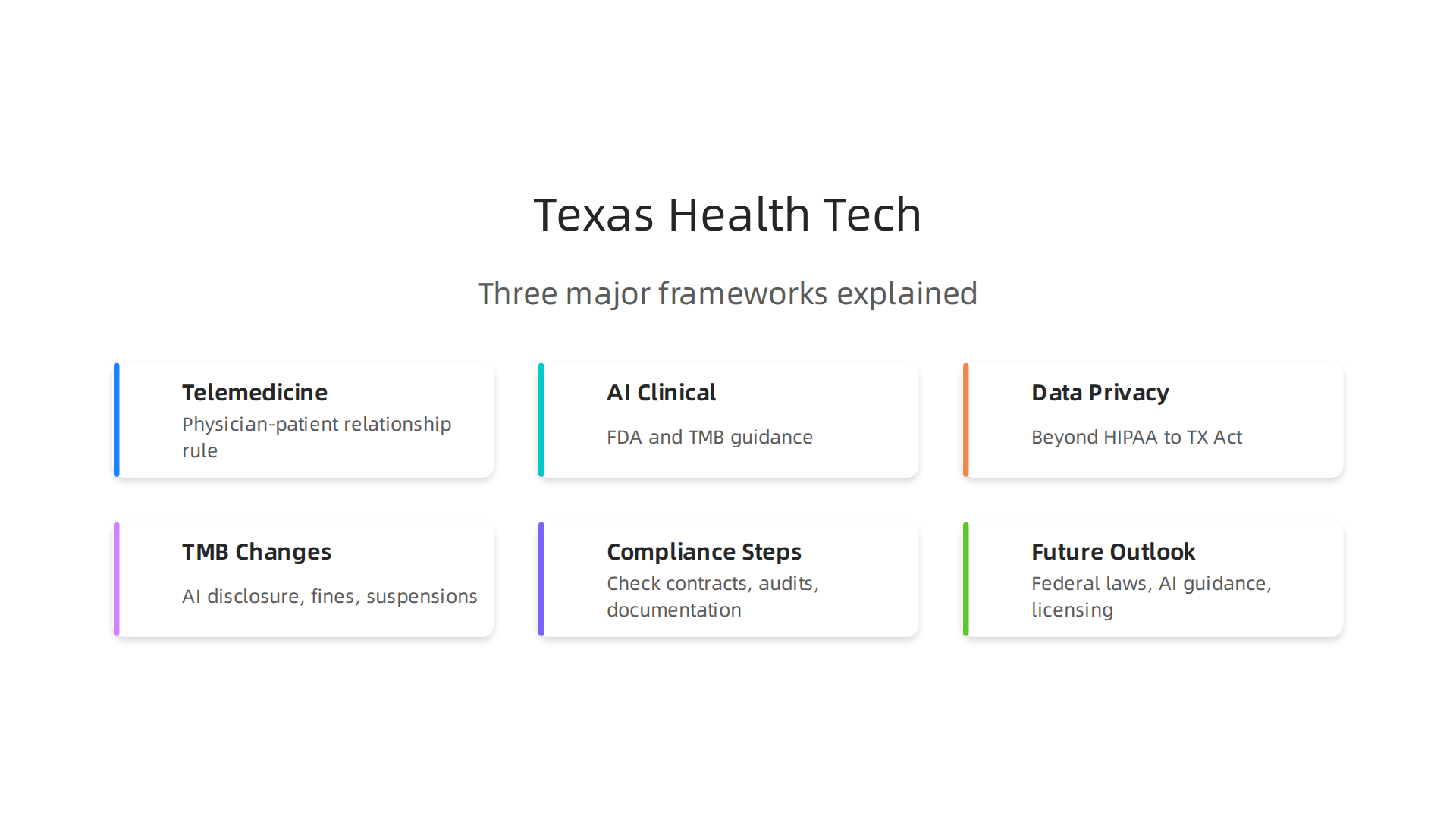
Now that you have a feel for how the Texas Medical Board operates, it is time to zoom in on the three big rulebooks that directly affect your health tech product. These frameworks dictate how you build, launch, and run your technology inside Texas.
1. Telemedicine: The Physician-Patient Relationship Rule
Texas has strict rules about how a doctor can treat a patient remotely. The core idea is simple. A valid physician-patient relationship must exist before a doctor can diagnose, prescribe, or treat. And for telemedicine, that relationship typically requires a live, two-way audio-visual visit.
The Texas Medical Board enforces this standard closely. You cannot rely on a simple chat or a questionnaire alone. As the AAFP explains, telehealth legal requirements include proper consent and a documented clinical encounter. That means your platform must support real-time video and help the physician establish that connection.
There are also cross-state licensing wrinkles. Texas allows out-of-state physicians to treat established patients via telehealth without a Texas license in certain cases. But that exception is narrow. Most health tech companies serving Texas need to make sure every provider using their platform has the right license. The Center for Connected Health Policy maintains a detailed map of these state-by-state rules.
The takeaway? If your product enables telemedicine, design it to facilitate a proper physician-patient relationship first.

2. AI and Clinical Decision Support: FDA and TMB Guidance
Artificial intelligence is transforming how doctors make decisions. But in Texas, using AI in diagnostics comes with extra oversight. The Texas Medical Board and the FDA both have a say.
According to a 2026 report from Holland & Knight, states are actively enacting AI healthcare laws that address provider use, AI chatbots, and patient protections. Texas is part of that wave. Your AI or machine learning software used for clinical decision support must comply with FDA clearance pathways. But you also need to follow TMB guidance on physician oversight. The board expects doctors to remain in the loop. AI can assist, but the final clinical decision must rest with a licensed professional.
This is especially true for tools that diagnose conditions or recommend treatments. Build your software so the physician can review and override AI suggestions easily. That is not just good design. It is a compliance necessity.
For a deeper look at how health plans are adopting AI and navigating these challenges, read our article on why 94% of health plans are adopting AI in health insurance in 2026.
3. Data Privacy: Beyond HIPAA to the Texas Medical Records Privacy Act
HIPAA sets the baseline for protecting patient data. But Texas goes further. The Texas Medical Records Privacy Act adds stricter requirements for how health information is used and stored. And a new law, SB 1188, signed in 2025, adds rules for electronic health records and AI.
As the HIPAA Journal explains, the Texas Medical Records Privacy Act requires covered entities to comply with HIPAA plus additional state-level protections. Under SB 1188, electronic health records must be stored in a way that limits access and ensures data localization. The law also regulates how AI interacts with patient records.
That means your health tech platform needs more than just HIPAA compliance. You need to meet Texas-specific privacy standards. If your product stores or processes patient records, you must design for data residency and tighter access controls.
These frameworks do not exist in isolation. They work together to create a complex compliance environment. Keeping up with changes from the Texas Medical Board, the FDA, and state privacy laws is a full-time job. That is why many health tech leaders rely on daily briefings.
Stay ahead of every regulatory shift without the research burden. Get clear daily updates on AI and health tech regulation with The Deep View Newsletter. It saves you hours of reading so you can focus on building a compliant product.
Next, we will walk through how the TMB investigates and disciplines providers. Knowing this process helps you spot problems before they escalate.
Recent Policy Changes and Enforcement Trends at the TMB
Knowing the rules is one thing. Seeing how the Texas Medical Board actually enforces them is another. And right now, the TMB is more active than ever.
In 2025 alone, the board launched over 1,500 formal investigations into Texas providers. That is a clear signal that enforcement is a top priority. These investigations often target telehealth prescribing and remote monitoring practices.
Here is what is changing in 2026.
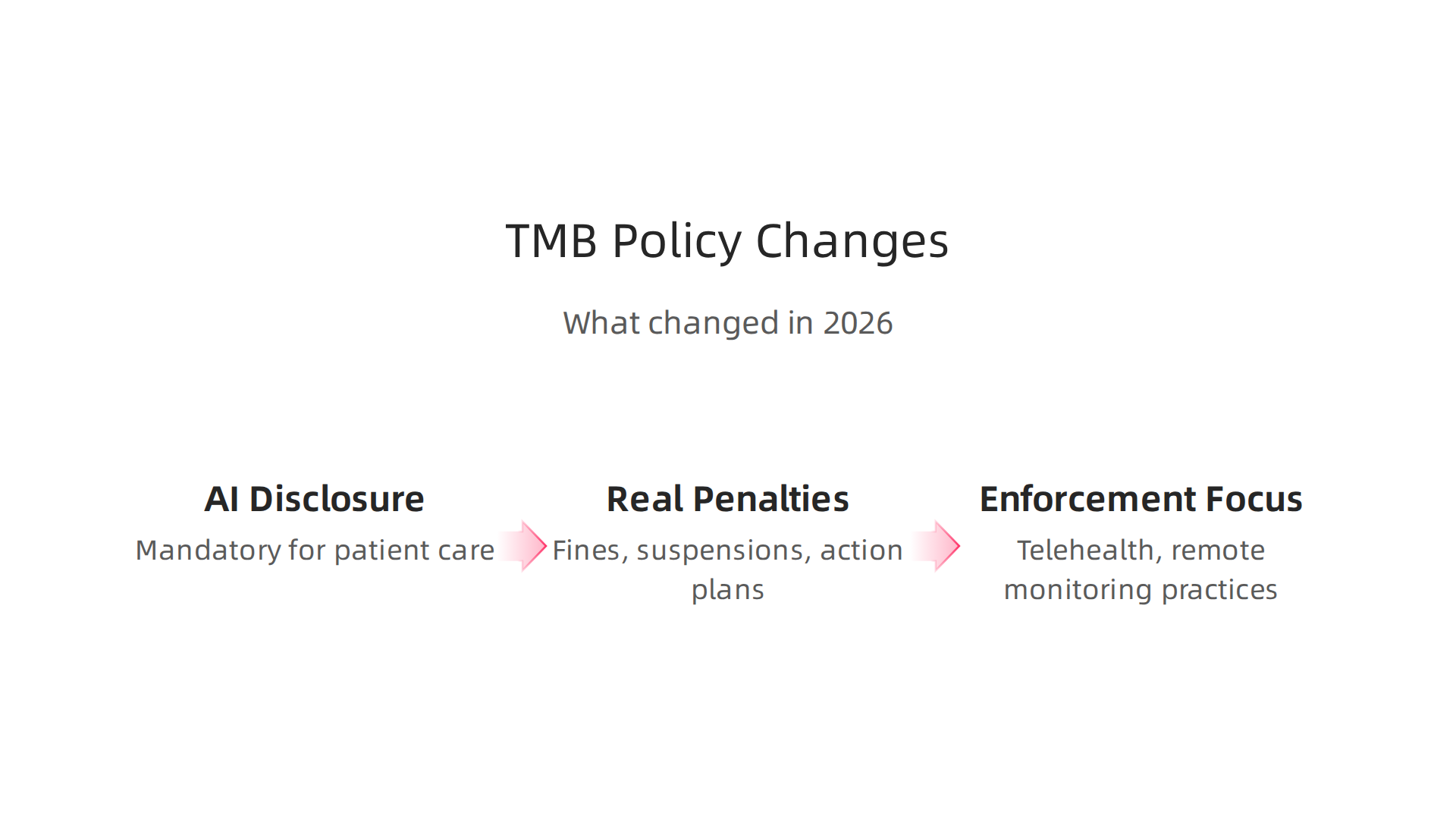
AI disclosure is now mandatory.
New rules that took effect this year require providers to tell patients when they are using artificial intelligence in their care. That includes communications, diagnosis suggestions, and treatment planning. If your health tech platform uses AI, you must build that disclosure into the workflow. No exceptions.
Penalties are real and they hurt.
The TMB can issue fines, suspend a medical license, or demand a corrective action plan. And they do not just go after doctors. Companies that enable bad practices can also face consequences. The board has a public list of disciplinary actions, and the numbers show a steady stream of suspensions and restrictions.
Take a look at the TMB’s own disciplinary action data. In fiscal year 2024, there were 22 temporary suspensions. In FY 2026, that number has already reached 5 by March. The pattern is clear. The board is watching closely.
So what does this mean for your product? You need to build compliance into your software from day one.

Make sure your telemedicine platform supports proper physician-patient relationships. Include clear AI disclosure features. And design your system so a doctor can always override an AI suggestion.
Keeping up with these enforcement trends can feel like a full time job. The rules change fast, and missing a new requirement can cost you.
That is why many health tech leaders use The Deep View Newsletter to stay updated. It delivers clear daily briefings on AI and health tech regulation straight to your inbox. No fluff. Just what you need to know.
For a deeper look at how technology is reshaping care delivery, read our article on digital health in family practice and its impact on community care. Understanding these trends helps you build tools that actually work for providers and patients.
Next, we will walk through how the TMB investigates and disciplines providers. Knowing this process helps you spot problems before they escalate.
Impact on Digital Health Startups and Investors
If you are building a health tech company in Texas right now, you probably feel the pressure. The rules we just talked about are not just paperwork. They shape your entire business.
Startups with AI tools face a tougher road in Texas.
Here is the reality. The Texas Medical Board treats AI diagnostic tools with extra caution. In states like California or New York, the path to market can feel smoother. But in Texas, regulators want proof that your system supports, not replaces, a doctor’s judgment. That means you need built-in override features and clear audit trails from day one.
If you are working on an AI-powered triage app or a diagnostic support tool, expect more questions from the board. Your compliance team needs to know the Texas rules inside and out.
Investors are changing what they look for.
Smart money now follows compliance. Venture firms and angel investors want to see that your legal team understands state medical board rules before they write a check. They know that a single enforcement action can kill a company.
This shift is real. According to Wipfli, regulatory changes are forcing healthtech leaders to build new strategies around compliance. Investors are paying attention. If your startup has a proactive compliance program and legal counsel experienced in Texas board rules, you stand out.
Funding is moving to later-stage companies.
Here is the trend in 2026. Early stage funding for health tech in Texas is still active. Programs like Texas Health Catalyst at Dell Medical School offer seed funding of up to $50,000 to get you started. But the biggest rounds are going to companies that have already navigated regulatory hurdles.
Series A and B investors want to see that you have survived a board review or adapted to a new rule. They pay a premium for proven resilience. As one analysis from Qubit Capital explains, these funding rounds are about more than capital. They validate your ability to operate in a tough regulatory environment.
So what does all this mean for you?
If you are a founder, build compliance into your software from the start. Use your funding on legal counsel who knows the texas medical board. If you are an investor, prioritize companies that treat regulation as a feature, not a burden.
And if you want to stay ahead of these shifts every single day, check out The Deep View Newsletter. It gives you clear daily updates on AI and health tech regulation so you never miss a change that could affect your company.
Compliance Strategies for Health Systems and Software Buyers
If you run a hospital system or make software buying decisions for a healthcare organization, you already know the stakes are high. The same Texas Medical Board rules that challenge startups also create real headaches for established health systems. The difference is that your organization has more to lose from a single enforcement action.
Here is what you need to do in 2026 to stay protected.
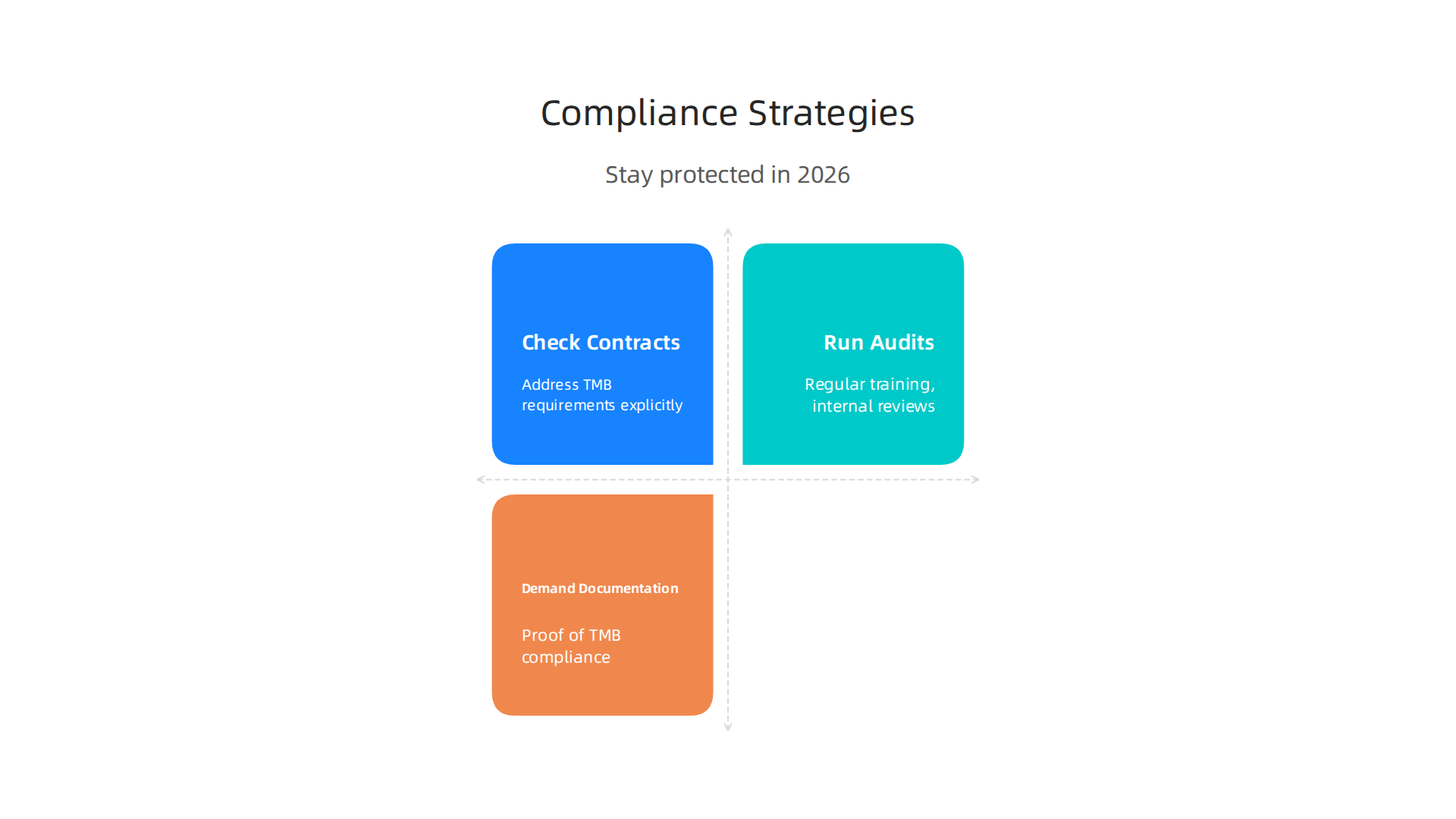
First, check your vendor contracts closely.
Your software vendors must address TMB-specific requirements for telemedicine and AI tools. The rules are not optional. Since January 1, 2026, Texas requires that all electronic health records be physically stored inside the United States. That means your cloud storage agreements and data hosting contracts need explicit language about compliance with Texas SB 1188.

Also, AI diagnostic features in your software must support, not replace, a doctor’s decision. If your vendor’s product uses AI for diagnosis, you need proof that it has built-in override options and clear audit trails. The Texas law regulating EHR and AI is clear on this.
Second, run regular compliance audits and training.
The Texas Medical Board does not mess around. Your team needs to know the latest privacy rules, including the updated HIPAA requirements for 2026. That means mandatory encryption, multi-factor authentication, and 72-hour breach reporting for every Texas covered entity. Learn the full list of new requirements in the 2026 HIPAA compliance guide for Texas.

You also need to enforce the Texas Medical Records Privacy Act across your organization. This law adds protections on top of HIPAA, and mandatory medical privacy regulations apply to every healthcare system operating in the state. Schedule biannual training for your staff and conduct internal audits to catch gaps before the board does.
Third, demand TMB-specific documentation from vendors.
Before you buy any new health tech tool, ask for proof of compliance. Your vendors should give you written documentation that their product meets Texas rules for telemedicine, AI use, and data storage. If they cannot provide it, walk away.
The healthcare technology and compliance landscape is a patchwork of federal and state rules. In Texas, that patchwork is especially dense. Buying software without checking its TMB readiness is a risk your organization cannot afford.
Looking for a practical next step? Read our guide on how digital health in family practice is reshaping community care to see how these rules affect real-world clinics.
And if you want to stay ahead of every regulatory change that impacts your purchasing decisions, subscribe to The Deep View Newsletter. It gives you clear daily updates on AI and health tech regulation so you never miss a rule that could affect your compliance strategy.
Comparing Texas Medical Board Policies with Other State and Federal Bodies
Texas is one of the strictest states in the country, but it is not the only one with unique rules. Healthcare systems and software buyers need to understand how the Texas Medical Board compares with other state and federal bodies. The differences can affect where you deploy technology and how much compliance work you need to do.
Telemedicine prescribing: Texas vs. California
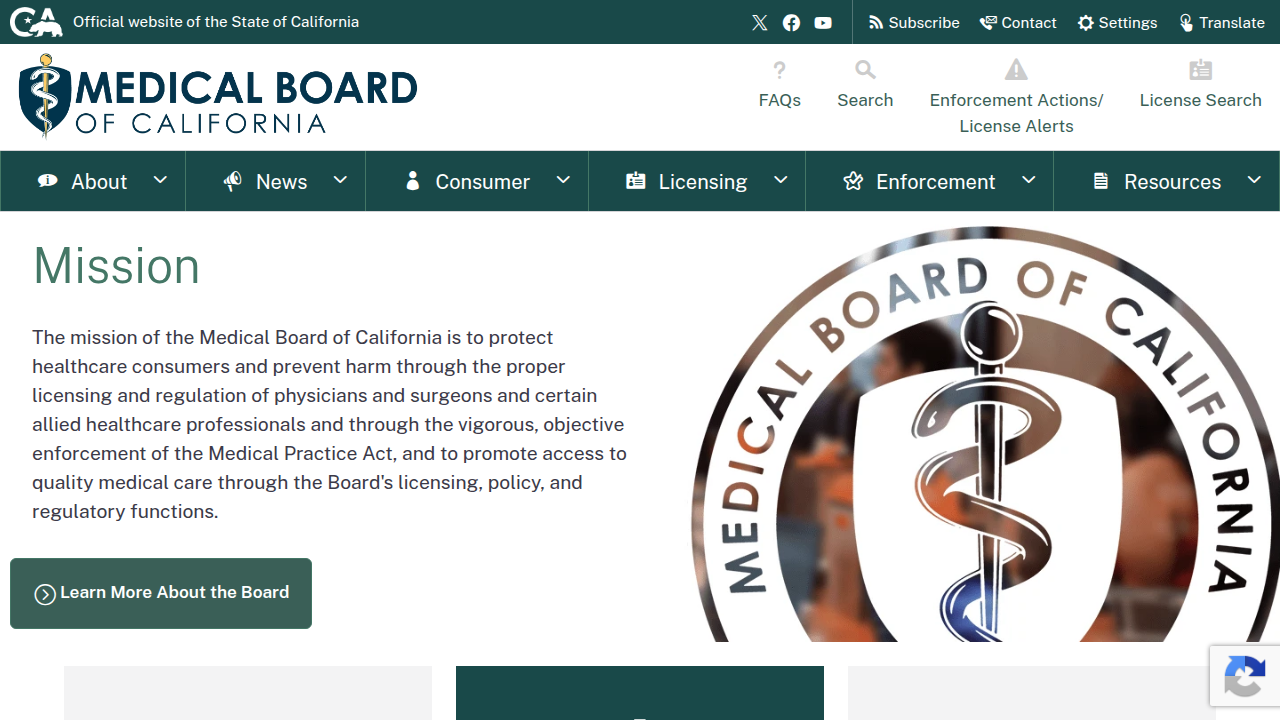
When it comes to telemedicine prescribing, Texas takes a more conservative approach than California. The Medical Board of California does not prohibit the use of technology in medicine as long as a California-licensed physician follows standard care rules.
Texas, on the other hand, requires a documented patient-provider relationship before most prescriptions can be written. This difference matters if your health tech platform supports cross-state telehealth. Cross-state telehealth rules in 2026 show that major states like Texas, California, New York, and Florida are not part of the interstate medical licensure compact, which adds extra licensing hurdles.
Texas does allow out-of-state physicians to treat established patients via telehealth without a Texas license, but only for ongoing care. That is a narrower exception compared to some other states. If you plan to offer services across state lines, you need to check each state’s licensing exceptions carefully.
AI oversight: Texas is more permissive
Here is the surprising part. While the Texas Medical Board is strict on telemedicine, it is more permissive on AI oversight compared to some other states. Many states are actively regulating AI in healthcare in 2026, including rules about insurer decision-making, provider use, and patient protections. Texas has required that AI tools support rather than replace doctors, but it has not passed the same level of specific AI laws as states like Colorado or California.
For health tech companies, this creates a compliance priority list. If your product uses AI for diagnosis, you need to meet the Texas Medical Board’s requirements first. But if you also operate in states with stricter AI laws, you must layer those on top.
What federal bodies add
Federal frameworks from the FDA, FTC, and OCR give you a baseline. The FDA oversees AI-driven medical devices. The FTC enforces deceptive practices. OCR handles HIPAA enforcement for 2026. But state boards like the Texas Medical Board, the FL Department of Health, and the Texas Board of Nursing can add extra layers on top of federal rules.
A state-by-state comparison helps you prioritize market entry and compliance investments. If you are expanding nationally, start with the strictest states first. Texas is at the top of that list for telemedicine rules.
The practical takeaway? Build your compliance foundation around the Texas Medical Board. Then adjust for other states as you grow.
Want to stay on top of every state and federal change that could affect your technology decisions? Subscribe to The Deep View Newsletter. It delivers clear daily updates on AI and health tech regulation so you never miss a rule that could impact your compliance strategy.
And if you are looking for ways to apply these rules in real-world clinics, read our guide on how digital health in family practice is reshaping community care.
Future Outlook: Health Tech Policy in 2027 and Beyond
So far we have looked at how the Texas Medical Board compares to other state and federal bodies today. But these rules are not standing still. If you work with healthcare systems or build health tech products, the next few years will reshape your compliance map.
A big shift is coming from federal lawmakers
The Telehealth Modernization Act is one example of a push to standardize rules across all 50 states. If it passes, it could preempt some of the strict state-level variations we see now. This would give health tech companies a more predictable playing field. As regulatory shifts bring new strategies for healthtech leaders, having a flexible compliance system gives you a real advantage.
The Texas Medical Board will get more specific on AI
Expect the Texas Medical Board to release detailed guidance on algorithmic accountability and patient data usage. This is a major way the board will impact healthcare technology. If your product uses AI for diagnosis or treatment planning, these new rules will set the bar for how you validate your tools. While states like the FL Department of Health have their own approaches, the Texas Medical Board is likely to lead with strict requirements. We are already seeing how 94% of health plans are adopting AI in health insurance in 2026, and regulation will follow that fast adoption.
Cross-state licensing is getting easier
The Interstate Medical Licensure Compact (IMLC) continues to grow. This affects the Texas Board of Nursing and other professional boards. More states are joining, which makes it easier for clinicians to treat patients across state lines. Health tech platforms that help doctors prove their credentials and prescribe across borders will have a big market edge. Programs like Texas Health Catalyst are already funding startups focused on these exact compliance needs.
How to prepare
The future is moving toward more federal oversight, stricter state AI rules, and smoother cross-state licensing. To keep your compliance strategy ready for every update from the Texas Medical Board and beyond, you need a clear source of daily intelligence.
That is exactly what The Deep View Newsletter delivers. It provides clear daily updates on AI and health tech regulation so you never miss a rule change that could affect your deployment plans. Subscribe today and stay ahead of the policy curve.
Summary
This article explains how the Texas Medical Board (TMB) has become a central regulator for health technology in 2026 and what that means for founders, buyers, and investors. It reviews the three core compliance areas—telemedicine standards requiring documented physician‑patient relationships, AI and clinical decision‑support rules that demand physician oversight and mandatory AI disclosure, and Texas‑specific data privacy rules such as SB 1188 and the Texas Medical Records Privacy Act. The piece summarizes recent enforcement trends and data showing heightened investigations and disciplinary actions, and it translates those trends into practical implications for startups, health systems, and vendors. You will learn concrete steps to avoid common regulatory pitfalls: design real‑time telemedicine workflows, build override and audit trails for AI, enforce data residency and tighter access controls, and require TMB‑focused documentation from vendors. The article also compares Texas rules to other states and federal frameworks, highlights how investors now prize compliance, and outlines how to prepare for upcoming policy shifts. Overall, readers gain a clear, actionable compliance roadmap to launch and scale health tech in Texas without getting blindsided by state enforcement.