

Digital health is growing very fast in 2026. Experts say the global market for digital health will reach over a trillion dollars by 2031, showing how much money and effort are going into new health tools and systems Digital Health Market – Forecast from 2026 to 2031. This is a big step forward. But, even with all this growth, there’s a huge problem. Our public health system often struggles because health data is all over the place.
Think of it like this: many different doctors’ offices, hospitals, and clinics use their own computer systems. These systems often don’t "talk" to each other very well. This means health information can be broken up into many small pieces. When data is fragmented like this, it’s hard to get a full picture of what’s happening with people’s health.

It slows down how fast we can report important health trends, like when a new sickness is spreading. Also, if different places use different ways to write down health information, like using a different meaning for a qd medical abbreviation (which means "every day") or a cva medical abbreviation (for stroke), it causes confusion. This lack of a shared language, called limited interoperability, makes it tough for public health workers to act quickly and wisely.
This article will give you a clear plan. It’s for leaders in healthcare, people who make health products, doctors, and even investors. We will look at the best ways to use data standards, make sure data is managed well, and put these ideas into practice. Our goal is to make public health stronger and more responsive for everyone.
Want to stay informed about the latest AI trends in health tech?
The AI Newsletter Worth Reading
The previous section highlighted how fragmented health data can slow down our public health system. But what if we could connect all those dots? That’s where digitalization comes in. It’s not just a trend; it’s a powerful tool that offers many benefits and drives new business in public health.
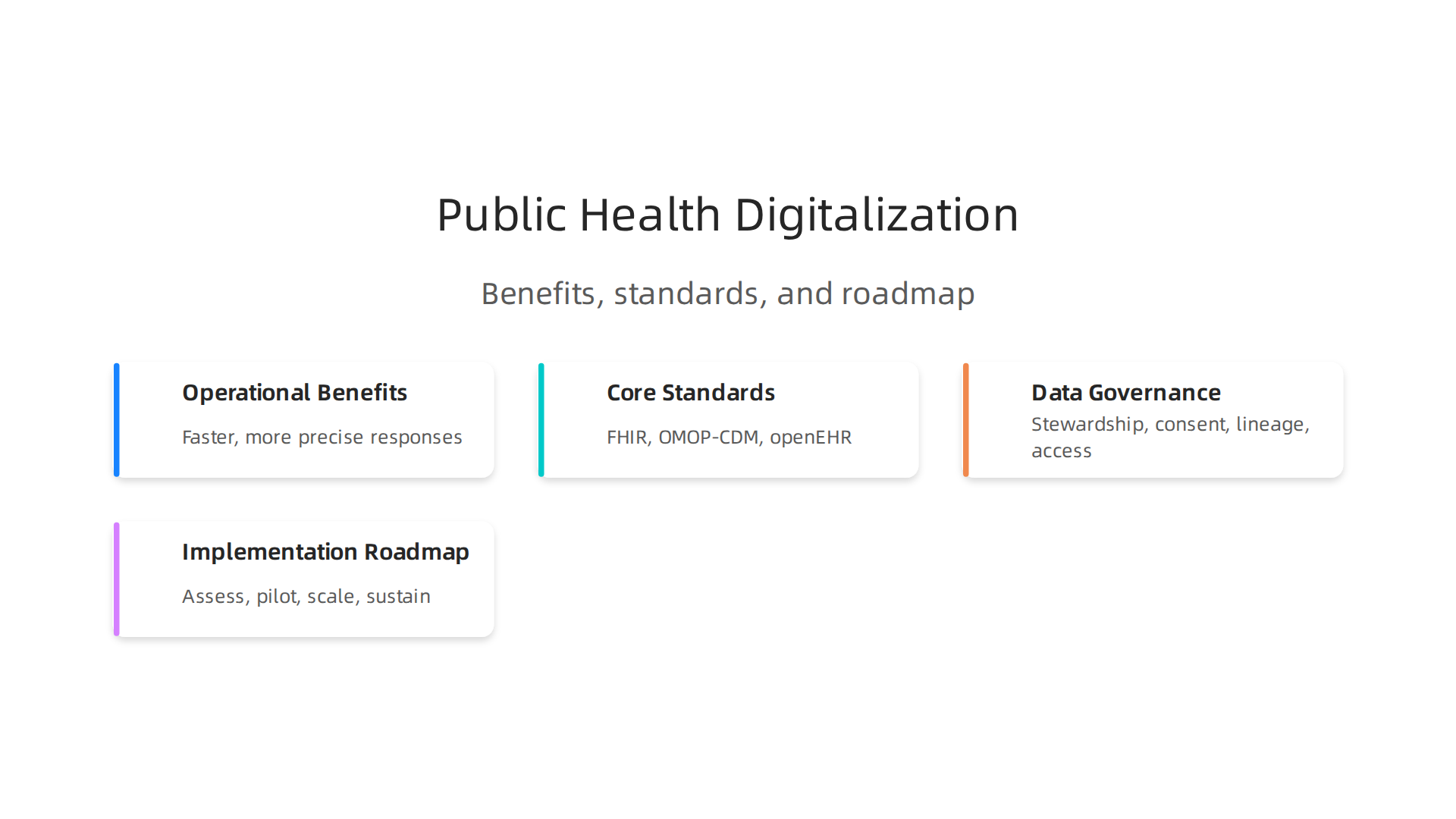
Operational Benefits: Faster, Smarter Responses
Digitalizing public health systems means we can work faster and more precisely.
Imagine a sickness starts to spread. With old systems, tracking it is slow because data has to be gathered and put together by hand. This can take days or even weeks. But with digital health, information from different clinics, hospitals, and labs can flow together quickly.

This helps with:
- Faster surveillance: Doctors and public health officials can see health trends much sooner. They can spot new outbreaks of sickness more quickly because digital systems gather data in almost real-time. This quick view helps them understand how a sickness is moving and what areas are most affected. Getting this kind of up-to-date information is key for public health efforts, allowing for timely analysis in any public health journal.
- Streamlined reporting: Digital tools make it easier to gather and report health information. Instead of filling out many paper forms or using different computer programs that don’t talk to each other, digital systems can automatically put reports together. This saves a lot of time and makes sure the information is correct. It also helps avoid confusion caused by unclear clarifying medical abbreviations that are not consistent across systems.
- Improved outbreak response: When an outbreak happens, quick action saves lives. Digital systems help public health teams share information instantly, letting them know where to send help, like doctors, nurses, or medicines. This makes their response much more effective, limiting how far a sickness spreads.
The market for digital health solutions is growing rapidly, with projections indicating significant expansion. This growth shows the strong business drivers for companies making these tools, as health systems look for ways to improve these operational aspects. For example, the global digital health market was valued at USD 347.4 billion in 2025 and is expected to grow to USD 1,830.4 billion by 2033, showing a huge increase in interest and investment in digital tools for healthcare Digital Health Market Size And Share Report, 2026-2033. This transformation means that digital health is becoming a basic part of how healthcare works, not just a nice-to-have. This is echoed in the 2026 US health care outlook, which highlights empowering consumer health with digital experiences and scaling AI to modernize operations 2026 US health care outlook.
Strategic Benefits: Smarter Planning and Better Outcomes
Beyond day-to-day operations, digitalization offers big-picture advantages that change how public health works for the better.
- Better resource allocation: With good digital data, leaders can see exactly where health resources are needed most. For instance, if a digital system shows a specific neighborhood has high rates of a certain disease, health officials can send more doctors or health programs there. This way, money and effort go to the places that need them, like making sure a local community health centers advance technology adoption.
- Analytics-driven decision-making: Digital tools let experts look at huge amounts of health data and find important patterns. They can use these patterns to make smarter choices about health programs, treatments, and prevention efforts. This kind of "smart thinking" helps public health officials plan for the future, like understanding long-term health trends or how different treatments affect groups of people. For instance, some companies are focusing on integrated platforms with trusted data and models, moving from isolated innovations to a whole-system approach KPMG Global tech report 2026. This helps create a more robust health system technology landscape.
- Longitudinal population insights: Digital health records can follow a person’s health journey over many years, even if they see different doctors or live in different places. When this kind of data is put together for many people (anonymously, of course), it gives us a deep look at the health of whole communities. This helps us understand what keeps people healthy or why they get sick over time.
These improvements are not just good for public health. They also drive business because they make health systems more efficient and effective. For example, companies like Ford Health are leading the way. They, along with other healthcare software companies, focus on digital solutions that can provide these kinds of insights, knowing that health systems will invest in tools that lead to better outcomes and lower costs in the long run. The shift in 2026 is towards digital health becoming foundational infrastructure, providing trusted data and models for the industry Digital Health 2026: Ten Predictions as the Industry Shifts ….
The strategic benefits of digitalization, like smarter planning and knowing what keeps whole communities healthy, really depend on one crucial thing: everyone speaking the same language when it comes to health data. That’s where core data standards and interoperability frameworks come in. They are like the rulebook that public health teams use to make sure all the different pieces of health information can talk to each other, no matter where they come from.
What are Data Standards?
Think of data standards as a shared set of rules for how health information should be put together and understood. Without these rules, one clinic might call a patient’s blood pressure "BP," while another calls it "Blood Press." A hospital might record a diagnosis code one way, and a lab another. This kind of mix-up makes it very hard to get a clear picture of health trends, track sickness, or help people effectively. Data standards make sure that when information moves from one place to another, its meaning stays the same.
There are many kinds of standards, each good for different tasks in public health.
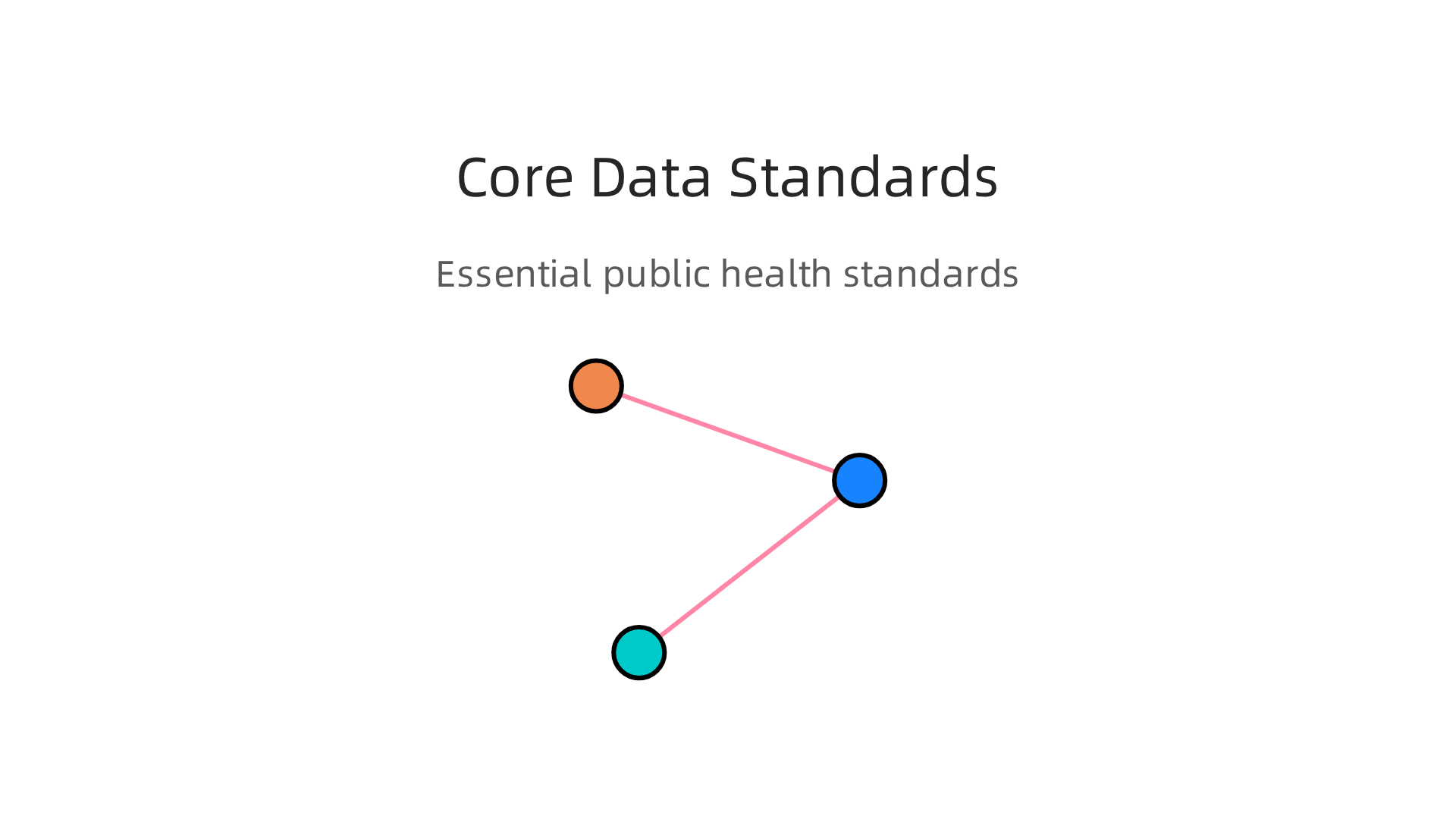
Here are some important ones:
- Fast Healthcare Interoperability Resources (FHIR): This standard is very popular in 2026 for sharing everyday clinical data. It helps different health systems talk to each other quickly and easily. FHIR is used a lot for things like exchanging patient records between doctors, for public health surveillance to track diseases, and in research studies. It’s especially useful because it lets health apps and computer systems connect easily, like plugging in a USB drive. Studies show that using FHIR can help with sharing data, though challenges in its adoption still exist Challenges of health data standard adoption and usage.
- Observational Medical Outcomes Partnership Common Data Model (OMOP-CDM): This standard is super helpful for big research projects. It takes health data from many different sources, like hospitals and clinics, and puts it into one common format. This makes it much easier for researchers to study large groups of people over time, find new treatments, and understand how diseases work. For example, researchers might compare how common a
cva medical abbreviation(stroke) is in different populations using OMOP-CDM. - openEHR: This is another standard often used for storing detailed electronic health records. It’s designed to be very flexible, so doctors can add lots of specific information to a patient’s record while still keeping it organized and understandable by other systems.
How Standards Shape Analytics, Reporting, and Data Exchange
Choosing the right standards makes a big difference in how well public health teams can do their job:
- Better Analytics: When data is standardized, it’s like having all your toys sorted by color. You can easily compare apples to apples, not apples to oranges. This means public health experts can look at information from many places and find important patterns. They can see what treatments work best, what causes diseases, and where to put more effort into preventing sickness.
- Easier Reporting: Standardized data makes reporting much simpler and more accurate. When health information is collected in the same way everywhere, it’s easier to create reports for government agencies, health organizations, or even a
public health journal. This ensures that everyone is looking at the same facts and figures, which is vital for making good decisions. Consistent data also helps avoid confusion with unclear terms, such as aqd medical abbreviationwhich might be understood differently in various non-standardized systems. If you want to dive deeper into how technology is changing healthcare, consider exploring healthcare technology trends 2026 reshape medicine and patient care. - Smooth Multi-Agency Data Exchange: This is where the magic really happens for public health. Imagine health departments, hospitals, labs, and even
ford healthworking together. With common standards, they can share information seamlessly and instantly. This quick sharing is key during health crises or when monitoring long-term health trends across a region. It means less paperwork, fewer mistakes, and faster, smarter responses to health challenges.
Companies that provide these digital tools and frameworks are seeing strong demand. They help healthcare organizations, from small clinics to big health systems, connect their data better. Staying updated on these developments is important for anyone working in health tech.
For those eager to stay on top of the latest advancements, especially in AI’s role in health technology, there’s a valuable resource. Get clear daily AI updates from The AI Newsletter Worth Reading.
2a. Key standards explained: examples and fit-for-purpose guidance
Now, let’s look closer at what each standard does and how to pick the right one for your needs. Each standard has its own special job:
- Fast Healthcare Interoperability Resources (FHIR): FHIR is all about making health data flow smoothly and quickly. It’s like the main language for computers to share small bits of health info, such as a patient’s visit notes, lab results, or prescriptions, in real time. This is super helpful for connecting different doctor’s offices, mobile health apps, and public health systems that need quick updates on things like disease outbreaks. For example, a recent review highlighted FHIR’s growing importance in all kinds of health research Fast Healthcare Interoperability Resources (FHIR) for Clinical, Epidemiological and Public Health Research: A Systematic Review.
- Observational Medical Outcomes Partnership Common Data Model (OMOP-CDM): If you’re planning a big health study, OMOP-CDM is often the best choice. It takes health data from many different places and changes it into one common format. This means researchers can easily compare information from lots of patients over a long time, helping them understand diseases better or find new treatments.
- openEHR: This standard focuses on storing very detailed and flexible patient records within electronic systems. It lets doctors record rich, complex patient information in a structured way that other computer systems can still understand. It’s great for maintaining specific clinical notes and making sure all the nuances are kept.
How to Choose the Right Standard
Picking the best standard depends on what you want to do:
- For fast, everyday sharing or connecting different software: FHIR is usually the go-to. It works well for day-to-day care and connecting various parts of the health system, including big health organizations like
ford health. - For big research studies that compare data from many different sources: OMOP-CDM is built for this. It makes sure all the diverse data talks the same language for analysis.
- For creating very detailed, adaptable patient records within a single system, while ensuring the data is still structured for future use: openEHR can be a powerful option. This is especially useful for managing complex medical terms, preventing confusion from a
qd medical abbreviationin a patient’s chart.
Keeping up with how these standards are used is important. A study published in a public health journal found that while these standards are very useful, there are still some gaps in how widely they are adopted and used across all healthcare settings Data Standards Adoption Gaps in Healthcare.
3. Data governance, privacy, and regulatory compliance for public-health datasets
After figuring out which data standards to use, the next big step is making sure all that health data is handled wisely and safely. This is where data governance, privacy rules, and regulatory compliance come in.

They are like the guardrails that keep public health datasets secure and useful, especially when different groups need to share information.
Essential Elements of Data Governance
Good data governance for public health means having clear rules and people in charge.
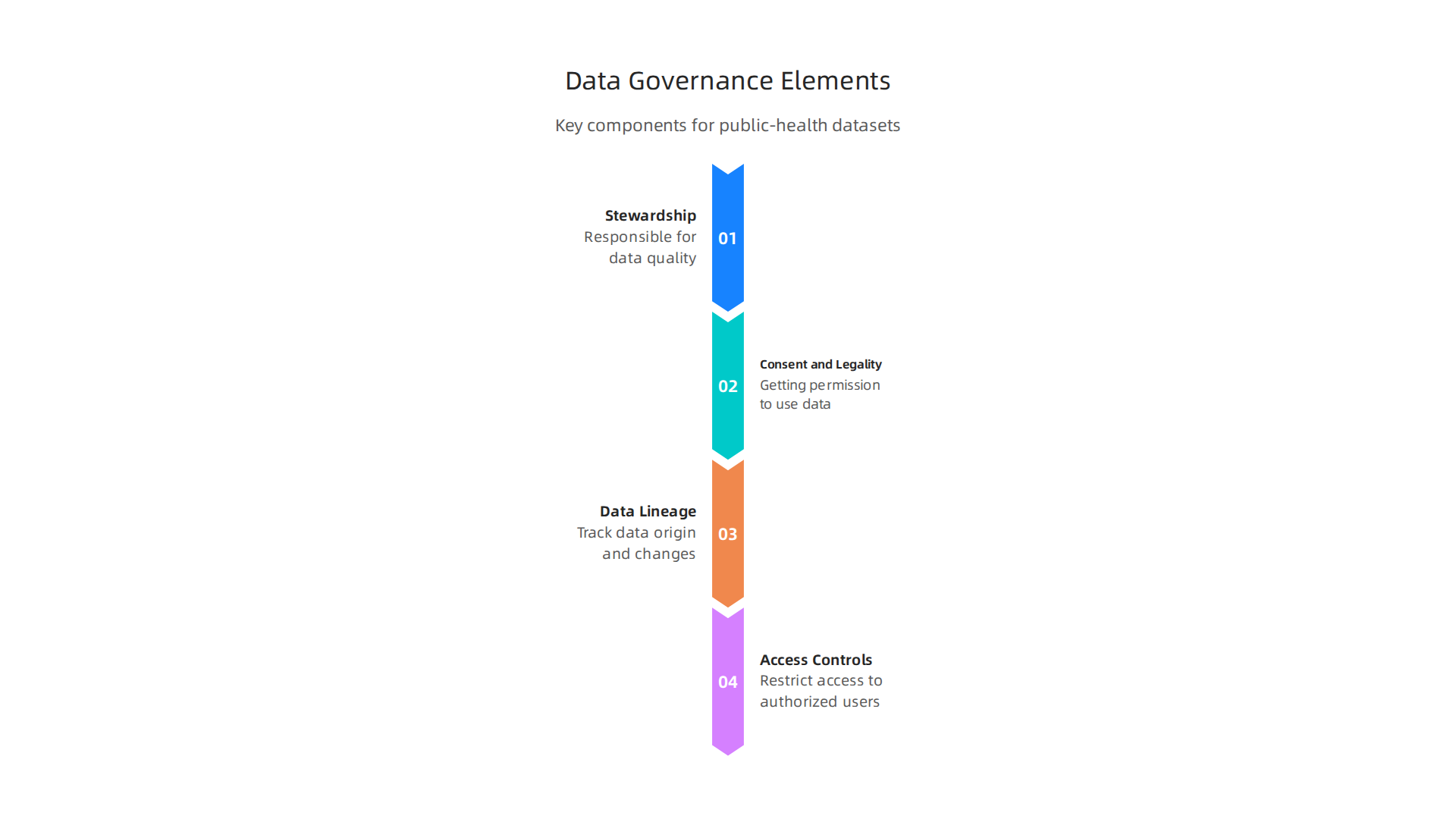
Think of it as having a playbook for how health information is collected, stored, used, and shared. Here are the key parts:
- Stewardship: This is about who is responsible for the data. It means having people or teams who look after the data to make sure it’s correct and used properly. They are the data’s guardians, ensuring its quality and ethical use. The CDC, for example, offers guidance on Data and IT Governance to help organizations manage this responsibility.
- Consent and Legality: It’s super important to get permission to use someone’s health data. This often means getting their consent or making sure there’s a clear legal reason for using it, especially when dealing with sensitive information from many patients. Rules like those found on the HHS Guidance Portal help define what is allowed.
- Data Lineage: Knowing where data comes from and how it has changed over time is key. This helps ensure the data is trustworthy and accurate. For instance, understanding the full path of data helps avoid mistakes, like confusing a
qd medical abbreviationfor something else in a patient’s chart, which could lead to wrong conclusions in a public health study. For more on improving clarity, you might want to read about clarifying medical abbreviations for safer health tech systems. - Access Controls: Not everyone should see all the data. Access controls make sure only authorized people can view or use specific health information. This helps protect patient privacy.
Many organizations, like ford health, put a lot of effort into these governance pieces to ensure their public health data is used responsibly. In fact, many global health organizations are calling for a worldwide plan for health data governance in 2026 to ensure data is managed ethically From the senior leadership of 15 global health organisations.
Regulatory Compliance and Cross-Border Sharing
Dealing with public health data also means following strict laws. In the US, for example, the Health Insurance Portability and Accountability Act (HIPAA) sets rules for protecting patient information. In Europe, the General Data Protection Regulation (GDPR) is another major law. These rules can be complex, especially when data needs to cross borders.
The Centers for Disease Control and Prevention (CDC) plays a big part in this. They launched the Public Health Data Strategy Milestones for 2026 to make data sharing faster, more complete, and more secure. This strategy helps the public health system respond better to health threats. For anyone working in public health, staying updated on these plans and best practices is very important.
When public health datasets are shared between different countries, things get even more complicated. Each country might have its own privacy laws. This makes it tricky but very important to have clear agreements and ways of working together so that data can be shared safely and legally to help with global health issues. For example, a recent article in a public health journal discussed how important it is to share data properly during big health crises, suggesting we need better ways to do this to stop future problems To mitigate the costs of future pandemics, establish a common data space.
After putting strong data governance in place and making sure all privacy rules are followed, the next big task for public health systems is actually putting these new data standards to use. This needs a clear plan, like a practical roadmap, to make sure things go smoothly and help improve health for everyone.
A Step-by-Step Roadmap for Implementing Public Health Data Standards
Implementing new data standards across a whole public health system can seem like a huge job. But by breaking it down into smaller steps, it becomes much easier to manage.

Here’s a simple roadmap to follow:
- Assess What You Have: Before you change anything, you need to understand your current setup. Look at the data you collect now, how good it is, and what systems you already use. This step helps you see what’s working and what needs to change to meet new standards. For example, if your records often use a confusing
cva medical abbreviation, you’d note that as an area for improvement. - Start Small with a Pilot Project: Don’t try to change everything at once. Pick a small part of your system or a specific project to test the new standards. This "pilot" helps you find problems early and learn what works best without affecting the whole system. Think of it as a trial run to smooth out any bumps.
- Scale Up Gradually: Once your pilot project is successful, you can start spreading the new standards to more parts of your public health system. This means slowly adding more departments or programs. During this time, it’s vital to keep checking for issues and making adjustments.
- Keep It Going (Sustain): Implementing standards isn’t a one-time thing. You need to have a plan for keeping them up to date, training new staff, and making sure everyone continues to follow the rules. This ongoing effort makes sure the standards stay useful and effective over time. Following a practical guide like A Roadmap to Advancing Interoperability in Public Health can be very helpful here.
Key Organizational Considerations
Making these changes isn’t just about technology; it’s also about people and how an organization works.
- Building the Right Team: You’ll need people with different skills. This includes IT experts who understand how to build and maintain data systems, data scientists who can make sense of the information, and public health professionals who know what kind of health data is most important. Many organizations, like those associated with
ford health, invest heavily in training their teams for digital health advancements. - Choosing Good Partners: Often, public health systems work with outside companies or vendors to help with new technologies. Picking the right partners means looking for those who understand healthcare data, have good security practices, and can work well with your existing teams.
- Making Systems Work Together: New systems need to talk to old systems. This is called integration. It’s about making sure all your different software and tools can share information easily and correctly. This can be tricky, especially with older setups, but it’s key for a smooth public health data flow. Learning about the wider health system technology landscape can help leaders make better decisions.
- Managing Change: People don’t always like new ways of doing things. It’s important to help staff understand why these changes are happening and how they will make their jobs easier or more effective in the long run. Good communication and training are very important here. For instance, clearly explaining why a specific
qd medical abbreviationwill no longer be used can prevent confusion and errors.
By following this roadmap and paying attention to these important organizational details, public health systems can successfully put new data standards into practice. This will make data more reliable, easier to share, and ultimately, better for public health efforts in 2026 and beyond.
Stay updated on the latest shifts in health tech, AI, and healthcare innovation. The AI Newsletter Worth Reading delivers clear daily insights directly to your inbox.
To truly make new data standards work, public health systems need a strong foundation in place. This means getting the right technology ready and also making sure people are prepared for the changes.
4a. Technical and organizational prerequisites for successful adoption
Before new data standards can really shine, public health systems need good technology basics. This includes setting up proper infrastructure and data architecture. Think of it like building a house; you need a strong frame and good plumbing before you can move in. Good data architecture helps information flow smoothly and quickly, which means public health teams can use data faster to make important decisions. Modern systems also shorten the time it takes to see value from these new standards. The U.S. Centers for Disease Control and Prevention (CDC) has its own Public Health Data Strategy Milestones for 2026 which highlights ongoing efforts to improve data exchange.
It’s also super important to get everyone on board with the changes. This is called change management. People like doctors, nurses, and other public health workers need to understand why new standards are being put in place and how they will help. Clear communication and good training are key here. For example, if a system used to allow many different ways to write a cva medical abbreviation or a qd medical abbreviation, the new standards will fix this to avoid confusion and errors. This kind of clear guidance helps stop mistakes and makes data more useful. Companies like those under the ford health umbrella often spend a lot of time and effort training their staff on new digital health tools, showing how important it is. A common goal for any good public health journal is to share these kinds of best practices so everyone can learn. To learn more about making sure medical terms are clear, you can read about clarifying medical abbreviations for safer health tech systems. Getting buy-in from all the health professionals is a big step to make sure new systems are used well.
Now, let’s look at what has worked well and where we still need to improve. Many public health systems are seeing good results from using new digital tools and data standards. It is clear that bringing in new health technology can really make a difference.
5. Evidence and case studies: what works (and where gaps remain)
We have seen many good examples of new data standards being put to use. Digital health tools are being used more than ever. For example, in 2024, many doctors used telehealth every week, and most hospitals offered telehealth services. This shows how much people are starting to rely on digital ways to get care [Digital Health Adoption Statistics: 2026 Report].
Artificial intelligence (AI) is also playing a big part. By 2026, about 75% of health systems had already started using at least one AI solution. This number went up a lot from the year before [75% of Health Systems Have Adopted AI]. Many places that use AI for health say they get double their money back. These AI tools help with things like talking to patients, writing down notes from doctors, and making medical records better. Sharing these success stories in a public health journal helps everyone learn and grow.
But even with all this good news, there are still some problems.
Where We Still Need to Grow:
-
Data Quality: Sometimes, the information collected is not perfect. Imagine if some doctors wrote
cva medical abbreviationin one way and others wrote it differently, or if aqd medical abbreviationmeant slightly different things in various places. This can cause confusion and make it harder to get a clear picture of public health. Making sure everyone uses the same clear terms is a big job. To improve this, we need to focus on better ways to keep data clean and correct. You can learn more about how medical abbreviations affect safety by reading about the dangers of medical abbreviations and solutions for patient safety. -
Fairness for Everyone (Equity): Not everyone has the same access to new technology. People in poorer areas or those who don’t have good internet might miss out on the benefits. We need to make sure these new digital health tools help everyone, not just a few.
-
Keeping Things Going (Sustainability): Setting up new systems costs money and effort. It’s also hard to keep them running well over a long time. This includes making sure the technology is up-to-date and that people know how to use it correctly. Large organizations, like those under the
ford healthumbrella, often have to plan carefully for the long-term use of their health technology. -
Working Together Across Different Areas: It can be tough to share health data between different cities, states, or even countries. Each area might have its own rules or ways of doing things. This makes it hard for public health teams to get a full view of health issues that cross borders. One study showed that using new health data standards still faces challenges in how they are adopted and used across different places [Challenges of health data standard adoption and usage].
So, while we’ve come a long way in using technology to improve public health, there’s still work to do to make sure the data is good, fair, lasts a long time, and can be shared easily.
While we’ve made great strides, there’s still important work to do to make sure health data is good, fair, lasts a long time, and can be shared easily. So, what comes next? Let’s look at what the future holds for health technology, standards, and the role of research starting in 2026.
6. Future trends: where standards, journals, and research intersect in 2026 and beyond
Looking ahead, technology will keep changing how we think about public health. New and smarter tools, especially in artificial intelligence (AI), will play an even bigger role. We expect the global digital health market to grow a lot. Experts say it will go from about $420.2 billion in 2026 to over $1.8 trillion by 2033 [Digital Health Market Size And Share Report, 2026-2033]. This big growth means more chances to use technology to help people.
One exciting idea is called federated learning. Imagine many different hospitals or health systems, like a large organization such as ford health, all wanting to learn from their patient data without actually sharing the private information directly. Federated learning lets AI models learn from data in different places without the data ever leaving its original spot. This keeps patient information safe while still allowing us to find important health patterns. This way of learning will need new standards to make sure it works well and protects everyone’s privacy.
These new technologies will also change how we find proof that something works. With AI, we can process huge amounts of health information to see which treatments are best or how diseases spread. This helps us create better health guidelines. To learn more about how technology is changing medicine, you can read about healthcare technology trends 2026 reshape medicine and patient care.
The Role of Public Health Journals and Research
This is where public health journals become super important. These journals are where doctors, scientists, and researchers share their new findings and ideas. They are like a big classroom for everyone in health. As new AI tools and data standards come out, journals will publish studies that show how well these new methods work. They will also talk about the problems and what we need to improve.
For example, remember how we talked about issues with data quality, like if a cva medical abbreviation or a qd medical abbreviation is not always clear? Research published in a public health journal can highlight these problems and suggest better ways to define and use medical terms. This helps everyone in healthcare speak the same language, which is key for patient safety. You can find more information about making sure medical abbreviations are clear for health systems by checking out clarifying medical abbreviations for safer health tech systems.
Scholarly articles in a public health journal help to:
- Share New Knowledge: They tell us about the latest ways to use technology in health.
- Create Best Practices: They show what works best, so other hospitals and clinics can do the same.
- Influence Standards: The proof they offer helps decide what the new health data standards should be.
- Keep Everyone Informed: They make sure that health workers and leaders stay up-to-date with fast-changing technology.
In 2026 and beyond, the careful work of researchers and the sharing of their findings in a public health journal will be vital. They will help guide us in using new technology wisely to improve health for all. Many health plans are already adopting AI to help manage care better. If you want to stay on top of daily AI updates, consider signing up for The AI Newsletter Worth Reading.
Summary
This article explains why digital health and consistent data standards are essential to modern public health, and provides a practical plan for leaders, clinicians, vendors, and investors to make that shift. It covers the operational benefits—faster surveillance, streamlined reporting, and better outbreak response—and strategic gains like analytics-driven planning and longitudinal population insights. The piece breaks down key standards (FHIR, OMOP-CDM, openEHR), gives fit-for-purpose guidance on which to use, and shows how standards improve analytics, reporting, and multi-agency exchange. It also outlines core elements of data governance, privacy and cross-border compliance, plus a step-by-step implementation roadmap with technical and organizational prerequisites. Real-world evidence and remaining gaps (data quality, equity, sustainability, and integration) are discussed, and the article closes by looking at future trends such as AI, federated learning, and the role of research and journals in shaping standards. After reading, you’ll have a clear, actionable framework to choose standards, set governance, run pilots, and scale interoperable public health data systems.