


Why this guide matters for healthtech leaders, educators, and career-minded clinicians
Have you ever wondered how medical staff get those important pictures of our insides, like for a baby check-up or to see if a bone is healing right? That’s where a diagnostic medical sonography associate degree comes in handy. This special two-year college program trains people to become diagnostic medical sonographers.

These are the healthcare professionals who use ultrasound machines to create images of the body. They learn how to use the equipment, think carefully about what they see, and perform many kinds of body scans safely and well Associate in Applied Science in Diagnostic Medical Sonography. Many students choose this path because it offers a direct way to work in healthcare. For example, a program like the Diagnostic Medical Sonography Associate Degree Program can prepare someone for an entry-level job in under two years.
This guide is for everyone involved in making healthcare better. For healthtech leaders, understanding these programs helps you hire the best people and plan for your future teams. You’ll see what skills new sonographers bring, which is key as technology in healthcare keeps changing in 2026. For educators, knowing about program rules, what subjects are taught, and how students learn in hospitals is super important. It helps you make sure your students are ready for real jobs. And for career-minded clinicians, this guide helps you understand what a diagnostic medical sonography associate degree is all about. You’ll learn what training looks like, including the important hands-on practice called clinical placements, which often takes up at least three days a week over two years General Advice for Sonography Students on Clinical Placement 1. This way, you can pick a school that fits your goals. Understanding program details, like if a school is accredited, is just as vital as choosing the right medical assistant training program for other roles. This information helps everyone make smart choices that improve patient care.
As a healthtech leader, staying updated on everything from workforce development to cutting-edge tools is critical. To ensure you’re always in the know, consider subscribing to The AI Newsletter Worth Reading for clear daily AI updates.
What is a Diagnostic Medical Sonography Associate Degree?
Continuing from the idea of making smart choices, let’s look closer at what a diagnostic medical sonography associate degree really is. This special college program is usually finished in about two years. When you complete it, you typically earn an Associate of Applied Science (AAS) degree. This degree is what you need to become a registered diagnostic medical sonographer, which happens after you pass certain certification exams THE REGISTERED APPRENTICESHIP.
To get into these programs, you normally need to have a high school diploma or its equivalent. Some schools may also ask that you’ve taken certain science classes. Sometimes, they even prefer you to have some prior healthcare experience, similar to what you might need when learning how to pick the best accredited medical assistant programs in 2026.
What exactly do you learn in a diagnostic medical sonography associate degree program? You gain many important skills.
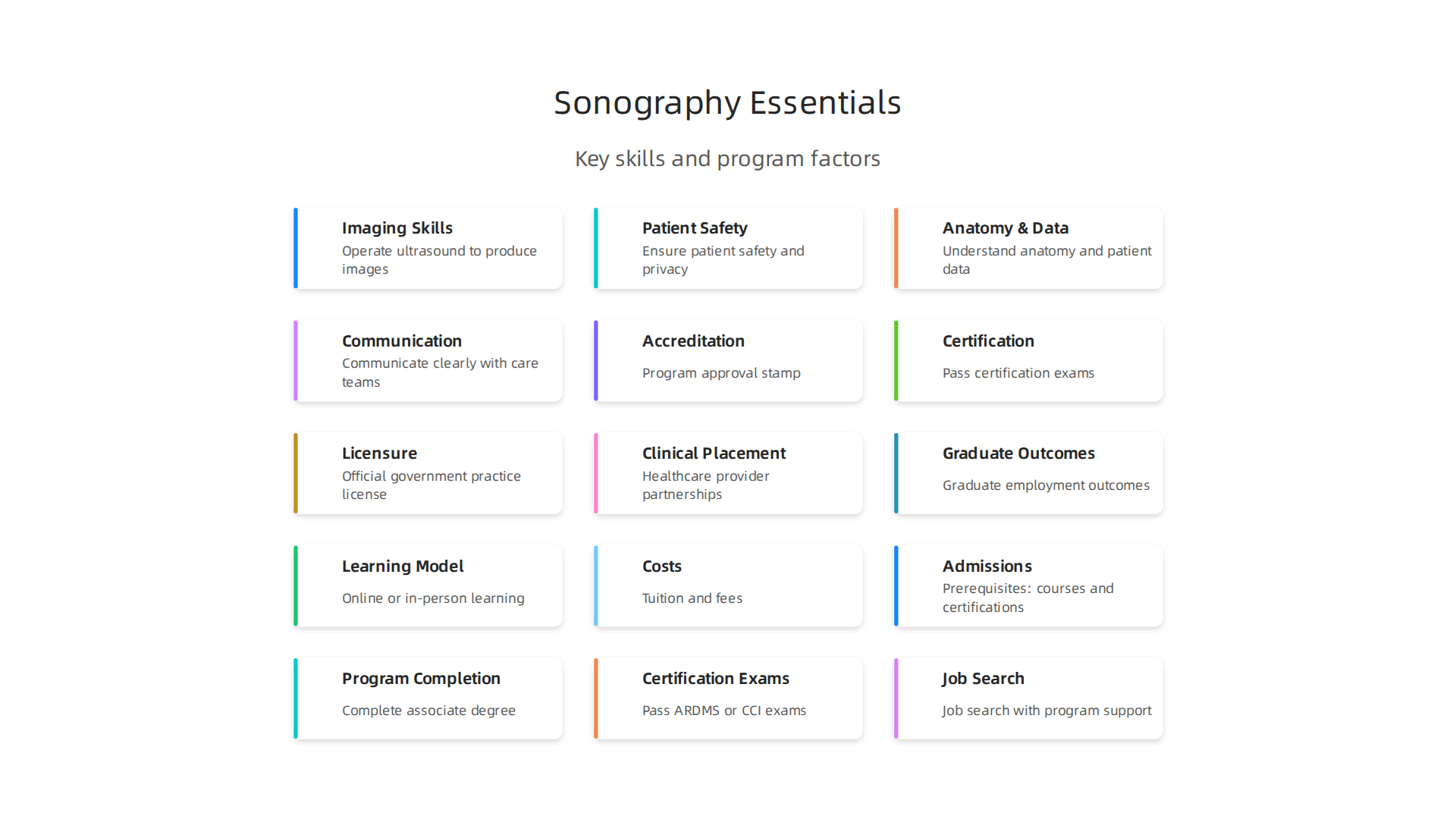
When students finish, they are expected to be good at several key things that help them do their job well and keep patients safe.
- Imaging Skills: Students learn how to use ultrasound machines to create clear pictures inside the body. This means they can pick the right tools and ways to scan, and then perform the scans accurately. They also learn to apply imaging rules to get good quality images Diagnostic Medical Sonography Program Student Handbook.
- Patient Safety and Care: A very important part of the job is keeping patients safe and comfortable. This includes knowing basic patient care and following strict rules about patient privacy, like HIPAA guidelines. These programs also teach about being ethical and professional in a healthcare setting Page 1.
- Anatomy and Data Interpretation: Sonographers must understand the human body very well. They need to know where organs are and how they look in pictures. They also learn how to gather and understand information from patient charts to help perform the best diagnostic procedures Program Goals and Outcomes – DACC.
- Communication: Being able to talk clearly with patients, their families, doctors, and other co-workers is super important PDF Diagnostic Medical Sonography. This helps make sure everyone understands what is happening and that patient care goes smoothly.
These skills prepare students to work well as part of a healthcare team. As technology changes fast in 2026, these strong basic skills are still the most important. Healthtech leaders looking at healthcare technology trends 2026 reshape medicine and patient care will find that sonographers with these foundations are ready to adapt to new tools and methods.
Choosing a good diagnostic medical sonography associate degree program means knowing what you will study. These programs are made to give you both classroom smarts and hands-on practice. Let’s look at the kinds of classes you’ll take and the important time you’ll spend helping real patients.
Typical Curriculum & Clinical Requirements (What to inspect in a program)
When you enroll in a diagnostic medical sonography associate degree program, you can expect to learn a lot. The classes help you understand how the body works and how to use ultrasound tools. For example, many programs start with courses like Introduction to Sonography and Patient Care. Then, you’ll dive into more specific topics such as "Anatomy and Physiology I" and "Anatomy and Physiology II," which teach you all about the human body. You’ll also take classes on the physics of how ultrasound works and how to use the machines 2024 DMS Catalog Copy.docx.
These programs usually have about 70 to 90 credit hours in total. Some may even be longer, like one program offering 81 or 91 credit hours, depending on if you want to also specialize in blood vessel studies Diagnostic Medical Sonography AS Degree – Keiser University. It’s a lot of learning, but it builds a strong base for your career.
Beyond textbooks, a big part of getting your diagnostic medical sonography associate degree is the clinical training. This means you spend many hours working in real hospitals or clinics.

These hours are super important because they let you practice what you learned in class on real patients. You get to work alongside experienced sonographers and other healthcare pros.
How many hours? Well, it varies a bit by program, but it’s always a lot. Some programs require at least 1,296 clinical hours MEDICAL SONOGRAPHY PROGRAM MANUAL 2025-2026. Others ask for a minimum of 1,350 supervised hours in approved clinics General Sonography – Associate in Applied Science. Some longer programs can even include over 2,000 clock hours that combine classroom time with a 24-week externship where you work full-time, often 40 hours a week Associate of Applied Science in Diagnostic Medical …. These clinical rotations might include shifts of 8.5 hours or more, helping you get used to a healthcare work schedule Diagnostic Medical Sonography (DMS) Associate of …. This practical experience is key to becoming a skilled sonographer.
If you’re interested in healthcare training and want to learn more about different career paths and educational requirements, you might find it helpful to look into a Medical Assistant Training Program Develop Skilled Healthcare Professionals. Staying informed about healthcare education and the latest in health tech can also give you an edge in your career.
Keeping up with fast changes in healthcare technology is a must. If you want daily updates on how AI and technology are shaping the healthcare world, make sure you check out The AI Newsletter Worth Reading.
After all that hard work in your diagnostic medical sonography associate degree program, you want to make sure your training counts. This is where accreditation, certification, and sometimes licensure come in. These words might sound big, but they are very important for showing that your school and you are ready for the job.
First, let’s talk about program accreditation. This is like a special stamp of approval for your school’s program itself. It means that the program meets high standards for teaching you everything you need to know. For a diagnostic medical sonography associate degree, the main group that gives this stamp is CAAHEP, which stands for the Commission on Accreditation of Allied Health Education Programs. If your program has CAAHEP accreditation, it means it includes the right classes and enough hands-on training to get you ready for work [Sonographer Higher Education Pathways]. This is really important because many employers will only hire people who went to an accredited program. It also helps make sure you can get your clinical training spots in hospitals.
Next is certification. This is for you, the student, after you finish your program. It shows that you have passed special tests and know how to do the job well. The main group for sonographer certification is called ARDMS (American Registry for Diagnostic Medical Sonography). To get certified, you usually need to finish a CAAHEP-accredited sonography program. Then, you pass two main exams: one on the physics of ultrasound and one on a specific area like the abdomen or heart [Ultrasound Technician Certification 2026: Complete ARDMS, CCI …]. Passing these exams shows you have the skills to be a good sonographer. Other groups like Cardiovascular Credentialing International (CCI) also offer certifications for specific areas like heart or blood vessel sonography [Registered Cardiac Sonographer (RCS) – CCI].
Having your certification is a big deal for getting a job. Most employers look for certified sonographers. It tells them you are ready to start helping patients safely and effectively. In fact, completing an accredited diagnostic medical sonography program is often one of the best ways to become eligible to take these important certification exams [REGISTERED DIAGNOSTIC MEDICAL SONOGRAPHER (RDMS …]. This also helps you get better clinical placements while you’re still in school.
Sometimes, states also require a license to work. This is another official paper from the government that says you can practice in that state. Most of the time, getting your certification is a big step towards getting this license. Choosing a program that is accredited and leads to certification is key for your future in diagnostic medical sonography. If you’re looking into how other healthcare roles get their programs approved, you might find information on How to Pick the Best Accredited Medical Assistant Programs in 2026.
Now that you know how important accreditation and certification are, let’s look at what exciting jobs you can get with your diagnostic medical sonography associate degree. This degree opens many doors in healthcare, preparing you for important roles right away.
Career Paths & Job Outlook for Graduates (roles, employers, and demand signals)
After finishing your program and getting certified, you’ll be ready for several entry-level jobs.

Many graduates become a diagnostic medical sonographer. This is the main role where you use special machines to create images of the inside of the body. You might also become a vascular sonographer, focusing on blood vessels, or an obstetric sonographer, who takes pictures of babies before they are born. Some jobs just call you a general ultrasound technologist or staff sonographer DIAGNOSTIC MEDICAL. In these roles, you’ll use your skills to operate equipment, choose the right imaging methods, and perform general diagnostic tests with care and accuracy, just like you learned in your associate degree program Associate in Applied Science in Diagnostic Medical Sonography.
You’ll find these jobs in different healthcare places. Hospitals are a big employer, needing sonographers for many departments. You can also work in special imaging centers that focus only on scans, or in smaller outpatient clinics. Your diagnostic medical sonography associate degree teaches you to be a part of the healthcare team, using good judgment to do your job well Program Goals and Outcomes – DACC. You’ll learn how to talk with patients, their families, and doctors, which is a key skill in any medical setting PDF Diagnostic Medical Sonography.
Graduates with an associate degree are highly valued for their hands-on skills. They are ready to step into patient care roles immediately. While people with bachelor’s degrees might sometimes move into leadership or teaching, your associate degree makes you ready for direct service. It also gives you a great understanding of how hospitals work generally, and how an ultrasound department runs specifically, including patient care and emergency situations Diagnostic Medical Sonography Program. If you are curious about other entry-level healthcare roles, you might also look into a medical assistant training program.
Staying informed about new tools and methods is always a good idea in health tech. The world of healthcare technology, including things like AI in diagnostics, is always changing.
Get clear daily AI updates from The AI Newsletter Worth Reading.
To make sure you are ready for these new changes in healthcare tech, choosing the right program for your diagnostic medical sonography associate degree is very important.
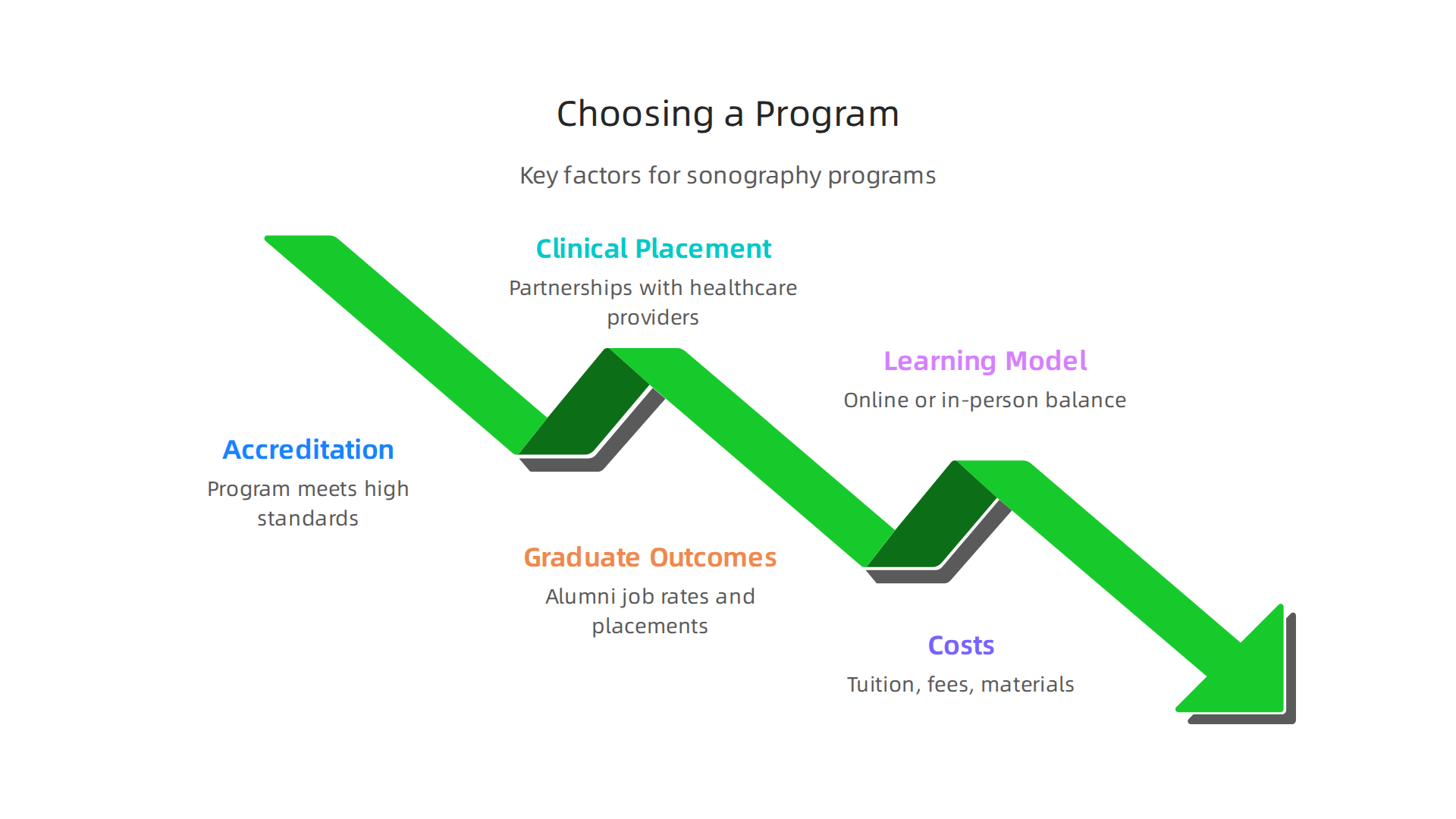
Think of it like picking the best path for your future career. There are a few key things to look at when you decide.
First, always check if the program has proper accreditation. This means it meets high standards and its graduates can get certified, which is a must for working as a sonographer.
Next, look at the clinical placement strength. This is where you get real-world, hands-on training in places like hospitals or clinics. A good program will have strong partnerships with many healthcare providers. This means they can promise you great spots to learn and practice what you’ve studied in class. For example, many programs require students to complete hundreds, sometimes over 1,000 to 1,350, supervised clinical hours before graduating, as noted in the [MEDICAL SONOGRAPHY PROGRAM MANUAL 2025-2026] and [General Sonography – Associate in Applied Science]. These hands-on hours are super important to become good at using ultrasound machines and helping patients.
You should also look at graduate outcomes and employer relationships. Find out where past students from the program are working. Do they get jobs easily? Do local hospitals often hire people from that school? Strong ties between the school and healthcare employers can really help you find a job after you finish your diagnostic medical sonography associate degree.
Now, let’s talk about online versus in-person learning. For a diagnostic medical sonography associate degree, you will likely have a mix of both. Some parts of your coursework, like learning about the body or physics (the didactic parts), might be done online. This can be very flexible! However, the most important part, the clinical training, must be done in person. You need to be in a hospital or clinic to practice with real ultrasound machines and real patients. There’s no way to learn these hands-on skills through a computer screen, according to [Post COVID Adult Learning Preference in Vocational Learning]. Some programs offer flexible schedules for their in-person classes and clinical rotations to help students balance their lives, as seen in the [Smith Chason College Academic Associate of Science in Diagnostic Medical Sonography – Ultrasound Tech Schools in San Diego].
Finally, consider the costs. A diagnostic medical sonography associate degree program can vary in price. Think about tuition, fees, and other materials. Some programs may take about two years to complete, with costs often listed per credit, as detailed in the [Diagnostic Medical Sonography Associate Degree Program]. Make sure you understand all the costs before you enroll. Keeping up with new tools and methods is always a good idea, and the right program will set you up for success in a field always bringing in [new technology in healthcare the 2026 strategic playbook for leaders].
Once you’ve thought about what makes a good program, the next step is actually getting in. Entering the field of diagnostic medical sonography means going from applying to a school to landing your first job. It’s an exciting path that has clear steps.
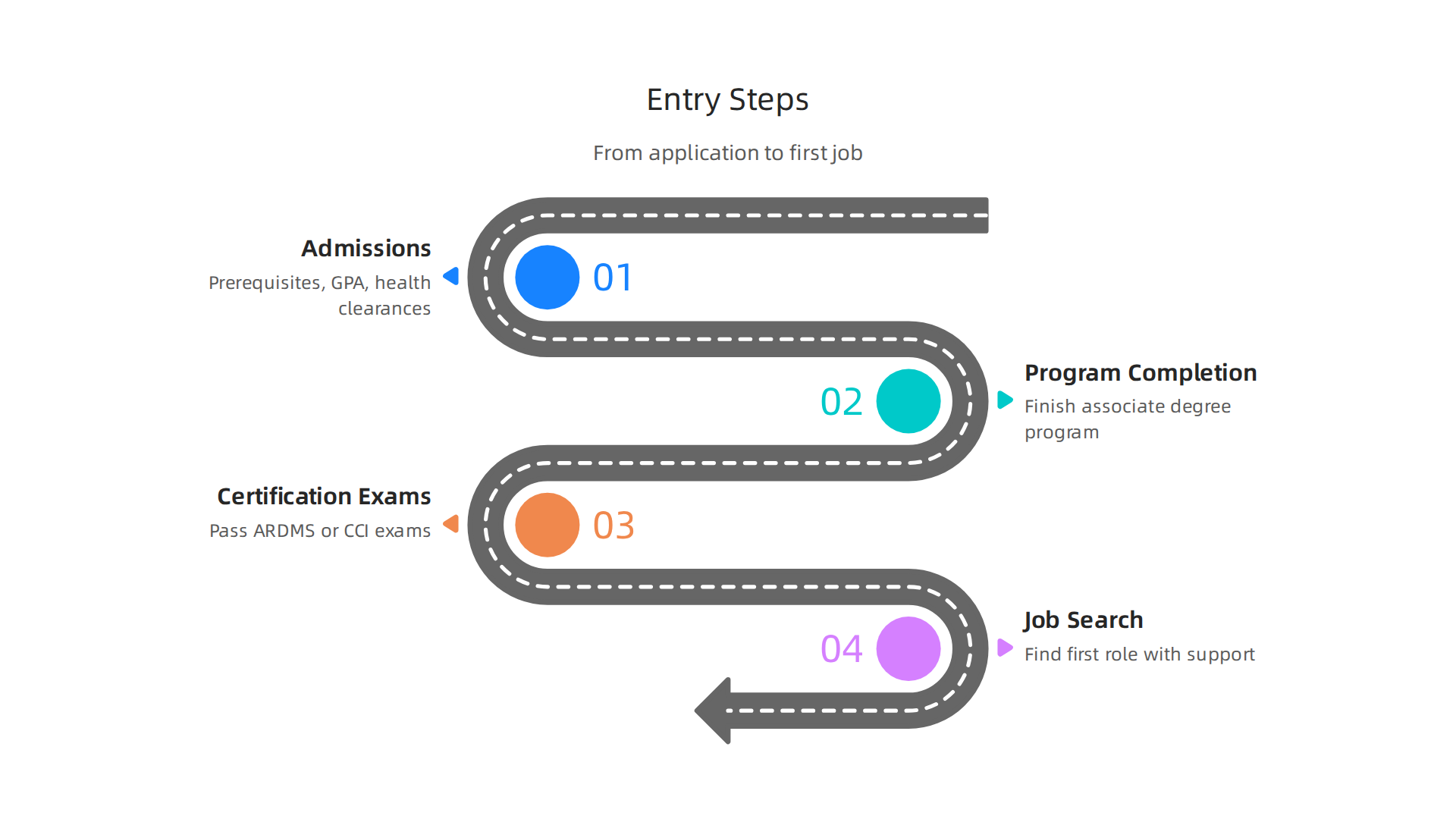
Steps to Enter the Field: From Application to First Job
To start, you’ll need to meet the admissions requirements for a diagnostic medical sonography associate degree program. Most programs ask for certain prerequisite courses. These often include classes like college math, anatomy and physiology (which teaches you about the human body), and physics (which helps you understand how ultrasound works). You usually need to pass these classes with good grades, sometimes a "C" or better, and keep a certain GPA, like 2.75 or higher, as mentioned by one program’s admissions details Page 1 of 7. Some programs also prefer or require you to have an associate degree in another healthcare field or even a bachelor’s degree, especially if it involves direct patient care, as seen in the Mercy DMS Admissions-Enrollment 26-27. Another requirement might be a certificate or license in a related healthcare area, like being a certified nursing assistant (CNA) or an Advanced EMT, before you can apply GREAT BASIN COLLEGE DIAGNOSTIC MEDICAL ….
You might also need to take special entrance exams, like the HESI-A2 exam, where you need a minimum score in sections like reading comprehension and math. Some programs also ask for an Ultrasound Student Assessment (USA) exam. Don’t forget proof of vaccinations, like the Hepatitis B series, which is often needed when you apply Diagnostic Medical Sonography – Application Process. Applications usually open during specific times of the year, for example, from October to February for Fall 2026 classes 2026 DMS_admission requirements V2. It’s always smart to have your checklist and supporting papers ready by the deadline Sonography-Application-Checklist-Fall-2026.pdf.
After you successfully get into a program and complete your diagnostic medical sonography associate degree, the next big step is transitioning from a student to a working sonographer. This usually means passing certification exams given by groups like the American Registry for Diagnostic Medical Sonography (ARDMS). To even take these exams, you need to show that you’ve finished an approved program Candidate-Guide-EN-January-2026. …. These exams test your knowledge and skills, making sure you are ready to work safely and effectively with patients.
Then comes the job search. Many programs help their graduates find jobs because they have good connections with local hospitals and clinics. Knowing about healthcare technology trends 2026 can also give you an edge in your job hunt, showing employers you are up-to-date. Sometimes, having previous experience, even from a medical assistant training program, can be helpful. This entire process, from getting your application in to landing that first job, is all about showing you have the right knowledge and hands-on skills to care for patients.
Stay informed about the latest developments in healthcare technology and beyond.
Get clear daily AI updates from The AI Newsletter Worth Reading.
After you get your first job as a sonographer, you might wonder what comes next. A career in diagnostic medical sonography offers many ways to grow and learn even more. This often means choosing a special area to focus on, taking more classes, or getting higher degrees.

Specializations and Extra Certifications
Once you have your diagnostic medical sonography associate degree and some experience, you can pick a specific path. Sonographers can choose to become experts in areas like heart imaging, known as cardiac sonography. They might also specialize in blood vessel imaging, called vascular sonography, or focus on performing ultrasounds for pregnant people, which is obstetric sonography. There are many other areas too, such as breast or pediatric sonography PIKES PEAK STATE COLLEGE.
To work in these special areas, you usually need more training and to pass extra certification tests. For example, to become a Registered Cardiac Sonographer (RCS), you’d need to meet specific requirements for heart ultrasound work Registered Cardiac Sonographer (RCS) – CCI. These added certifications show employers that you have advanced skills and knowledge, which can help you get better jobs or earn more money.
Continuing Education and Higher Degrees
Staying current in the field is very important. Technology in healthcare is always changing, so sonographers need to keep learning. This is called continuing education. It involves taking workshops, short courses, or online classes to learn about new tools and methods. This helps you keep your skills sharp and often helps you renew your certifications. Keeping up with new technology in healthcare the 2026 strategic playbook for leaders is a big part of this.
Some sonographers who start with a diagnostic medical sonography associate degree choose to go back to school for a bachelor’s degree. This can open doors to new kinds of jobs, like teaching future sonographers, managing an ultrasound department, or working in research. These higher education pathways let you take on more responsibility and leadership roles Sonographer Higher Education Pathways. By continually building on your initial education, you can create a long and rewarding career.
Summary
This article explains what a diagnostic medical sonography associate degree is, who it’s for, and why it matters to healthtech leaders, educators, and clinicians. It describes the typical two-year AAS program: core imaging and anatomy classes, physics and patient-care training, plus extensive clinical placements that often total 1,200–2,000+ hours. The guide covers accreditation (CAAHEP), certification routes (ARDMS and CCI), and licensing considerations that affect employability. It also walks through admissions requirements, common course loads and credit counts, how to evaluate programs (clinical partnerships, graduate outcomes, and costs), and choices around online versus in-person learning. Readers will learn how to pick a program, prepare for certification exams, and plan career steps including specializations and continued education to advance in sonography and healthtech roles.