


Why technology adoption in community health centers matters now
In 2026, using new technology is more important than ever for a community health center. Digital tools are not just nice to have, they are key to making sure everyone can get good healthcare.

When a community health center uses technology well, it helps people get appointments more easily. It also allows different doctors and clinics to work together better, which is known as interoperability. This teamwork helps improve health for patients, especially in rural areas where access can be tough. In fact, many hospitals are already sharing data with technology partners, and this focus on interoperability is a big topic for healthcare in 2026, as noted in a report on Progress on Interoperability and Ongoing Improvements. Also, states are planning for Rural Health Transformation Project February 2026 that involve more technology and teamwork with local CHCs.
But leaders at a community health center often have big questions. They might wonder if the money spent on new technology will really make things better or if it will reach everyone fairly, especially those who need help the most. They also worry about how new tools will change daily work and if they will follow all the government rules. It’s about finding smart ways to use Digital Health in Family Practice 2026 Reshapes Community Care to boost Operational Efficiency and Digital Tools in Healthcare.
A big part of these changes involves new technologies like Artificial Intelligence (AI). AI is quickly being adopted across various health areas. If you want to stay updated on how AI is changing healthcare, consider subscribing to The AI Newsletter Worth Reading.
Thinking about how technology helps a community health center, let’s look at what’s really happening right now in 2026. What kinds of technology are these centers using, and where do they do really well or need a little more help compared to bigger hospitals?
What Tech Community Health Centers Are Using
Many community health centers are already using important digital tools to care for patients. Here are the main ones:
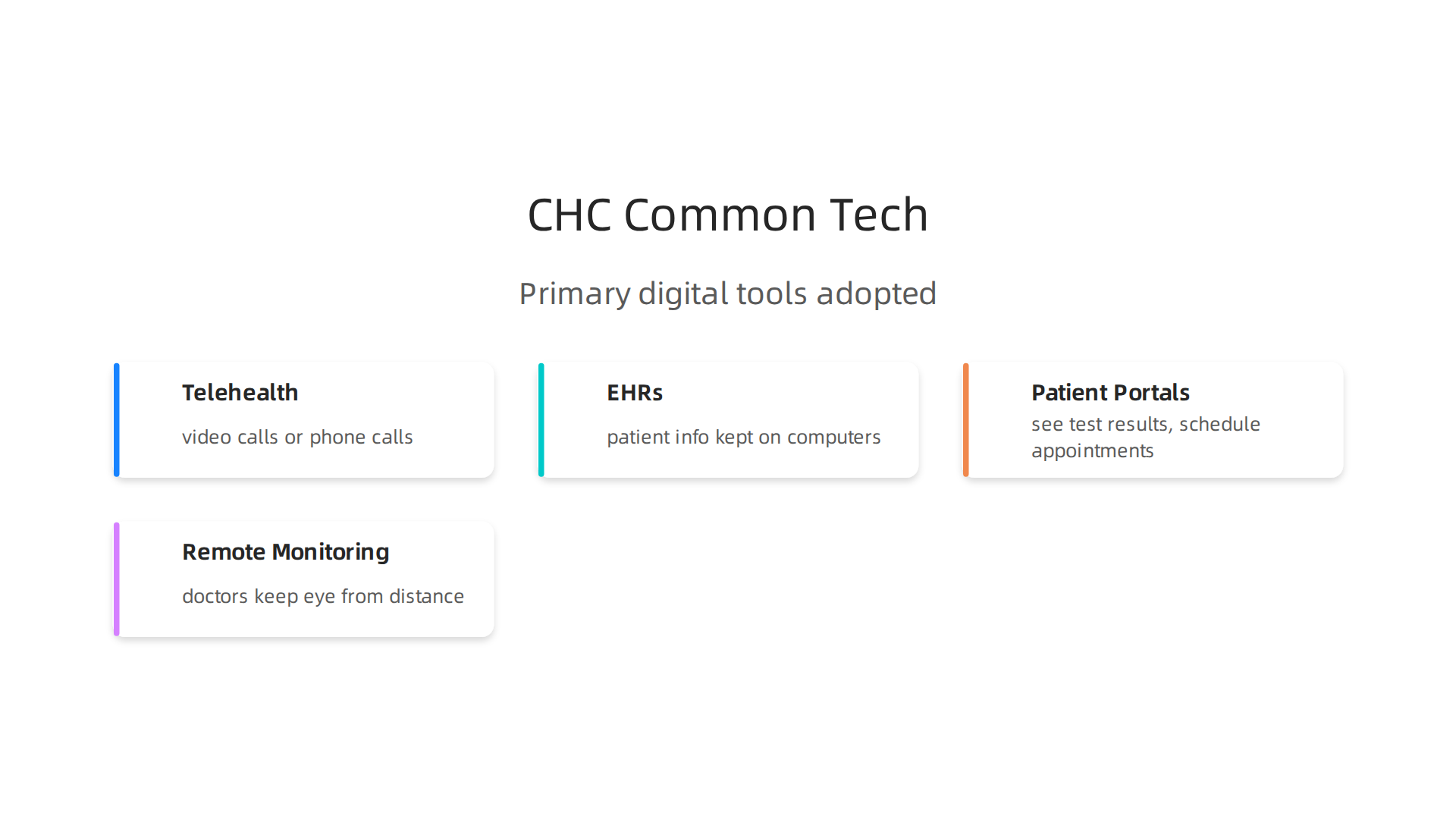
- Telehealth: This means talking to a doctor or nurse through video calls or phone calls. It became very popular, and now it’s a normal way for many people to get care, especially if they live far away or can’t leave home easily.
- Electronic Health Records (EHRs): Instead of paper charts, patient information is kept on computers. This makes it easier for different healthcare providers to see a patient’s history quickly and accurately. Back in 2020, most places that help with mental health (84%) were already using EHRs, and this number has only grown by 2026, as shown in a report on Health Information Technology Adoption and Utilization.
- Patient Portals: These are secure websites or apps where patients can see their test results, schedule appointments, and send messages to their doctors. It helps people feel more in charge of their own health.
- Remote Monitoring: This technology lets doctors keep an eye on patients’ health from a distance. For example, a patient with blood pressure issues might use a special device at home that sends readings directly to their doctor.
These tools help a community health center become more efficient, making sure that good care is available.
Where Community Health Centers Still Need to Grow
Even with these good steps, there are areas where community health centers might not be as far along as bigger health systems.
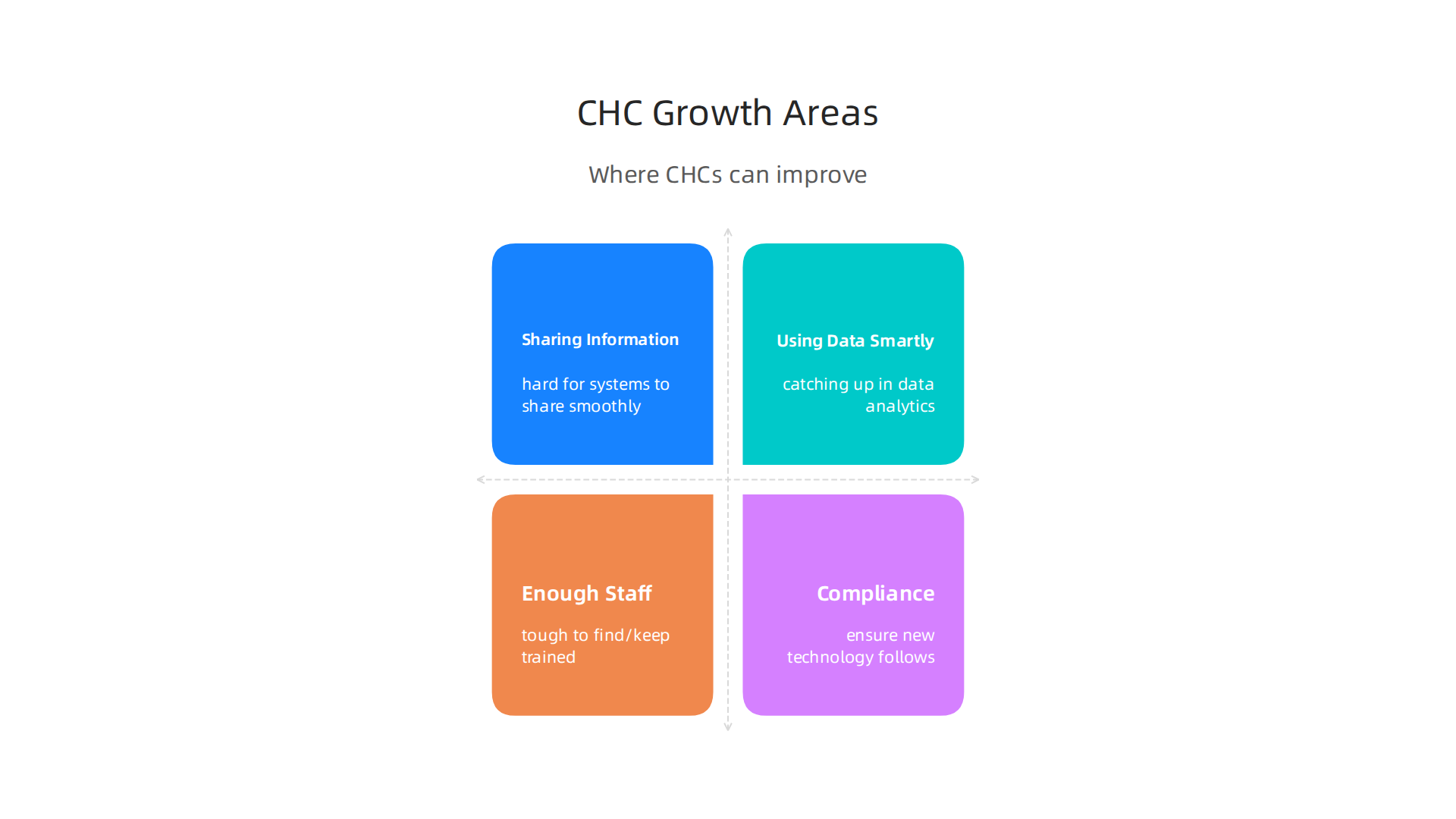
- Sharing Information (Interoperability): While working together is a goal, it can still be hard for different computer systems at various clinics or hospitals to share patient information smoothly. This is a bigger challenge for smaller centers compared to the digital transformation in large health systems.
- Using Data Smartly (Analytics): Larger health systems often use advanced tools to look at all their patient data. They can find patterns, see what treatments work best, and plan services better. Many community health centers are still catching up in using data this way.
- Having Enough Staff: New technology needs people who know how to use and manage it. Finding enough trained staff, like IT experts or people who can help patients learn new apps, can be tough. In 2025, there was already a concern about the number of people working in behavioral health, and these staffing worries continue to affect all of healthcare by 2026, as noted in the State of the Behavioral Health Workforce, 2025.
- Keeping Up with Rules (Compliance): Healthcare has many strict rules about patient privacy and safety, like HIPAA. It can be a big job for a community health center to make sure all new technology follows these rules. Leaders need to keep an eye on Regulatory Compliance in 2026 and Beyond to stay prepared. Modernizing older computer systems to meet these new rules is also a key task, and you can learn more about how to modernize legacy health systems to help with this.
Overall, community health centers are making good progress with technology. They are good at using tools that directly help patients. But they still face challenges in how they connect with other health groups, use data, and find enough skilled workers to handle all the new tech.
Even though community health centers are doing a great job using new tools, they still face some big hurdles.

These challenges are often unique to smaller centers compared to large hospitals. It’s not just about getting new gadgets, but also about the money, the people, and the older computer systems they have.
Operational and Financial Hurdles
One of the biggest problems for a community health center is having enough staff and money.
- Staffing and Training: Imagine buying a new fancy cooking machine but not having anyone who knows how to use it, or enough people to teach everyone else. It’s similar in health care. New technology needs people who are trained to use it well. Community health centers often struggle to find and keep enough staff, like IT experts or people who can help patients learn new apps. It’s also tough to pay for training programs for existing staff. Without proper training, new tools might not be used to their fullest, affecting Digital Health in Family Practice 2026 Reshapes Community Care.
- Limited Money: Let’s be honest, new technology costs money. Community health centers usually operate with tighter budgets than big hospitals. This means they have less money to spend on buying the latest tech, updating old systems, or even building strong internet networks. This lack of available funds can make it hard to keep up with faster changes. Often, they need to prioritize immediate patient care needs over long-term tech investments.
Outdated Tech and IT Problems
Another set of problems comes from the technology itself and the teams that support it.
- Old Computer Systems: Many community health centers might have older computer systems, often called "legacy systems." These are like old cars that still run but are very hard to fix or add new features to. Rolling out new digital tools can be complicated when they don’t easily connect with these older systems. This "technical debt" means they have to spend more time and money just to make new and old tech talk to each other. Building an effective digital strategy is one of the Five keys to successful digital health transformation.
- Not Enough IT Help: Larger health systems have big teams of IT specialists. Community health centers often have smaller teams, or sometimes even just one person, handling all their computer and network needs. This limited IT infrastructure means they might not have the extra hands or expert knowledge needed to plan, install, and maintain complex new technologies. This challenge is especially true for advanced technologies like Artificial Intelligence (AI), which requires specialized knowledge and robust systems.
These challenges mean that while many community health centers are eager to embrace new technologies, they face bigger roadblocks than their larger counterparts. Overcoming these barriers is key to ensuring that every community health center can offer the best possible care with modern tools.
To stay on top of advanced tech like AI that impacts healthcare, you might find The AI Newsletter Worth Reading helpful.
Community health centers often face tough money problems, making it hard to get the newest tools and keep them running. But there are smart ways for a community health center to find money and buy what they need. It’s all about having good plans for funding, getting new things, and making sure the center can keep helping people for a long time.
Finding Money for Community Health Centers
Finding enough money is a big task. Here are some common ways community health centers get funding:
- Government Grants: A lot of money comes from federal and state governments. These grants are like special gifts of money given for specific reasons, like improving health care in certain areas or for programs like community health worker support. For example, a "Request for Proposals (RFP) For Health Access Program" might offer funds for health services that help many people Request for Proposals (RFP) For Health Access Program.
- Donations and Philanthropy: People and groups who care deeply about local health sometimes donate money. This extra help can go a long way in supporting new projects or services.
- Value-Based Payments: This is a way of paying where health centers get money based on how well their patients get better, not just how many services they offer. It encourages centers to focus on keeping people healthy. Programs like the Community Health Access and Rural Transformation (CHART) Model are voluntary payment models that help with this US Department of Health and Human Services. Also, some sustainable operational models are built around getting paid through Medicaid for eligible services Rural Health Needs and Target Population.
- Partnerships: Working with other hospitals, local businesses, or even big tech companies can bring in funds or shared resources. This helps a community health center grow and offer more services without having to do it all alone.
Smart Ways to Buy New Technology
Once a community health center has money, they need to be smart about buying new digital tools. This is called procurement.
- Buying Together (Group Purchasing): Imagine if many health centers teamed up to buy a big order of new computers. They could get a better price than if each bought one alone. This is what group purchasing does.
- Working Together on Requests (Cooperative RFPs): Sometimes, health centers work together to write a "Request for Proposal" (RFP). This means they tell many companies what they need at the same time. This can lead to better deals and solutions that fit many centers.
- Checking Out Sellers (Vendor Vetting): Before buying anything, it’s very important to check the company selling the tech. Do they have good reviews? Will their tools really help patients? This helps ensure the center gets reliable technology that works well for their community. Using smart procurement for Digital Health for Family Practice and Community Care can boost Operational Efficiency and Digital Tools in Healthcare.
These methods help a community health center like Chespenn Health Services find the money and make smart choices to get the best technology. It means they can keep providing great care, especially for those in need, helping to reach How Community Health Technology is Reaching Underserved Communities in 2026.
After a community health center smartly invests in new digital tools, the next big step is making sure those tools work well together. This means thinking about the center’s basic technology setup and how all the different systems can talk to each other. It’s not just about having the latest tech; it’s about making it all connect smoothly so patient care gets better.
Technical Infrastructure Checklist
First, let’s look at the basic tech foundation every community health center needs to have in place.
- Good Internet Connection: Imagine trying to do anything online with slow internet. It’s frustrating! A fast and reliable internet connection is a must-have for any health center in 2026. It helps doctors and patients connect easily, whether for online visits or sharing medical files.
- Strong Electronic Health Record (EHR) System: This system is where all patient information is stored safely. A good, "mature" EHR system means it’s well-developed, easy for staff to use, and can grow with the center. This helps a lot with Digital Health in Family Practice 2026 Reshapes Community Care and boosts general workflow.
- Identity and Access Management: Keeping patient information private is super important. Identity and access management systems are like digital gatekeepers. They make sure only the right people, like doctors or nurses, can see sensitive health data.
- APIs (Application Programming Interfaces): APIs are special digital connectors that let different computer programs share information. For example, an API might let your EHR system talk to a new patient scheduling app. This smooth communication is key for modern healthcare.
Making Systems Talk: Interoperability Priorities
Connecting different health systems so they can share information is called interoperability. It’s a big goal for every community health center, including places like Chespenn Health Services.
- Using Data Standards: For computer systems to truly understand each other, they need to "speak" the same language. This means using common data standards, which are like agreed-upon rules for how health information is formatted. This helps close gaps in how health data is shared across different systems Closing the Gap in California’s Health Data Exchange: Necessary Investments.
- Health Information Exchanges (HIEs): HIEs are networks that let doctors, hospitals, and other healthcare providers securely share patient health information. They help make sure everyone involved in a patient’s care has the full picture, no matter where that patient goes for treatment.
- FHIR (Fast Healthcare Interoperability Resources): FHIR is a newer, faster way to share health data quickly and easily. It’s like a modern, updated set of data standards that makes it simpler for different digital tools to work together.
- Realistic Integration Timelines: Putting all these new systems and connections in place takes time. It’s important for a community health center to have a realistic plan for how long it will take to connect everything and make it work well. Projects often need revised plans to properly implement and scale new programs, showing that timelines can change Revised Project Narrative 1.30.2026 – Arizona Center for Rural Health. This focus on Operational Efficiency and Digital Tools in Healthcare is crucial for long-term success.
Workflow integration & clinician adoption: minimizing disruption
Having all the best technology in place is a great start. But even with the most advanced digital tools, they won’t truly help if doctors and nurses don’t actually use them every day.

For any community health center, making sure staff adopt and use new digital tools is super important. We call this workflow integration and clinician adoption. It’s about bringing new systems into daily work without causing too much trouble or making things harder.
Tactics for Getting Clinicians Engaged
Getting doctors and nurses to use new technology needs smart planning. Here are some ways to help them get on board:
- Let Them Help Design: When staff help decide how a new system should work, they are much more likely to use it. This is called "co-design." They know what works best in their daily jobs, making the tools more practical.
- Try It Out Small: Don’t introduce a new system to everyone all at once. Start with a small group of users, like a "pilot workflow." This helps find problems early on and fix them before a full rollout. Research shows that issues with how new tools fit into daily work can be a big reason why doctors don’t use digital health programs Rapid Adoption of Telehealth by Primary Care Clinicians.
- Offer Good Training: Training isn’t a one-time event. Give clear, regular training sessions that are easy to understand. Make sure staff feel comfortable asking questions and getting help when they need it.
- Listen to Feedback: Always ask what’s working and what’s not. Make changes based on what the staff needs. This makes the tools better for everyone at the community health center.
Measuring How Well New Tools Are Adopted
How do we know if these new digital tools are really helping? We track a few key things:
- Tracking Uptake: Look at how many doctors and nurses are logging into the new system. Are they using its main features? This tells you if people are actually giving the new tools a try.
- Understanding Satisfaction: Ask staff if they like the new tools. Do they find them helpful or frustrating? This shows their satisfaction, which is key for long-term use.
- Seeing Clinical Impact: The real goal of How Community Health Technology Is Reaching Underserved Communities in 2026 is to improve patient care. Are patient outcomes getting better? Are appointments easier to schedule? Are wait times shorter? These are ways to measure the clinical impact.
Remember, bringing in new systems like electronic health records can be challenging, and there can be barriers to getting staff to use them fully Barriers to EHR Adoption and Use. But with careful planning, open talks, and good support, any community health center can make these changes work. Staying up-to-date with new tools and how to use them best is an ongoing job.
For more insights into the latest AI and tech trends shaping healthcare, you might find The AI Newsletter Worth Reading really helpful.
Regulatory, privacy & compliance considerations for CHC tech
Using new technology in a community health center is exciting, but it also comes with big rules.

We need to make sure patient information stays private and safe. This is super important for any community health center, like Chespenn Health Services, because they deal with sensitive health data every day. Keeping up with these rules helps make sure everyone trusts the care they get and that the center avoids big problems.
Keeping Patient Information Private
The main rule that helps keep health information private in the United States is called HIPAA. This stands for the Health Insurance Portability and Accountability Act. HIPAA makes sure that doctors, hospitals, and other healthcare places handle patient information very carefully. This includes all the digital tools and systems a community health center uses. When patient data is shared or stored using technology, it must meet HIPAA’s strict standards. The Office of the National Coordinator for Health IT (ONC) works to help with these rules and keep health data safe ONC – Office of the National Coordinator for Health IT.
Besides HIPAA, each state might also have its own extra rules about patient privacy. This means a community health center needs to know both the federal (HIPAA) and state laws to stay in the clear. These rules often say who can see patient data and how it can be used, especially when sharing information between different parts of a healthcare system or with other groups.
Steps for Staying Compliant with Tech
When a community health center works with companies that provide new digital tools, they need to take certain steps to keep data safe. These are practical things that help with operational efficiency and digital tools in healthcare.
- Business Associate Agreements (BAAs): If a technology company handles patient data for your center, you must have a special contract called a BAA. This contract makes sure the company follows the same privacy rules as your center.
- Data Mappings: It’s smart to know exactly where patient data goes. This means mapping out how information moves from one digital tool to another. This helps you keep track and makes sure there are no weak spots where data could be at risk.
- Breach Response Plan: Even with the best plans, sometimes things go wrong. A "breach" is when patient data gets into the wrong hands. Every community health center needs a clear plan for what to do if this happens. Knowing the steps ahead of time can help fix the problem quickly and tell affected patients, as required by law.
Digital health in family practice, and across all community care settings, relies on these rules to protect everyone involved. Knowing these rules helps a community health center use new technology wisely. For more on how digital health is changing care, especially in everyday practice, check out Digital Health in Family Practice 2026 Reshapes Community Care.
Using new technology wisely needs more than just knowing the rules; it also needs a clear plan. For any community health center looking to bring in new digital tools, having a step-by-step roadmap is key. This helps make sure the technology truly helps patients and staff, improves Operational Efficiency and Digital Tools in Healthcare, and is used in a fair way for everyone.
A Practical Playbook for Tech Adoption
Here’s a simple guide for a community health center to follow when adopting new technology:
- Understand What’s Needed (Needs Assessment): Before getting any new tech, ask: What problems do we need to solve? What parts of our work could be easier or better? Maybe it’s making appointments simpler, helping patients get health info, or making sure doctors can share notes easily. Knowing your biggest needs helps you choose the right tools.
- Test It Out Small (Pilot Design): Don’t roll out new tech everywhere at once. Pick a small group of staff or a few patients to try it first. This is called a pilot program. Set clear goals for this test: What do you hope to learn? What should improve? Looking at real examples of how digital transformation works in healthcare can give you ideas for your own center Cases of Digital Transformation in Healthcare: 10 Real Cases ….
- Check If It Works (Evaluation Metrics): After the pilot, look closely at the results. Did patient satisfaction go up? Did staff save time? Are health outcomes better? Use simple ways to measure success. If the tech didn’t help much, that’s okay. You learn what works and what doesn’t without a big commitment.
- Grow It Slowly (Scale Plan): If the pilot was a success, you can start to use the tech more widely. Plan how you’ll train more staff and introduce it to more patients. This might mean rolling it out to one new department at a time.
- Find the Money (Funding Alignment): New technology costs money. Look for grants, government programs, or partnerships that can help cover the costs. Making sure the tech brings clear value can also help show why it’s a good investment for the future.
Making Sure Everyone Benefits
When bringing in new technology, it’s super important for a community health center to think about fairness. This means:
- Reaching Underserved Patients: Some patients might not have smartphones, internet access, or feel comfortable with new technology. Make sure the new tools don’t leave anyone behind. Can you offer help or other ways for them to get care? It’s important to find ways to make sure
Digital Health for Family Practice and Community Carereaches everyone. If you’re wondering how technology is helping more people, you can read about How Community Health Technology Is Reaching Underserved Communities In 2026. - Checking for Risks: Think about any new risks the technology might create. This could be about data privacy, as we talked about before, or making sure the tools actually improve care and don’t create new problems.
By using this roadmap, a community health center can thoughtfully add new technology that truly helps patients and improves the way care is given in 2026.
Ready to stay informed on all the latest tech that impacts healthcare? Get clear daily AI updates from The AI Newsletter Worth Reading.
Summary
This article explains why adopting modern technology is essential for community health centers (CHCs) in 2026 and what leaders should know to make those investments succeed. It describes the core digital tools—telehealth, EHRs, patient portals and remote monitoring—that improve access and efficiency, then lays out the common challenges CHCs face, including interoperability gaps, limited analytics, staffing shortages, legacy systems and tight budgets. The piece outlines practical financing options like grants, value‑based payments, philanthropy and partnerships, plus smarter procurement tactics such as group purchasing and cooperative RFPs. It provides an IT checklist (internet, mature EHRs, identity management, APIs) and interoperability priorities (data standards, FHIR, HIEs) to make systems talk. The article also covers clinician adoption strategies—co‑design, pilots, training and feedback—and compliance steps like BAAs, data mapping and breach plans. Readers will finish with a clear, actionable playbook to plan, pilot, evaluate and scale technology in ways that protect privacy and promote equity.