


Medical abbreviations are short ways to write common medical terms. They help doctors, nurses, and other healthcare workers save time, especially when writing down many notes or orders. But sometimes, these shortcuts can cause big problems. One such abbreviation is ‘q d’. Even though it seems simple, the ‘q d medical abbreviation’ has led to many mistakes.
The term ‘q d’ comes from the Latin phrase "quaque die," which means "every day." So, when a doctor writes ‘q d’ for a medicine, they mean for the patient to take it once a day. Sounds clear, right? Not always.
Here’s the problem: ‘q d’ looks a lot like other medical abbreviations. It can be easily confused with ‘q.i.d.’, which means four times a day, or ‘q.o.d.’, which means every other day
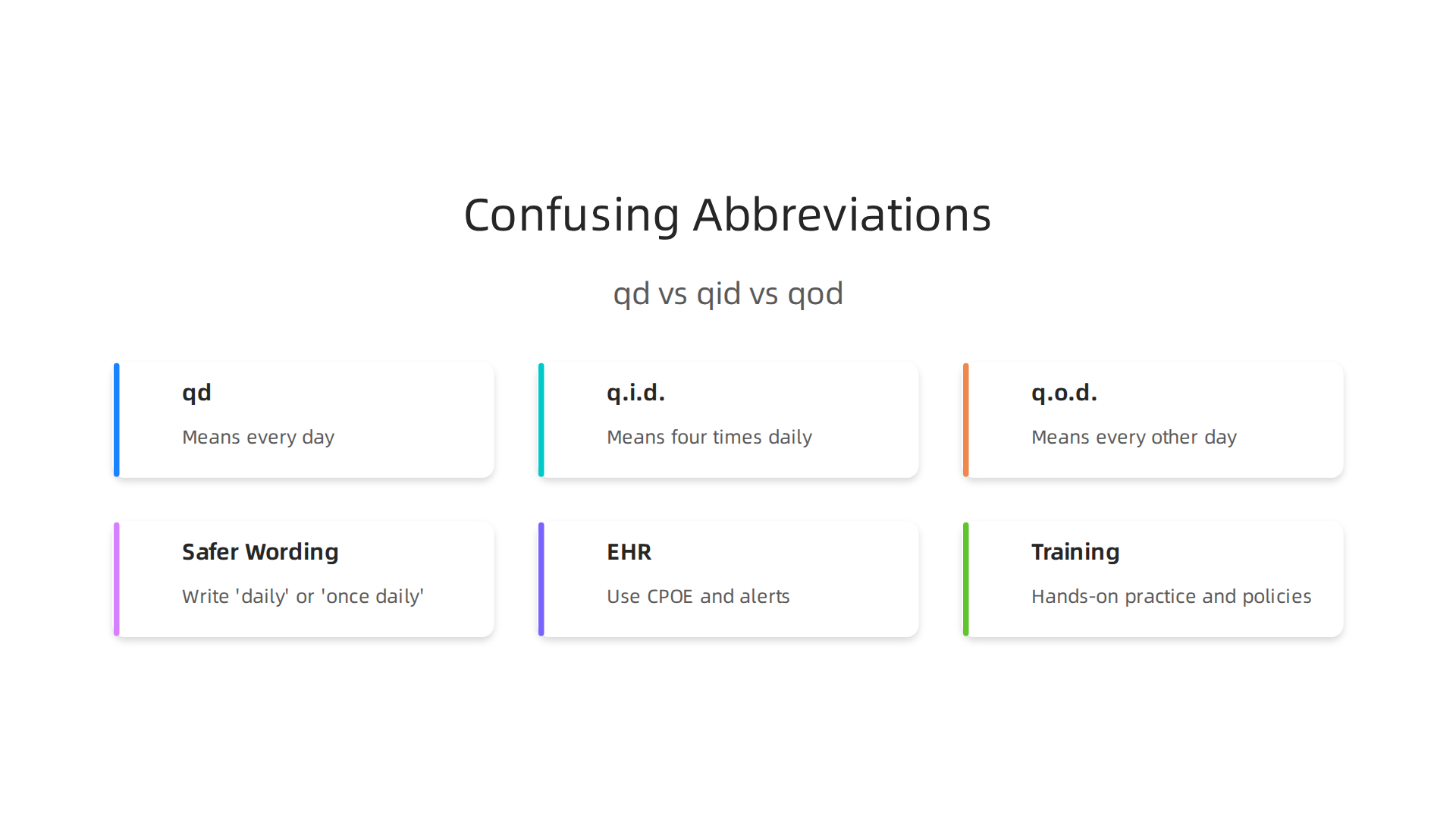
Prohibited Abbreviations: Seeking to Educate, Not Enforce. Imagine a patient needing medicine once a day getting it four times a day instead, or vice versa. This kind of mix-up can be very dangerous for patient safety.

Because of these risks, groups like the Institute for Safe Medication Practices (ISMP) have listed ‘q d’ as an error-prone abbreviation that should not be used ISMP List of Error-Prone Abbreviations, Symbols, and Dose Designations. Many hospitals and clinics in 2026 ask their staff to avoid it completely and instead write out "daily" Medical Abbreviations to Avoid.
That’s why a clear understanding and a focused reference on terms like the q d medical abbreviation are so important for clinicians. When everyone uses the same, clear words instead of shortcuts that can be misunderstood, it makes care safer. This need for clear language also applies to other common terms like the ppm medical abbreviation, eds medical abbreviation, or dm medical abbreviation. Having an essential medical abbreviations guide for clinicians helps healthcare teams and healthtech systems work together better and avoid harmful mistakes.
For those in health tech, staying updated on such critical safety information is key. It helps you build better systems and tools that support clinicians. Get clear daily AI updates from The AI Newsletter Worth Reading.
Overview: Common medication abbreviations and why they persist
We just talked about how a simple shortcut like the q d medical abbreviation can lead to big problems. But if these abbreviations are so risky, why do doctors and nurses keep using them? It all goes back to how healthcare has worked for a long time.
Why shorthand became common in medicine
Think about how busy doctors and nurses are. In the past, and even now, they had to write down a lot of notes very quickly. Every second counts when taking care of patients. Using short forms or abbreviations was a way to save time and get information on paper faster. It was like a speedy code they all learned. This shorthand became a natural part of their daily work, showing up in patient charts, doctor’s orders, and nursing notes. These tiny words helped them keep track of many things at once, from the ppm medical abbreviation for parts per million to the dm medical abbreviation for diabetes mellitus. Over time, these shortcuts spread widely across different hospitals and clinics. The overall impact of abbreviations on patient safety has been a concern for many years, as they can directly lead to errors The impact of abbreviations on patient safety.
Different ways of understanding abbreviations
Here’s where it gets tricky: not everyone uses abbreviations in the exact same way. What one doctor means by a shortcut might be a little different for another, especially in different medical fields or even in different parts of the country. This can lead to big misunderstandings. For example, some abbreviations for how often a medicine should be given have been found to cause errors in many hospitals Prevalence of error‐prone abbreviations used in medication prescribing for hospitalised patients.
This difference in how abbreviations are used creates a big problem for patient safety. Imagine a handwritten note where q d looks like q.i.d. to one person, or how the eds medical abbreviation could mean different things depending on the context. These small mix-ups can change a patient’s treatment plan. When healthcare workers use different systems or have different training, the risk of a medication error goes up Medication Errors: An Overview for Clinicians.
To make sure everyone is on the same page, we need to focus on clear communication. Having an essential medical abbreviations guide for clinicians is a step in the right direction. It helps create a common language. Learning about the dangers of medical abbreviations and solutions for patient safety is also very important for everyone in healthcare, including those who build health tech tools.
What ‘q d’ means: interpretation, variants, and clinical contexts
Let’s zoom in on a very common and often tricky abbreviation: q d. In medicine, when you see q d, it most commonly means "once daily" or "every day." This comes from a Latin phrase, "quaque die," which translates to "every day." So, if a doctor writes q d for a medicine, it means the patient should take that medicine one time each day. This instruction implies the medicine should be given every 24 hours Abbreviations.
Common ways q d is written and what they mean
You might see q d written in a few ways, like QD, qd, or Q.D.. All of these typically mean the same thing: "daily." Many healthcare groups, like those creating recommendations for safe medicine use, list QD, qd, and Q.D. under the meaning of "daily" Recommendations for Safe Use of Medicines Terminology. The goal is always to tell someone to take a medicine once a day. For example, some medication frequency guides simply list QD as "Daily" Medication Frequency – CDA Examples v1.0.0 – FHIR.
However, even though the meaning seems simple, the way it’s written can cause big problems.
Why q d can be misunderstood and the risks involved
Here’s the tricky part: the q d medical abbreviation can look very similar to other abbreviations when written by hand. The biggest danger is that QD can be misread as QID. While QD means once daily, QID means "four times a day." Imagine if a patient is supposed to take a medicine once daily, but someone misreads it as four times daily. That could lead to a harmful overdose. Because of this serious risk, many hospitals and health organizations, like the FDA, strongly advise against using QD or qd at all. They prefer the full phrase "once daily" instead Dosage and Administration Section of Labeling for Human… – FDA.
Even in 2026, healthcare professionals are told to avoid QD and qd in practice and to use terms like "daily" or "Q24HR" instead Medication Abbreviation Frequencies for Administration Times and …. Some guides even list QD under "avoid" when talking about daily dosing UCL UoM Prescription writing quick reference guide V2. The problem is real, as similar looking abbreviations like QOD (every other day) have also been mistaken for four times per day or once daily, showing how easily mistakes can happen Dangerous Abbreviations, Symbols, and Dose Designations.
For healthcare technology companies, ensuring software clearly displays "once daily" instead of q d is a crucial step for patient safety. This clarity is important for all staff, from doctors writing orders to medical assistants preparing medications. To learn more about other critical medical shortcuts, understanding how to correctly interpret the mdd medical abbreviation in health tech can also be very helpful.
Want to stay informed on the biggest changes happening in healthcare and technology?
Get clear daily AI updates from The AI Newsletter Worth Reading.
When the q d medical abbreviation is misunderstood, it can cause big problems for patients. These mistakes can lead to people getting too much medicine (overdosing) or not enough (underdosing).

Sometimes, medicines might be completely missed, or given at the wrong time. Each of these can be harmful to a patient’s health.
For instance, if a medicine meant for "once daily" (q d) is mistaken for "four times a day" (QID), a patient could suffer a serious overdose. This kind of mix-up is a real danger. On the other hand, if q d is confused with QOD (every other day), a patient would get their medicine less often than they should. This could mean they do not get the proper treatment, which is a form of underdosing or a medication omission. Groups like the Institute for Safe Medication Practices (ISMP) warn that QD or qd can be mistaken for QID, especially if the handwriting is unclear ISMP List of Error-Prone Abbreviations, Symbols, and Dose Designations.
Why mistakes happen: human factors
Several things make these mistakes more likely. One big reason is poor handwriting. When a doctor writes a medicine order by hand, a quickly written q can look a lot like an i. Or, a small dot or tail on a q might be misunderstood, turning qd into something else entirely. This can cause wrong doses or scheduling errors. Even in 2026, handwriting issues still cause medication errors Medication Errors: An Overview for Clinicians.
Another factor is how information is shown on computer screens, which is called interface layout. In today’s health tech world, many orders are typed into computers. But if the software is not designed well, or if medical staff use free-text entries, the q d medical abbreviation can still be entered. A confusing layout might make it hard to spot a mistake before the medicine is given. Human actions and choices play a very big role in why medication errors happen Human Factors and Medication Errors.
Because of these very real patient-safety risks, many hospitals and health groups have a "Do Not Use" list. This list includes q d and QD, telling staff to always write out "daily" instead. Experts agree that QD and QOD are often confused, leading to errors Medical Abbreviations to Avoid. This helps make sure everyone understands the medicine instructions clearly.
Understanding the various kinds of medical abbreviations and their dangers is important for everyone in healthcare, from the doctor writing the order to the nurse giving the medicine. To dive deeper into these issues, you can read more about The Dangers of Medical Abbreviations and Solutions for Patient Safety. For those building or using health tech, finding ways to make sure abbreviations are clear in systems is a key step to keeping patients safe. Learning how to put safer systems in place is part of Clarifying Medical Abbreviations for Safer Health Tech Systems.
Now, let’s look at how we can make things safer. Instead of using the q d medical abbreviation, healthcare teams should use clear, plain words. This helps everyone understand the instructions exactly right, no matter if they are a doctor, nurse, or pharmacy worker.
Clearer Wording for Dosing
The best way to avoid confusion is to simply write out the full meaning.
For example, instead of QD or qd, healthcare professionals should write "daily" or "once daily." This is a clear rule from many patient safety groups Do Not Use List/Prohibited Abbreviations. When a medicine needs to be given at a very specific time each day, like every 24 hours to keep a steady level in the body, it’s even better to write "every 24 hours." This leaves no room for guessing Medication Abbreviation Frequencies for Administration Times and ….
Here are some other common dose timings and their safer wording:
- Instead of
QOD(every other day): Write "every other day." This prevents it from being mixed up with "daily" or even "four times a day" Medical Abbreviations to Avoid. - Instead of
QID(four times a day): Write "four times daily." - Instead of
BID(twice a day): Write "twice daily."
These small changes make a big difference in preventing errors. It’s an important part of making healthcare safer, like understanding an essential medical abbreviations guide for clinicians that focuses on clarity.
How Hospitals and Health Systems Help
Many hospitals and health organizations have special rules to stop dangerous abbreviations from being used. These are often called "Do Not Use" lists. Groups like The Joint Commission and ISMP Canada create these lists and recommend that all healthcare providers follow them ISMP List of Error-Prone Abbreviations, Symbols, and Dose Designations. These lists often ban abbreviations like QD and QOD to ensure everyone uses the full words. For instance, some lists clearly state that instead of Q.D., QD, q.d., or qd, staff should always "Write ‘daily’" National Patient Safety Goals / Unapproved Abbreviations Card.
These policies are crucial. In 2026, with more health tech systems in place, these lists can be built right into the computer programs. When doctors type in orders, the system can stop them from using forbidden abbreviations. This means if they try to use the q d medical abbreviation, the system could prompt them to type "daily" instead. This reduces the chance of human error. Using electronic prescribing helps a lot, but even then, clear rules for how to write orders are key Safe Electronic Communication of Medication Information – ISMP.
Having standard order templates in electronic health records (EHRs) is another smart step. These templates can offer only the approved, clear options for how often medicine should be given. This guides healthcare staff to choose the safest wording from the start.
Overall, by using clear language and smart rules, we can make sure everyone understands medicine instructions perfectly and keep patients safe. This approach to patient safety is vital in every part of healthcare.
Moving beyond simple rules, health technology today offers powerful tools to make sure medication orders are always clear and safe. In 2026, electronic health records (EHRs) and computerized provider order entry (CPOE) systems are key players in this effort.
EHR order-entry, clinical decision support, and display best practices
These modern systems do more than just store patient information. They are designed to stop errors before they happen. Computerized provider order entry (CPOE) lets doctors and nurses type in medicine orders right into a computer, instead of writing them on paper or saying them out loud
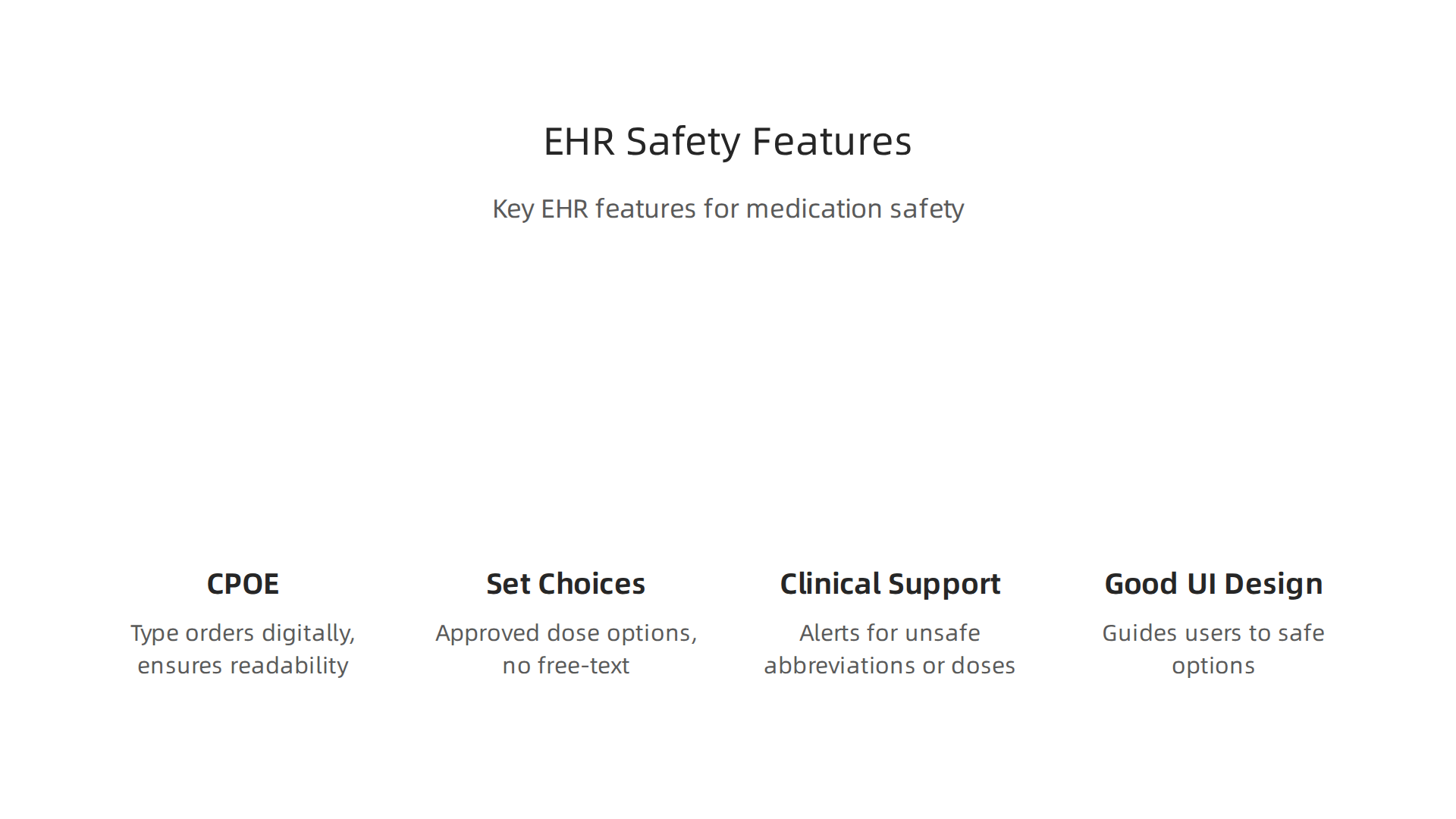
Computerized Provider Order Entry. This digital way of ordering helps a lot by making sure the orders are complete and easy to read.
One of the best things CPOE systems do is normalize how often medicine is given. Instead of letting doctors type anything they want, which might include dangerous terms like the q d medical abbreviation, these systems offer set choices. For example, when ordering a medicine, a drop-down menu might only show "daily," "twice daily," or "every other day." This means there’s no way to accidentally type "QD" or "QOD," which are common causes of errors Physician’s Order. By removing the option for free-text abbreviations, these systems take away a big risk for patients. Errors can often creep in with free-text entries due to misspellings or inconsistent wording SAFER Computerized Provider Order Entry with Decision Support.
These smart systems also use something called clinical decision support. Think of it as a helpful assistant that checks orders in real-time. If a doctor tries to use an unsafe abbreviation, or if a dose seems wrong, the system can pop up an alert. This immediate feedback helps prevent mistakes right when they are about to happen. For example, if someone tries to enter "QD" for "daily," the system can automatically change it to "daily" or warn them not to use the abbreviation Vol. 14, No. 8 August 2015 – ISMP. This helps healthcare workers stick to best practices and a clear essential medical abbreviations guide for clinicians.
Designing the order-entry screen correctly also makes a big difference. User interfaces (UIs) can be made simple and clear, guiding users to pick safe options. This means less chance of mixing up similar-looking abbreviations like q d medical abbreviation and "QID" (four times a day). Good design helps healthcare staff make accurate choices every time.
As health technology continues to grow, so does our ability to improve patient safety. To keep up with these fast changes and understand how AI is shaping the future of healthcare, you might enjoy getting daily updates.
Get clear daily AI updates from The AI Newsletter Worth Reading.
By using these advanced features, hospitals and clinics can build a stronger safety net for patients. This proactive approach ensures that every medication order is understood clearly, reducing the risk of harm. Knowing how digital tools are used to clarify medical abbreviations for safer health tech systems is vital for everyone involved in healthcare.
Teaching Clinicians, Policy Rollout, and Change Management
While smart health tech systems are great for catching errors, they work best when healthcare teams know how to use them right. This means teaching doctors, nurses, and pharmacists about new rules and making sure everyone follows them. It’s about how people work with the technology to keep patients safe.
Training Healthcare Teams on New Rules
A big part of preventing mistakes is making sure every clinician understands which abbreviations are safe and which ones are not.

For example, abbreviations like q d medical abbreviation (for daily) are known to cause problems because they can be easily confused with other terms Error-Prone Abbreviations: Why This Risk Persists in Modern …. To fix this, hospitals must create clear training programs. These programs teach staff about:
- "Do Not Use" Lists: These lists clearly show abbreviations that are banned from use, like "QD" or "QOD" Medication Orders Policy | CCTSI.
- Standardized Terms: What to use instead, like writing out "daily" or "every other day."
- Hands-on Practice: Training with the actual electronic health record (EHR) systems so staff get comfortable choosing safe options.
- Why it Matters: Showing how dangerous abbreviations can lead to serious patient harm.
This training helps everyone learn the new essential medical abbreviations guide for clinicians. It’s like learning a new language for safety. Knowing how to correctly use or avoid terms helps keep patients safe. For more on improving safety, check out how medical abbreviations boost patient safety and clinical accuracy.
Making Changes Stick Through Audits and Feedback
It’s not enough to just teach new rules once. To make sure these changes really last, hospitals need ways to check if people are following them. This is where "change management" comes in.
- Regular Audits: This means regularly looking at medication orders to see if anyone is still using unsafe abbreviations, like
q d medical abbreviation. Audits can show if the training is working or if some areas need more help Audit and feedback: effects on professional practice | Cochrane. - Feedback Loops: When mistakes are found, instead of just pointing fingers, staff get helpful feedback. This feedback helps them learn and improve. It’s about coaching, not just criticizing. Audit and feedback helps professionals compare their work to best practices How do I audit and receive feedback on my clinical practice?.
- EHR Enforcement: The best way to make sure rules are followed is to build them into the computer system itself. For instance, the EHR system can stop an order if it contains an unsafe abbreviation. This acts as a strong safety net. If a user types "QD," the system can automatically suggest "daily" or block the entry completely. This kind of built-in help is crucial for keeping patients safe in 2026.
By doing these things, health systems can greatly reduce errors linked to confusing abbreviations. This helps make healthcare safer for everyone. Learning about the wider view of health tech systems can also be beneficial by exploring health system technology landscape insights.
Making sure everyone knows the right way to write medical orders keeps patients safe. Even with training, it’s good to have quick tools that clinicians can use every day. Think of it like a cheat sheet for the most important medical terms. This helps prevent mix-ups and makes sure patients get the right care.
How to Use Clear Phrases for Dosing
It is very important to avoid old, confusing abbreviations like q d medical abbreviation. This abbreviation used to mean "once daily," but it caused many mistakes because it looked too much like other terms Dosage and Administration Section of Labeling for Human … – FDA. In 2026, healthcare systems strongly advise writing out the full words.
Here is a simple table showing what to avoid and what to use instead for common dosing times:
| What to Avoid | What it Used to Mean | What to Write Instead |
|---|---|---|
| QD, q.d. | Once Daily | Daily, Once a Day |
| QOD, q.o.d. | Every Other Day | Every Other Day |
| QID | Four Times a Day | Four Times a Day |
| BID | Twice a Day | Twice a Day |
| TID | Three Times a Day | Three Times a Day |
Many healthcare guides, like the UCL UoM Prescription writing quick reference guide V2, recommend using full words. You can find many Quick Reference Sheets that are printable to help keep these rules handy. Learning to avoid dangerous abbreviations is part of having an essential medical abbreviations guide for clinicians. For more about this, you can read about clarifying medical abbreviations for safer health tech systems.
Scripts for Safe Communication
Sometimes, doctors give orders verbally, or over the phone. It is very important to write these down correctly. Here are some simple scripts to help clinicians clarify and document orders safely:
When clarifying an unclear order:
- Clinician: "Doctor, to be clear about the order for the medication, you said ‘QD.’ Can you please confirm if you mean ‘daily’ or ‘once a day’?"
- Doctor: "Yes, I mean once a day. Please write it as ‘once a day’ in the system."
- Clinician: "Got it, ‘once a day’ confirmed. Thank you."
When documenting a verbal order:
- Clinician: "Doctor, I am writing down your verbal order for [Patient’s Name]: [Medication Name] [Dose] ‘Daily’ starting [Date/Time]. Is that correct?"
- Doctor: "That is correct."
- Clinician: "Thank you. I will sign this as a verbal order now."
Using these clear ways of talking and writing helps everyone understand exactly what is needed. This practice is key to avoiding errors and boosting patient safety. Knowing about the dangers of medical abbreviations and solutions for patient safety can help you understand why these steps are so important.
Summary
This article explains the q d medical abbreviation — its Latin origin (quaque die), its common meaning of "once daily," and why that short form has become a serious patient-safety risk. It shows how q d can be misread as QID (four times daily) or QOD (every other day), how handwriting and poor interface design increase errors, and why safety bodies advise writing out dosing frequencies. The piece covers practical fixes: write "daily" or "every 24 hours," embed controls in EHRs and CPOE, train clinicians on ‘Do Not Use’ lists, and use audits and feedback to sustain change. Readers will learn how to prevent misunderstanding in clinical orders and how technology and policy can reduce medication mistakes.