


For healthtech leaders in 2026, truly understanding "what does Medicare cover" is not just good knowledge; it’s absolutely vital for business. The rules and policies of Medicare are always changing. These changes can deeply affect how new health technologies get paid for, how widely they are used, and even if they get adopted at all.
Medicare is a federal health insurance program for people age 65 or older, and also for some younger people with disabilities. In 2026, the Centers for Medicare & Medicaid Services (CMS) continues to update its guidelines for what services and devices are covered. For example, Medicare Part A helps cover care in a hospital, skilled nursing facilities, hospice, and some home health care services. Medicare Part B helps with doctor visits, outpatient care, and many other medical services. These details matter for healthtech companies because if a new device or software isn’t covered, it’s much harder for hospitals and clinics to use it.
When CMS changes its policies, especially those related to Understand Every Health Benefits Model for 2026 or "cms value based care," it sends big ripples through the entire healthcare world.

These shifts can redefine how healthcare providers get paid, which then affects what new technologies they are willing to try. For healthtech innovators, keeping up means knowing if their solutions fit into current payment models or if new policies will open doors for them. This directly impacts their success and ability to help patients.
This article will help you understand "what does Medicare cover" in detail for 2026. We will also look at how these important coverage decisions affect both healthcare providers and technology vendors.

Finally, we’ll share practical steps healthtech leaders like you should take to navigate this changing landscape successfully.
Stay informed on the latest tech changes affecting healthcare and beyond.
The AI Newsletter Worth Reading
Medicare 101: Parts, eligibility, and baseline coverage
To really understand "what does Medicare cover," it’s helpful to first know its basic parts and who can get it. Medicare is mainly for people who are 65 or older. But it also helps younger people with certain disabilities, like those with End-Stage Renal Disease (ESRD) or Amyotrophic Lateral Sclerosis (ALS), also known as Lou Gehrig’s disease, get the care they need. Most people don’t pay a monthly fee for Medicare Part A if they or their spouse worked and paid Medicare taxes for at least 10 years, which is about 40 quarters of work Costs | Medicare.
If you didn’t pay enough Medicare taxes, you might have to pay a monthly premium for Part A Medicare.
Here’s a simple look at the different parts of Medicare in 2026:
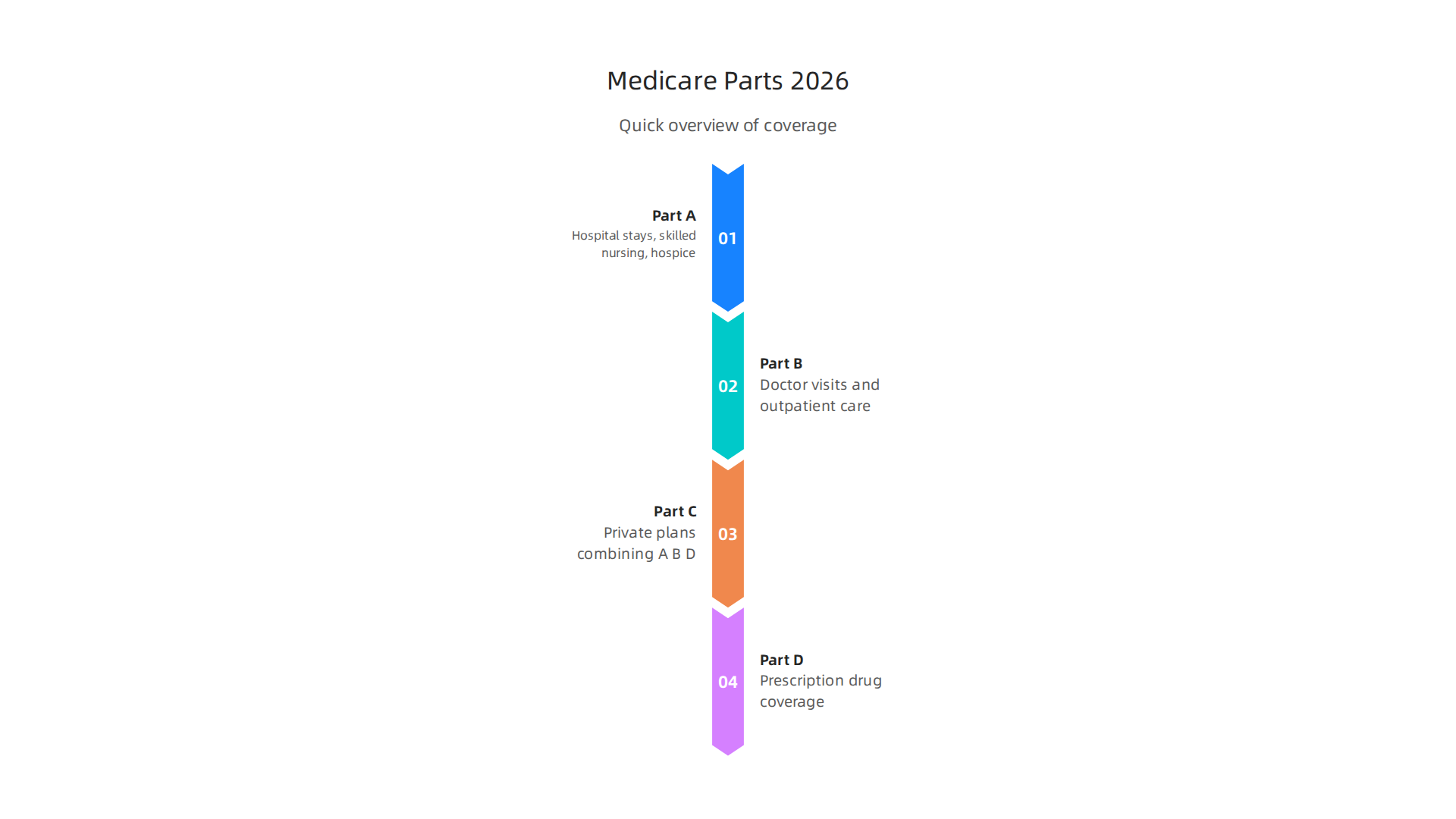
Medicare Part A (Hospital Insurance)
This part helps cover big hospital stays. It includes care you get when you’re admitted to a hospital, care in a skilled nursing facility after a hospital stay, and hospice care. Part A also covers some home health care services Medicare and You Handbook 2026. In 2026, you’ll need to pay a deductible of $1,736 before Medicare starts to pay. For longer hospital stays, you might also pay a daily coinsurance amount, like $434 per day for days 61 through 90 Medicare Deductible, Coinsurance & Premium Rates: CY 2026 Update.
Medicare Part B (Medical Insurance)
Part B covers doctor visits, outpatient care, and many other medical services and supplies that are medically needed. This includes things like visits to your family doctor, X-rays, lab tests, and durable medical equipment such as wheelchairs 2026 Medicare Part A and B covered services chart. It also covers some home health care services, similar to Part A. For 2026, the standard monthly premium for Part B is $202.90, and there’s an annual deductible of $283 Medicare Part B Premiums and Deductibles Will Increase …. After you meet your deductible, you usually pay 20% of the Medicare-approved amount for most doctor services.
Medicare Part C (Medicare Advantage)
Think of Part C as an "all-in-one" choice. These plans are offered by private insurance companies that Medicare approves. They include all the benefits of Part A and Part B, and most also offer prescription drug coverage (Part D). Many Medicare Advantage plans also give extra benefits that Original Medicare doesn’t, like vision, hearing, or dental care. These plans work closely with the Centers for Medicare & Medicaid Services (CMS) to make sure they follow all the rules and guidelines for Contract Year 2026 Policy and Technical Changes to the …. In 2026, the average monthly premium for Medicare Advantage plans is expected to be about $14.00 Medicare Advantage and Medicare Prescription Drug ….
Medicare Part D (Prescription Drug Coverage)
This part helps pay for your prescription medicines. It’s optional and offered by private companies that have a contract with Medicare. Each plan has a list of covered drugs, called a formulary, so it’s smart to compare plans to find one that covers your medications What’s Medicare drug coverage (Part D)?. Companies like MedImpact Healthcare Systems help manage these benefits. In 2026, changes under the Inflation Reduction Act mean that insulin copays are capped, and Medicare will negotiate prices for certain drugs New Medicare this year / Aging Pathways – MN.Gov. You can learn more about this specific coverage by checking out our detailed guide on what does Medicare Part D cover in 2026.
What Medicare Doesn’t Typically Cover
It’s a common misunderstanding that Medicare covers everything. Actually, it doesn’t cover all healthcare costs. For example, Original Medicare usually doesn’t cover routine dental care, eye exams for glasses, hearing aids, or cosmetic surgery. Most long-term care, such as help with daily living activities in a nursing home, is also not covered. This is why many people choose to add supplemental insurance like Medigap or a Medicare Advantage plan, or look into providers like Option Care Health for specific home health services, to help with costs and services beyond what Original Medicare provides.
We’ve talked about the main parts of Medicare. Now, let’s look closer at what Medicare covers in your daily life, the helpful tools it pays for, and some limits you should know about.
Understanding these details helps you see the full picture of your healthcare plan in 2026.
Inpatient Hospital Care
When you need to stay in a hospital, Medicare Part A steps in. This covers your room, meals, nursing care, and other services you get while you’re there. It also helps with care in a skilled nursing facility if you need it after a hospital stay. Hospice care for serious illnesses is also under Part A. Just remember, there are costs like a deductible for each benefit period.
Outpatient Medical Services
For things like doctor visits, lab tests, X-rays, and physical therapy, Medicare Part B is your friend. This part covers many services you get without staying overnight in a hospital. It also covers mental health services you get as an outpatient, and some preventive services to keep you healthy. After you meet your yearly deductible, you typically pay 20% of the cost for most of these services.
Durable Medical Equipment (DME)
What does Medicare cover for items you use at home? Medicare Part B helps pay for durable medical equipment, or DME. This includes things like wheelchairs, walkers, oxygen equipment, and hospital beds that your doctor orders for use at home. These items must be medically necessary. This means your doctor needs to say you really need them for your health. Sometimes, you might need to get special permission, called prior authorization, before Medicare will pay for a big item.
Home Health Care
Both Part A and Part B can help with home health care. If you need skilled nursing care or therapy services at home after a hospital stay, Part A might cover it. If you need ongoing home health services for medical care, Part B can also help. These services often include things like wound care or help with medicine given by a nurse.
Prescription Drugs
Medicare Part D helps with the cost of prescription drugs. Each plan has its own list of covered drugs. It’s smart to check that your medicines are on the list when you pick a plan. In 2026, there’s a good change: what you pay for covered prescription drugs in Part D plans will be capped at $2,100 each year Su Medicare en 2026: lo que necesita saber.
Telehealth Services
A big update for 2026 is how Medicare covers telehealth. Thanks to recent laws, many telehealth services are still covered through the end of 2027. This means you can get certain doctor visits and mental health services from your home using video or phone calls. This is a big help for people who find it hard to get to a doctor’s office in person Medicare Telehealth Coverage Extended Through 2027. Medicare Part B covers these visits for a wide range of services, including primary care and specialist visits Does Medicare Cover Telehealth? Yes, Here’s What to Know.
What Medicare Doesn’t Cover: Important Limitations
It’s just as important to know what Medicare doesn’t cover. Original Medicare generally does not pay for:
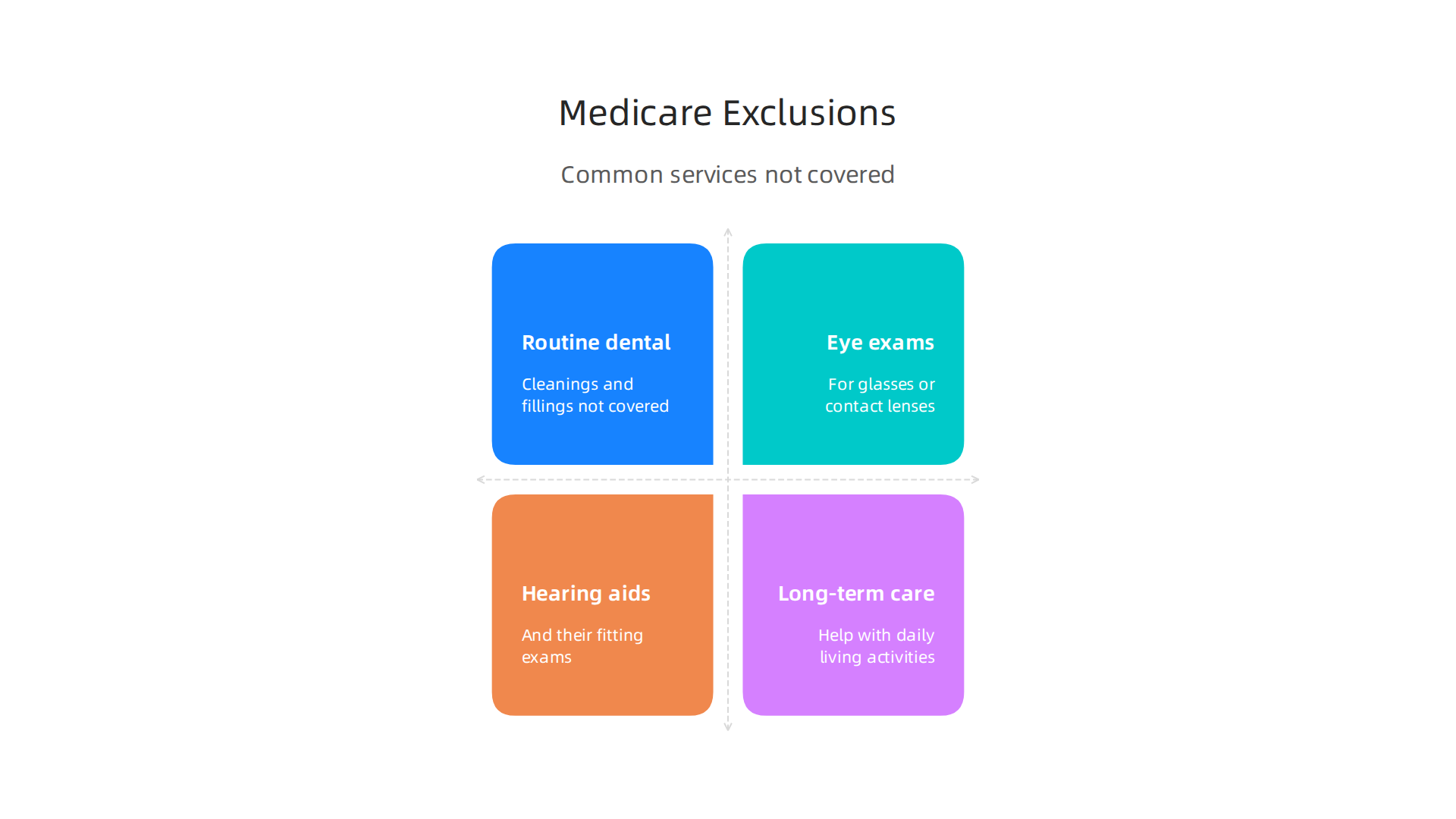
- Routine dental care, like cleanings and fillings
- Eye exams for glasses or contact lenses
- Hearing aids and their fitting exams
- Most long-term care, such as help with daily living in a nursing home or assisted living facility
- Cosmetic surgery
These are common services many people need, which is why many look into Medicare Advantage plans or other private insurance options to fill these gaps. How Medicare decides what to cover, and how much to pay, is guided by the Centers for Medicare & Medicaid Services (CMS) rules. These rules help make sure that the care you get is truly needed.
Knowing the ins and outs of what Medicare covers helps you make smart choices for your health. For more detailed information on different benefit options, consider learning how to understand every health benefits model for 2026.
Staying up to date on all these changes and how they impact health technology can be a challenge. For clear daily updates on AI and technology trends shaping healthcare, you might want to consider subscribing to The AI Newsletter Worth Reading.
Knowing what Medicare covers is one thing, but how doctors and hospitals actually get paid for those services is another. The way Medicare pays for care greatly affects what kind of care you get and how new tools are used. This involves different payment models that guide healthcare providers.
How Providers Get Paid: Fee-for-Service vs. Value-Based Care
For a long time, the main way healthcare providers got paid was through a system called fee-for-service. This means doctors and hospitals got paid for each service they provided, like every visit, test, or procedure. If you went to the doctor five times, they would bill Medicare five times. This model focused on the number of services given, which sometimes meant more services were done, not always better ones.
However, in 2026, Medicare is pushing more towards value-based care models. What does Medicare cover under this new model? Instead of paying for each service, value-based care rewards providers for giving high-quality care that leads to better patient health and lower costs. The Centers for Medicare & Medicaid Services (CMS) has programs that give incentive payments to providers who meet certain quality goals for people with Medicare CMS’ Value-Based Programs.
This means providers are encouraged to keep you healthy, rather than just treating you when you’re sick.

Experts explain that value-based care ties how much providers earn to the results they get for patients, like the quality and cost of care Value-Based Care: What It Is, and Why It’s Needed.
Medicare Advantage and Payment Models
Medicare Advantage plans (Part C) play a big role in this shift. These private plans get a set monthly payment from Medicare for each person they cover. This payment is adjusted based on the enrollee’s health and other factors Ch 1: June 2026 Report to the Congress. Because of this setup, Medicare Advantage plans have a strong reason to manage care well, coordinate services, and avoid unnecessary treatments. They often use value-based contracts with doctors and hospitals to make sure care is both good and cost-effective. These plans are encouraged to enhance care through elements of value-based care Value Based Care – Healthcare & Reimbursement Info.
How Payment Models Change Healthcare
The move from fee-for-service to value-based care is a big deal for how healthcare is delivered and what new technologies are used.
- Encourages Better Technology: With value-based care, doctors are more likely to adopt new health technology that helps them keep patients healthier, like tools for remote monitoring or digital platforms for managing chronic conditions. For example, if a new app helps people manage their diabetes better, leading to fewer hospital visits, the provider might be rewarded for those good outcomes. This focus pushes innovations that truly improve patient outcomes and efficiency.
- New Ways to Deliver Care: These payment models also inspire new service ideas. We might see more virtual care, home health programs, or team-based care where different specialists work together more closely. These approaches can be more efficient and lead to better health results, which aligns with value-based goals. In 2026, we see many healthcare technology trends 2026 reshape medicine and patient care.
- Focus on Prevention: Since preventing illness can be cheaper than treating it, value-based care encourages more preventive services. This helps answer "what does Medicare cover" in terms of keeping you healthy in the first place, rather than just treating you after you get sick.
Understanding these payment models helps us see how Medicare is working to improve healthcare quality and control costs in 2026. For those specifically interested in care for older adults, learning about senior care technology modernizing long-term care for better outcomes can provide even more insights into how these models are applied.
The shift in how Medicare pays for care has a big impact on hospitals and doctor’s offices. These changes affect how much money health systems take in, how much they spend, and how they decide about staffing. It also creates new daily challenges for how they operate.
How Money Flows to Hospitals
In 2026, new Medicare payment rules are changing how hospitals get paid. For example, inpatient hospital payments are expected to go up by about 2.6%, which means roughly $5 billion more for hospitals that meet certain quality standards CMS finalizes 2.6% pay bump for hospitals in 2026. This increase is for general acute care hospitals that do well in quality reporting programs and use electronic health records in meaningful ways FY 2026 Hospital Inpatient Prospective Payment System.
However, other payment rules can make things harder. Hospitals might see reductions in payments for certain outpatient services. These mixed changes mean hospitals must carefully watch their money to stay afloat 2026 Final Medicare Payment Policy Changes Across Settings. This affects their overall profits and how much they can invest in new tools and services.
Dealing with New Rules and Billing
Moving towards CMS value based care means hospitals need to adjust how they do things. They have to make sure they follow all new rules and track patient results very closely. This can be complex. Billing gets more complicated when payments are tied to good outcomes rather than just the number of services provided. Hospitals often face new challenges with billing and staying compliant with these changing rules Hospitals to Face Reimbursement and Compliance.
Medicare Advantage plans also add extra work. These private plans can have their own rules and paperwork, which means hospitals have to manage different systems for traditional Medicare and Medicare Advantage patients. This can put a lot of extra administrative pressure on hospitals Blog explains why analysis of MA’s impact on hospital.

Changes in Staffing and Care
With value-based care, hospitals might need different kinds of staff. For example, they may hire more care coordinators or patient educators to help people stay healthy and avoid returning to the hospital. This means rethinking staffing decisions. Hospitals also need to redesign how care is given, creating special plans for certain illnesses to ensure patients get the best and most efficient treatment. An organized approach to improving how a health system runs can really help the unified operational playbook elevates health system performance for 2026. All these changes directly influence what services a hospital offers and ultimately, what does Medicare cover when a patient needs care.
Understanding these operational and financial changes is key for health systems in 2026 as they work to provide good care while managing costs.
Keeping up with changes in health technology and policies can be a lot. For daily updates on AI and technology that affects healthcare, you might find it helpful to read The AI Newsletter Worth Reading.
The changes in how Medicare pays for care also mean big shifts for companies that make digital health tools. These companies need to know how their products and services fit into the new payment rules. Understanding what Medicare covers for digital health is key to their success in 2026.
How Digital Health Tools Get Paid
It’s important for digital health companies to understand the different ways they can get paid by Medicare. This includes payments for services like digital therapeutics, telehealth, and remote patient monitoring (RPM). These payment pathways are tied to the broader shift toward CMS value based care, where healthcare providers get paid based on the quality of care and patient outcomes, not just the number of services.
Telehealth Services:
Good news for telehealth providers: Medicare continues to cover many telehealth services through December 31, 2027. This means patients can still get care from home, and the old rules about needing to be in a rural area for some services are mostly paused for now. For instance, Medicare covers things like mental health visits, certain physical therapy, and other common doctor’s appointments done by video or phone Medicare Telehealth Coverage Extended Through 2027. Many different types of visits are still covered, and patients can get them from almost anywhere Medicare Telehealth Coverage 2026: Services, Costs, and How …. This ongoing coverage is a big help for companies providing digital care. For more details on what Medicare covers with telehealth, you can check the official information Telehealth Insurance Coverage.
Remote Patient Monitoring (RPM):
RPM allows doctors to keep an eye on patients’ health data from a distance, like blood pressure or blood sugar levels. Medicare has specific codes for these services, which means companies offering RPM can get paid. This helps patients manage long-term health problems and can prevent them from needing to go to the hospital.

Digital Therapeutics and FDA-Cleared Devices:
For newer digital tools, especially those that need approval from the FDA, getting Medicare coverage can be more complex. These products, sometimes called "digital therapeutics," are like software-based treatments. For them to be covered, they often need to show clear proof that they work well and improve patient health, aligning with the goals of CMS value based care. This means doing studies and collecting strong evidence. Companies like option care health and medimpact healthcare systems also play a role in how these newer technologies are integrated and paid for, often through special contracts or benefit plans.
Strategies for Digital Health Companies
To succeed in this changing landscape, digital health vendors need smart plans.
- Understand Reimbursement: Before bringing a product to market, companies must know exactly how their service will be paid for by Medicare. They need to figure out which payment codes apply and what kind of proof is needed.
- Go-to-Market and Pricing: Pricing needs to be set carefully. It should reflect the value the digital tool brings to patients and healthcare systems, but also fit within what Medicare or Medicare Advantage plans will pay. Companies should also think about how their products will be used alongside other services.
- Evidence Generation: It’s super important to show that your digital health product truly helps patients. This means conducting good research and trials. Strong evidence of improved health outcomes and cost savings can make it much easier to get Medicare coverage. Medicare’s value-based programs reward providers who deliver quality care CMS’ Value-Based Programs, so showing your product helps achieve those results is key.
Making sure digital health innovations improve patient care is the main goal. By focusing on how their solutions help meet the goals of CMS value based care, digital health companies can better navigate the system and grow. Learning about current healthcare technology trends 2026 is essential for staying competitive and providing value. Companies also need to think about how to unlock healthcare growth with digital health platforms in 2026.
The world of Medicare is always changing, and 2026 is no different. The Centers for Medicare & Medicaid Services (CMS) keeps updating its rules to make healthcare better and more fair. These changes often focus on how healthcare providers get paid, pushing for CMS value based care. This means paying for quality results instead of just the number of services given. Understanding what does Medicare cover in this shifting landscape is super important for everyone.
Recent Policy Changes and What’s Next
CMS has been busy making new rules and laws. For 2026, we see some important updates across different parts of Medicare. One big focus is on Medicare Advantage (MA) plans. These plans are getting payment changes, with a projected increase in payments to plans by over $25 billion in 2026 to help them offer more benefits and better care for seniors 2026 Medicare Advantage and Part D Rate Announcement. However, some changes mean certain beneficiaries might see their current Medicare Advantage plans shift, possibly leading to some losing their existing plans. You can learn more about these changes by watching an explanation on Big Medicare Advantage changes for 2026.
Another key area of change involves prescription drug costs. Good news for patients: Medicare is setting a cap on out-of-pocket prescription drug costs under Part D. Starting in 2026, this cap will be $2,100 for the year Medicare Updates for 2026 Every Senior Should Know. This is a big help for people with high drug costs. Also, Medicare is working to lower prices for some expensive prescription drugs. You can find more details about these and other updates, like changes to premiums and deductibles for Medicare Parts A and B, in guides like the Medicare Changes 2026: Updates to Coverage, Costs, and More.

For instance, the standard monthly premium for Medicare Part B went up to $202.90 for 2026 2026 Medicare Parts A & B Premiums and Deductibles.
These updates are all part of the larger move toward CMS value based care, where the goal is to improve health outcomes and keep costs down. This means healthcare providers get paid more when their patients get better, not just for doing more tests or procedures Understanding Value-Based Care: What It Means for …. This focus encourages using new technologies and ways of giving care that truly help patients.
What Digital Health Leaders Should Do Next
For leaders in digital health, investors, and product teams, it’s really important to keep a close eye on these policy changes. Here are some simple steps:
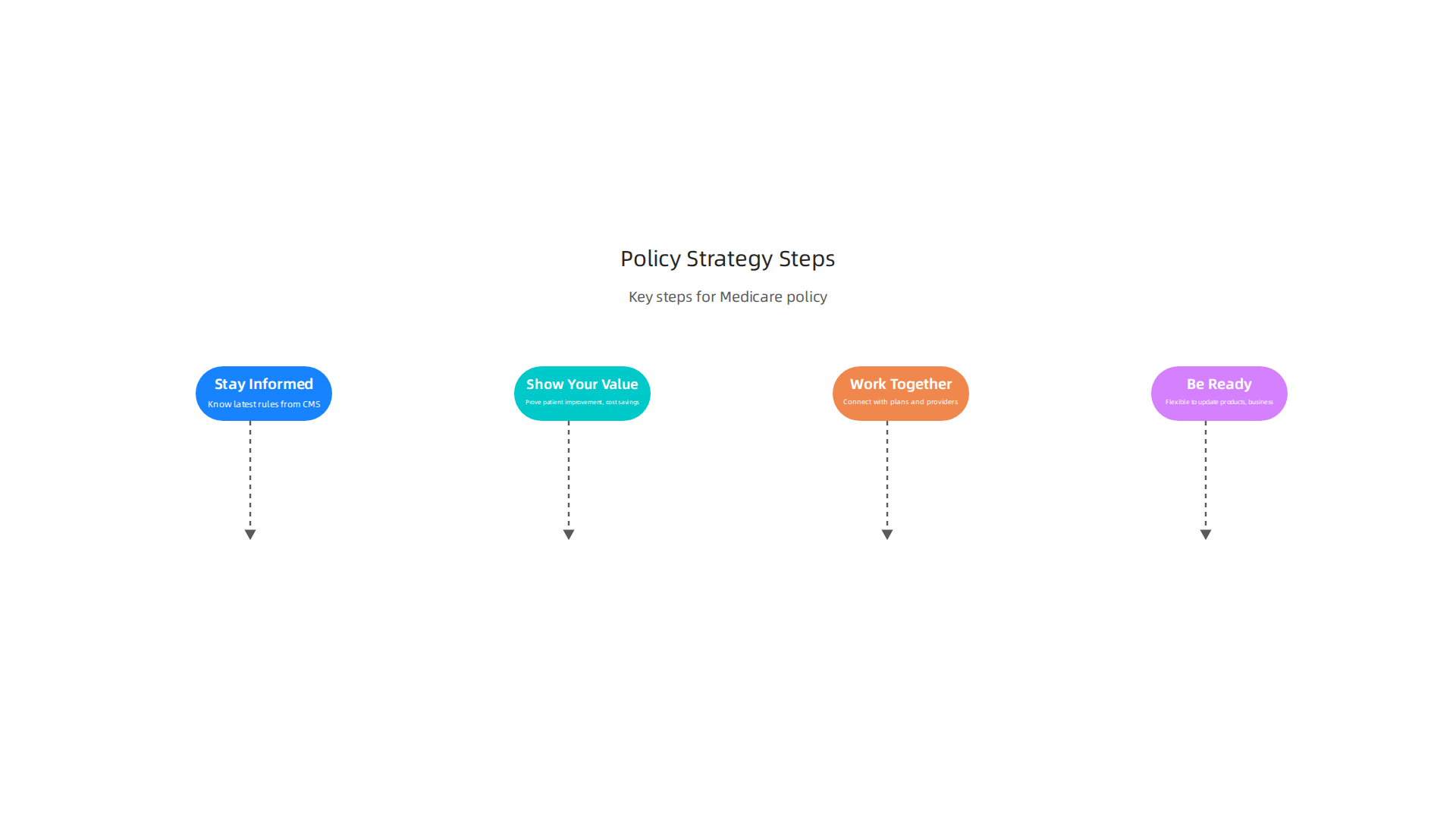
- Stay Informed: Make sure you know about the latest rules from CMS. These rules tell you
what does Medicare coverand how payments work. This helps you plan your products and services better. You might want to understand what does Medicare Part D cover in 2026 if your digital health tool involves prescription management. - Show Your Value: Since
CMS value based careis the focus, your digital health tools need to clearly show that they help patients get better and save money. Think about doing more studies to prove how well your product works. - Work Together: Connect with health plans, especially Medicare Advantage plans, and providers. Companies like
option care healthandmedimpact healthcare systemsare key players who understand how new digital tools fit into the system. Working with them can help your product get adopted and paid for. - Be Ready to Adjust: Policies can change often. Be flexible so you can quickly update your products or how you do business to fit new rules.
Keeping up with healthcare technology trends 2026 and the policies that shape them is key to making sure digital health tools can truly help people and grow in the market.
Want to keep learning about the latest in health tech and AI?
The AI Newsletter Worth Reading delivers clear, daily updates right to your inbox.
Summary
This article explains what Medicare covers in 2026 and why those details matter for healthtech leaders. It summarizes the four Medicare parts (A–D), eligibility rules, and key 2026 cost updates—like Part A and B deductibles and the Part B premium—while clarifying what is typically excluded. The piece connects CMS policy shifts and the move toward value-based care to real-world consequences for hospitals, providers, and digital health vendors, showing how payment models influence technology adoption, staffing, and billing. It also outlines which digital services (telehealth, remote patient monitoring, some digital therapeutics) have clear reimbursement paths and what evidence vendors must produce to win coverage. Finally, the article gives practical next steps—stay informed on CMS rules, demonstrate value through outcomes, partner with payers and providers, and design flexible go-to-market strategies—to help healthtech teams navigate Medicare-driven market risk and opportunity.