


It is important to plan for unexpected health events.

No one wants to think about a time when they cannot make their own medical choices. But it happens. This is where a health care power of attorney comes in. It is a very important legal paper that lets you pick someone you trust to make health care decisions for you if you cannot speak for yourself.
A health care power of attorney, often called an HCPOA, names a person, known as your agent or attorney-in-fact, to make choices about your medical care.

This person steps in when you are unable to communicate your wishes due to being very sick or hurt. The agent’s job is to make decisions based on what they believe you would want or, if your wishes are not known, what is best for you. This is different from a general power of attorney, which handles your money or property matters, not your health care. It is also different from a living will, which states your general wishes about medical treatment but does not appoint someone to speak for you directly in the moment What Is a Health Care Power of Attorney (HCPOA)?.
For health systems, company founders, and medical staff like clinicians, the absence of a designated health care power of attorney can cause many problems. Imagine a patient arrives at a hospital and is too unwell to talk. If there is no one legally named to make choices for them, doctors and nurses might not know what to do next. This can lead to delays in care and a lot of stress for family members who might disagree on what the patient would have wanted. Health care providers may face tough ethical choices and legal concerns when there is no clear guidance. This kind of situation can slow down patient care and create extra work for the hospital and its staff, affecting how well a health system runs. Understanding the health system technology landscape insights for healthtech leaders helps address these types of operational challenges in 2026.
Staying informed about legal and operational best practices in healthcare is crucial for everyone in the field.
To keep up with the latest information and insights in the health tech world, including advancements that improve patient care and system efficiency, consider subscribing today.
The AI Newsletter Worth Reading
What Exactly Is a Health Care Power of Attorney (HCPOA)?
Following up on our talk about planning for your health, let’s look closer at what a health care power of attorney (HCPOA) really means. At its heart, a health care power of attorney is a special legal paper. It lets you pick one trusted person to make medical choices for you if you become too sick or hurt to make them yourself. This chosen person is often called your "agent" or "health care agent."
The main job of your agent is to speak for you when you cannot. They must make health care decisions based on what they believe you would want. If your wishes aren’t known, they should act in your best interest. This power only starts when a doctor says you cannot make your own medical decisions. Before that, you stay in charge of your own health care. In fact, many states have laws that explain what a health care power of attorney does and who can be your agent, like in Wisconsin where it defines the "principal" as the person who makes the document and the "health care agent" as the person chosen to make decisions
Wisconsin Legislature: Chapter 155. This type of document is a key part of planning for your future medical care Types of Powers of Attorney and Caregiving.
How It’s Different from Other Papers
It’s easy to mix up a health care power of attorney with other legal papers.

Let’s make it clear:
- General Power of Attorney: This paper deals with your money and property. It lets someone pay your bills or sell your house. It does not cover health care choices. A health care power of attorney, on the other hand, is specifically for medical decisions Power of Attorney – StatPearls.
- Durable Power of Attorney: Sometimes, a health care power of attorney is called a "durable power of attorney for health care." The word "durable" simply means that the document stays valid even if you become unable to make decisions. Not all durable powers of attorney are for health care; some are for finances. But a durable power of attorney for health care is specifically what we are talking about here.
- Living Will: A living will tells doctors what kind of medical treatment you want or don’t want, especially for end-of-life care. For example, it might say you don’t want machines to keep you alive if there’s no hope of getting better. But a living will doesn’t name a person to make choices for you. A health care power of attorney does both: it names an agent and can include your specific wishes. Both a living will and a health care power of attorney are types of "advance directives," which are legal papers that state your wishes about medical care Medical Power of Attorney.
- Medical Proxy: This term is often used in the same way as an agent for a health care power of attorney. It refers to the person you choose to make medical decisions for you. So, your medical proxy is the agent named in your health care power of attorney. In some places, the document itself might be called a medical power of attorney Definition of medical power of attorney – National Cancer Institute.
To make a health care power of attorney valid, you usually need to sign it in front of witnesses. In many places, it also needs to be acknowledged by a notary public NC General Statutes – Chapter 32A Article 3. These steps help make sure the document is legally strong and truly reflects your wishes. Understanding these important differences helps ensure your medical choices are known and respected.
While planning for your health, it is also useful to learn about medical abbreviations boost patient safety and clinical accuracy to help you understand medical discussions with care providers better.
It’s super important to choose an agent, even when you feel healthy. This is part of what we call advance care planning. It means thinking and talking about your future medical care. You pick someone to make choices for you if you cannot speak for yourself. This is a very smart move for everyone, not just those who are already sick.
When an Agent Is Especially Important
There are certain times when having a health care power of attorney can be a true lifesaver:
- Chronic Illness: If you have a long-term health problem like heart disease, diabetes, or lung issues, your health can change quickly. An agent can step in right away if you become too ill to make choices.
- Planned Procedures: Even for routine surgeries or medical tests, unexpected problems can come up. You might be unable to talk right after surgery. Having an agent ensures someone can make decisions based on your wishes if this happens.
- Risk of Dementia: For people who have a family history of memory problems or other brain conditions, setting up a health care power of attorney early is very important. It’s best to do this before any serious memory issues begin Advance care planning for people living with dementia. This way, your choices are clear even if your ability to think clearly changes later on.
- Unexpected Events: Accidents or sudden illnesses can happen to anyone, at any age. No one plans to get into an accident, but having a health care power of attorney ready gives you peace of mind. The main legal step in advance care planning is picking a health care agent in a valid document Results.
Thinking About Fairness and Challenges
While having a health care power of attorney is a great idea, not everyone finds it easy to do. There are some challenges that stop people from putting these plans in place:
- Talking About Tough Topics: It can be hard to talk about getting sick or dying.

Some people avoid these talks, which delays making plans.
- Culture and Language: Different cultures have different views on health and making decisions. Also, language barriers can make it tough to understand legal papers or talk to doctors. These things can make it harder for some people to complete advance directives Advance Care Planning: Advance Directives for Health Care.
- Finding a Trusted Agent: Not everyone has a close family member or friend they feel comfortable naming as their agent. Sometimes, loved ones live far away or are too old themselves to take on the role. This highlights the need for community support and fair access to health resources, much like when we discuss choosing and scaling community health care models for optimal health equity.
- Cost and Information: Getting legal help to set up a health care power of attorney can cost money, which is a barrier for some. Also, knowing what is a medical deductible and how it affects overall healthcare costs can be confusing, adding to the stress of planning for future health needs. It is important that everyone has clear information about how to make these important plans.
Choosing the right person to be your agent for a health care power of attorney is one of the most important parts of planning for your future health care. This person will speak for you if you cannot speak for yourself. So, you want to pick someone who truly understands your wishes and can make tough choices. Here’s what to look for:
Practical Qualities of a Good Agent
When you think about who to choose, consider these practical things:
- Can They Make Hard Choices? Your agent might have to make very serious medical decisions. They need to be strong and able to keep calm under pressure. They should be able to talk to doctors and stick up for your choices, even if it’s difficult. It helps if they are clear-headed and can put your wishes first, even if those wishes are different from their own.
- Are They Available? This person needs to be easy to reach, especially in an emergency. If they live far away or are too busy with their own lives, it might be hard for them to act as your agent when needed. Your agent must be able to step in right away if you become unable to make choices. These health care plans give your chosen agent the power to carry out your wishes if you can’t speak for yourself Advance Healthcare Planning.
- Do They Know Your Wishes? This is super important. Your agent should know what kind of medical care you want and do not want.

This includes knowing your values and what matters most to you in life. You should talk openly with them about your beliefs regarding medical treatment. This way, they can make decisions that truly match what you would want Health Care Decision Making.
- Can They Understand Medical Talk? Doctors and nurses often use special words, like "HPI medical abbreviation" for history of present illness or "medical acronym NPO" which means "nothing by mouth." A good agent doesn’t need to be a doctor, but they should feel comfortable asking questions to make sure they fully understand what is happening and what the choices mean. It’s about making sure everything is clear, not just nodding along. You can learn more about how important it is for clear communication in healthcare by reading about clarifying medical abbreviations for safer health tech systems.
- Do They Understand Costs? While the main focus is your health, medical decisions often come with costs. It can be helpful if your agent has some idea of how health insurance works, for example, what is a medical deductible or how your choices might affect your overall medical coverage.
A Simple Checklist for Choosing Your Agent
Here is a quick checklist to help you think about who might be the best person to be your health care power of attorney agent:
- Do they understand your health care wishes?
- Are they able to make tough decisions calmly?
- Can they be reached easily in an emergency?
- Are they willing to talk with doctors and ask questions?
- Do they respect your values, even if they are different from their own?
- Are they at least 18 years old? (This is a legal rule.)
- Have you talked with them about this role, and have they agreed to do it?
Choosing an agent is a gift you give yourself and your loved ones. It makes sure your voice is heard, no matter what happens.
To stay updated on the latest trends in healthcare and technology that might affect your future health choices, consider subscribing to a trusted resource.
Get clear daily AI updates from The AI Newsletter Worth Reading.
Making sure your health care wishes are followed is important, but it gets tricky when you think about different countries. The rules for a health care power of attorney can change a lot depending on where you are in the world. As we look at 2026, with more people living in and traveling to different places, understanding these differences is key.
Legal variations: key differences across major jurisdictions
Laws about who can make medical decisions for you if you can’t, known as a health care power of attorney or similar documents, are not the same everywhere. What works in one country might not work in another. It’s like how different countries have different driving laws.
United States and Other Common Law Countries
In countries that use a legal system called "common law," like the United States, the United Kingdom, and Canada, you can usually name a health care agent. This is done through a written paper that often needs signatures from witnesses or a special stamp from a notary public to be official Healthcare Power Of Attorney Laws Vary Between Countries?. Each state in the U.S. might have slightly different rules, too.
The UK and European Union
The United Kingdom has its own set of rules. For example, in England and Wales, a document called a Lasting Power of Attorney (LPA) is used.
It’s often split into two parts: one for money and property, and another for health and welfare decisions Incapacity Planning: Power of Attorney and Living Will. This health and welfare LPA is the one that lets someone make medical choices for you. It’s important to know that a health care power of attorney made in another country is generally not accepted automatically in the UK for health and welfare matters Is a Foreign Power of Attorney Valid in the UK? Solicitors.
Across the European Union, the situation can also be complicated. Countries with "civil law" systems, like France or Germany, tend to have stricter rules about recognizing these documents from other countries The Impact of International Laws on Power of Attorneys. There’s a special agreement called the Hague Convention on the Protection of Adults, which helps set rules for when courts have power and which laws apply to protective measures. However, not all countries have fully agreed to follow it, and the UK, for example, has only agreed for Scotland, not the rest of its nations Powers of Attorney: Cross-border considerations. This means your health care power of attorney from home might not be instantly valid if you need medical care in another EU country.
What This Means for Healthcare
These differences are a big deal, especially in 2026. If you move to another country, or even just plan to travel a lot, your existing health care power of attorney might not work. This is important for "expats," people living outside their home country. They need to learn about the local laws and what their documents are called there. For example, in France, it might be called a mandat de protection Healthcare Power of Attorney Abroad: A Guide for Expats.
For doctors and hospitals that help people from many different places, called multi-jurisdictional providers, these legal differences are a challenge. Also, with more telehealth services where doctors see patients remotely, it’s vital to know which country’s laws apply when medical decisions are being made. Health systems are often looking for ways to handle these complex situations better, sometimes through healthcare technology trends. Making sure your wishes are clearly understood and legally binding, no matter where you are, requires careful planning and perhaps even getting new documents in a new country.
When you know you need a local document like a health care power of attorney, the next important step is to make sure it’s done correctly. This means following certain rules for signing, getting it witnessed, and making it official. A health care power of attorney is a legal paper where you name someone to make health care choices for you if you can’t make them yourself What Is a Health Care Power of Attorney (HCPOA)?. This person is often called your agent or attorney-in-fact durable power of attorney for health care | Wex – Cornell Law School.
Getting Your Health Care Power of Attorney Right
Making your health care power of attorney valid usually involves a few key steps:
- Witnesses: Most places require your signature to be seen by one or two adult witnesses.

These witnesses confirm that you signed the paper freely and that you seemed to understand what you were doing. For example, in North Carolina, a health care power of attorney needs to be signed in front of two qualified witnesses NC General Statutes – Chapter 32A Article 3. But there are rules about who can be a witness. Often, the person you named as your agent, your doctor, or someone who might inherit from you cannot be a witness. This is to make sure there are no conflicts of interest HEALTH CARE POWER OF ATTORNEY Completion Guide.
- Notarization: Many states also ask for the document to be notarized. A notary public is an official who checks your ID and watches you sign the paper.
They put their special stamp on the document to show it’s official. While witnesses confirm you signed freely, a notary confirms your identity. In some places, you might need both witnesses and a notary, while in others, one or the other might be enough. Always check the rules for where you live.
- Filing and Safekeeping: Once your health care power of attorney is properly signed and witnessed, you should keep the original in a safe place, but make sure it’s easy to find in an emergency. It’s also a good idea to give copies to your agent, your doctor, and any family members who might need to know about it.
How Hospitals Can Help
For hospitals and clinics, dealing with health care power of attorney documents needs clear steps. In 2026, with health care technology trends making things faster, hospitals can improve how they handle these important papers.
Here are some best practices:
- Clear Rules for Staff: Hospitals should have clear rules and training for their staff on how to check and use a health care power of attorney. This includes knowing what makes a document valid in their state.
- Easy Access to Documents: Using digital systems can help hospitals keep patient documents, including their health care power of attorney, ready and available when needed. This helps make sure medical decisions are made quickly and correctly. When patients move from one care setting to another, technology can help improve how their information is passed along, which is called transitions of care.
- Notary Services: Some hospitals even offer notary services right there, which can be a big help for patients and their families. When a notary helps someone in a hospital, they need to make sure the patient is awake and understands what they are signing 5 tips when notarizing for medical patients.
- Clear Communication: It’s vital that doctors and nurses talk clearly with patients and their agents. This includes making sure everyone understands medical terms and abbreviations like NPO or HPI. Using clear language helps everyone be on the same page. To learn more about common terms, check out our guide on clarifying medical abbreviations for safer health tech systems.
By following these best practices, both individuals and health care providers can ensure that a health care power of attorney truly works as intended, protecting patients’ wishes and making tough medical decisions easier for everyone involved.
For those interested in staying updated on the latest shifts in technology and their impact on various sectors, including healthcare, consider getting daily insights. Find out more when you sign up for The AI Newsletter Worth Reading.
A health care power of attorney is a key part of what experts call "advance care planning." This is a way for people to think about and share their wishes for future medical care Advance Care Planning: Advance Directives for Health Care. It helps if you become unable to speak for yourself. But how does a health care power of attorney fit in with other important papers like advance directives and POLST forms?
And how do hospitals keep track of these in their computer systems?
How HCPOA interacts with advanced directives, POLST, and the EHR
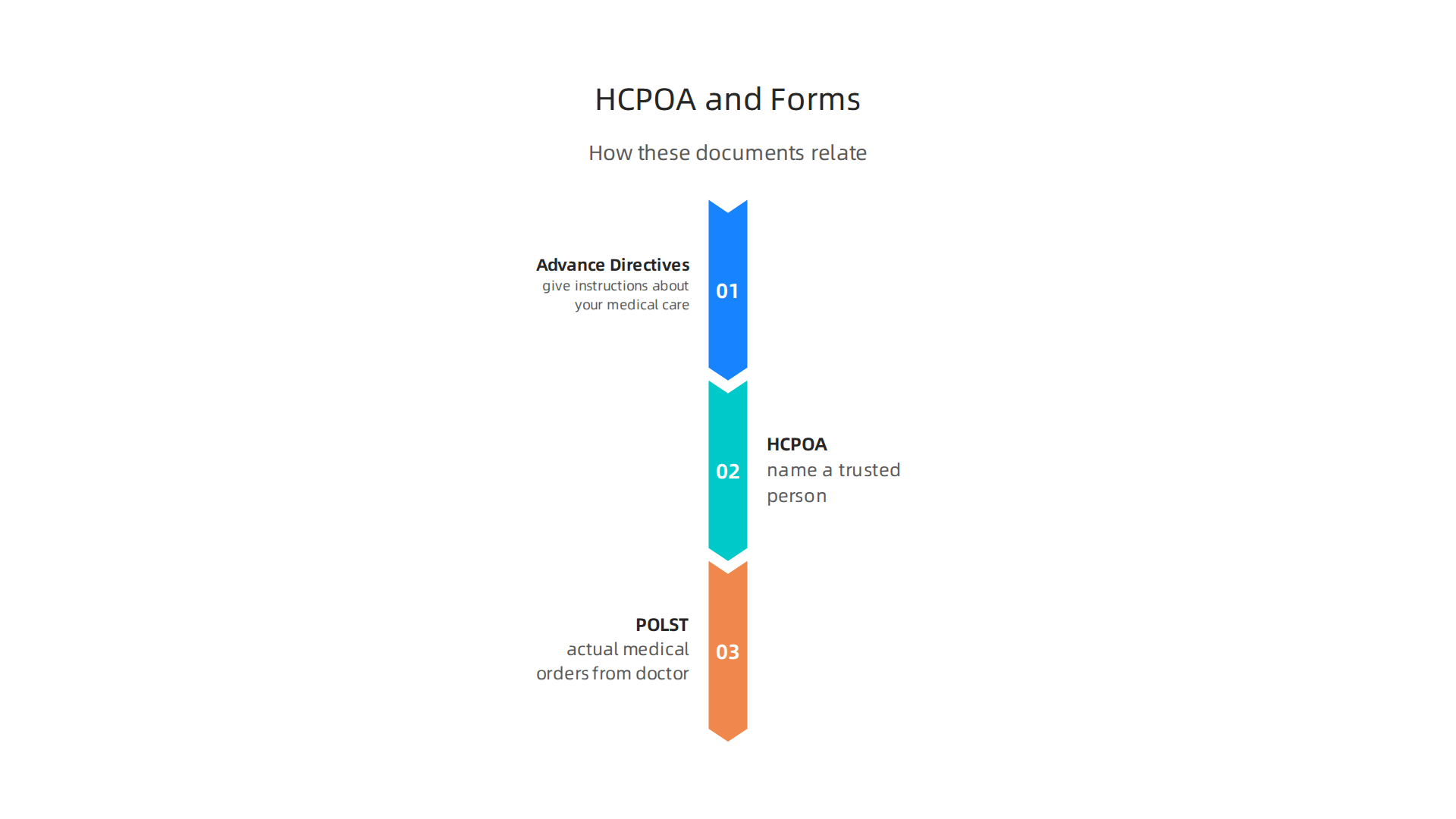
It’s helpful to know that a health care power of attorney (HCPOA) is one type of advance directive. An "advance directive" is a general term for legal papers that give instructions about your medical care. They only become active if you cannot make your own choices Advance Care Planning, Medical Power of Attorney & ….
Here is how they differ:
- Advance Directives (General): These documents let you say what kind of medical care you want or do not want. The most common kind is a "living will," which states your wishes about life-sustaining treatments like breathing machines or feeding tubes. Think of it as your written instructions for future care Advance Care Planning: A Guide to Advance Directives. This planning process is crucial for making sure your choices are clear to your doctors and family.
- Health Care Power of Attorney (HCPOA): This is a special type of advance directive where you name a trusted person, called an agent, to make health care decisions for you. The HCPOA focuses on who will make choices if you can’t. Your agent should know your wishes, but they have the power to make decisions in your place. Choosing this person is considered the most important legal part of advance care planning Results.
- POLST Forms: POLST stands for "Physician Orders for Life-Sustaining Treatment." These are different from other advance directives because they are actual medical orders from a doctor. They are often printed on special colored paper. POLST forms are meant for people who have serious illnesses and want very specific medical orders to be followed right away, no matter where they are getting care. A POLST form turns your treatment wishes into doctor’s orders.
So, while an advance directive (like a living will) tells doctors what you want, a health care power of attorney names the person who will speak for you. A POLST form is a direct medical order. All three are important tools for advance care planning Advance Healthcare Planning.
Keeping Track with Electronic Health Records (EHR)
In 2026, technology plays a big part in how these documents are managed. Electronic Health Records (EHR) are computer systems that hospitals and clinics use to keep all your medical information in one place. For a health care power of attorney and other advance directives to work well, they need to be easily found in your EHR.
Here’s why EHRs are important:
- Easy Access: Doctors and nurses can quickly see if you have an HCPOA or advance directive. This is super helpful in an emergency when quick decisions are needed. Modern healthcare technology trends 2026 reshape medicine and patient care make this access faster than ever.
- Clear Flagging: Hospitals use special flags or notes in the EHR to show that a patient has these important documents. This makes sure that the medical team knows to check them. Good public health data standards building smarter systems for 2026 help ensure these flags are clear and understood across different systems.
- Honoring Wishes: When documents are properly put into the EHR, it helps the medical team honor your wishes and work closely with your agent. Having detailed, easily accessible patient records is a core part of systems like Elation Health AI EHR redefines primary care for independent practices.
Making sure your health care power of attorney, advance directives, and any POLST forms are clearly documented in your medical record helps ensure that your voice is heard, even if you cannot speak for yourself. It’s a vital step in planning for your future health.
In 2026, getting your wishes known for future medical care is becoming even easier thanks to new technology. We talked about how Electronic Health Records (EHR) help keep track of your health care power of attorney (HCPOA) and other important papers. Now, let’s look at how digital tools make creating and managing these documents simple and safe.
Tech-enabled HCPOA: digital forms, e-signatures, EHR integration, and security
Gone are the days when you needed stacks of paper to set up your health care power of attorney. Today, many people are using digital forms and e-signatures. An e-signature is like your handwritten signature, but it’s done online. It has the same legal power as a pen-and-paper signature.
The use of e-signatures is growing very fast, especially in healthcare. Experts say that the digital signature market will keep growing a lot in the coming years Digital Signature Market Size, Share & Global Report [2034]. In 2026, about 78% of healthcare providers use e-signatures for many tasks, like patient forms E-Signature Statistics & Trends: 2026 Industry Data Report | ZiaSign. This makes things quicker and more organized for everyone involved. The government even works on standards for electronic signatures in healthcare to make sure they are used correctly and safely Adoption of Standards for Health Care Attachments ….
When your health care power of attorney is a digital file, it can be easily added to your Electronic Health Record. This means that if there’s an emergency, doctors and nurses can find your wishes and your chosen agent’s contact info very fast. Digital health platforms are really helping to grow healthcare in new ways, making things more efficient for patients and providers alike unlock healthcare growth with digital health platforms in 2026.
Keeping digital HCPOA safe and sound
With all this digital convenience comes the need for strong security. It’s super important that your digital health care power of attorney is kept private and safe from people who shouldn’t see it. Here’s how technology helps:
- Secure Systems: Hospitals and clinics use special computer systems that protect your health information. These systems have rules to keep your medical records safe.
- Identity Checks: When you choose an agent for your HCPOA, there are ways to check their identity online. This makes sure that only the person you picked can make choices for you.
- Following Rules: Healthcare also has strict rules, like HIPAA, about keeping patient information private. Digital HCPOA tools follow these rules very closely. This helps make sure your personal details and decisions are handled with great care.
Using digital tools for your health care power of attorney makes the process easier and helps your doctors and family know your wishes quickly. It’s a modern way to plan for your future health needs.
Want to learn more about how technology is changing healthcare?
The AI Newsletter Worth Reading
Summary
A health care power of attorney (HCPOA) is a legal document that names a trusted person to make medical decisions for you if you become unable to do so. This article explains what an HCPOA does, how it differs from living wills, general or durable POAs, and POLST orders, and why naming an agent is a central step in advance care planning. It covers when an HCPOA matters most—after injury, during planned procedures, with chronic illness, or for dementia risk—and gives practical guidance for choosing an agent who understands your wishes and can act calmly. The piece outlines legal requirements like witnesses and notarization, how hospitals should store and access HCPOAs in electronic health records, and the growing role of digital forms and e-signatures along with needed security. It also reviews jurisdictional differences for travelers and expats and offers tips for making sure your wishes are honored across settings. After reading, you will know how to create, document, and share an HCPOA so your medical preferences can be followed when you cannot speak for yourself.