


Why Digital Innovation in Senior and Long-Term Care Can’t Wait
Our world is changing fast, and more people are getting older. This means that places like nursing homes and other care centers need to help many more seniors. In fact, the market for long-term care technology is set to grow a lot, showing just how important these changes are becoming Long Term Care Technology Market Size, Forecast, 2034. But here’s a big problem: there aren’t enough helpers and nurses to give everyone the care they need. This shortage of staff makes it hard for facilities like life care centers of america to keep up.
Because of this, it’s super important to find new and smart ways to deliver safe care to many people. Digital tools can help a lot. Experts say that by 2026, senior care homes will start using AI to manage tasks like checking on residents and making schedules 5 Digital health predictions for 2026. This kind of change is not just about fancy gadgets. It’s about making sure our loved ones get the best care possible, even with fewer hands on deck.

For example, some places might start using angels care home health services that use technology to help people stay well at home longer, which is a type of private home care.
In this article, we’ll look at the cool new ideas in technology that are changing senior care. We’ll talk about:
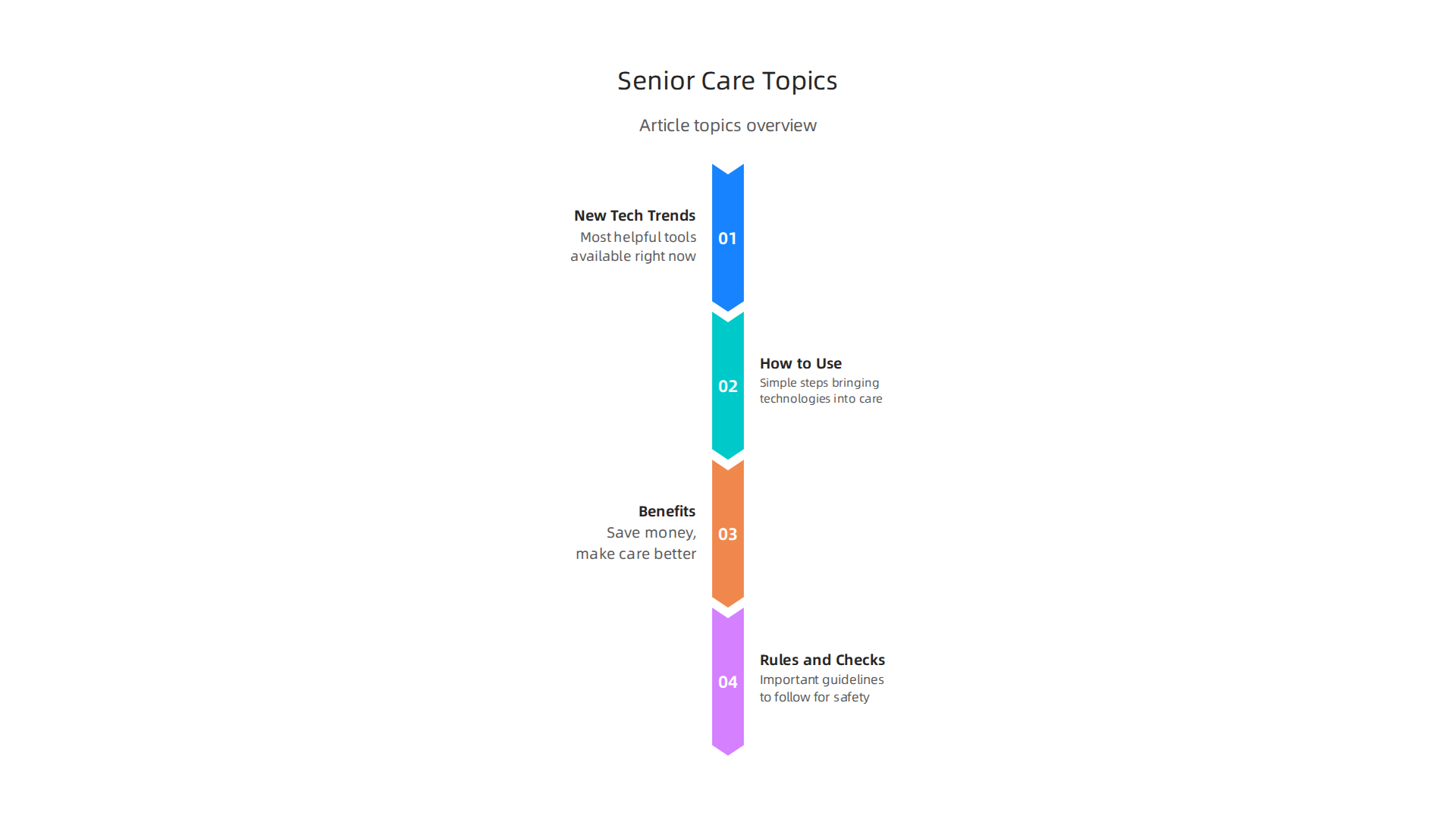
- New Tech Trends: What are the most helpful tools available right now?
- How to Use Them: Simple steps for bringing these technologies into care settings.
- What You Get Back: How these new tools can save money and make care better.
- Rules and Checks: Important guidelines to follow to make sure everything is safe and proper.
By learning about these changes, we can help care facilities, including those partnering with companies like best buy health, use smart ideas to make senior care better for everyone. For more details on new tech helping seniors, check out our guide on innovative primary care tech and models reshaping senior care in 2026.
Want to stay informed about the latest tech advances in healthcare every day?
Get clear daily AI updates from The AI Newsletter Worth Reading.
The world of senior care, already stretched thin by not enough helpers, faces even bigger problems that new technology must address.
These issues make it hard for places like life care centers of america and other care facilities to give everyone the high-quality attention they deserve in 2026.
Operational Pressures
One main issue is how tough it is to run these places every day. With fewer staff members, it’s hard to keep things going smoothly for everyone who needs help. Staff shortages mean that existing nurses and caregivers are often stretched thin. This can lead to them feeling tired or stressed, which then makes it harder to meet all the daily needs of seniors.
Rising costs are another big hurdle. Everything from medical supplies to employee wages is going up. This makes it harder for care centers to afford all the resources needed to provide top-notch care. This financial pressure can limit the number of staff they can hire or the quality of services they can offer.
Also, when people move between different care settings, like from a hospital back home or to a rehabilitation center, there can be gaps where care isn’t clear or continuous. This is called a care continuity gap. It means that important health information might get lost, or a senior might not get the right follow-up care they need right away. Services like angels care home health and other private home care options face similar struggles in making sure care is always there, even when a patient’s location changes.
Clinical Priorities
Beyond daily operations, there are very important health goals for seniors. A big one is trying to stop people from going back to the hospital soon after they leave. These are called readmissions, and they can be tough on seniors and costly for the healthcare system. Studies show that using telehealth can greatly reduce hospitalizations, helping older adults stay healthier at home The Impact of Telehealth Adoption on Patient Outcomes.
Many seniors also have long-term health problems, like diabetes, high blood pressure, or heart issues, that need careful watching. This is called monitoring chronic conditions. If these conditions aren’t managed well, they can lead to bigger health problems and a lower quality of life.
Good care also means helping seniors live full and happy lives. This means keeping up their quality of life, making sure they feel good, stay active, and connect with others. Technology can help with all these things, from making sure medicines are taken on time to allowing virtual visits with family. Companies like best buy health are looking into how technology can support these goals, both in facilities and at home, allowing seniors to maintain independence longer.
All these challenges show why new digital tools are not just nice to have. They are truly needed to give the best care possible in 2026. Understanding how to improve patient handoffs between different care providers and locations is key to solving care continuity gaps, and technology can play a big part in making those transitions smoother. For more details on this, you can learn about Transitions of Care 2026: How Technology, Regulation, and Strategy Improve Patient Handoffs.
These new digital tools are not just extra features; they are truly needed to give the best care possible in 2026. They help with many of the challenges we just talked about. Let’s look at some important technologies that are changing how we care for seniors.

Key technologies reshaping senior & long-term care
One big change is happening with remote monitoring and wearable sensors. These are like smart gadgets that seniors can wear or have in their homes. They can keep an eye on important health signs such as heart rate, sleep patterns, or how much a person moves. If something seems off, these sensors can alert caregivers or family members right away. This helps catch problems early and manage long-term health issues better. Companies like best buy health are exploring how these tools can support seniors living at home, helping them stay independent longer. It’s important that these systems keep health information safe and follow rules, as discussed in guides like Remote Patient Monitoring HIPAA Compliance.
Telehealth and virtual care models are also growing fast. This means seniors can see doctors, specialists, or even talk to family members through video calls.
It makes it easier to get expert medical advice without having to travel. It also lets family stay involved in care from far away. Virtual care can make things simpler for everyone, as explained in recent trends like Virtual Care in 2026.
Then there’s AI and analytics. AI, which stands for Artificial Intelligence, helps care centers look at lots of information quickly. It can help figure out who might be at risk for certain health problems or predict when a senior might need more help. This allows places like life care centers of america to plan better and make sure they have enough staff. AI can also help with daily tasks, making operations smoother for both big facilities and smaller providers like angels care home health or those offering private home care. Experts say that senior care places will use AI more for managing schedules and care, especially with staff shortages in 2026, according to 5 Digital health predictions for 2026.
These technologies are making senior care smarter, safer, and more helpful for everyone. To learn more about how new ideas are changing care, check out these innovative primary care tech and models reshaping senior care in 2026.
Want to stay informed on how AI is transforming healthcare and other industries? Get clear daily AI updates.
The AI Newsletter Worth Reading
But simply having new tools isn’t enough. For technologies to truly help seniors, care teams must learn how to use them well every day.
This is about bringing new digital tools into daily care smoothly. It needs good planning and training for all staff.
Integrating digital tools into care workflows: change management and staff training
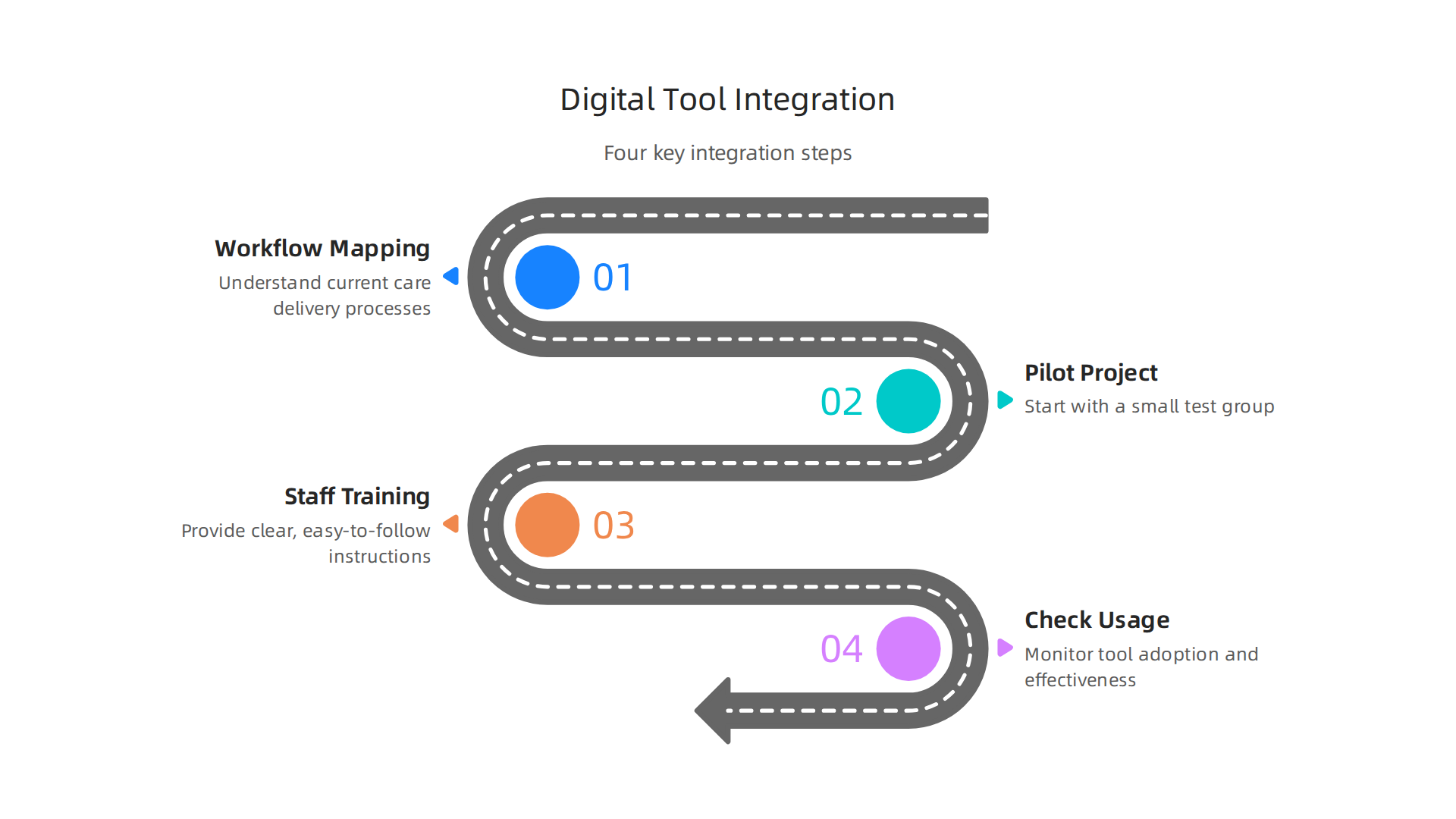
When bringing in new tech, the first step is to understand how care is given right now. This is called workflow mapping. It means looking at all the steps caregivers take, from morning routines to giving medicine. Then, you can see exactly where new tools, like smart sensors from best buy health, can fit in to make things better. It’s important to know that new tools might change how things are done, and some staff might worry about more work. Studies show that how new tools fit into daily tasks and workload can be a challenge to getting staff to use them, as explained in research on Implementation of Evidence-Based Practice in Long-Term Care.
Next, it’s smart to start with a small test, called a pilot project. For example, a few rooms at life care centers of america might try out new virtual visit tech first. This helps find any problems early and fix them before rolling out the tech to everyone. A good pilot project also helps measure if the new tools are really helping. It helps move successful small tests into bigger, everyday use, according to experts discussing From Pilots to Practice: Speeding the Movement. During this time, it’s key to talk with nurses and caregivers. Their ideas are very important for making the new tools work for everyone.
After planning and testing, training is the biggest part. Staff need clear, easy-to-follow training on how to use each new digital tool. This could be hands-on practice, simple guides, or short video lessons.

The training should cover everything, from how to log in to what to do if a device isn’t working. It’s also important to set clear goals for what staff should be able to do after training. For instance, staff at angels care home health should know how to use a new scheduling app perfectly.
Finally, care centers need to check if staff are actually using the new tools and using them correctly. This means looking at how often the tools are used and if they are helping patients. For places like those offering private home care, this could mean quick check-ins with caregivers. For larger groups like life care centers of america, they might look at data from the new systems. Knowing this helps them see what’s working and what needs more help. This kind of ongoing check-up and training is a key part of long-term care, as detailed in an evaluation of LONG-TERM CARE pilot projects. Making sure staff are comfortable and skilled with new technology is vital for the success of digital changes. This helps lead to better patient care and more efficient operations, showing the importance of Digital Transformation in Large Health Systems.
Making sure staff are comfortable and skilled with new technology is vital for the success of digital changes. This helps lead to better patient care and more efficient operations. But beyond just teaching staff, there are important rules and laws that everyone in senior care must follow when using new tech.
Regulatory, privacy, and compliance considerations for senior care tech
When care homes, like those managed by life care centers of america, bring in new digital tools or remote monitoring devices, they also take on big responsibilities. The main one is keeping patient information private and secure. In the United States, a key law for this is HIPAA, which stands for the Health Insurance Portability and Accountability Act. This law sets strict rules for how health information is handled.
For any senior care tech, whether it’s a smart sensor from best buy health or a virtual visit platform, all private resident data must be protected. This means that data about a senior’s health cannot be shared without permission, and it must be stored very safely. In 2026, HIPAA guidelines for telemedicine are clear: healthcare providers must audit their processes, check for risks, train staff, and sign agreements with tech vendors to make sure patient data is always safe HIPAA Guidelines on Telemedicine – Updated for 2026. This also includes strong rules for remote monitoring.
These important rules shape many decisions. For example, when angels care home health chooses new devices, they must pick ones that are built with strong security features. This means the devices must encrypt data, which is like putting it in a secret code, so only authorized people can read it. Also, when care centers work with healthcare software companies or other tech providers, they must sign special contracts called Business Associate Agreements (BAAs). These agreements make sure the tech companies also follow HIPAA rules.
Staying compliant is not just about avoiding fines, which can be very high. It is also about building trust with seniors and their families. They need to know that their personal health details are kept safe, whether they are getting private home care or living in a larger facility. This focus on strong public health data standards helps make sure that new technology genuinely improves care without putting privacy at risk. Staying up to date with these rules, like those outlined in the Telehealth Compliance Checklist 2026: HIPAA, ISO 27001, GDPR, is a must for any care provider.
For leaders in the health tech space, keeping up with these fast-changing rules and innovations is critical.
The AI Newsletter Worth Reading offers clear daily updates.
For leaders in the health tech space, keeping up with these fast-changing rules and innovations is critical. But it’s also about figuring out how to pay for new technology and show that it really helps. This means understanding different ways to buy things and how to prove that the money spent brings good results.
Business models, procurement, and proving ROI in long-term care
Bringing new tech into places like those run by life care centers of america needs smart planning. It’s not just about picking the right tools, but also about how to get them and how to pay for them. There are two main ways companies often buy new things: CAPEX and OPEX.
- CAPEX (Capital Expenditure): This is when a care center buys a big item once, like a brand-new MRI machine or a whole set of expensive monitoring devices for
private home care. They own it right away. - OPEX (Operational Expenditure): This means paying for a service or product over time, like a monthly bill. Think of it like renting instead of buying. This is becoming more common for tech.
Many senior care providers are now using OPEX models because they can be more flexible. For example, they might use subscription services for software or specialized tools from best buy health. This way, they pay a regular fee instead of a huge upfront cost. Another popular choice is managed services. This is where another company takes care of all the tech for them, handling updates, repairs, and support. These models help care homes get the latest tech without having to be tech experts themselves. Good ways of buying, like focusing on the total value instead of just the lowest price, are key for medical tech, as highlighted in "Value Based Procurement in MedTech" Value Based Procurement in MedTech.
Building a Business Case for New Tech
Even with smart payment plans, leaders need to show that new technology is a good investment. This is called building a "business case." It means explaining why the tech is needed, what good it will do, and how it will pay for itself.
To do this, care providers like angels care home health need to track important numbers, also known as metrics. These might include:
- Better patient outcomes: Are residents healthier? Do they feel happier?
- Cost savings: Does the tech reduce staff workload, prevent falls, or lower hospital visits?
- Staff efficiency: Does it help staff do their jobs faster or more easily?
It is important to look at both short-term and long-term benefits. Some tech might save money right away, while others might take a few years to show a full return on investment (ROI). For example, performance-based contracts often include "clawback" plans, meaning if the tech doesn’t perform as promised, some money can be recouped PHTI Playbook on Performance-Based Contracting. This shows how important it is to have clear goals for the technology.
Getting everyone on board, from the care staff to the finance team, is also very important. This is called "stakeholder sign-off." When everyone understands and agrees on the goals, it makes adopting new tech much smoother. Learning about how healthcare software companies navigating the 2026 health tech market approach these issues can be very helpful. Ultimately, the goal is for vital care technology boosting outcomes and ROI in healthcare to enhance the lives of seniors while also making good business sense.
After all the hard work of building a business case and choosing how to pay for new technology, the next big step is to see if it actually works. This is where pilot projects and case studies come in. These are like small tests or detailed stories that show what happens when new tech is used in real life. They help care providers understand what’s really helping residents and staff, and what might not be working as well.
Pilot projects are super important because they let you try out new ideas without making a huge commitment. Think of it as a dress rehearsal before the big show. By testing in a smaller setting, like one wing of a facility or with a specific group of residents, organizations can learn a lot. They can see how the technology fits into daily routines, how staff use it, and what kind of results it brings. The goal is to move from these smaller tests to bigger use if they prove successful, as highlighted in "From Pilots to Practice: Speeding the Movement" From Pilots to Practice: Speeding the Movement of Successful Pilots to Effective Practice.
To really understand if a pilot project is a success, it helps to look at it in four key parts:
- Objective: What was the main goal of using this new tech? Was it to reduce falls, make scheduling easier, or improve communication?
- Intervention: What exactly was the new technology or change that was put in place?
- Implementation: How was the tech put into use? What challenges came up? Did staff get enough training? Studies show that careful planning, like developing personal communication plans, can make implementation smoother in long-term care settings Implementation of communication routines facilitating person-centred care in long-term residential care: A pilot study – PubMed.
- Outcomes: What were the actual results? Did it meet the objective? Were there any unexpected good or bad effects? Looking at the outcomes helps evaluate pilot projects in long-term care, like those studied in "LONG-TERM CARE – Evaluation of pilot projects in the field of long-term care in the Republic of Slovenia" LONG-TERM CARE –.
Examples of Pilots in Action
Let’s imagine some scenarios to show how this works:
- Large Systems: A big organization like
life care centers of americamight pilot a new AI-powered monitoring system across several of its facilities. Their objective could be to predict and prevent resident falls. The intervention is the smart monitoring tech, implementation involves training hundreds of staff, and outcomes would show if falls went down and by how much. - Standalone Facilities: A single
angels care home healthlocation might try out new communication software to better connect caregivers with families. The objective is faster, clearer updates. The intervention is the app frombest buy health, implementation is teaching a smaller group of staff and families to use it, and outcomes would focus on satisfaction and response times. - Tech Startups: A small company creating a wearable device for
private home caremight partner with a few families to test their product. The objective is to track vital signs and alert family members if there’s an issue. The intervention is the device, implementation is helping a few individuals wear and use it, and outcomes show if the alerts are accurate and helpful.
Learning from both what works and what doesn’t is crucial. Sometimes, a pilot project shows that a technology isn’t ready or doesn’t fit the needs of residents or staff. That’s still a valuable lesson. It saves money and effort in the long run by preventing a wider rollout of something that wouldn’t succeed. This ongoing learning helps improve senior wellness technology and clinical care technology innovations.
Keeping up with all the new technologies and what these pilot projects reveal can be a lot. To get daily updates on AI and technology that are shaping the healthcare sector, consider subscribing to The AI Newsletter Worth Reading.
Learning from what works and what doesn’t helps businesses decide if they should use new technology more widely. But how do you take a small success and make it work for a whole company? This needs a clear plan, like a roadmap.
A 12-month roadmap for CIOs, clinical leaders, and digital teams
For leaders in technology (CIOs), doctors and nurses (clinical leaders), and digital teams, a 12-month roadmap is a key tool.

It helps them plan how to bring new technology into daily care, especially for seniors. This roadmap breaks down the big goal into smaller, easier-to-manage steps over four quarters, making sure that good ideas from pilot projects can grow. Think of it as a guide to making technology truly helpful and lasting. This kind of careful planning is part of what makes a care-grade roadmap successful.
Here’s how a typical 12-month plan might look:
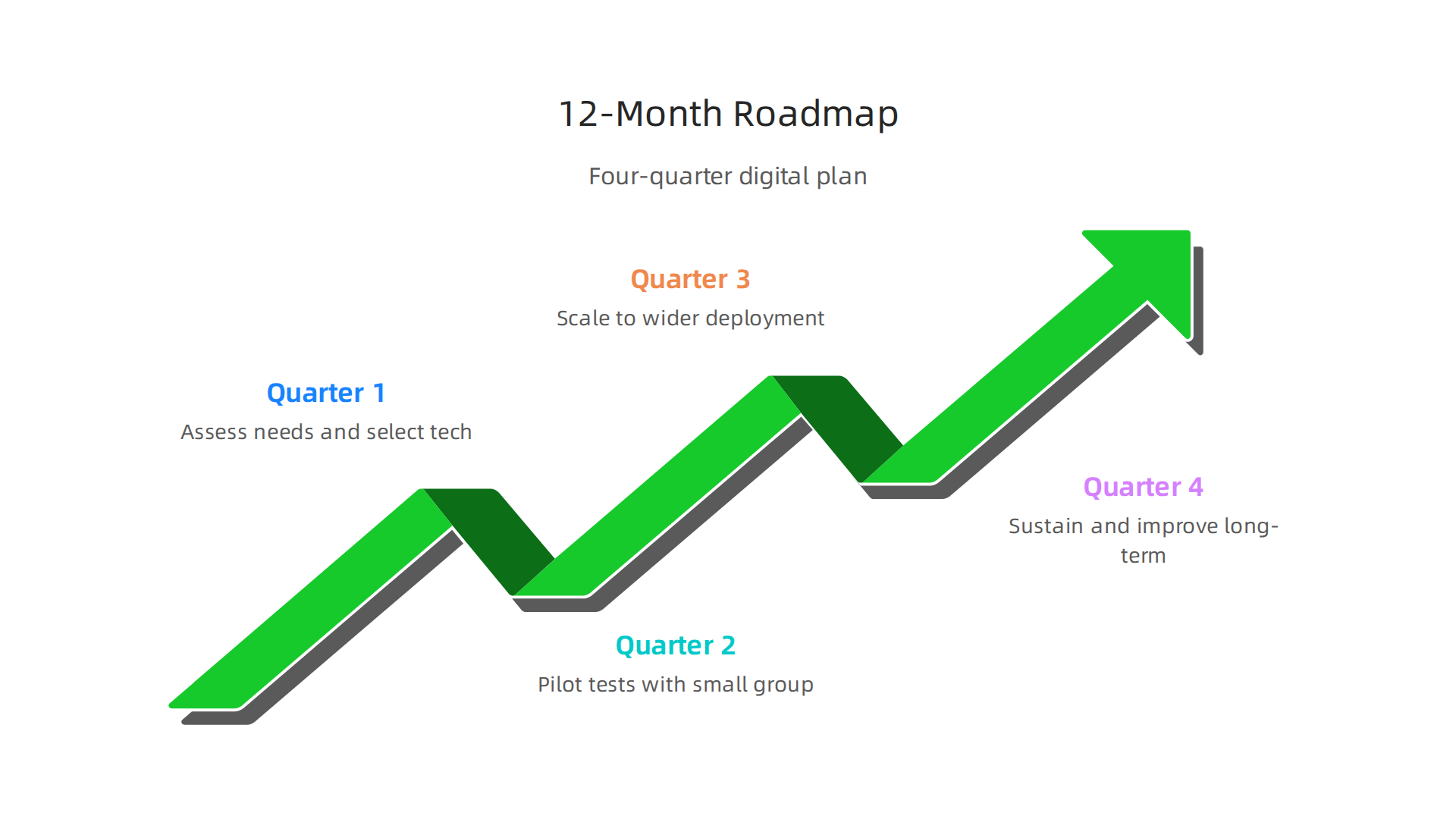
Quarter 1: Assess and Plan
The first three months are about looking closely at needs and choosing the right technology.
- What to do: Figure out what problems need solving. For example, does
angels care home healthneed better ways to track patient vitals, or doeslife care centers of americawant to improve staff communication? Research different technologies and pick the best fit. - Checkpoints: Get approval from leaders, make sure the tech matches your goals, and set a clear budget.
Quarter 2: Pilot and Test
This is where you try out the chosen technology in a small way, just like we talked about before.
- What to do: Pick a small group of users or a single location to test the tech. Train staff, gather feedback, and fix any small problems that pop up. This might involve a special wearable device for
private home careor new software frombest buy health. - Checkpoints: Review the pilot results often. Is the tech working as expected? Are people happy with it? Decide if it’s ready to go bigger.
Quarter 3: Scale and Grow
If the pilot works well, this quarter is about making the technology available to more people and places.
- What to do: Expand the technology to more facilities or a larger number of staff and residents. This means training more people and setting up the tech in more areas. This step is crucial for businesses like
life care centers of americawho want to see widespread benefits. Many organizations are focused on accelerating the adoption and use of artificial intelligence in healthcare. - Checkpoints: Monitor how the rollout is going. Are there unexpected challenges? Is the technology being used correctly everywhere? Keep an eye on how new healthcare technology trends reshape medicine and patient care.
Quarter 4: Sustain and Improve
The last quarter focuses on making sure the technology keeps working well for a long time and gets better over time.
- What to do: Set up ongoing support for users, regularly check how the tech is performing, and look for ways to make it even better. Gather more feedback and plan for future updates. This helps ensure that your digital transformation in large health systems elevates care and boosts roi.
- Checkpoints: Review the overall impact of the technology. Is it still meeting its goals? What lessons have been learned for next time?
Planning for What Could Go Wrong
As part of this roadmap, it’s smart to have a "risk register." This is just a list of things that could go wrong and what you’ll do if they do. For example, what if staff don’t like the new tech, or if it costs more than planned? Thinking about these issues ahead of time helps you deal with them calmly.
Also, "governance checkpoints" are important. These are specific times when leaders review progress and make big decisions about the technology. This makes sure everyone is on the same page and that the project stays on track.
Summary
The article argues that digital innovation in senior and long-term care is urgent due to an aging population and chronic staff shortages, and it lays out practical guidance for leaders who must act now. It reviews operational pressures and clinical priorities—like reducing readmissions and managing chronic conditions—then explains the most impactful technologies, including remote monitoring, telehealth, and AI analytics. The piece walks through how to integrate tools into daily workflows with pilots, staff training, and continuous evaluation, while highlighting important regulatory and privacy obligations under HIPAA. It also covers procurement options (CAPEX vs OPEX), how to build a business case and measure ROI, and how to scale successful pilots. Finally, the article offers a four-quarter, 12‑month roadmap with governance and risk checkpoints so CIOs and clinical teams can move from testing to sustainable, care-grade adoption.