


When you work in healthcare, words and letters get shortened a lot. This helps people share information quickly. One common example is the pci medical abbreviation. But what happens when these short forms mean different things to different people? This can cause big problems.
Why ‘PCI’ and Other Abbreviations Matter for Safety, Workflow, and Strategy
Imagine a team of doctors and nurses. They use many short terms, called abbreviations, to talk about patients and treatments. The pci medical abbreviation is one of them. In many cases, it stands for Percutaneous Coronary Intervention. This is a special heart procedure to help open blocked heart arteries, as explained by experts at UCSF Health. It’s a very important treatment for people with heart issues in 2026.
But here’s the thing: sometimes, the same letters can mean something else entirely. For example, PCI could also stand for "Pulmonary Contusion Injury" or "Posterior Circulation Ischemia" in other parts of a hospital. This can be super confusing! A team in Europe even noted in a 2026 review that defining "complex PCI" can be hard because doctors might see it differently.
This confusion isn’t just a small bother. It can lead to serious issues:
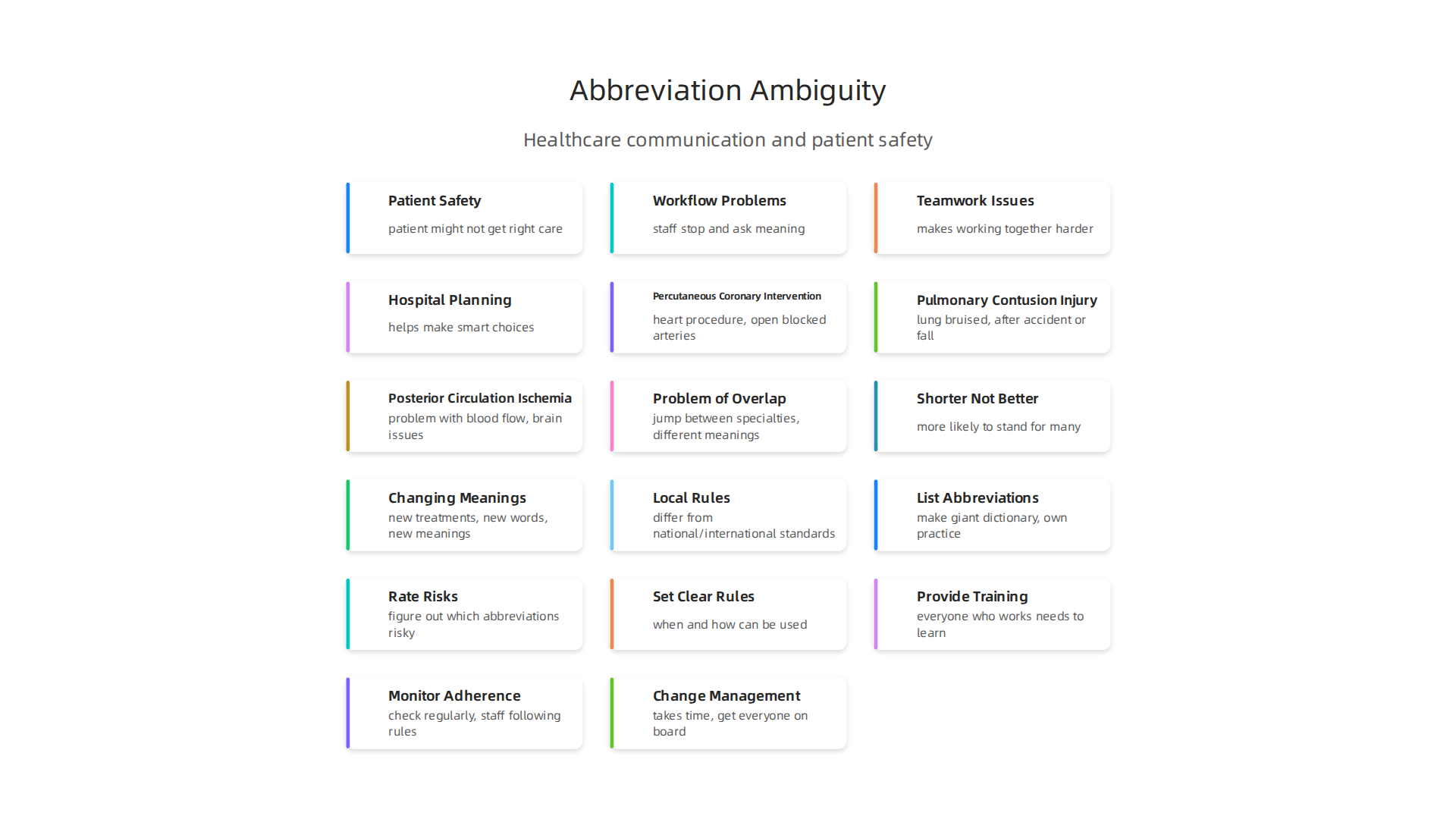
- Patient Safety: If a doctor thinks
PCImeans one thing and a nurse thinks it means another, a patient might not get the right care.

This is a big worry in any healthcare setting.
- Workflow Problems: When medical staff have to stop and ask what an abbreviation means, it slows down their work. Time is very important in a hospital.
- Teamwork Issues: Clear communication helps everyone work together. If medical teams use unclear abbreviations, it can make working together harder.
- Hospital Planning: For bigger health systems, understanding these terms helps when buying new tools or planning how to care for many patients. Using clear language helps hospitals make smart choices and can even boost how well new technology works, leading to better patient care and savings. You can learn more about how big hospitals are making these changes by reading about digital transformation in large health systems.
We see this problem with many medical abbreviations, not just PCI. Think about wnl medical abbreviation (which usually means "within normal limits") or b i d medical abbreviation (meaning "twice a day"). Most of the time, these are clear. But some, like PCI, can have many meanings. Even in clinical research, study teams often create their own unique abbreviations, making it harder for others to understand the research without a special guide, according to a 2025 study detail.
Because of this, it’s really important for anyone in healthcare to know their medical terminology course lessons well. Doctors, nurses, and other health workers often take nursing continuing education courses to keep their knowledge sharp. Understanding these abbreviations helps everyone communicate better and keeps patients safe in 2026.
To keep up with the newest ideas in health technology and how they might affect patient care, you’ll want the best information. Get clear daily AI updates from The Deep View Newsletter. Discover The AI Newsletter Worth Reading today.
What ‘PCI’ Means in Clinical Contexts — Definitions and Common Variants
Let’s dig deeper into the common meanings of the pci medical abbreviation. In most hospitals, especially when dealing with heart issues, PCI almost always stands for Percutaneous Coronary Intervention. This is a very important heart procedure. Doctors use it to open up blocked heart arteries without needing big surgery. They often use tiny balloons or tubes called stents to help blood flow better to the heart. This procedure is a key treatment for heart problems, as explained by experts at Percutaneous Coronary Intervention StatPearls. In fact, guidelines from groups like Carelon Medical Benefits Management provide details on when this procedure is recommended for things like severe blockages.
But, as we discussed, PCI can mean other things too, depending on where you are in the hospital or what kind of doctor is writing notes.
Here are a few other meanings you might see:
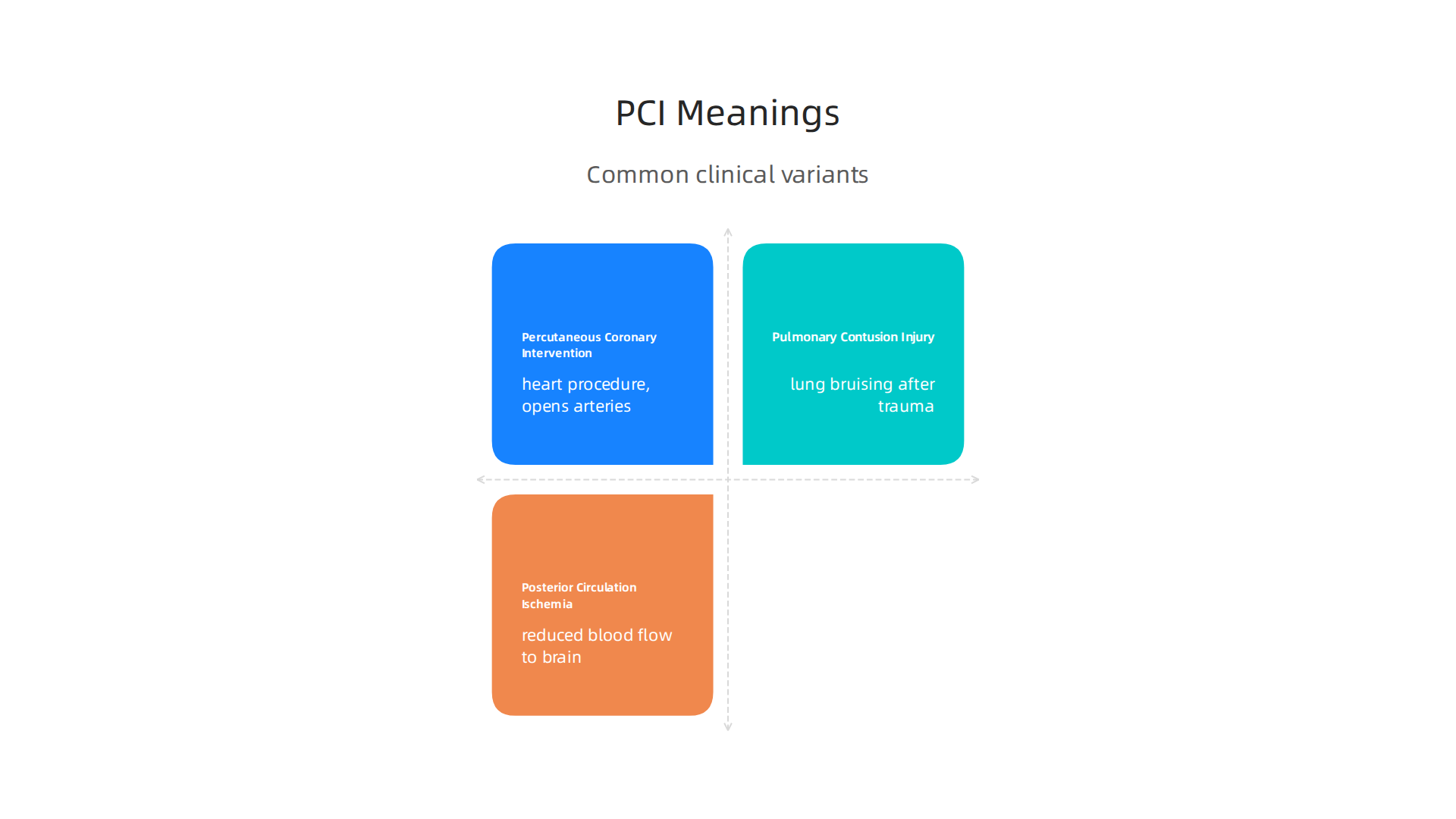
- Pulmonary Contusion Injury: In trauma or emergency rooms,
PCImight stand for this. It means the lung has been bruised, often after a car accident or a fall. This is a problem doctors watch closely for in patients who have had serious injuries. - Posterior Circulation Ischemia: This meaning of
PCIis used when talking about brain issues, especially in neurology or stroke care. It points to a problem with blood flow to the back part of the brain. If this blood flow is stopped or too low, it can lead to a stroke.
How do medical staff know which pci medical abbreviation they are looking at? It all comes down to context.
- If the patient is in the cardiology department, has chest pain, or a doctor mentions "stent" or "artery,"
PCIalmost certainly means the heart procedure. - If a patient just had a big accident and is having trouble breathing, then "Pulmonary Contusion Injury" is a good guess.
- If a doctor is talking about a stroke or brain scans, "Posterior Circulation Ischemia" makes more sense.
These clues help everyone on the medical team understand each other and keep patients safe. This is why learning the basics of a medical terminology course is so important for anyone working in healthcare. Clear communication is also key for good patient handoffs, where information is passed from one care team to another. You can learn more about how technology and smart plans help improve these Transitions of Care 2026 How Technology Regulation and Strategy Improve Patient Handoffs. Healthcare workers also take nursing continuing education courses to stay updated on these important details.
Understanding the specific meaning of the pci medical abbreviation is a good example of how tricky medical language can be. It’s not the only abbreviation that causes confusion. Many other short forms in healthcare can mean different things, making clear communication super important for patient safety.
Let’s look at some patterns and common problems with medical abbreviations:
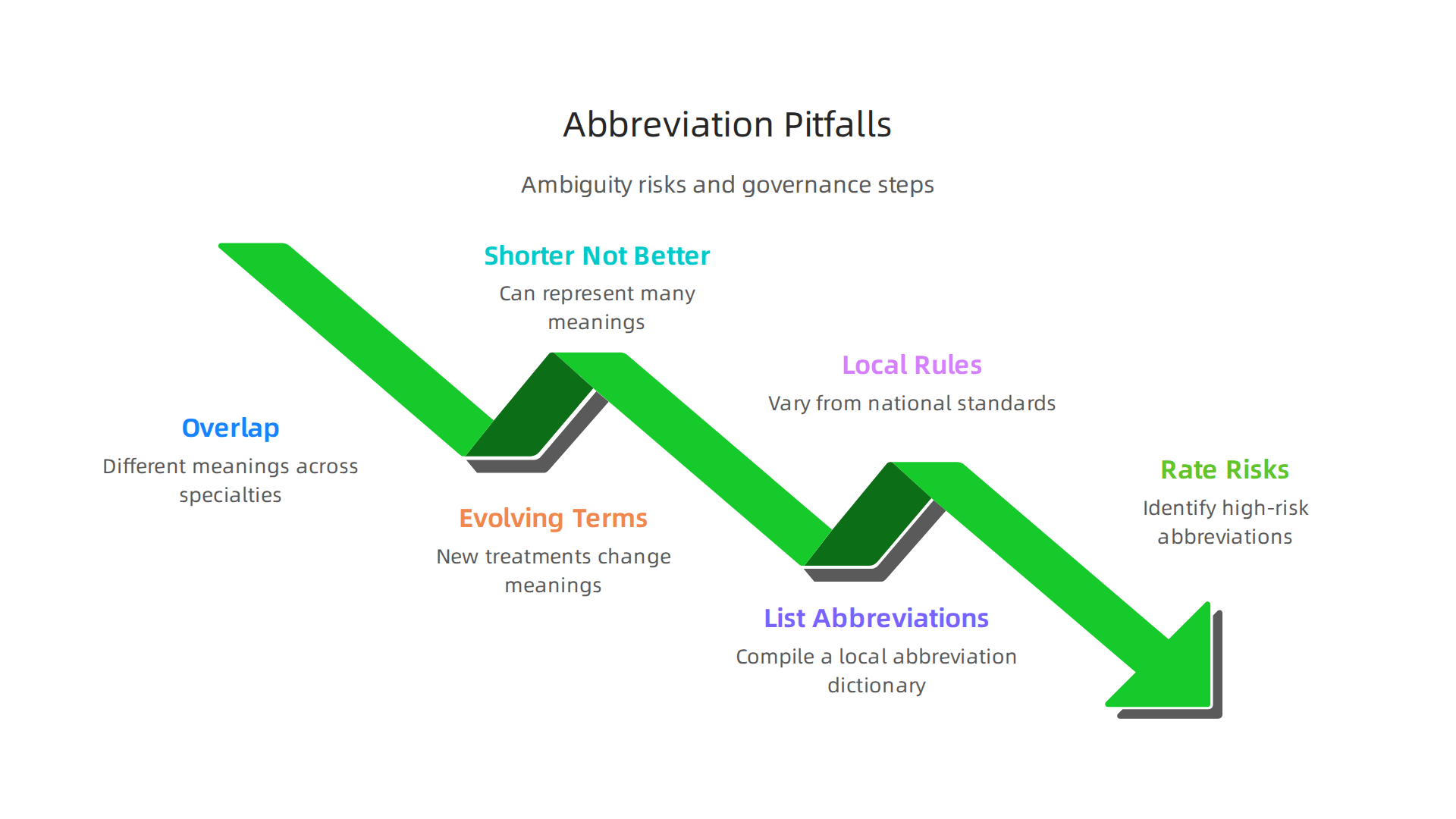
The Problem of Overlap
Just like PCI has different meanings across heart care, injury care, and brain care, other abbreviations also jump between specialties.
- WNL Medical Abbreviation: This one often stands for "Within Normal Limits," meaning everything looks okay. But sometimes, in a rushed setting, it could be mistakenly thought to mean "We Never Looked." This kind of mix-up can be very risky.
- B I D Medical Abbreviation: This usually means "twice a day" for medicine. But if written poorly or quickly, it might be confused with "B.A.D." for a different instruction.
These overlaps happen because medical staff in different departments might create their own quick notes. However, when those notes are shared, problems can arise.
Shorter is Not Always Better
You might think shorter abbreviations are easier, but often they cause more trouble. The shorter an abbreviation like PCI is, the more likely it is to stand for many different things. Longer, more specific terms usually have only one meaning, which helps everyone understand quickly and correctly. This makes patient safety a major concern for all healthcare workers, as highlighted by the Patient safety fact sheet from the World Health Organization (WHO).
How Abbreviations Change
Medical language isn’t set in stone; it changes over time. New treatments and technologies mean new words and abbreviations appear. Old ones might get used less or gain new meanings. Also, how people write them can vary. Sometimes a dot is used, sometimes not. These small differences can add to confusion. This is why getting a good medical terminology course helps ensure everyone learns the most current and standardized forms.
Local Rules Versus Big Standards
Every hospital or clinic might have its own list of approved abbreviations. These are called local conventions. But then there are bigger, national, and international standards. Sometimes, local ways of doing things can be different from these larger guidelines. When medical staff move between places or work with teams from different hospitals, these differences can lead to mistakes. That’s why many health systems are working on things like Digital Transformation in Large Health Systems Elevates Care and Boosts ROI to create more unified and safer practices. Regular refresher courses, like nursing continuing education courses, are key to keeping everyone updated on the right way to communicate.
Staying updated on the latest in health tech and best practices is crucial in today’s fast-moving world.
Get clear daily AI updates from The AI Newsletter Worth Reading.
Keeping up with the right ways to communicate is super important. When medical terms and their shortened versions aren’t clear, they can cause serious problems for patients. These problems can show up in many ways, from giving the wrong medicine to performing the wrong procedure. This makes patient safety a top concern for everyone in healthcare, as even small misunderstandings can have big impacts.
Medication Errors
One of the most dangerous areas for unclear abbreviations is when giving out medicine. Imagine a doctor writes an order for medicine using an abbreviation like b i d medical abbreviation. While most know this means "twice a day," if it’s written quickly, poorly, or looks too much like another abbreviation, a nurse might give the medicine at the wrong time or not at all. This kind of mistake can make a patient’s condition worse or slow down their recovery. It highlights how even well-known abbreviations can lead to errors when there’s ambiguity. Reports show that healthcare errors, including those from miscommunication, greatly affect patient safety outcomes Healthcare Errors That Impacted Patient Safety.
Procedure Order Mix-Ups
Think about the pci medical abbreviation. As we learned, it can mean different things depending on the type of care. If a doctor orders a "PCI" and doesn’t write out the full meaning, a nurse or other medical staff might prepare for a heart procedure when a brain procedure was actually needed. This mix-up is very serious and can lead to unneeded or even harmful actions. Such errors can lead to serious patient safety incidents An international perspective on definitions and terminology used to describe serious reportable patient safety incidents.
Problems During Patient Handoffs
Patient handoffs are when one healthcare worker passes information about a patient to another, like at shift change. This is a critical time for errors.

If a nurse says a patient’s labs were "WNL," using the wnl medical abbreviation, it usually means "within normal limits," so everything is fine. But if the new nurse mishears or misunderstands, they might miss something important. This is especially true if they are new or trained in a place with different abbreviation rules. Clear communication is a must during these moments. In fact, many patient safety incidents happen in primary care settings, showing how vital clear communication is Frequency of and Harm Associated With Primary Care Safety Incidents. Improving how medical teams share information during these critical times can be helped by understanding new strategies for Transitions of Care 2026: Improve Patient Handoffs.
These kinds of mistakes, no matter how small they seem, can lead to patients staying in the hospital longer, needing more treatment, or even facing worse health problems. That’s why keeping medical language clear and standardized is so important for everyone involved.
Making medical language clear is a big job. Luckily, modern tools like Electronic Health Records (EHRs) and other computer systems are built to help. They play a huge part in making sure abbreviations like pci medical abbreviation or b i d medical abbreviation are understood correctly by everyone.
How Computers Show Abbreviations
When a doctor types an order or a nurse writes a note, EHRs display these words on a screen. The way the computer screen looks and works, called the interface, is very important. For example, if a doctor orders medicine "b.i.d." for "twice a day," the EHR might show this clearly. If a pci medical abbreviation is used, the system tries to show its meaning.
Many EHR systems today have helpful features. If you move your mouse over an abbreviation like wnl medical abbreviation, a small box might pop up showing "within normal limits" in full.

This is like a little helper that makes sure you know exactly what each short form means.
Smart Systems That Help Decide Meanings
Beyond just showing the full meaning, smart computer systems can do even more. They have something called "decision support." This means the computer can watch out for abbreviations that might be confusing. If it sees an abbreviation that has more than one meaning, it might ask the healthcare worker to pick the right one or type out the full words.
Think of it like a smart assistant that flags a possible mistake before it happens. This is especially helpful for abbreviations that are known to cause problems. In 2026, many of these systems use smart computer programs, often powered by artificial intelligence, to figure out the right meaning of medical short forms automatically. This is called "disambiguation" and helps remove guesswork from clinical documents Word sense disambiguation of acronyms in clinical narratives. Studies show that these smart systems work to improve how we understand medical abbreviations Disambiguating Clinical Abbreviations by One-to-All Classification.
Even with all this technology, it’s still important for healthcare staff to keep learning. Taking a medical terminology course or nursing continuing education courses helps everyone stay sharp and understand the language of medicine, both old and new. Better technology helps everyone, from hospitals to smaller clinics, to have smoother operations. Learning about how new technology helps healthcare can be found in resources like Digital Transformation in Large Health Systems.
For daily insights into how AI and technology are changing healthcare, you might enjoy The AI Newsletter Worth Reading.
Even with helpful computer systems, how can we make sure everyone understands medical words the same way, all the time? The answer lies in using "standards" and "controlled vocabularies." Think of these as universal rulebooks for medical language.
Standard Rules for Medical Words
Standardized terminologies are like agreed-upon dictionaries for all healthcare. They give unique codes and clear meanings to medical terms, diseases, and procedures. This way, whether a doctor types "twice a day" or uses the b i d medical abbreviation, the computer system knows it means the exact same thing everywhere.
Two very important standards used in healthcare today are SNOMED CT and LOINC.
- SNOMED CT (Systematized Nomenclature of Medicine Clinical Terms) is a big library of medical terms, covering everything from symptoms to surgeries. It helps make sure that when someone talks about a condition or a procedure, like a
pci medical abbreviation, it has one clear, agreed-upon meaning in health records Recent Developments in Clinical Terminologies – SNOMED CT. SNOMED International works to create these global standards

- LOINC (Logical Observation Identifiers Names and Codes) focuses on lab tests, observations, and clinical measures. It makes sure that when a lab report shows a result, everyone understands what test was done and what the numbers mean.
Together, these standards help distinguish different diagnostic terms and are made by expert groups Standardized Vocabularies Boost Interoperability: LOINC. You can even watch a helpful video about how LOINC and SNOMED CT work. By using these common ways of speaking and writing, healthcare workers can share information easily and clearly. This is really important for getting healthcare right, whether you’re dealing with a wnl medical abbreviation or a complex diagnosis.
Smart AI Tools Make Things Even Clearer
Beyond these rules, smart computer programs, often using Artificial Intelligence (AI) and Natural Language Processing (NLP), are getting even better at understanding medical language. They can look at words in a medical note and figure out the full meaning of an abbreviation based on what other words are around it. This is called "context-aware disambiguation."
For example, an AI system might see "PCI" in a note. It knows "PCI" could mean different things. But if the surrounding text talks about heart problems or blood vessels, the AI can guess that pci medical abbreviation most likely means "Percutaneous Coronary Intervention," a type of heart procedure. This smart approach helps to expand abbreviations into their full forms, reducing any chance of misunderstanding Disambiguating Clinical Abbreviations by One-to-All Classification.
In 2026, these tools are making health information much more reliable. This means less guesswork and better care for patients. As technology keeps improving, especially in areas like Digital Health in Family Practice 2026, the goal is to make sure medical language is crystal clear for everyone, every time.
To truly make medical language clear, especially with many abbreviations, health systems need a good plan. This plan is called "abbreviation governance." It’s about setting up smart rules and ways to handle every pci medical abbreviation or other shortcut used in patient care.
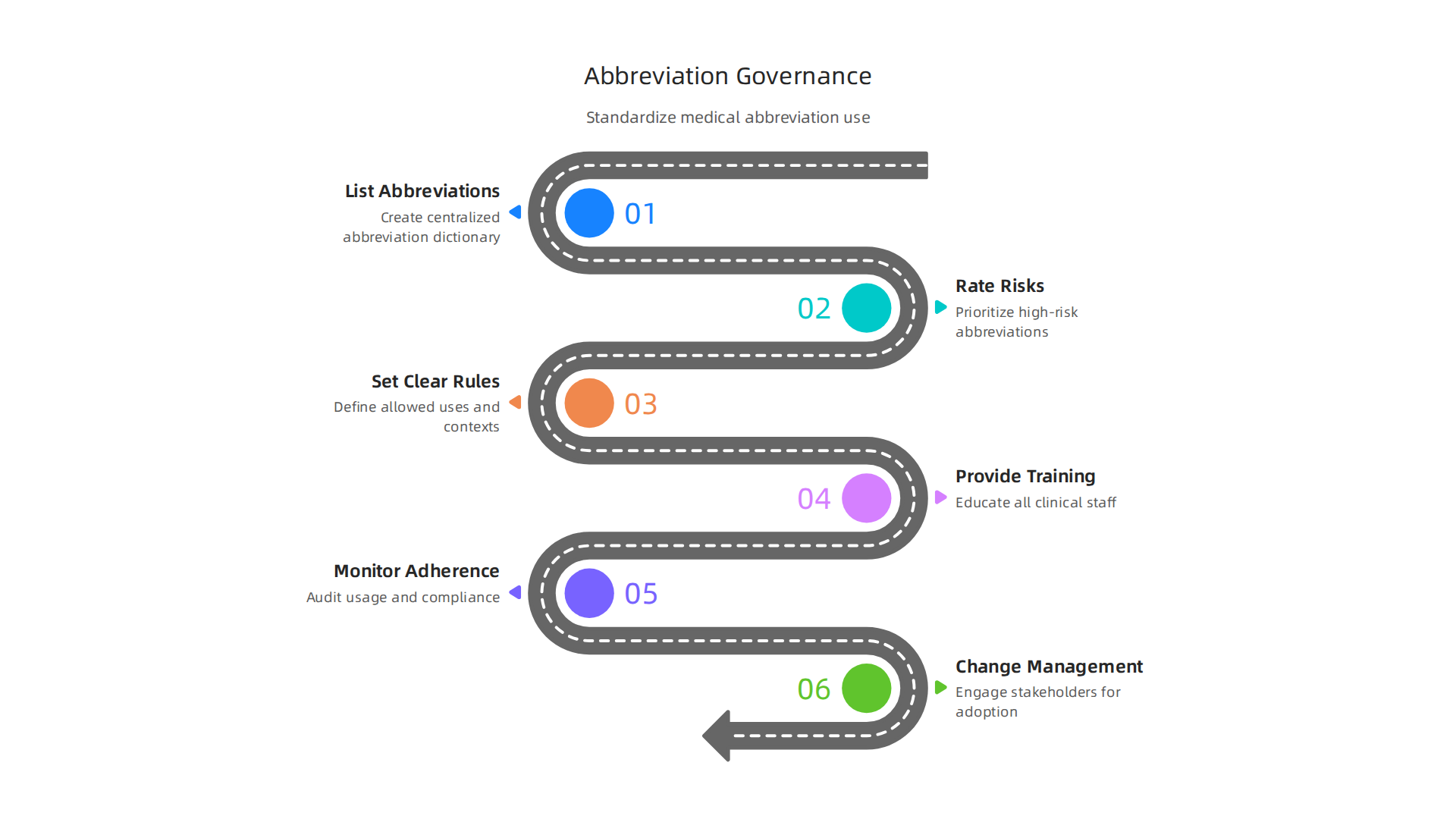
This ensures everyone understands the same thing, all the time.
First, hospitals and clinics should list every abbreviation they use. Think of it like making a giant dictionary just for their own practice. Next, they need to figure out which abbreviations are risky. For example, a common phrase like wnl medical abbreviation (meaning "within normal limits") might be low risk because it’s usually clear. But a pci medical abbreviation could be high risk if it means different things in different situations. Tools that help computers figure out the correct meaning of abbreviations from the words around them are very helpful here Disambiguating Clinical Abbreviations by One-to-All Classification.
After listing and rating risks, health systems must set clear rules or policies. These rules say when and how certain abbreviations can be used, and which ones should be avoided completely. These policies then need to be built into the computer systems, like the Electronic Health Record (EHR). This might mean that when a healthcare worker types an abbreviation, the system automatically shows the full meaning or warns them if it’s a risky shortcut. Making sure that Digital Transformation in Large Health Systems includes these smart features is key for clear communication.
It’s not enough to just make rules. Everyone who works in healthcare needs to learn them. This means offering training, maybe through special medical terminology course or nursing continuing education courses. After training, health systems must keep an eye on things. They should check regularly to make sure staff are following the rules and that the computer systems are working as they should. This monitoring helps catch any new problems quickly. Studying how these changes are put into place and what effects they have is part of good planning Defining and Measuring Implementation Outcomes in a Real-World.
Making such big changes in a health system is called "change management." It takes time and effort to get everyone on board. Leaders need to track important numbers to see if their efforts are working. Are there fewer mistakes related to abbreviations? Is patient care getting safer? Showing that these changes help patients and save money proves the value of abbreviation governance. In 2026, many health tech leaders look for ways to make their systems better and smarter. Staying informed about the latest in AI and technology can help. Get clear daily AI updates from The AI Newsletter Worth Reading.
Regulatory, Legal, and Policy Considerations for Clinical Communication
Following the rules for abbreviations is not just a good idea; it’s often the law. When healthcare workers use abbreviations that are unclear, it can lead to big problems. Imagine a patient needing a very specific treatment, but a shortened word in their chart is misunderstood. This could cause mistakes in care, and it can even lead to legal trouble for the hospital or clinic. Rules from government groups and healthcare organizations help prevent these kinds of dangers.
Many medical policies clearly state how certain abbreviations should be used or even say they should not be used at all. For example, a pci medical abbreviation, which stands for Percutaneous Coronary Intervention, is a serious heart procedure. Because it’s so important, there are very clear rules about how and when to write about it in a patient’s record General Coding Guidelines for PCI—2026. It’s not like a simpler wnl medical abbreviation, which means "within normal limits" and is usually easy to understand. The more critical the information, the more important it is to be super clear.
Different groups work to make sure medical language is standard. This means everyone uses the same words and abbreviations in the same way. One important tool for this is using standard codes and terms. Systems like SNOMED CT and LOINC help hospitals and doctors talk about patient information in a way that computers can understand, too. This makes it easier to share information without losing the true meaning Standardized Vocabularies Boost Interoperability: LOINC and SNOMED CT. These standards are especially helpful for complex procedures where clear definitions are needed, as seen in the push for a universal definition for complex PCI.
Making these policy changes stick takes effort. Healthcare leaders need to set up clear ways to put new rules into practice. They also need to make sure staff get good training, maybe through a special medical terminology course or updated nursing continuing education courses. This training teaches everyone the new rules for abbreviations, including when to avoid risky ones or when to spell things out fully instead of using a b i d medical abbreviation (meaning "twice a day"). Understanding current rules and how to put them into practice is key to keeping patients safe. Learning about how regulations affect healthcare technology and patient care can help everyone involved. Check out this resource on Texas Medical Board Regulations 2026 for more insights.
Summary
This article explains why the short form PCI and many other medical abbreviations can cause confusion, clinical errors, and workflow problems if they carry multiple meanings. It reviews the most common clinical definitions of PCI — especially Percutaneous Coronary Intervention — and shows how context (department, symptoms, nearby terms) usually signals the intended meaning. The piece outlines real safety risks, such as medication errors, procedure mix-ups, and handoff failures, and describes how modern tools (EHRs, AI/NLP, and decision support) plus standards like SNOMED CT and LOINC help reduce ambiguity. It also covers practical governance: inventorying abbreviations, risk-ranking them, setting policies, embedding rules in systems, training staff, and monitoring compliance. Finally, the article highlights regulatory and legal stakes that push health systems to standardize language and gives readers concrete steps to improve communication and patient safety in their organizations.