


Why digital transformation in large health systems matters now
In 2026, big changes are happening in healthcare. Digital transformation is not just a fancy term; it is super important for large healthcare systems. Think of groups like HCA Healthcare, Einstein Healthcare Network, or St. Luke’s University Health Network. They need to update how they work to give people the best care. This means using new technology to get better results for patients, keep things running smoothly, and stay competitive.
When healthcare systems embrace digital tools, it helps them make smarter choices. It also makes sure they can keep helping people even when things get tough. This helps them stand out from other healthcare groups and offer better services, just like a modern community medical group would. A big part of this shift is building a solid plan for how digital tools and patient data work together across the whole system Toward a National Health Digital and Data Architecture.
But changing a big system is not easy. Leaders in these large healthcare systems often face several challenges:
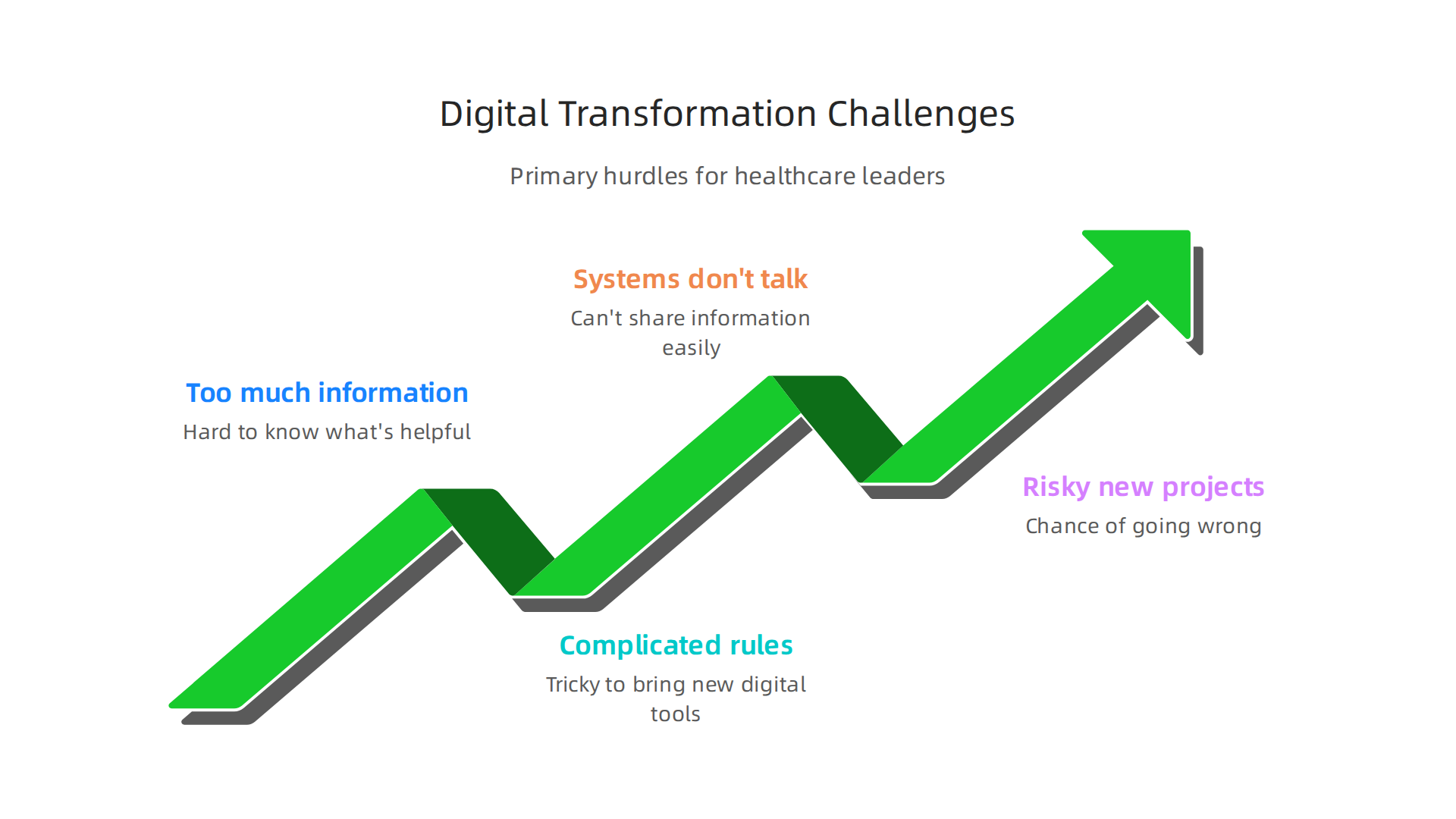

- Too much information: There’s so much new technology and data every day, it can be hard to know what’s truly helpful.
- Complicated rules: Healthcare has many strict rules and laws (regulatory complexity), which makes it tricky to bring in new digital tools without breaking them.
- Systems that don’t talk: Different computer programs and devices often can’t share information with each other easily. This problem, called interoperability, is a big hurdle for healthcare systems Data Integration Architecture Patterns for Healthcare Enterprises.
This is a common issue when trying to modernize legacy health systems.
- Risky new projects: Starting a big new technology project (implementation risk) always has a chance of going wrong, costing time and money.
Even with these problems, digital change is necessary for hospitals and healthcare systems to keep up and provide excellent care now and in the future. To stay informed about the latest tech trends shaping healthcare, you might be interested in checking out The AI Newsletter Worth Reading.
Clarifying the Business Case: Costs, ROI and Value Levers
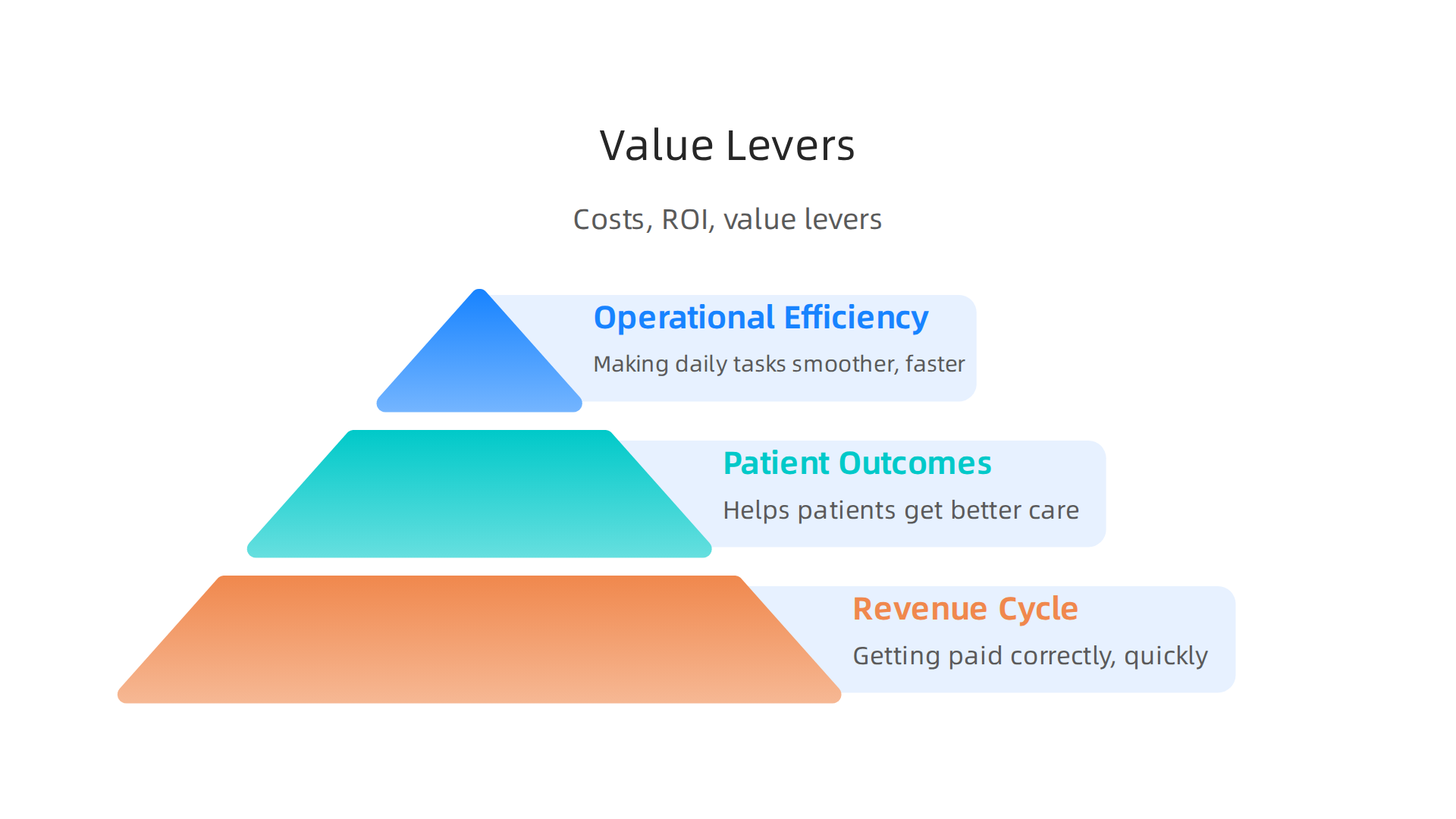
It’s clear that big healthcare systems must change digitally to stay current. But leaders like those at HCA Healthcare, Einstein Healthcare Network, or St. Luke’s University Health Network need to see exactly how these changes will help their business. They want to know what it costs and what good things will come back to them. This is called the business case, and it focuses on three main "value levers": making things run better, helping patients more, and getting paid correctly.
Making Things Run Better (Operational Efficiency)
One of the biggest ways digital transformation helps is by making daily tasks smoother and faster. Imagine doctors and nurses spending less time on paperwork and more time with patients.

Digital tools can automate many jobs, like scheduling appointments or managing patient records. This saves money by needing less staff for those tasks and helps everyone work smarter. For example, using smart systems can help healthcare providers handle huge amounts of patient information better, leading to insights that improve how they work Healthcare AI in 2026: Building GenAI-Ready Organizations for ….
This helps a large healthcare system work more like a well-oiled machine.
Helping Patients More (Patient Outcomes)
Digital tools are not just for saving money; they also help patients get better care. When all parts of a healthcare system can talk to each other, a patient’s full health history is easy to find. This means doctors can make better choices faster. Things like telehealth appointments and remote monitoring can help patients manage their health from home, which can prevent bigger health problems down the road. These types of changes really improve the patient’s journey and overall health results, much like how digital health is reshaping community care in smaller practices Digital Health In Family Practice 2026 Reshapes Community Care.
Getting Paid Correctly (Revenue Cycle Improvements)
For any healthcare system, getting paid for services is key. Digital tools can make this process much better. They can help with checking insurance information, sending out bills, and collecting payments more quickly and with fewer mistakes. When the "revenue cycle" is improved, the hospital or healthcare system gets the money it’s owed faster. This leads to better financial health for the organization. By connecting different parts of the system with tools like Fast Healthcare Interoperability Resources (FHIR) and API-first architecture, organizations can break down data silos and get paid more efficiently AI-Ready Healthcare Enterprise at HIMSS 2026.
Understanding the Costs and Returns
Every big digital project has costs. These include:
- Buying new software and hardware: The actual tools needed.
- Training staff: Teaching everyone how to use the new systems.
- Making old and new systems work together: This can be tricky, especially when modernizing legacy health systems.
- Ongoing maintenance: Keeping the new systems running smoothly.
To figure out if a digital change is worth it, healthcare systems look at its Return on Investment (ROI). This means comparing the money spent to the money saved or gained, and also looking at other benefits that are harder to put a number on, like happier patients or better staff morale. They use models that look at how much efficiency they gain, how many errors they cut down, and how patient care improves over time. This helps them understand the true value of their investment. To learn more about modernizing older systems, you might find this article helpful: How To Modernize Legacy Health Systems In Regional Hospitals.
After looking at the costs and good things that come from digital changes, big healthcare systems like HCA Healthcare, Einstein Healthcare Network, and St. Luke’s University Health Network must also think about how to keep everything in order. This means having clear rules, following laws, and keeping patient information safe. These three areas, governance, compliance, and security, are super important when moving to new digital ways of working.
Clear Rules for Everyone (Governance)
Governance is like having a good set of rules and a coach to make sure everyone plays fair and safe. For large healthcare systems and even a community medical group, it means making sure that new digital tools are used correctly. This helps manage risks, keep patient data good, and make sure any outside companies they work with are doing their part too.
For example, who decides what data is collected? How is it stored? Who can see it? Good governance answers these questions. It also helps healthcare systems make sure that patient information can be shared easily and safely between different parts of the system, which is called interoperability. New rules, like the United States Core Data for Interoperability (USCDI) Version 7, guide how health information should be exchanged to improve care United States Core Data for Interoperability (USCDI) – Draft Version 7.
Having these standards helps everyone speak the same language when it comes to patient data. Making sure different health systems can talk to each other is also key to good patient handoffs, especially in transitions of care 2026.
Following the Law (Compliance)
Compliance means following all the health laws and rules. In healthcare, this is a very big deal because patient information is very private. Laws like HIPAA (Health Insurance Portability and Accountability Act) say exactly how patient health information must be protected. If a healthcare system does not follow these rules, it can face big fines and lose trust.
So, when bringing in new digital tools, it’s not just about what’s helpful, but what’s allowed. Healthcare organizations must make sure their technology follows every single rule. This includes making sure data is moved in the right ways and that patient privacy is always kept safe. For example, guidance on HIPAA helps clarify how new tools, like AI systems, must be used carefully in patient care February 23, 2026 – AHCA/NCAL. Some states also have their own specific rules, like the Texas Medical Board regulations 2026, which health tech companies must understand.
Keeping Data Safe (Security)
Security is about protecting patient information from bad people or accidents. Digital systems can be a target for hackers. If patient data is stolen or changed, it can cause huge problems for patients and the healthcare system. So, strong security controls are not just a good idea; they are a must-have for any digital project in healthcare. This is especially true given the U.S. health system vulnerabilities that exist.
These controls include things like:
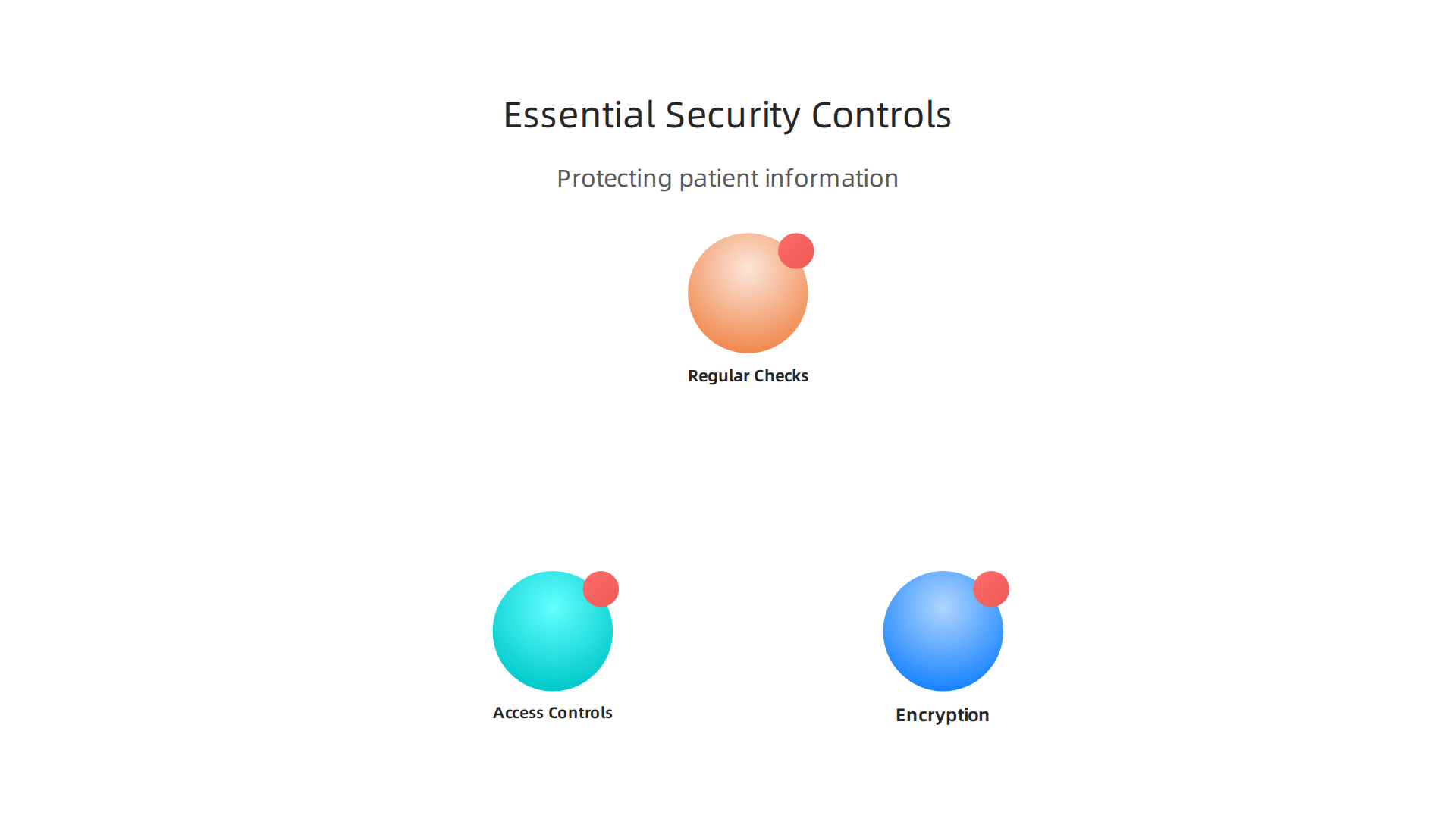
- Encryption: This scrambles patient data so only authorized people can read it. It’s like putting a secret code on all your important messages.
- Access Controls: Making sure only staff who need to see certain patient information can actually get to it. Not everyone needs to see everything.
- Regular Checks: Doing tests often to find any weak spots in the digital systems before hackers can find them.
For large systems that handle lots of patient data, like HCA Healthcare, these security steps are part of their daily work. They must protect health information from all kinds of threats.
In short, while new technology helps make things better and save money, it also brings a big responsibility to keep everything running smoothly, legally, and safely. Strong governance, full compliance, and top-notch security are the foundation for any successful digital health change in 2026.
Staying up-to-date with all the rapid changes in health tech, including AI, can be tough. Get clear daily AI updates from The AI Newsletter Worth Reading.
Building on the idea of keeping digital health changes running smoothly and safely, a big part of that is making sure all the different computer systems can share information easily. This is what we call interoperability. It is really about building usable, trusted data for everyone in a healthcare system.
Making Data Talk (Interoperability Goals)
For big places like HCA Healthcare, Einstein Healthcare Network, and St. Luke’s University Health Network, it is very important that patient information can move between different departments, doctors, and even other healthcare systems. This helps doctors make better decisions quickly and ensures patients get the best care.
Here are some important goals for making sure health data can talk to each other:
- Sharing Clinical Data: This means that test results, doctor’s notes, and medical histories can be sent from one place to another without problems. Imagine a patient moving from one clinic to a hospital; all their past health information should follow them easily. Setting up clear rules for how health information should be exchanged helps this happen, improving Compliance with Interoperability Standards in Implementing Digital … within health organizations.
- Real-Time Information: Doctors need to see updates about a patient’s health as they happen, not hours later. This means information streams in constantly, like a live news feed, helping doctors make faster choices, especially in urgent situations.
- Data for Better Decisions: Gathering all this health information into one big "smart" place helps healthcare systems learn new things. These "analytics-ready repositories" let experts study patterns in patient care. They can use this data to find better ways to treat sickness, improve how hospitals work, and even predict health problems before they get too bad. This is like having a super brain that learns from all patient experiences.
A strong way to define how digital health care is working and how well it can talk to other systems is by using a digital maturity model. These models help healthcare systems see where they are doing well and where they need to improve their digital tools to become more connected Digital health and capability maturity models—a critical thematic ….
Smart Ways to Handle Data (Data Strategy)
To make interoperability work well, all healthcare systems, from a large hospital network to a small community medical group, need a smart plan for their data. This involves a few key ideas:
- Data Governance: Remember "clear rules for everyone" from before? This applies to data too. It means having rules about how data is created, stored, and used. For example, making sure "John Smith" is always spelled the same way across all systems, and that his birthdate is always correct. This is called "master data management" and it makes sure information is consistent and reliable throughout the entire healthcare system.
- API Strategy: Think of APIs (Application Programming Interfaces) as special messengers that allow different computer programs to talk to each other. In healthcare, a popular type of messenger is called Fast Healthcare Interoperability Resources, or FHIR (pronounced "fire"). FHIR helps send health information in a common language, making it easier for new apps and systems to connect and share important details FHIR for Federal Health Research Studies. This means a small community medical group can share data with a big hospital system more easily, which is key for how digital health in family practice 2026 is reshaping community care.
By planning carefully for interoperability and having a clear data strategy, big healthcare systems can make sure their digital tools truly help patients and doctors every day. This leads to better care, faster service, and smarter ways of working for everyone in 2026.
Choosing the right technology is super important for big healthcare systems like HCA Healthcare, Einstein Healthcare Network, and St. Luke’s University Health Network.

It is like picking the right tools to build a very big, strong house. These tools need to work well now and in the future. To do this, they need a careful way to pick platforms and partners, and smart ways to sign contracts.
Picking the Best Tech (Evaluation Criteria)
When a large healthcare system decides on new digital tools or platforms, they look at several key things. This helps them find solutions that truly fit their needs and can grow with them.
- Can It Grow (Scalability)? Imagine HCA Healthcare, a huge network. Any new system must be able to handle lots and lots of patient data and many users without slowing down. It needs to grow as the healthcare system grows.
- Can It Connect (Integration)? The new tech must talk easily with all the old systems already in place. This goes back to interoperability. For example, it should work smoothly with existing electronic health records (EHRs) and use standard ways of sharing data, like FHIR. Good data integration architecture helps systems become more scalable and secure for the whole enterprise, as highlighted in a 2026 report on Data Integration Architecture Patterns for Healthcare Enterprises.
- Who Made It (Vendor Track Record)? Healthcare systems want to work with companies that have a good history. Have they helped other large healthcare systems successfully? Do they offer good support? A strong partner is key.
- Full Cost Over Time (Total Cost of Ownership, TCO): It is not just about the price tag today. Healthcare systems must think about all the costs over many years. This includes how much it costs to set up, train staff, maintain, and upgrade the system.
Thinking about these things helps a community medical group or a large network avoid future problems and make sure their investment is smart. Sometimes, modernizing older systems is part of this journey, helping them get up to speed with new technology and better patient care. You can learn more about how to make these upgrades in our guide on how to modernize legacy health systems in regional hospitals.
Smart Ways to Buy (Procurement and Contracting)
After deciding what kind of technology they need, healthcare systems also think about how they will buy it and what kind of deals they will make. This helps protect them and keeps things flexible.
- Reducing Risks: Large healthcare systems often start with smaller projects or pilot programs to test new technology. This helps them see if it really works for their specific needs before committing fully. They also make sure contracts are very clear about what the vendor needs to deliver.
- Staying Flexible: Healthcare technology changes very fast. Contracts should allow for updates and changes without big problems. This means being able to add new features or adjust services as healthcare needs evolve in 2026.
By carefully choosing their technology and setting up smart agreements, healthcare systems can build a strong digital foundation that truly helps doctors, nurses, and patients every day.
As you consider new technologies and strategies, staying informed about the latest developments is crucial. The AI Newsletter Worth Reading offers clear daily AI updates to help you keep pace.
After choosing the best technology and making smart agreements, the next big step for healthcare systems like HCA Healthcare is making sure everyone is ready to use it. This means preparing all the doctors, nurses, and staff across many different places. It is like buying a new car; you also need to learn how to drive it safely and know how to keep it running well.
Operational readiness and change management across sites
Getting people ready for new technology is called "operational readiness" and "change management." It means making sure teams know how to work with the new tools, getting them trained, and setting up clear rules for how things will be done. This is especially important for a large organization like Einstein Healthcare Network or a vast network like St. Luke’s University Health Network, which has many sites.
Preparing clinical and operational teams
- New Workflows: When new technology comes in, the way people do their jobs often changes. For example, a new electronic system might change how a nurse checks in a patient or how a doctor sends orders. Healthcare systems need to clearly show these new steps, or "workflows," so everyone knows what to do. They might even practice the new steps before the real system goes live. This helps avoid confusion and keeps patient care smooth.
- Training: Training is super important. It is not enough to just give people a manual. Staff need hands-on training that helps them learn the new system in a way that feels real to their daily tasks. Think of it like learning to ride a bike; you need to practice. Good training helps everyone, from a small community medical group clinic to a large hospital, feel comfortable and confident with the new tech. Studies show that successful use of AI in healthcare, for instance, relies heavily on good change management and training, as highlighted in a 2026 framework for AI Change Management: Framework for Enterprise Adoption 2026.
- Governance: This is about who makes the rules and how decisions are made about the new technology. For big healthcare systems, there needs to be a clear plan for how the system will be used, updated, and managed over time. This includes making sure data is handled safely and that everyone follows the same best practices. Strong governance keeps the whole system working well and securely.
Measuring adoption and continuous improvement
After the new technology is in place and training has happened, healthcare systems need to check if it is actually being used and if it is helping.
- Measuring Adoption: How do you know if people are really using the new system? You can look at things like how many staff log in each day, how often they use key features, or if they are completing tasks more quickly. If people are not using the new tools, it is a sign that something needs to be fixed. It could be more training, changes to the system, or clearer instructions. Learning from how other groups adopted technology can be very helpful, such as lessons learned from Health Alliance Technology Adoption: Lessons from Brevard Health Alliance.
- Continuous Improvement: The world of healthcare technology keeps changing. What works great today might need updates tomorrow. Healthcare systems need to have ways to get feedback from staff about what is working and what is not. This feedback helps them make small changes and improvements over time, making the technology even better for everyone. This ongoing process helps the technology truly serve its purpose across the entire enterprise.
By focusing on preparing their teams and constantly checking how well new tools are being used, big healthcare systems like HCA Healthcare can make sure their technology investments truly lead to better care for patients and a smoother workday for staff.
After making sure everyone is ready and trained to use new healthcare technology, the next big step is to see if it is truly making a difference. This means checking if the technology actually helps patients feel better and helps staff do their jobs more easily. For large healthcare systems like HCA Healthcare, knowing the real impact is key to smart choices.
Measuring clinical impact and patient outcomes
It is not enough for new technology to just be used. We need to measure if it leads to better results for patients and smoother operations for clinics. This can be tricky, but it is super important.
What kind of results should we measure?
When new technology comes into a hospital or a community medical group clinic, we look at different kinds of changes:
- Clinical Outcomes: These are about patient health. Did the new tool help patients get well faster? Did it stop them from getting sick again? Did it make treatments safer? For example, a new heart monitoring device might help doctors catch problems earlier, saving lives.
- Operational Outcomes: These are about how smooth and efficient things run. Does the technology save time for nurses or doctors? Does it make appointments easier to schedule? Does it lower costs in some areas? For instance, a new digital system might reduce the amount of paper used or make patient records easier to find.
- Patient Experience: How do patients feel about their care? Does the new technology make it easier for them to talk to their doctors? Do they feel more informed? For example, a patient portal might let them see their test results quickly, making them feel more in control of their health.
A big challenge is figuring out if the changes we see are because of the new technology, or if other things played a part. It is like trying to know if a child got taller just because they ate their vegetables, or if they were going to grow anyway. Doctors and researchers work hard to set up studies that can truly show the link between the new technology and the good results. For example, a new framework helps define digital health interventions clearly, making it easier to study their impact, as an international study confirmed in 2026 about a universally applicable framework for defining digital health interventions.
Ways to check and keep improving
Healthcare systems need good ways to look at these results all the time, not just once.
- Collecting Data: This means gathering information from many sources. It could be from patient health records, surveys asking patients how they feel, or reports on how quickly tasks are completed.
- Maturity Models: Some tools, called "maturity models," help healthcare organizations understand how well they are using digital health tools and how they can get even better. These models help measure a system’s ability to use technology smartly to improve care, like the Digital Health Communication Maturity Model. These models can show large networks like Einstein Healthcare Network or St. Luke’s University Health Network where they stand and what steps they need to take next.
- Always Making Things Better: Just like with adoption, checking results is an ongoing process. Staff feedback is important here too. If a tool is not helping as much as expected, it might need changes or even more training. This helps ensure that technology truly makes a positive difference in patient care, as seen in how clinical care technology innovations drive better outcomes in palliative and dementia care.
By carefully measuring clinical impact and patient outcomes, healthcare systems can make sure their big investments in technology are really making healthcare better for everyone.
Want to stay informed on the latest breakthroughs and insights in AI and technology that are shaping the future of healthcare?
The AI Newsletter Worth Reading
After understanding if new technology really works and helps people, the next big task for healthcare systems is to make sure these good ideas can be used everywhere. This means moving a small test, called a pilot, into a program that works across many hospitals, clinics, and doctor’s offices. For big organizations like HCA Healthcare, scaling these pilot programs is a huge step. It needs careful planning for how decisions are made, how money is spent, and how long things will take.
A clear path from small tests to big programs
When a new technology shows promise in a small pilot, the goal is to expand it so many more patients and staff can benefit. This is like going from a small garden experiment to growing crops on a large farm. This journey needs a clear roadmap.
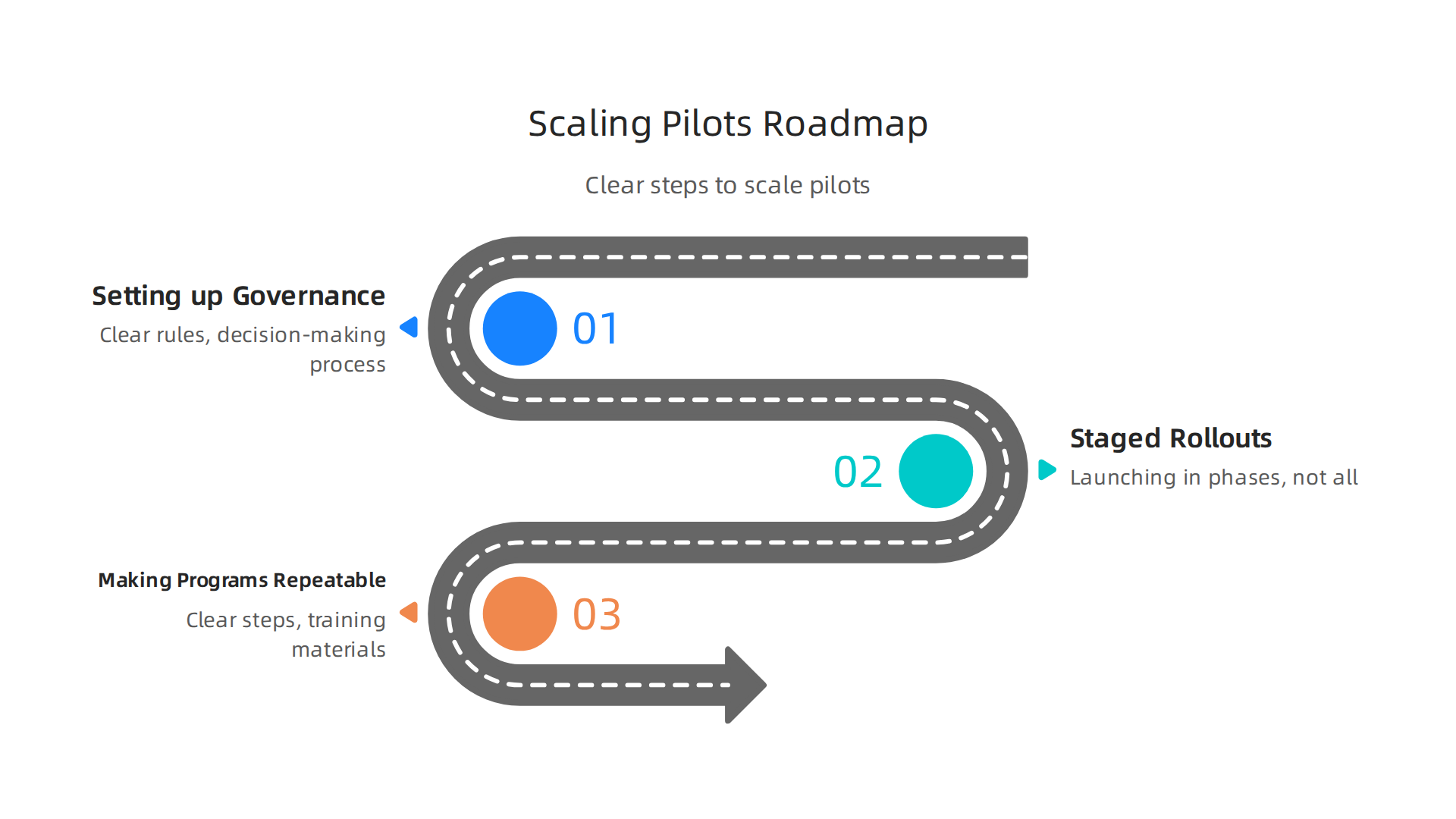
- Setting up Governance: This means creating clear rules and a decision-making process. Who decides which pilots get more funding? Who checks if the rollout is going well? Strong leaders need to be in charge, setting the direction and making sure everyone follows the plan. This helps make sure new technologies, especially advanced ones like AI, are rolled out safely and successfully across different locations and services, as highlighted in a 2026 report on Scaling AI Safely Will Define Success for Healthcare Leaders in 2026.
- Staged Rollouts: It is often too much to launch a new technology everywhere at once. Instead, healthcare systems roll it out in stages. They might start in one city, then move to another, or begin with one type of care and then expand to others. This careful approach helps them learn and fix problems along the way. Think of it as a playbook for success, turning initial pilot results into a full-scale operation, a strategy often seen with A New Playbook for AI in Medical Groups. This also applies to modernizing existing care systems, which you can learn more about by reading how to Modernize Legacy Health Systems in Regional Hospitals.
- Making Programs Repeatable: To scale effectively, the process of bringing in new technology needs to be easily repeated. This means having clear steps, training materials, and support systems that can be used again and again. For a large community medical group or networks like Einstein Healthcare Network and St. Luke’s University Health Network, this is key to getting the most out of their investments.
Smart spending and timelines
Rolling out technology across a large network costs money and takes time.
- Funding Models: Pilot programs usually get a small amount of money to start. If they work well, they then get more money in stages. This "staged investment" helps reduce risk. If a pilot does not work out, not too much money is lost. When a technology is ready for a full enterprise rollout, large budgets are needed, and funding plans are put in place for many years. Many healthcare systems are shifting from simple pilot projects to full enterprise strategies, especially for AI technologies, as described in insights on Healthcare AI in 2026: Building GenAI-Ready Organizations.
- Realistic Timelines: Scaling up takes time. A pilot might run for a few months, but rolling it out across an entire healthcare system like HCA Healthcare could take years. Leaders must set realistic goals and timelines, understanding that there will be challenges and changes along the way. This mindful approach to managing change is vital for successfully adopting new technologies across the entire organization, just like using an AI Change Management Framework for Enterprise Adoption in 2026.
By planning carefully for governance, funding, and timelines, healthcare systems can turn successful small tests into large-scale programs that truly improve health for many people.
Summary
This article explains why digital transformation is urgent for large health systems in 2026 and what leaders must do to succeed. It walks through the business case—costs, ROI and three main value levers (efficiency, patient outcomes, revenue cycle)—and describes the practical expenses such as software, integration and training. The piece covers governance, regulatory compliance and the security controls required to protect patient data, plus interoperability goals and data strategies (FHIR, APIs, master data management). It offers guidance on selecting scalable technology and vendor contracting, getting clinical and operational teams ready with training and change management, and measuring clinical impact with maturity models and metrics. Finally, it explains how to move pilots into staged, enterprise rollouts with governance, funding models and realistic timelines so organizations can scale safe, effective digital care across sites.