


Why a Concise, Trusted Guide to Medical Abbreviations Matters for Clinicians
In the fast-paced world of healthcare in 2026, medical abbreviations are everywhere. They help busy doctors and nurses write notes quickly, but they can also cause big problems. Sometimes, the same abbreviation can mean many different things. This can lead to serious mix-ups that affect how patients are diagnosed and treated.
Think about the scd medical abbreviation. It’s a common abbreviation you might see in a patient’s chart. But what does it really mean? It could stand for sickle cell disease, a blood disorder. It could also mean sudden cardiac death, a very serious heart event. And sometimes, it simply refers to a sequential compression device, which is a machine used to prevent blood clots. Imagine the confusion if a healthcare worker misreads "SCD" in a critical moment. One small misunderstanding could change a person’s life.

This is why busy clinicians and healthtech teams need clear, trusted information. They need definitions that are easy to find and backed by facts. This helps reduce errors and makes sure everyone is on the same page. Without a reliable guide, problems can pop up not just with the scd medical abbreviation, but also with others like c/o medical abbreviation, aki medical abbreviation (acute kidney injury), or esrd medical abbreviation (end-stage renal disease). Each of these has a specific meaning that needs to be understood correctly.
To keep patients safe and care efficient, health systems must prioritize clear communication. This includes making sure all medical staff, from doctors to digital health teams, have access to up-to-date and correct information about abbreviations. Understanding these terms properly is a key part of good patient care and smooth operations. For more on ensuring patient safety, consider exploring ways to improve communication across healthcare systems and digital platforms, such as clarifying medical abbreviations for safer health tech systems.
Staying updated on the latest in health technology, including best practices for clinical communication, is vital for everyone in the field.
Get clear daily AI updates from The AI Newsletter Worth Reading.
Common clinical meanings of ‘SCD’ across specialties
As we saw, understanding medical abbreviations correctly is super important for patient safety. One abbreviation, scd medical abbreviation, is a good example of how confusion can happen. It has a few very common meanings depending on where you see it. Let’s look closely at what SCD often means in different parts of healthcare in 2026.
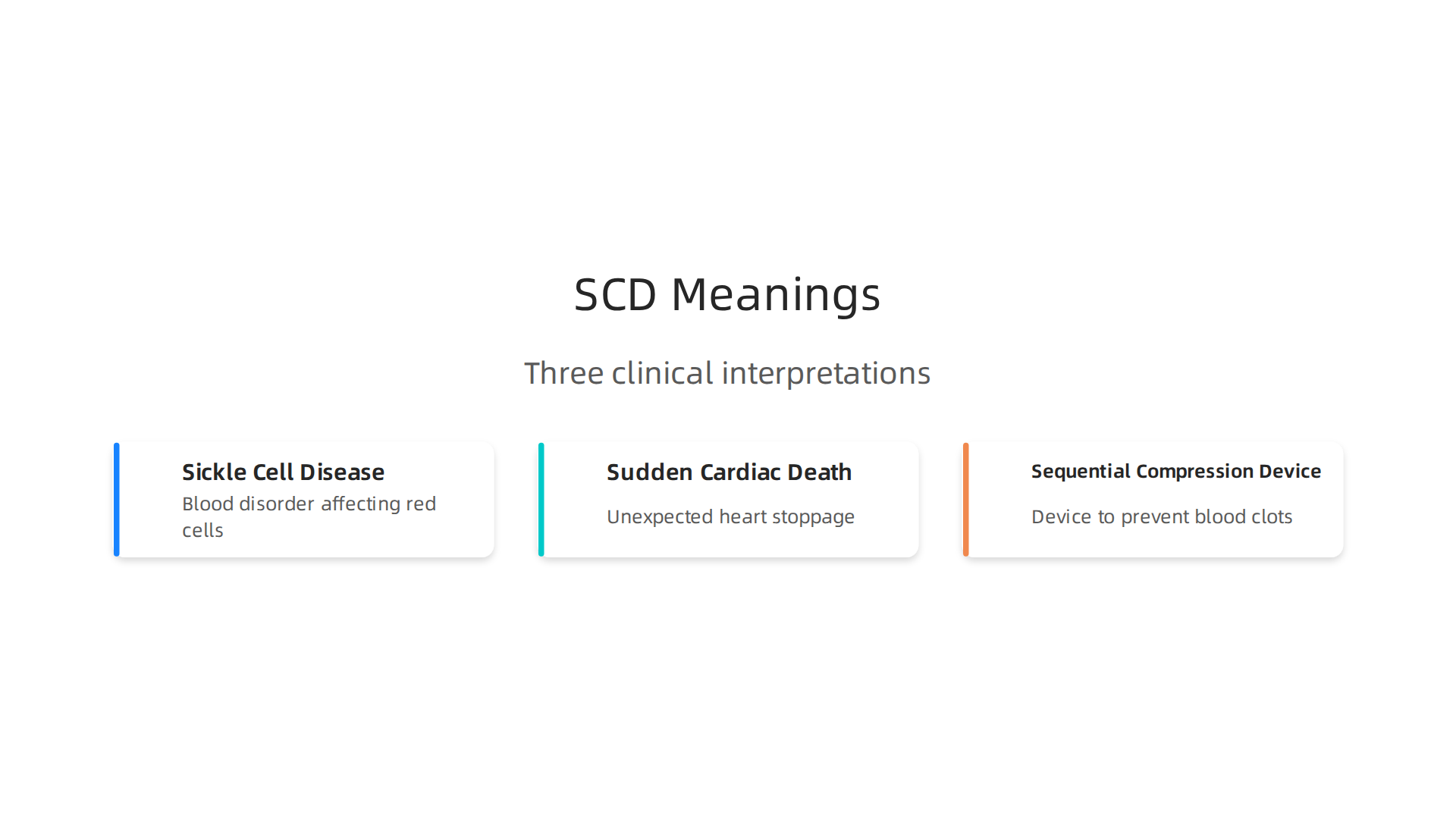
Sickle Cell Disease
In areas like blood health (hematology), SCD often stands for sickle cell disease. This is a blood problem that people are born with. It makes red blood cells take on a special C-shape, like a sickle. These sickled cells don’t move through blood vessels easily. They can get stuck and block blood flow, which causes pain and other health issues. Knowing that a patient has sickle cell disease is very important for their care, and doctors must be able to spot this abbreviation clearly in their notes. The World Health Organization provides additional information on sickle-cell disease.
Sudden Cardiac Death
When you’re dealing with heart conditions (cardiology), SCD most often means sudden cardiac death. This is a very serious event where a person’s heart stops working suddenly and unexpectedly. It can happen quickly, sometimes within an hour of symptoms starting, even if the person seemed healthy before. Doctors and nurses need to know if a patient is at risk for this. Correctly understanding SCD in this context helps them act fast to try and prevent it or respond during an emergency. Medical documents often explain these terms in detail, as seen in comprehensive lists of medical abbreviations.
Sequential Compression Device
Away from blood and heart issues, SCD can also refer to a sequential compression device. This is a machine used in hospitals, especially after surgery. It has cuffs that wrap around a patient’s legs and inflate and deflate in a pattern. This gentle squeezing helps blood move, which stops blood clots from forming in the legs. You might see SCD written on a patient’s care plan, meaning they need this device to stay safe.
Other Meanings
While those three are the most common, SCD can sometimes mean other things too, though less often in everyday clinical notes. For example, some may use it for "Specific Carbohydrate Diet" in nutrition, or "Scleroderma" in rheumatology, as explained by ScienceInsights on medical terms. This simply adds to the confusion if care teams are not careful.
The lesson here is clear: the context around the scd medical abbreviation is everything. A doctor in the emergency room needs to know if SCD means a sudden heart stop or a blood disorder when looking at a patient’s chart. Getting it wrong could lead to very different and dangerous actions. This is why having good systems for communication is key to patient safety. You can learn more about how to boost patient safety and clinical accuracy by improving how medical abbreviations are used.
Clear guidelines and ongoing education help all healthcare staff understand these critical terms, making sure patients get the right care every time. This is especially true for transitions of care where information is handed from one team to another.
How to disambiguate ‘SCD’ in patient records and orders
We know that scd medical abbreviation can mean different things, making it tricky for healthcare teams. To keep patients safe, doctors, nurses, and medical coders must be very careful when they see SCD in patient charts. Here are some smart steps they can use in 2026 to figure out the right meaning.
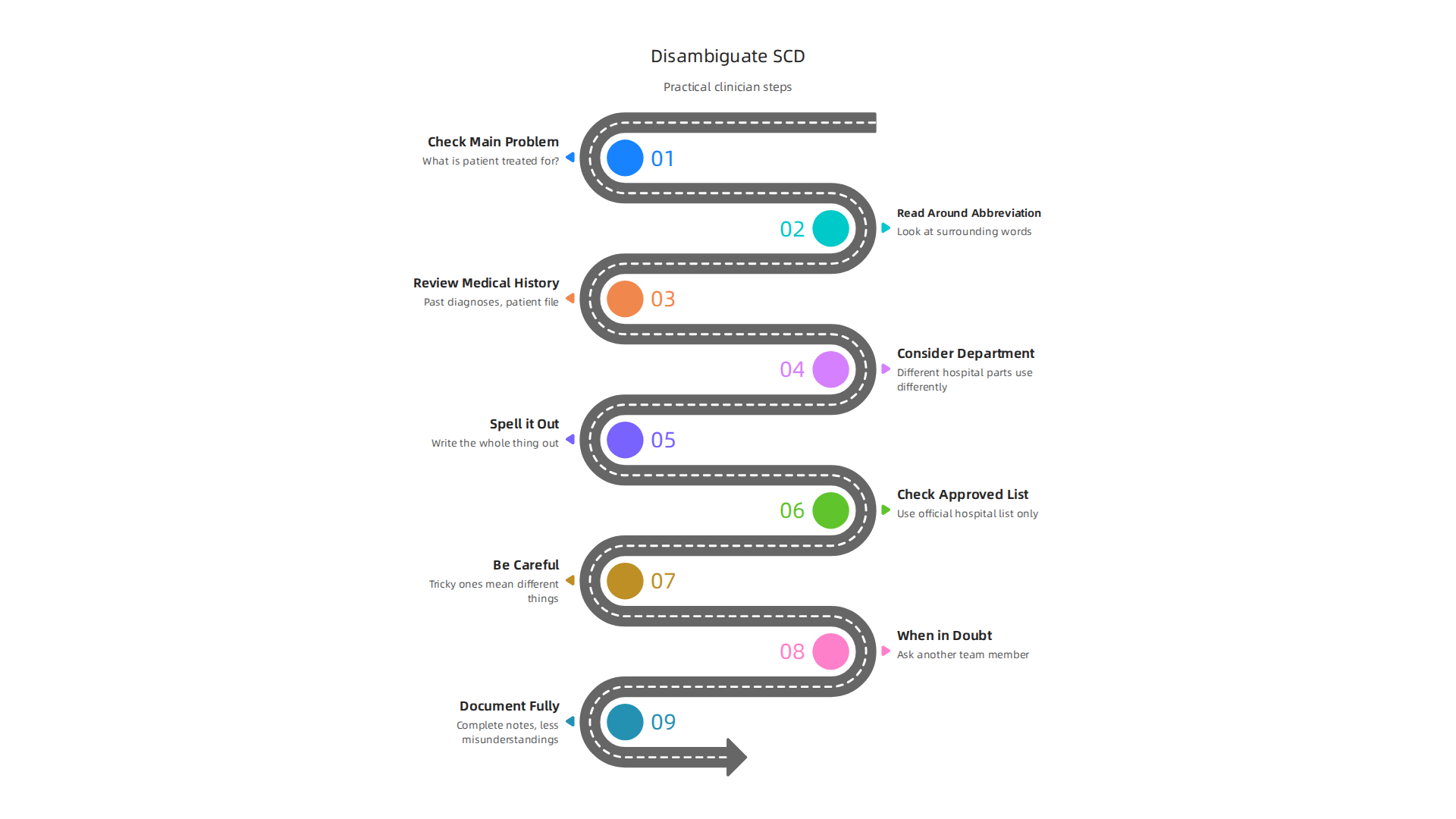
Practical Steps to Clarify ‘SCD’
-
Check the Patient’s Main Health Problem: What is the patient being treated for?
- If the patient has long-term blood issues or needs blood transfusions,
SCDlikely means Sickle Cell Disease (SCD) Symptoms, Causes & Types. - If the patient is in the heart clinic or has a history of heart trouble,
SCDmight stand for sudden cardiac death. - If the patient just had surgery and needs help preventing blood clots,
SCDprobably means sequential compression device. - Looking at the patient’s chief complaint, sometimes written as
c/o medical abbreviation, can give a big clue.
- If the patient has long-term blood issues or needs blood transfusions,
-
Read Around the Abbreviation: Look at the words directly before and after
SCD.- If you see notes about "heart monitoring," "EKG," or "chest pain," it points to a heart issue.
- If you see "anemia," "crisis," or "genetics," it suggests sickle cell disease.
- If it mentions "legs," "clot prevention," or "post-op," it’s likely the compression device.
- Sometimes, other abbreviations like
aki medical abbreviation(acute kidney injury) oresrd medical abbreviation(end-stage renal disease) might appear in the same chart, signaling the patient’s general condition and helping narrow down the possibilities.
-
Review the Patient’s Full Medical History: Does the patient’s file mention any past diagnoses related to heart problems or blood disorders? A clear history is one of the best ways to know what
SCDmeans for that specific person. Doctors often check guidelines, like the ASH Clinical Practice Guidelines on Sickle Cell Disease (SCD), to understand patient conditions better. -
Consider the Department or Specialty: Different parts of the hospital use
SCDin their own ways. A note from a heart doctor will likely mean something different than a note from a blood specialist or a surgery team. As the saying goes, context is king. In fact, studies show that misinterpretation of medical abbreviations is a common problem.
How EHRs and Technology Help
Electronic Health Records (EHRs) are powerful tools in 2026 that can help reduce confusion.

Many modern EHR systems are designed to:
- Expand Abbreviations: Some systems can be set up to automatically show the full meaning of an abbreviation when you hover over it or click on it.
- Smart Search Functions: You can search the patient’s entire record for related terms. For example, if you see
SCD, you can search for "sickle cell," "cardiac arrest," or "compression device" to find more information. - Alerts and Warnings: Advanced EHRs can flag ambiguous abbreviations and ask the user to confirm the intended meaning, reducing errors.
- AI for Disambiguation: New technologies, including AI, are being developed to better understand medical language and help figure out what abbreviations like
scd medical abbreviationtruly mean. There’s ongoing work to create a framework for clinical abbreviation disambiguation to make this process easier and safer.
Even with these tools, the human element is key. If there’s ever any doubt, the best step is always to ask the person who wrote the note for a clearer explanation. This helps prevent serious mistakes because the hidden danger of abbreviations is very real. Learning how to check these details helps us in clarifying medical abbreviations for safer health tech systems.
Staying updated on health technology and how it helps solve healthcare challenges is crucial. You can get daily insights into these advancements.
Get clear daily AI updates from The AI Newsletter Worth Reading.
Reading patient records can be tricky, especially when an abbreviation like SCD pops up. As we learned, scd medical abbreviation has a few common meanings. What it means often depends on which part of the hospital you are in. Different medical fields use SCD for very different things. This is why knowing the specialty is super important for patient safety.
Specialty-specific meanings: hematology, cardiology, surgery and beyond
Let’s look at how SCD changes its meaning across different areas of medicine.
In Hematology: Sickle Cell Disease
When you are in a clinic focused on blood disorders, SCD almost always stands for Sickle Cell Disease. This is a genetic blood problem that affects red blood cells. These cells, which are usually round, become shaped like sickles. This can cause many health issues, including pain and damage to organs. It’s a serious, inherited condition where the body makes a different kind of hemoglobin, called hemoglobin S (HbS) [1]. Doctors and nurses in this field need to be very careful, especially when patients with sickle cell disease need surgery, like open-heart surgery [2].
In Cardiology: Sudden Cardiac Death
In the heart doctor’s office or the emergency room when dealing with heart problems, SCD typically means Sudden Cardiac Death. This is when the heart suddenly stops working properly. It’s a big, unexpected problem where the heart stops pumping blood, often within an hour of symptoms starting [3]. Understanding if a patient is at risk for this is very important for heart specialists.
In Surgery: Sequential Compression Device
After surgery, especially to prevent blood clots in the legs, SCD most often refers to a sequential compression device. This is a special sleeve that wraps around a patient’s legs. It inflates and deflates to gently squeeze the legs, helping blood flow better and stopping clots from forming. These devices are common in surgery recovery areas. The simple SCD abbreviation can indeed stand for sequential compression device [4].
Why Specialty Context Matters So Much
The way scd medical abbreviation changes its meaning from one specialty to another shows why clear notes and good communication are vital.

If a heart doctor thinks a patient has sickle cell disease when they actually need a leg device, it could cause big problems. And if a surgeon thinks SCD means a leg device when the patient has a serious heart condition, that’s also very dangerous.
To keep patients safe, specialty teams must:
- Write out abbreviations: When possible, especially for new diagnoses or important orders, write the full words instead of just
SCD. - Use templates: EHRs can have special templates for each department that guide staff to use full words or specific phrases.
- Train staff: Regularly teach staff members about common abbreviations and how they might differ in various specialties.
- Encourage questions: Make it easy for any team member to ask for clarification if they are unsure.
Using a clear precision digital health strategy for specialty care can help healthcare teams manage these specific needs better. By focusing on context and clear communication, we can make sure everyone understands what SCD truly means for each patient.
Patient safety risks and real-world errors from abbreviation ambiguity
But what happens when this clear understanding breaks down? The use of scd medical abbreviation can lead to serious patient safety risks if misunderstood. When doctors and nurses use abbreviations that have many meanings, mistakes can happen. These mistakes can cause bad things to happen to patients or make their care get delayed. Studies have shown that many medical abbreviations have more than one meaning, which makes them tricky to use safely [1]. In fact, ambiguous abbreviations contribute to many errors, especially in critical care where quick decisions are made [2].
Think about these common mix-ups with SCD:
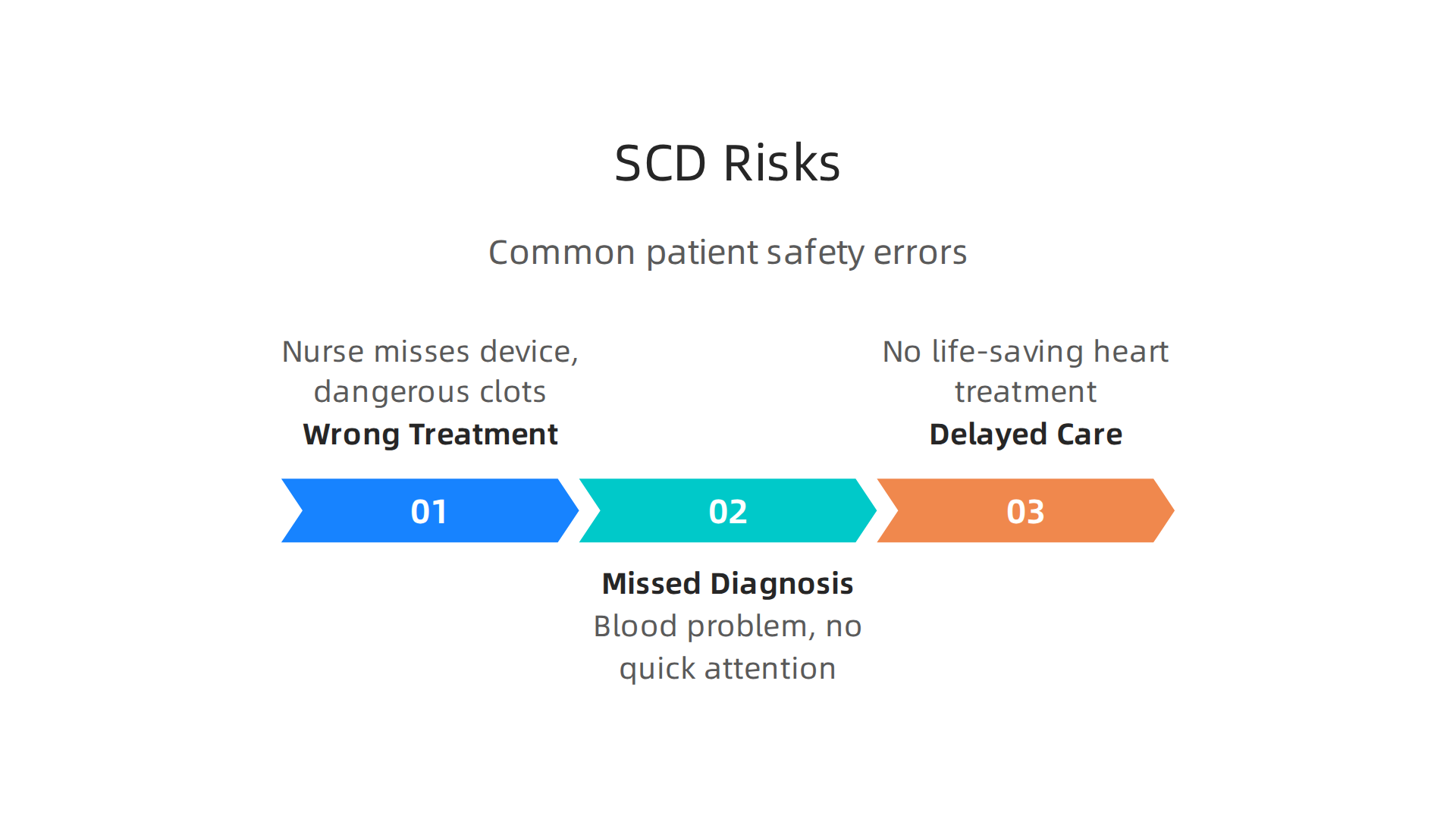
- Wrong Treatment: Imagine a patient who needs a sequential compression device (SCD) after surgery to prevent blood clots. If a nurse thinks
SCDmeans the patient has Sudden Cardiac Death, they might miss putting on the device. This could lead to dangerous blood clots. - Missed Diagnosis: What if a patient with Sickle Cell Disease (SCD) comes to the emergency room, but the doctor thinks
SCDmeans Sudden Cardiac Death? The patient’s blood problem might not get the right attention quickly, making their condition worse. - Delayed Care: A patient at risk for Sudden Cardiac Death (SCD) needs quick heart care. If the care team thinks
SCDmeans a leg device, there could be a big delay in giving life-saving heart treatment. This delay can have very serious results.
These kinds of errors are not rare. Over half of medical abbreviations can be misunderstood [3]. Healthcare teams constantly report incidents where these confusions lead to problems. Hospitals use special ways to look into these mistakes. They do "root-cause analyses" to find out why an error happened. Often, the tricky nature of medical shorthand, like the scd medical abbreviation, comes up as a main reason for problems.
It’s not just SCD. Other abbreviations like c/o medical abbreviation (which can mean "complains of" or "care of"), aki medical abbreviation (acute kidney injury), or esrd medical abbreviation (end-stage renal disease) can also be confusing if not used carefully. The goal is always to make sure every team member understands what is written in a patient’s chart, so they can provide the best and safest care possible. This is why many groups are working to clarify medical abbreviations for safer health tech systems.
To stay on top of how technology and clear communication are changing healthcare, you might want to learn more.
Get clear daily AI updates with The AI Newsletter Worth Reading.
Institutional policies and best practices for standardizing abbreviations
Because medical abbreviations can cause confusion and even harm, hospitals and healthcare groups have strict rules about using them. These rules help make sure everyone on the care team understands what is written in a patient’s chart. It is all about making healthcare safer for everyone.
Creating Approved Abbreviation Lists
One main way to make sure abbreviations are used correctly is to create a list of approved ones. This list tells doctors, nurses, and other staff exactly which abbreviations they can use. Any abbreviation not on the list should not be used. For example, some hospitals might allow "SCD" only for Sickle Cell Disease, while completely banning it for Sudden Cardiac Death or Sequential Compression Device to avoid confusion. Some organizations even create a "Do Not Use" list to highlight abbreviations that are very risky [1].
These lists often include:
- The abbreviation itself (like
aki medical abbreviationfor Acute Kidney Injury). - Its full, clear meaning.
- Sometimes, specific situations when it’s okay to use.
Making these lists is a big job. It needs doctors, nurses, pharmacists, and IT experts to work together. They look at abbreviations that cause problems, like the scd medical abbreviation, and decide how to make them safer. This group also helps set up how often the list should be reviewed and updated. Many health systems have a formal policy for medical record documentation and abbreviations to guide this process [2].
Putting New Rules into Action
Once an approved list is ready, the next step is to make sure everyone uses it. This means rolling out the changes across all clinical teams and making sure computer systems, like Electronic Health Records (EHRs), are updated.
Here are some tips for making these changes work:
- Training and Education: All staff need clear training on the new rules. They need to learn which abbreviations are approved and which are banned.

They also need to know why these changes are important for patient safety.
- Clear Policies: Hospitals must have clear policies that state only approved abbreviations can be used in patient records. This helps staff follow the rules.
- Updating EHR Systems: Electronic Health Records should be set up to warn staff or even block them from using banned abbreviations. For example, if someone types
c/o medical abbreviation, the system might flag it and ask for the full phrase "complains of" or "care of." This smart technology can help prevent mistakes before they happen. - Regular Checks: Hospitals should regularly check patient charts to make sure the new abbreviation rules are being followed. If people are still using old or unclear abbreviations, more training or reminders might be needed.
- Feedback Loops: Staff should have a way to share if they find the new system difficult or if they spot new problems. This helps the hospital make the rules even better over time.
By having strong policies and putting them into practice, healthcare organizations can greatly improve patient safety. This helps make sure that important patient information, whether it includes esrd medical abbreviation or aki medical abbreviation, is always understood correctly by everyone. Proper management of medical language helps boost patient safety and clinical accuracy.
[1] Abbreviation Do Not Use List: Best Practices for 2026
[2] Policy and Procedure of Abbreviations of Medical Terms
By having strong policies and putting them into practice, healthcare organizations can greatly improve patient safety. This helps make sure that important patient information, whether it includes esrd medical abbreviation or aki medical abbreviation, is always understood correctly by everyone. Proper management of medical language helps boost patient safety and clinical accuracy.
Quick-reference checklist and maintenance tips for clinical teams
While hospitals set up the big rules, it is also very important for doctors, nurses, and all clinical staff to know what to do every day. These quick tips help prevent mistakes when using medical abbreviations, making care safer for everyone.
A Daily Checklist for Clear Documentation
Here is a simple checklist that clinical teams can use to make sure abbreviations are always clear:
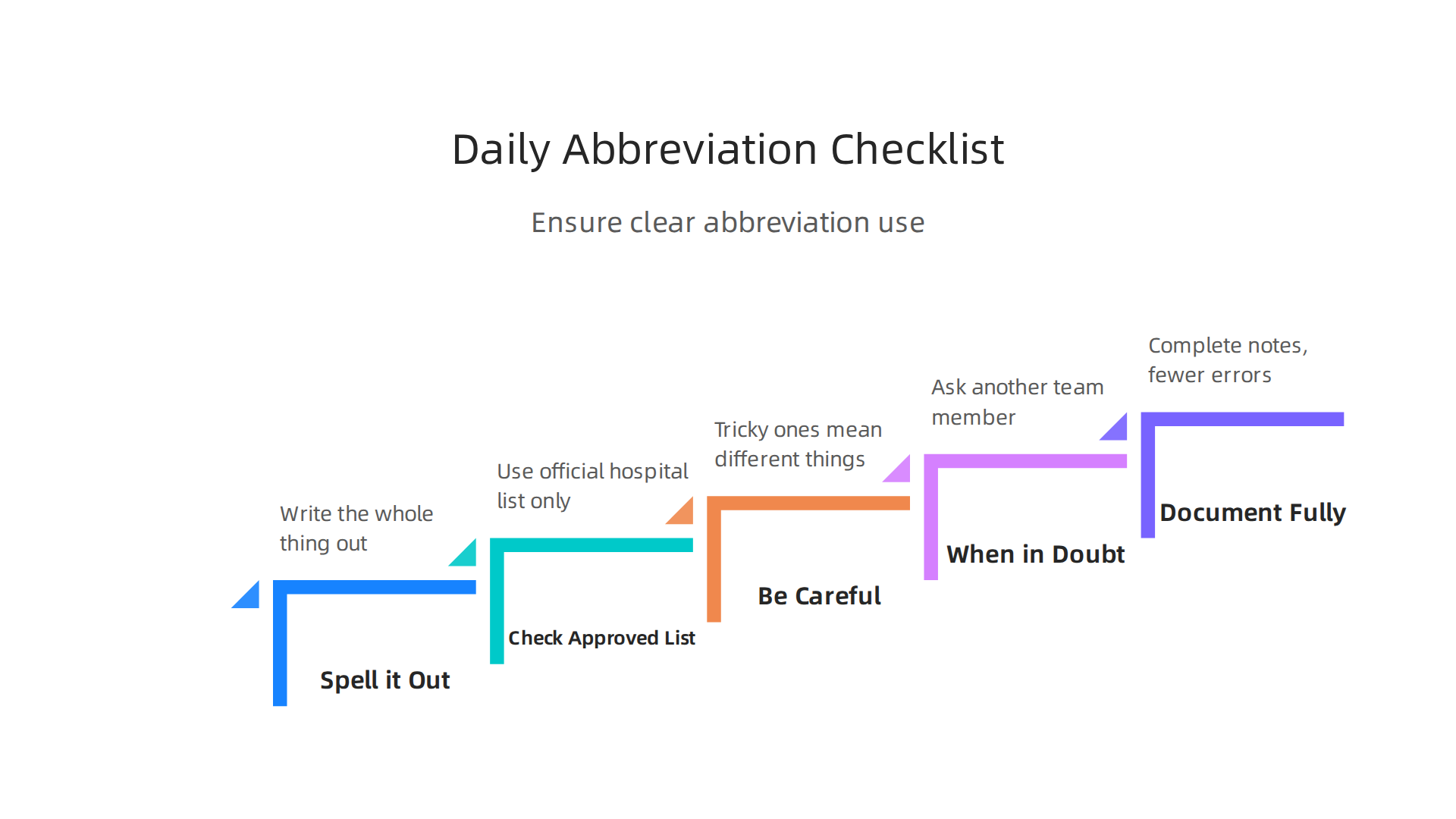
- Always Spell it Out First: When you are not sure if an abbreviation will be understood, just write the whole thing out. For example, instead of
aki medical abbreviation, write "Acute Kidney Injury." - Check the Approved List: Only use abbreviations that are on your hospital’s official approved list. Many hospitals have specific lists of approved abbreviations for use in medical records and a separate "Do Not Use" list [1]. If it is not on the good list, do not use it.
- Be Careful with Tricky Ones: Some abbreviations, like the
scd medical abbreviation, can mean many different things. Always make sure the full meaning is very clear in the patient’s record to avoid confusion. If you writec/o medical abbreviation, make sure it is clear if you mean "complains of" or "care of." - When in Doubt, Ask: If you see an abbreviation you are not sure about, ask another team member. It is always better to ask than to guess. Understanding inappropriate medical abbreviations can help prevent errors.
- Document Fully: Make sure all your notes are complete. This leaves less room for misunderstandings later on.
Keeping Abbreviation Lists Up-to-Date
Making sure these rules work well over time takes ongoing effort from everyone. Here is how clinical teams can help keep abbreviation use safe and current:
- Regular Review: Hospital leaders should look at the approved abbreviation lists often, at least every few years. This helps make sure they still fit with new medical terms and practices [2]. This helps keep things current, especially with terms like
esrd medical abbreviationoraki medical abbreviation. - Updating EHR Systems: Electronic Health Records (EHRs) are a big help. They can be set up to warn staff about using abbreviations that are not allowed. This digital check is an important part of keeping patients safe.
- Continuous Learning: Everyone on the healthcare team should get regular training. This helps them stay up-to-date on any changes to the approved lists and why these rules are important for patient safety.
- Give Feedback: If a clinician finds an abbreviation that causes problems, they should tell their team leaders. This feedback helps improve the system for everyone. For more insights on this topic, read about the dangers of medical abbreviations and solutions for patient safety.
By following these steps, clinical teams can make sure that patient information is always communicated clearly. This helps reduce mistakes and keeps patients safe in their care journey.
Staying informed about the newest strategies in health technology and patient safety is key for all healthcare professionals in 2026. For clear daily updates on AI and technology that are changing healthcare, consider subscribing.
Get clear daily AI updates from The AI Newsletter Worth Reading.
Summary
This article explains why a concise, trusted guide to medical abbreviations is essential for clinicians and healthtech teams, using the multi-meaning