


Why understanding medical school requirements matters now
Thinking about becoming a doctor in 2026? That’s a big dream, and it starts with understanding the path to get there.

One of the first and most important steps is learning about medical school requirements. These can feel tricky because they change a lot from one school to another, and even between countries. For example, some schools in Australia require a minimum GPA of 5.0 out of 7.0 for an interview, while many US schools look for at least a 3.0 GPA or higher on a 4.0 scale, often with specific science GPAs too. This wide range can make it confusing for students and their helpers.
It’s not just about grades either. Most medical schools in the U.S. and Canada require you to have a bachelor’s degree, often in any field, as long as you complete certain science classes like biology, chemistry, and physics. This is a common requirement in these countries, which are known for having graduate-level medical programs An Overview of Education and Training Requirements for…. Other common requirements include taking the Medical College Admission Test (MCAT) and gaining real-world experience. You might wonder how a doctor’s path compares to other healthcare roles, like the journey to becoming a professional through bachelor of science in nursing programs. Both are vital, but their entry points are different. The key is knowing what each specific program asks for to avoid surprises.
This article is here to make things clearer. We will break down the main medical school requirements you need to know for 2026. This includes what you need for your grades and classes, what tests to take, what kind of experiences help you stand out, and when you need to do everything. We’ll give you clear steps so you can feel ready, whether you’re just starting to think about medicine or are already applying. Becoming a doctor is about more than just personal achievement; it’s about serving communities and helping people navigate important decisions, like understanding their health care power of attorney. Knowing the rules upfront makes your journey smoother and helps you prepare for a rewarding career.
To stay on top of the latest advancements that will shape your future medical career, consider checking out The AI Newsletter Worth Reading for clear daily updates on AI and technology trends in healthcare.
Okay, let’s talk about the schoolwork you need to do before you can even think about medical school. Getting good grades in the right classes is a super important part of the medical school requirements for 2026. Admissions committees, which are the groups of people who decide who gets into medical school, look very closely at your school report cards, called transcripts.
What Classes Do You Need to Take?
Most medical schools want to see that you’ve done well in certain science classes. These are like the building blocks for learning medicine.
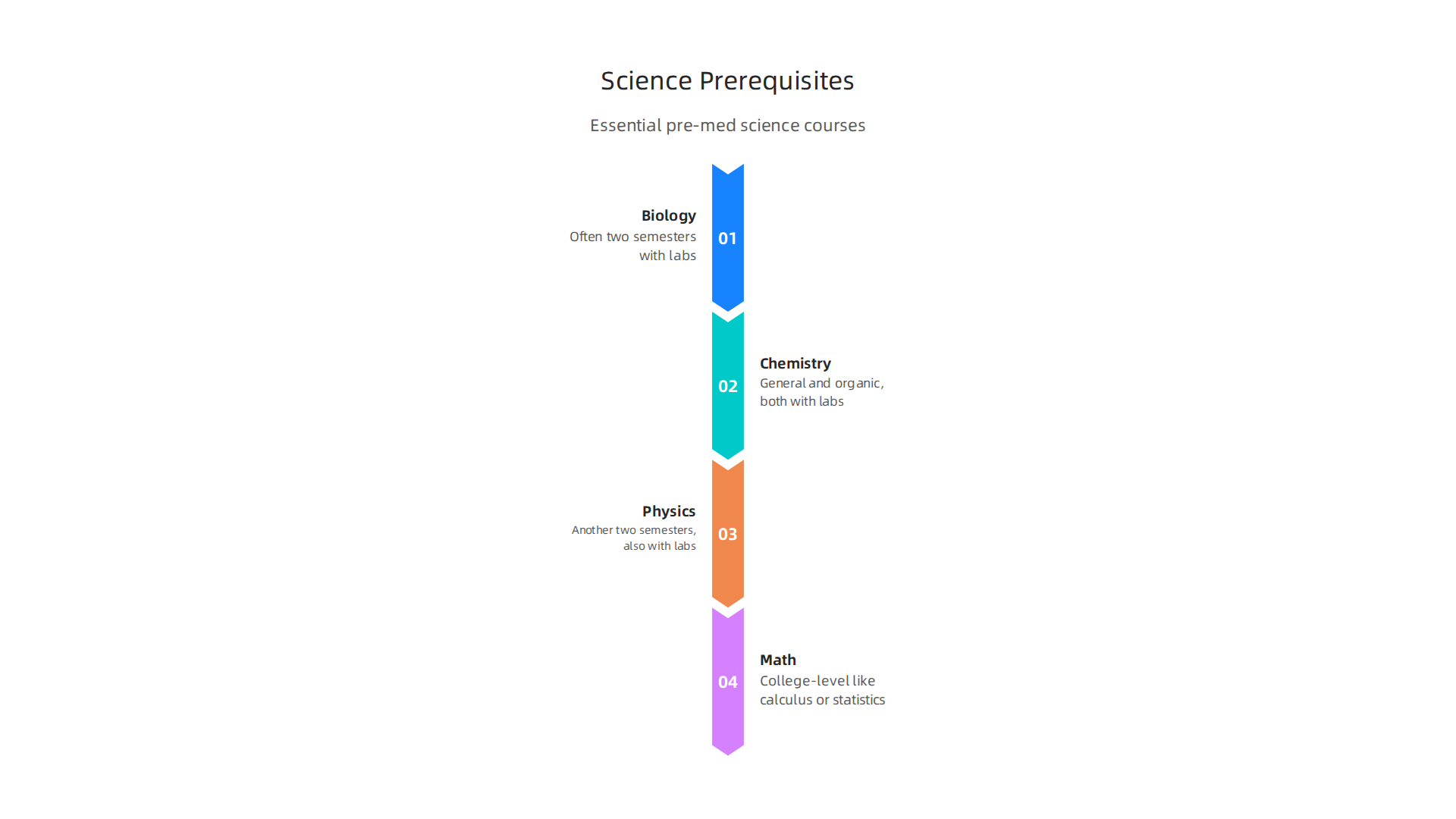
You’ll almost always need to take:
- Biology: Often two semesters with labs. Some schools even ask for a class in genetics 2025 Guide for M.D. Program Applicants.
- Chemistry: This usually means general chemistry and organic chemistry, both with labs.
- Physics: Another two semesters, also with labs.
- Math: You might need college-level math, like calculus, or statistics. Statistics is often very helpful for understanding medical studies later on.
Some schools might also want biochemistry or other advanced science classes. For example, Temple University suggests specific courses like Biology 1107/L and Chemistry 1031/L as typical pre-medical requirements Pre-Medical Requirements Required by MOST …. It’s really smart to look at the specific courses each medical school you’re interested in asks for because they can be a bit different. You’ll usually find a list of these expected courses in their admission guides. Also, while not always required, having a public health minor data standards or similar experience can show a broader interest in community health.
Understanding Your Grades and GPA
Your Grade Point Average (GPA) is a number that shows how well you’ve done in all your classes. Medical schools usually look at two main GPAs:
- Overall GPA: This is the average of all the grades you got in college.
- Science GPA (sometimes called BCPM GPA): This is the average of your grades only from Biology, Chemistry, Physics, and Math classes. This one is super important because it shows how strong you are in the core sciences needed for medicine.
Many U.S. medical schools look for an overall GPA of 3.0 or higher. For instance, the University of Nevada, Reno School of Medicine often seeks applicants with an overall GPA of 3.0 or higher and a science GPA of 3.0 or higher Medical School Admission Requirements™ (MSAR®) Report for …. However, getting into medical school is very competitive. Most students who get accepted have much higher GPAs, often 3.5 or even higher, especially in their science classes. For example, the University of Missouri generally doesn’t consider applicants with a science or overall GPA below 3.0 unless they have significant extra coursework Medical School Application Requirements – University of Missouri …. In Canada, schools like the University of Toronto might look for a minimum GPA of 3.6 out of 4.0, and often the accepted students have closer to a 3.8 GPA ADMISSION REQUIREMENTS OF CANADIAN FACULTIES ….
How Admissions Committees Look at Your Grades
It’s not just about one number. Admissions committees want to see a good trend in your grades. This means they like to see your grades get better over time, showing that you can handle harder classes. If you had a tough start in college, but your grades improved a lot by your junior and senior years, that can show you’ve grown and are ready for the challenge of medical school. They also look at where you took your classes. For example, they generally want to see transcripts from regionally-accredited institutions in the U.S. or Canada MD Application & Requirements.
What About Nontraditional Applicants?
If you didn’t go straight to medical school after college, or if you studied something completely different, you’re called a nontraditional applicant. Don’t worry! Medical schools still welcome you. You might need to take extra science classes after you finish your first degree. These are often called post-baccalaureate programs. These programs help you show that you can handle tough science courses and are serious about medicine. Sometimes, even getting a master’s degree in a science field can help prove your academic strength. What’s key is showing that you can do well in the required science courses, no matter when you take them.
Beyond good grades, another big part of the medical school requirements for 2026 involves taking important tests. These tests help medical schools see if you have the knowledge and skills needed to do well in their programs. Let’s look at the main ones.
The MCAT Exam: Your Big Test for North America
For most medical schools in the United States and Canada, you’ll need to take the Medical College Admission Test, or MCAT. Think of it as a very long and important exam that checks what you know about science and how well you can think critically. It tests you on:
- Chemical and Physical Foundations of Biological Systems: This covers general chemistry, organic chemistry, physics, and biology.
- Critical Analysis and Reasoning Skills (CARS): This part tests your ability to read and understand complex information, then use logic to answer questions.
- Biological and Biochemical Foundations of Living Systems: More biology and biochemistry questions.
- Psychological, Social, and Biological Foundations of Behavior: This section looks at how people think and act, which is important for understanding patients.
Preparing for the MCAT usually takes a few months because there’s so much to learn and practice.

The test is offered many times throughout the year, and you can find out more about it in publications like The MCAT® Essentials for Testing Year 2026. If you’re planning to take it, you’ll need to Register for the MCAT® Exam well in advance.
Other Important Tests Around the World
If you’re looking to study medicine in places like Australia, the UK, or Ireland, you might take different tests.
- GAMSAT: This stands for the Graduate Australian Medical School Admissions Test. It’s for people who already have a bachelor’s degree and want to go to medical school. Like the MCAT, it tests your thinking skills, how well you understand science, and your writing ability. For instance, in Australia, your GAMSAT score is one of three main things considered, along with your degree and an interview Information Booklet 2026 – GAMSAT. You can even use your GAMSAT score to apply to medical schools in Ireland and the UK.
- UCAT: The University Clinical Aptitude Test is another common test, mainly used for undergraduate medical courses in the UK, Australia, and New Zealand.
Test-Optional Trends: What Does This Mean for Medical School?
In recent years, many colleges have started offering "test-optional" admissions, especially for students applying right out of high school. This means you don’t always have to submit scores from tests like the SAT or ACT. However, for medical school, it’s a bit different. Most medical programs, especially in North America, still strongly expect or require an MCAT score.
While a few schools might be looking at other ways to judge applicants, the MCAT remains a very important part of the medical school requirements. It helps admissions committees compare students fairly from many different backgrounds. So, it’s not like becoming a nurse practitioner vs doctor where the entry paths can vary greatly. For medical doctors, the standardized test is usually a must. Still, it’s always a good idea to check the specific rules of each medical school you’re interested in, as things can change. For example, some universities like Stony Brook University have adopted a test-optional admissions policy for first-year students, which sometimes signals broader trends in education.
Medical schools look at your whole application, not just your test scores. But a strong score on these exams certainly helps show you are ready for the tough work ahead.
Get clear daily AI updates from The AI Newsletter Worth Reading.
Medical schools really do want to see more than just good grades and test scores. They want to know you understand what being a doctor is all about. This means they look closely at your experiences outside of the classroom. These experiences show that you are truly interested in medicine and have spent time helping others. Let’s explore the kinds of activities medical schools value most.
Clinical Exposure: Learning Where Care Happens
Clinical exposure means you spend time in places where patients get care. This could be a hospital, a doctor’s office, or even a nursing home.

The main goal is to see doctors and other healthcare workers in action. It helps you understand what patient care really looks like.
There are many ways to get clinical experience:
- Shadowing: This is when you follow a doctor or another medical professional to watch what they do each day. It’s a great way to learn about the different parts of medicine without having direct patient responsibility.
- Volunteering: You can volunteer at a hospital or clinic. This might involve helping patients with simple tasks, talking with families, or assisting staff. Long-term volunteer service shows medical schools you are dedicated to helping others The Importance Of Clinical….
- Paid Clinical Work: Jobs like being an Emergency Medical Technician (EMT), a Certified Nursing Assistant (CNA), or a medical scribe give you hands-on experience. These roles often involve direct interaction with patients, which is what medical schools really like to see What Counts as Clinical Experience for Med School in 2026?. In fact, these types of direct patient interactions are very important for affecting a person’s comfort, safety, or care Clinical Experience for Medical School: A Physician–Adcom’s Guide.
Medical schools value this experience because it shows you understand the challenges and rewards of healthcare. It also helps you see things like the health disparities definition in real life, understanding how different groups of people get different levels of care. While the specific number of hours can vary, having 100 to 300 or more hours of clinical experience is often a good aim A Guide to Extracurriculars for Medical School: Types + How to ….
Research Activities: Thinking Like a Scientist
Medical schools also like to see if you can think like a scientist. This means getting involved in research. Research can be in a lab, working on experiments, or it can be about public health, looking at health trends in communities. Getting a public health minor can also show your interest in this area.
Doing research shows that you can:
- Ask big questions: You learn how to identify problems and try to find answers.
- Solve problems: You develop skills to think through complex issues.
- Work with data: You learn how to collect and understand information.
Applicants who get into medical school often have both research and clinical experience. However, showing strong and steady clinical experience might be even more important for getting an interview and being accepted Clinical Volunteering vs Research: What Acceptance Rates Reveal.
Volunteering and Leadership: Showing You Care and Can Lead
Beyond clinical work and research, medical schools want to see that you are a well-rounded person who cares about others. Volunteering in your community, even in non-medical roles, shows your commitment. Maybe you helped at a food bank, tutored students, or worked with a non-profit organization. These activities show dedication and personal growth The Importance Of Clinical….
Leadership activities are also important. This could be leading a club, being a team captain, or organizing an event. These roles show you can work with others, make decisions, and take responsibility.
How to Present Your Experiences
When you apply to medical school, you’ll need to write about your experiences. The AMCAS application, used by many schools, has a "Work and Activities" section where you can list up to 15 different experiences Section 5 of the AMCAS® Application: Work and Activities – AAMC. For each one, you should describe what you did, the skills you learned, and how it prepared you for medicine.
Here are some tips for telling your story:
- Be specific: Don’t just say "I volunteered." Explain what you did, what you learned, and how it impacted you or others.
- Show your passion: Let your excitement for medicine come through in your writing.
- Connect to medicine: Even if an experience wasn’t directly clinical, explain how it taught you skills important for doctors, like teamwork, communication, or empathy.
- Think about patient rights: In your experiences, you might have learned about patient privacy or how crucial it is to protect your medical choices with a health care power of attorney. These are valuable insights.
- Consider all roles: Even if you aren’t pursuing a doctor’s path, understanding various healthcare roles, like those for a bachelor of science in nursing programs how to choose the right path for your career, can deepen your appreciation for healthcare teams.
For applicants from non-clinical backgrounds, it’s still possible to show valuable experiences. Think about any role where you interacted with people, solved problems, or showed care. For example, if you worked in customer service, you developed strong communication skills. If you were a tutor, you showed patience and the ability to explain complex ideas. Medical schools want to see how you think and how you relate to people, which these experiences can highlight.
To keep up with the latest insights in healthcare technology and how it shapes the medical world, consider subscribing to The AI Newsletter Worth Reading.
Getting into medical school is not just about having the right experiences; it’s also about knowing when and how to apply. The path to becoming a doctor requires careful planning, often over many years. This includes understanding the medical school requirements, important dates, and how to use different application systems.
Typical Application Timelines
Applying to medical school is a long process. It usually takes over a year from when you start preparing your application to when you receive an acceptance. For example, if you want to start medical school in the fall of 2027, you would typically begin preparing your application in late 2025 or early 2026.
Many things happen during this time:
- Taking tests: You need to take important exams like the Medical College Admission Test (MCAT) for US schools or the Graduate Medical School Admissions Test (GAMSAT) for schools in Australia, Ireland, and the UK.
- Writing essays: You’ll write personal statements and essays explaining why you want to be a doctor.
- Getting recommendation letters: You need people who know you well to write letters that tell schools how great you are.
- Interviews: If schools like your application, they will invite you for an interview.
Centralized Application Systems
Around the world, different systems help manage medical school requirements and applications. These systems make it easier to apply to many schools at once.
- AMCAS (American Medical College Application Service): This is the main system for most medical schools in the United States. You submit one primary application with your grades, experiences, and essays. Then, individual schools might ask for more information through "secondary applications."
- UCAS (Universities and Colleges Admissions Service): In the UK, students apply through UCAS. For graduate-entry medicine programs, you might need to take tests like the GAMSAT before you even submit your UCAS application, often in October of the year before you plan to start school Ucat Scores.
- GAMSAT and GEMSAS (Australia/Ireland): For graduate entry medical programs in Australia and Ireland, the GAMSAT is a key entry exam. This test is held in March and September each year. For example, if you’re applying for entry in 2027, you might take the GAMSAT in March 2026 or September 2026. Your GAMSAT score, along with your bachelor’s degree and an interview, are often the main things schools look at Information Booklet 2026. Applications to Australian graduate medical schools often open between March and May 2026 for 2027 entry University admission Australia – Graduate Medical.
- CaRMS (Canadian Resident Matching Service) equivalents: While CaRMS is mostly for residency matching after medical school, Canada also has centralized application services for medical school admissions, similar to AMCAS.
Strategic Planning for Your Application
Knowing when to do each part of the application is important. Here’s a general idea for strategic sequencing:
- Early College Years: Focus on getting good grades in your science courses and start gaining clinical experience. Think about whether you want to be a doctor, or if another role like a
nurse practitioner vs doctormight be a better fit for your goals. There are also programs like a Medical Assistant Training Program that offer different pathways into healthcare. - Sophomore/Junior Year: This is a good time to start studying for the MCAT if you’re applying to US schools. You can register for the MCAT exam throughout the year, with registration for 2026 exam dates opening in October 2025 Register for the MCAT® Exam. It is important to read The MCAT® Essentials for Testing Year 2026 to understand the exam fully. Plan to take it when you feel most ready. Most medical schools do not use a test-optional admissions policy.
- Spring/Summer Before Application Year: Aim to have your MCAT or GAMSAT score ready. This is also when you should ask for letters of recommendation. Start drafting your personal statement.
- Summer of Application Year: Submit your main application (AMCAS, GEMSAS, etc.) as early as possible. Many secondary applications follow shortly after.
- Fall/Winter of Application Year: Prepare for interviews. This is a crucial step where schools learn more about your personality and motivations.
Keeping track of these medical school requirements and deadlines can feel like a lot, but a well-planned timeline can make the process much smoother.
It is true that planning helps a lot when applying to medical school. Part of that planning involves understanding how much it costs and how to pay for it. Going to medical school is a very big investment, and it’s important to know the financial side of things.
Cost, funding and access: tuition, scholarships, and equity considerations
The price of medical school can be quite high. For students who began medical school in 2026, the total cost for four years was about $297,745 for public schools. For private schools, this number jumped to about $408,150. These costs include tuition, fees, living expenses, books, and other personal needs Medical School Funding: The FAFSA and Your Borrowing Plan. It’s a lot to think about, alongside all the other medical school requirements.
How to Pay for Medical School
Most students need help to pay for medical school. Here are some common ways:
- Loans: Many students take out student loans to cover these costs. These loans need to be paid back later.
- Scholarships and Grants: This is like free money you don’t have to pay back. Scholarships can come from the schools themselves, or from other groups. For example, the AMA Foundation offers scholarships to medical students, giving $10,000 for tuition help to students in their last year of training. Applications for these kinds of scholarships often close early in the year, like February 2026 for the current cycle Medical School Scholarships 2026 – The AMA Foundation.
- Work-Study Programs: Some schools offer jobs on campus that can help you earn money for your expenses.
It’s also important to think about health insurance during your studies. Many universities offer special plans, and understanding them is part of managing your total costs. You can learn more about how to get the right coverage by checking out information on Aetna student health plans.
Making Medical School Accessible for Everyone
Medical schools want students from all kinds of backgrounds. They know that a diverse group of doctors can better serve everyone. This is where "access considerations" come in.
- Socioeconomic Background: Students from less wealthy backgrounds might get extra help. For example, in the UK, the government announced plans in 2026 to support thousands of young people from deprived areas to apply for medical courses. This helps more students reach their goal of becoming a doctor Boost for thousands of aspiring health professionals from deprived areas. These efforts aim to reduce
health disparities definitionby ensuring future doctors understand diverse patient needs. - International Students: If you are an international student, the costs can be even higher. You might also have fewer options for financial aid compared to students who live in the country where the school is.
- Underrepresented Groups: Medical schools often have programs to help students from groups that have not always had many doctors. This could include people from certain racial or ethnic backgrounds, or those from rural areas. Taking a
public health minorcan also show your interest in serving diverse communities.
Thinking about all these costs and how to get help is a big part of getting ready for medical school. Planning ahead for your finances is just as important as planning your study time and applications.
Staying up-to-date with new medical technologies and how AI is changing healthcare is vital for future doctors. The AI Newsletter Worth Reading offers clear daily updates on these important trends.
Beyond the traditional path into medical school right after college, there are many other ways to become a doctor. These paths can be a great fit for people with different life experiences or educational backgrounds. Understanding these alternative routes is just as important as knowing the standard medical school requirements.
Graduate-Entry Medical Programs
For many people, the idea of going to medical school comes later in life, after they have already earned a bachelor’s degree in a field other than medicine. This is where graduate-entry medical programs come in. These programs are specifically designed for students who already have a university degree and often some work experience. The medical school requirements for these programs might focus more on strong performance in science courses taken during or after their first degree, rather than looking only at a traditional pre-med undergraduate major.
Osteopathic Medicine (DO)
When most people think of a doctor, they think of an MD (Doctor of Medicine). But there are also DOs (Doctor of Osteopathic Medicine). Both MDs and DOs are fully licensed doctors who can practice in any specialty. The main difference is that DO schools teach an extra focus on the body’s interconnected systems and how they can heal themselves. This includes hands-on diagnosis and treatment, known as osteopathic manipulative treatment. The medical school requirements for DO programs are very similar to MD programs, including needing specific science courses, a good GPA, and taking the MCAT exam. For those thinking about being a healthcare provider, it’s a good idea to research the differences between a nurse practitioner vs doctor to see which path fits their goals best.
International Medical Graduates (IMGs)
Many talented doctors from other countries want to practice medicine in places like the United States, Canada, or the UK. These doctors are called International Medical Graduates, or IMGs. The path for IMGs has specific medical school requirements and steps to ensure they meet the standards of the new country.
For instance, if an IMG wants to practice in the United States, they often need to get certified by the Educational Commission for Foreign Medical Graduates (ECFMG). This process includes:
- Credential Verification: Making sure your medical degree and other papers are real and valid Pathways for international medical graduates.
- Exams: Passing certain exams like Step 1 and Step 2 CK of the United States Medical Licensing Examination (USMLE). These exams check your medical knowledge and clinical skills IMG Guide to USMLE 2026: ECFMG, Pathways & Match Strategy. For 2026, IMGs also need to fulfill clinical and communication skill requirements through ECFMG Pathways ECFMG Certification for IMGs: Step-by-Step 2026.
- English Language: Showing you are good at English. For 2026, many pathways require a satisfactory score on tests like the Occupational English Test (OET) Medicine ECFMG News.
The requirements can vary slightly depending on the specific "Pathway" an IMG qualifies for, such as Pathway 1 for those with an independent medical license The ECFMG Reporter. Countries like Canada also have clear steps for IMGs, including exams like the MCCQE Part 1 IMG Pathway to Canada 2026: Step-by-Step Guide. The UK also has its own process for IMGs wishing to practice there IMG guide to UK practice 2026: from PLAB/UKMLA to first NHS job.
Career Pivots into Medicine
It’s never too late to pursue a career in medicine. Many people decide to change careers and become doctors later in life. This often means going back to school to complete the necessary science medical school requirements or enrolling in a graduate-entry program.
People working in health tech or research roles might find their current experience helps them stand out. Their understanding of healthcare technology trends 2026 reshape medicine and patient care can be a big plus. Some might also consider getting a bachelor of science in nursing programs as a stepping stone. Showing a clear desire to serve others, maybe by even getting a public health minor, can strengthen their application. It is wise for aspiring doctors to also be aware of future considerations like how to protect your medical choices with a health care power of attorney.
No matter which path you take, becoming a doctor is a big step that needs careful planning and hard work. But the good news is, there are many ways to get there.
Summary
This article walks through the essential medical school requirements for 2026, explaining what applicants must know about coursework, grades, tests, experiences, timing, and cost. It details common premed classes (biology, chemistry, physics, math/ statistics, and sometimes biochemistry), how admissions committees weigh overall and science GPAs, and why trends or grade improvements matter. The piece explains major entrance exams—MCAT for North America, GAMSAT and UCAT for other regions—and how clinical exposure, research, volunteering, and leadership strengthen an application. You’ll also find practical timelines for when to take tests, request letters, and submit centralized applications (AMCAS, UCAS, GEMSAS), plus financial considerations like loans, scholarships, and student health coverage. The article covers options for nontraditional applicants, IMGs, and DO/graduate-entry paths so you can pick the route that fits your background. After reading, you’ll know which requirements to prioritize, how to plan your application year-by-year, and where to look for funding and alternative pathways into medicine.