


Why a modern medical-abbreviation reference matters (and what ‘qhs’ means)
In healthcare, clear communication is super important. Even small words or letters, like medical abbreviations, can sometimes lead to big problems if they are not understood correctly. Imagine if a doctor writes a medicine order using a short form, and another nurse or pharmacist reads it the wrong way.

This could mean a patient gets medicine at the wrong time or in the wrong amount. Actually, this is a serious risk that health systems face every day.
One common medical abbreviation that can cause confusion is "qhs." This short form comes from Latin and means "every night at bedtime" or simply "at bedtime" Source: List of medical abbreviations: Latin abbreviations. But here’s the thing: sometimes, "qhs" can be mistaken for "qhr," which means "every hour" Source: appendix-doh-clinical-abbreviations-acronyms-symbols-policy.pdf. You can see how getting "every night" mixed up with "every hour" could be a big safety issue for someone needing care! Because of these kinds of errors, major healthcare groups like the Joint Commission have created "Do Not Use" lists for certain abbreviations to make patient care safer in 2026 Source: Inappropriate Medical Abbreviations – StatPearls – NCBI – NIH.
Keeping up with approved and unapproved medical abbreviations qhs and others is a key part of providing good, contemporary care. This guide will help you understand what "qhs" truly means and why it’s important to use full words instead of risky shortcuts. We will also look at other common related abbreviations, the safety risks they pose, and the best ways to write down medical information so everyone understands. We’ll even talk about steps health systems can take to make sure everyone follows these rules. Proper communication helps boost patient safety and clinical accuracy.
Want to stay informed about the latest breakthroughs in health technology, including how AI is shaping the future of medicine?
The AI Newsletter Worth Reading
When we talk about proper communication and patient safety, understanding exactly what medical abbreviations mean is key. Let’s look closer at "qhs."
What ‘qhs’ Really Means
The abbreviation "qhs" comes from an old Latin phrase, "quaque hora somni." In simple terms, this means "every night at bedtime" or just "at bedtime." When a doctor writes medical abbreviations qhs, they are telling the healthcare team to give a patient medicine once a day when it’s time for them to go to sleep. For example, a university medical center’s glossary confirms QHS every night as its meaning Abbreviations, Acronyms, and Symbols – URMC.Rochester.edu.
However, even with this clear meaning, medical abbreviations qhs can be very risky. The main problem is that "qhs" looks a lot like "qhr," which means "every hour." Imagine if a nurse mistakenly gave a medicine every hour instead of just once at bedtime! This kind of mix-up can be very dangerous for patients. Because of this high risk, many health groups put "qhs" on their "Do Not Use" lists. One guide even advises using "nightly" or "HS for bedtime" instead of "qhs" to prevent this exact error Student Handbook.
Why ‘Do Not Use’ Lists Are Important
To keep patients safe, big healthcare organizations like the Joint Commission have created "Do Not Use" lists.
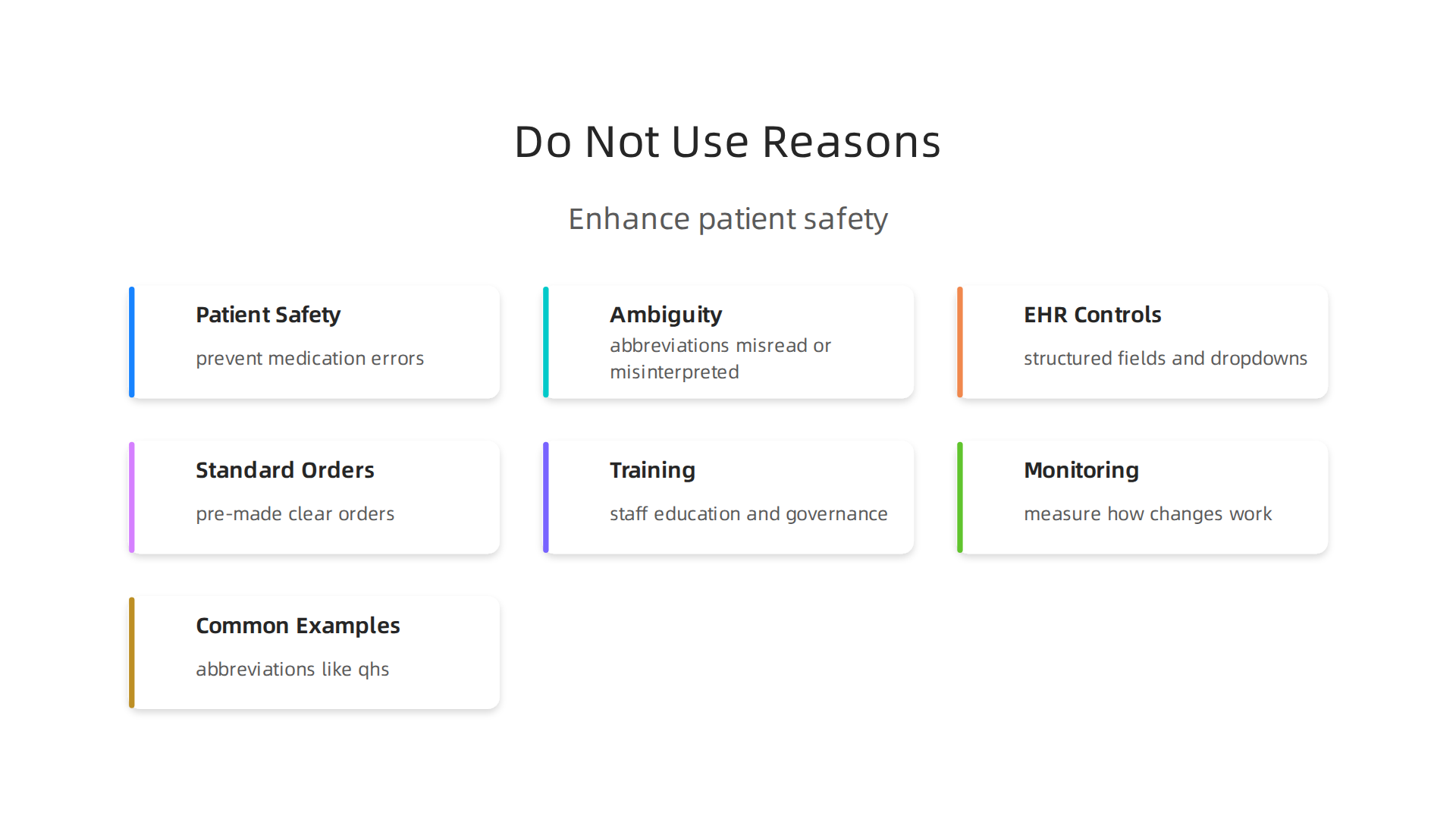
These lists tell healthcare staff which abbreviations are too risky to use because they can cause confusion. Medical abbreviations qhs often appears on these lists because of its potential to be mistaken for "qhr." In fact, an updated list from 2025 specifically marks "qhs" as a "Do Not Use" abbreviation due to its potential for error JCAHO’s “DO NOT USE” abbreviations list (updated 2025).
This shift towards clearer language is a core part of providing contemporary care in 2026. Health systems want to remove any possible way for mistakes to happen, especially with medicines.
Different Places, Different Rules
It’s also important to know that what is allowed in one hospital or clinic might not be allowed in another. Some healthcare systems have their own special lists of accepted and forbidden abbreviations. So, even if "HS" (for "hour of sleep" or bedtime) might be seen as okay in some places, others might ban it completely for extra safety.
This means that healthcare workers must always check the specific rules of where they are working. Just knowing an old abbreviation isn’t enough; everyone on the team needs to understand it the same way. This continuous effort in clarifying medical abbreviations for safer health tech systems is vital for better patient outcomes and accurate clinical work. By writing out full words, we make sure that everyone understands medical instructions clearly, every single time.
Understanding common abbreviations for when medicines should be given is also very important. While we talked about "qhs" meaning "at bedtime," there are many other short forms doctors use. These abbreviations tell healthcare workers how often a medicine should be given.
Here are some common timing abbreviations you might see in a hospital or clinic:
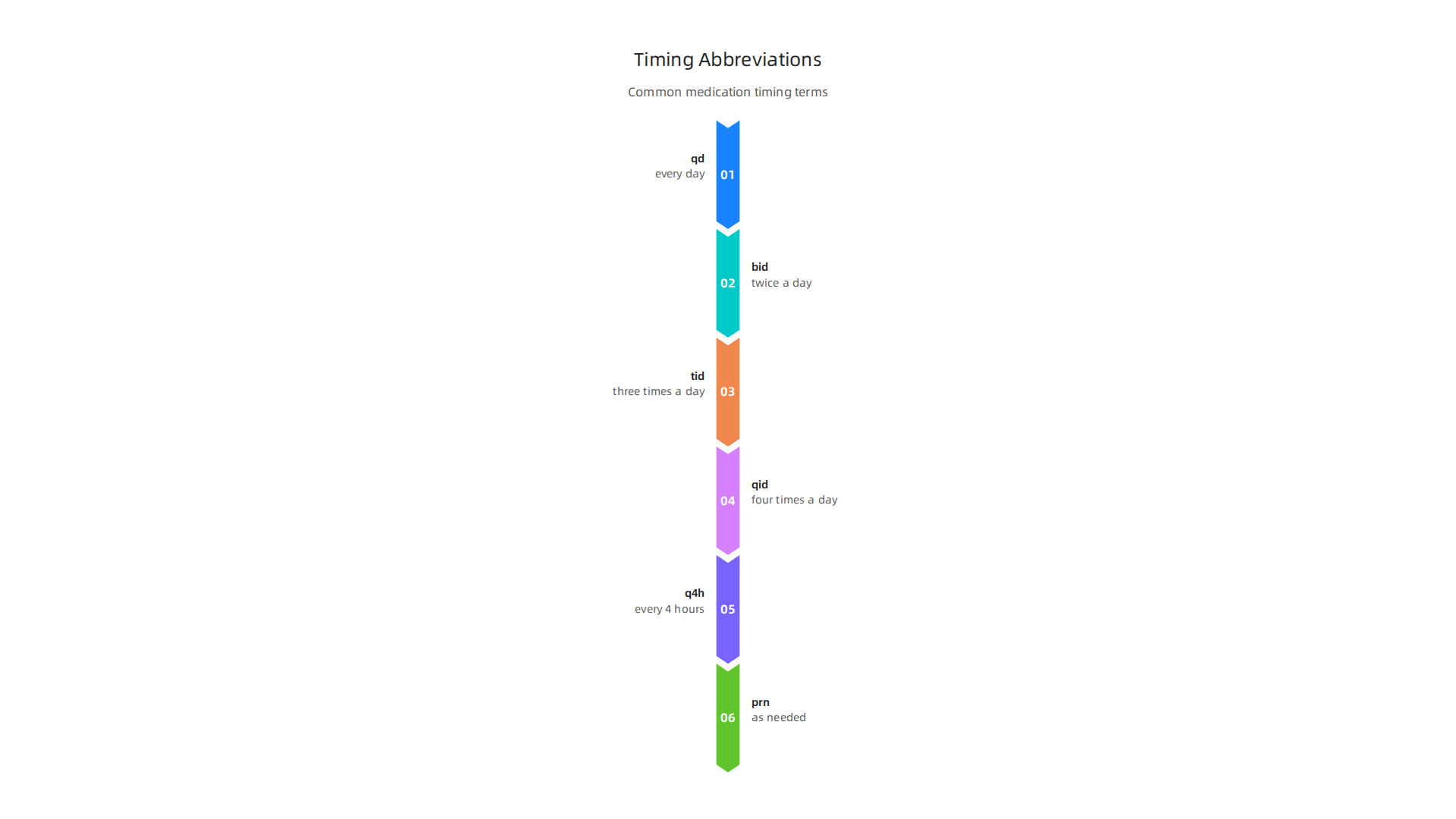
- qd: This means "every day." So, if a medicine is ordered "qd," it’s given once every 24 hours.
- bid: This stands for "twice a day."
- tid: This means "three times a day."
- qid: This means "four times a day."
- q4h: This means "every 4 hours."
- prn: This is a very common one, meaning "as needed." For example, pain medicine might be ordered "prn" if the patient asks for it. For more on this, you can learn about the prn meaning medical a health tech leaders guide to as needed prescriptions.
The Dangers of Shorthand
Even though these abbreviations save time, they can cause big problems. The biggest issue is when they look or sound too much alike, or when someone’s handwriting isn’t clear. This is where medical errors can happen. For example, "qd" (every day) can sometimes be mistaken for "qid" (four times a day) if written poorly. This kind of mix-up can be very dangerous. In fact, some lists specifically warn against "qd" because it can be confused with "QOD" (every other day), leading to patients getting medicine on the wrong days. You can find more details on why the q d medical abbreviation poses patient safety risks.
Using shorthand in spoken orders, or when writing them down, can easily lead to mistakes when a nurse or pharmacist reads the order later.

Studies show that error-prone abbreviations and handwriting that’s hard to read are big reasons for medication errors. One report from 2026 found that error-prone abbreviations caused about 14% of prescribing mistakes, and unclear handwriting caused 12% of them Medication errors, Prescribing errors, NCCMERP index. This shows how risky it can be.
Hospitals and other healthcare places often look at how many medication orders use these tricky abbreviations. It’s a key way they try to make sure patients are safe Percentage of medication orders that include error-prone abbreviations.
Why Clear Communication Matters Most
Just like medical abbreviations qhs can be confused with "qhr" (every hour), other abbreviations carry similar risks. This is why many groups, like the Institute for Safe Medication Practices (ISMP), have lists of "error-prone" abbreviations that should not be used ISMP List of Error-Prone Abbreviations, Symbols, and Dose Designations. These groups say it’s always best to write out the full word, like "daily," "twice daily," or "at bedtime," to remove any doubt.
Medication errors harm many people. In 2026, it’s thought that about 1.3 million Americans are harmed by medication mistakes each year

Medication errors statistics 2026. Making sure everyone uses clear, full words is a simple but powerful way to keep patients much safer. It’s a big part of reducing the dangers of medical abbreviations and solutions for patient safety.
For professionals navigating the fast-paced world of health tech, staying updated on these changes and understanding risks is key. Get clear daily AI updates from The AI Newsletter Worth Reading.
Even with a strong focus on clear communication, mistakes can still happen. This is often due to human factors and how our brains work, especially in busy healthcare settings. These issues make abbreviations like medical abbreviations qhs particularly risky.
Why Errors Happen
Healthcare workers, like doctors and nurses, often work very long shifts. They can get tired, especially during busy times or when handing off patient care to the next shift. When someone is tired or stressed, it’s easier to make small mistakes, like misreading an abbreviation.
For example, imagine a nurse reading an order at the end of a 12-hour shift. If "qhs" (at bedtime) is written a little messy, it could look like "qhr" (every hour). A simple slip of the eye or a moment of distraction can turn a safe order into a dangerous one. This kind of mistake can cause a medicine meant for sleep to be given far too often.
Common Types of Mistakes
When abbreviations are misread, it usually leads to two main problems:
- Wrong Time: A medicine meant for "qhs" (at bedtime) might be given in the morning, or at the wrong hour if confused with "qhr." This can mess up a patient’s sleep or cause other problems with their body’s natural rhythms.
- Wrong Frequency: If "qhs" is mistaken for "qhr," a medicine could be given every hour instead of just once at night. This increases the amount of medicine the patient gets many times over, which could lead to an overdose or very bad side effects.
These are not rare events. Reports from Malaysia showed that mistakes in writing down medication orders happened often, with a range of 1.13 to 5.30 per 100,000 prescriptions between 2018 and 2022. These errors highlight the ongoing challenge in ensuring accuracy in contemporary care and beyond analysis of data from the National Medication Error.
Documented Incidents and Patient Safety
Hospitals and safety groups track these kinds of mistakes closely. In 2025, over 300 serious medication error events were reported to a patient safety system by facilities in Pennsylvania, showing that these issues are still a major concern Analysis of Serious Medication Error Events Reported to PA-PSRS in 2025. The goal of contemporary care is to use technology and better rules to lower these numbers.
Understanding these human factors and how often errors can occur helps us see why simply writing out words in full, instead of using tricky abbreviations, is so important. For more details on avoiding these types of errors, you can explore resources on clarifying medical abbreviations for safer health tech systems. This simple change is a big step towards making sure patients get the right medicine at the right time, every time.
EHR documentation, order entry, and clinical decision support: reducing ambiguity
So, if simply writing out words in full helps so much, how do hospitals make sure this happens every time? The answer lies in smart digital systems: Electronic Health Records (EHRs) and Clinical Decision Support (CDS) tools. These systems are changing contemporary care by building safety right into the process.
Smart EHR Strategies
EHRs are like super-powered digital patient charts. They can be set up in ways that stop bad abbreviations like medical abbreviations qhs from being used.
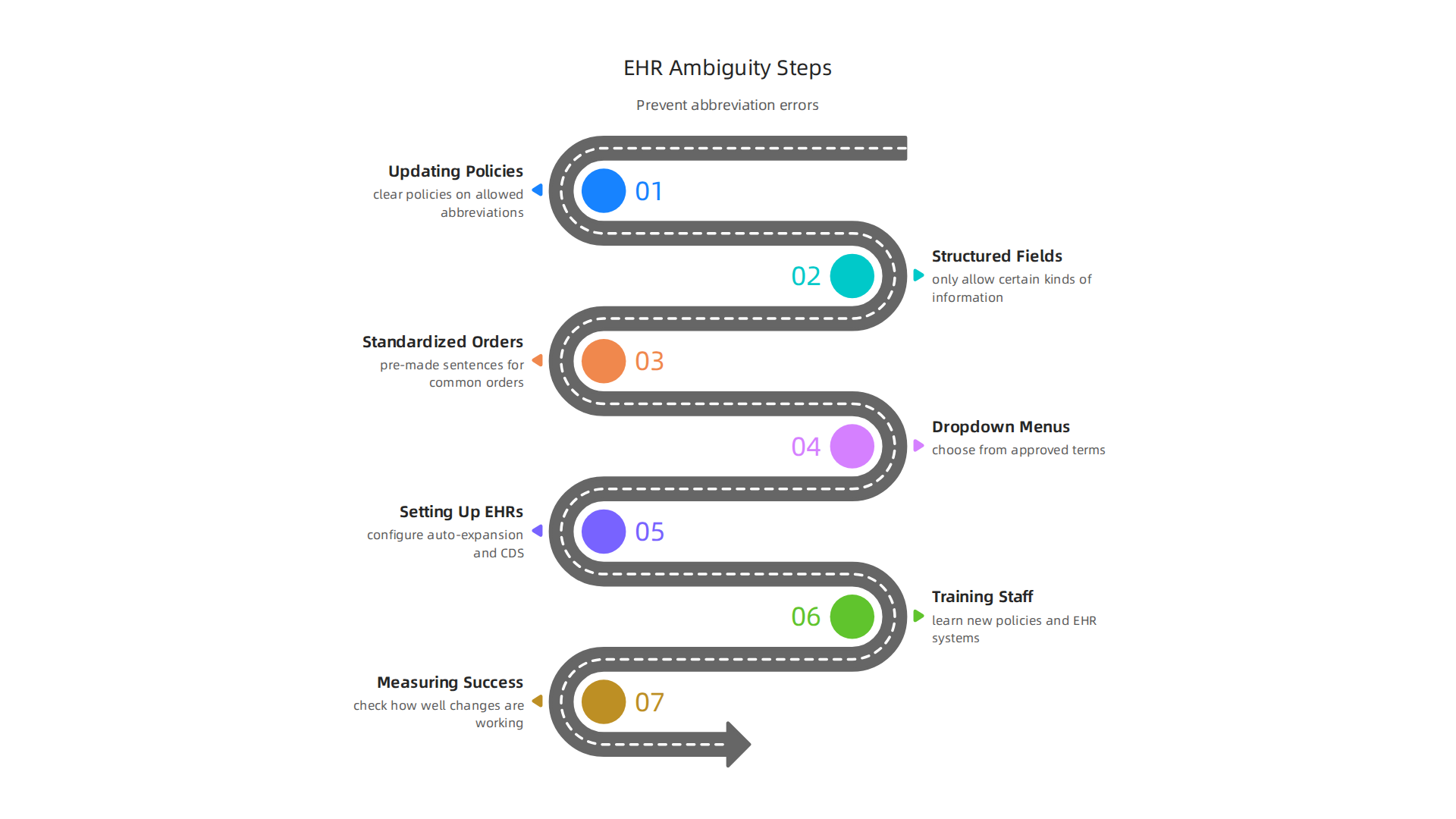
Here’s how:
- Structured Fields: Instead of letting doctors and nurses type anything they want, EHRs use special boxes or "fields" that only allow certain kinds of information. For example, for medicine times, there might be a field that only accepts specific choices from a list, like "every morning," "at bedtime," or "after meals." This means no one can accidentally type "qhs" when they mean "at bedtime" because "qhs" isn’t an option.
- Standardized Order Sentences: Hospitals can create pre-made sentences for common medicine orders. So, instead of writing "Give 1 pill qhs," a doctor would simply pick an option like "Administer 1 pill orally at bedtime." These sentences are clear and remove any guesswork.
- Dropdown Menus: This is a simple but powerful tool. For many parts of an order, healthcare staff can choose from a list of approved terms. If a medicine needs to be given at night, they click "At Bedtime" from a dropdown menu. This way, the system always records the clear, full wording, making sure everyone understands. These changes are crucial for reducing mistakes and improving overall patient safety, as discussed in a broader guide on medical abbreviations a health tech leaders guide to patient safety.
Clinical Decision Support (CDS) as a Safety Net
Beyond just structured fields, modern EHRs also use something called Clinical Decision Support (CDS). Think of CDS as an intelligent assistant that works behind the scenes, checking orders and giving helpful warnings.
In 2026, the global market for these kinds of systems, known as clinical decision support systems, is expected to reach about $7.0 billion, showing how important they are becoming in healthcare Clinical Decision Support System Market Size 2033. Here’s what they do:
- CDS Rules and Alerts: These are like built-in alarms. If a doctor tries to type an abbreviation that’s known to be risky, like an older abbreviation for "every morning" or an old form of
medical abbreviations qhs, the CDS system can instantly show a pop-up message. This message might say, "Warning: This abbreviation is unclear. Please select a full phrase from the list." This stops potential errors right when they happen. - Order-Validation Prompts: Before an order can be sent to the pharmacy or nursing staff, the CDS might ask the person to confirm the details. For example, if a medicine is ordered for "at bedtime," the system might prompt, "You have ordered this medicine for administration ‘at bedtime.’ Is this correct?" This extra step makes sure the timing is exactly what the healthcare worker intended.
- Integration with Patient Data: CDS systems can also look at a patient’s full health history. If a medicine is ordered for "at bedtime" that might make them too drowsy given other medicines they are taking, the system can flag that potential problem. This helps prevent bad interactions or side effects, making patient care safer and more thoughtful.
By using these kinds of tools, hospitals are making big strides in patient safety. They help prevent mistakes with tricky abbreviations, making sure everyone on the care team has a clear picture of what needs to happen.
Staying on top of these advancements, especially in AI’s role in health tech, is crucial for improving patient safety and healthcare efficiency.
Get clear daily AI updates from The AI Newsletter Worth Reading.
While smart digital tools like EHRs and CDS systems help a lot, hospitals also need clear rules and policies. This is where organizations and official guidelines step in to make sure healthcare remains safe and clear for everyone.
Official "Do Not Use" Lists
One big way hospitals stop dangerous abbreviations is by creating "Do Not Use" lists. These are official lists of abbreviations that healthcare workers should never use in patient records or orders. The goal is to avoid confusion that could lead to medical errors.
For example, abbreviations like "U" for unit, "QD" for daily, or "QOD" for every other day are often on these lists because they can easily be mistaken for something else. Even medical abbreviations qhs, which stands for "every night at bedtime," can be confused with "qhr" (every hour) and is therefore often listed as something not to use. Hospitals follow these rules closely to keep patients safe. You can see examples of such guidelines in many official documents, including comprehensive lists of Medical Abbreviations to Avoid.
How Accreditation Bodies Help
Accreditation organizations play a key role in making sure hospitals follow these safety rules. The Joint Commission, for example, is a very important group in the United States that checks if hospitals meet high standards for patient care and safety.
As part of their requirements, The Joint Commission makes it mandatory for healthcare facilities to have their own lists of approved and unapproved medical abbreviations. They even have a specific Do Not Use List/Prohibited Abbreviations that hospitals must follow. This means hospitals can get in trouble if they don’t have clear policies and if their staff keeps using abbreviations that are known to be risky. These rules are not just for written notes but apply to electronic records too, guiding the evolution of safe contemporary care.
This focus on clear communication and avoiding dangerous abbreviations is crucial. It shows how important it is to deal with the dangers of medical abbreviations and solutions for patient safety.
Making Policies and Training Work
Hospitals put these guidelines into action by creating their own detailed policies. These policies often include:
- Training for Staff: New and current staff members get training on which abbreviations are allowed and which are forbidden.
- Regular Checks: Hospitals regularly check patient charts, both paper and digital, to make sure staff are following the rules.
- Clear Consequences: There are clear steps for what happens if someone keeps using unsafe abbreviations.
By setting up these strong policies and making sure everyone understands them, hospitals are working hard to create a healthcare environment where mistakes caused by unclear communication are much less likely. These efforts improve patient safety day by day.
While clear policies and staff training are vital, modern technology offers powerful tools to further reduce mistakes from medical abbreviations. In 2026, hospitals rely heavily on digital systems that actively prevent errors before they can harm patients.
Tools and Technologies That Help: Auto-Expansion, Validation, and Analytics
Technology steps in to make sure that medical orders and patient notes are clear and safe. These tools help healthcare workers avoid using dangerous shorthand and catch potential errors right away.
Auto-Expansion and Smart Systems
One key tool is auto-expansion within electronic health records (EHRs). When a healthcare worker types a known abbreviation, the system can automatically change it into the full, clear term. This means if someone types "qhs" for "every night at bedtime," the system could expand it to prevent confusion with other similar abbreviations like "qhr" (every hour). The goal is to make sure every instruction is perfectly clear.
These EHRs often include Clinical Decision Support (CDS) systems. These smart systems act like a helpful co-pilot, checking orders and notes for possible problems. They can flag an error-prone abbreviation or a dose that seems wrong. The market for these helpful systems is growing quickly, with the Clinical Decision Support Software Market projected to expand a lot by 2031. This shows how important these tools are for contemporary care. Such systems are crucial because medication errors can be common, with a significant percentage linked to error-prone abbreviations in patient care, as noted by some studies.
These advanced EHRs and CDS systems are all about making patient care safer by catching errors early. They help to make sure that even specific terms like an "lmp medical abbreviation" (for last menstrual period) or "avm medical abbreviation" (for arteriovenous malformation) are clearly understood if used in a way that could cause confusion. For more on how these systems protect patients, you can explore guides on medical abbreviations that boost patient safety.
Barcode-Assisted Medication Administration
Another important piece of technology is barcode-assisted medication administration. This system uses barcodes on patient wristbands and medication packages. Before giving any medicine, a nurse scans both the patient and the medicine. The system then checks if it’s the right patient, the right medicine, the right dose, the right time, and the right way to give it. This extra step helps prevent medication errors that could happen from misreading an order, even if an abbreviation like "medical abbreviations qhs" was somehow missed by other checks. It adds a physical layer of safety to the digital one.
Analytics to Find Risky Patterns
Hospitals also use data analytics to make care safer. This means they collect information on how often certain mistakes happen or how often certain abbreviations are still being used. By looking at this data, they can see patterns. For example, if many staff members are still using a forbidden abbreviation, the hospital can offer more training or update its systems. This kind of monitoring helps hospitals continuously improve and make sure their rules are working. It allows them to understand the percentage of medication orders that include error-prone abbreviations and then act on it.
These tools and processes show how technology and smart data use are crucial in 2026 to make healthcare clearer and safer for everyone.
Want to stay up-to-date on how AI and other tech are changing healthcare? The AI Newsletter Worth Reading delivers clear daily AI updates to your inbox.
Making sure these smart technologies work well needs good planning and people working together. In 2026, hospitals know that it’s not enough to just buy new systems. They must also update their rules, set up their digital tools correctly, and teach their staff how to use them. This is how they truly keep patients safe from confusing medical abbreviations.
Training, governance, and an implementation checklist for health systems
To really reduce mistakes from medical abbreviations, hospitals follow clear steps.
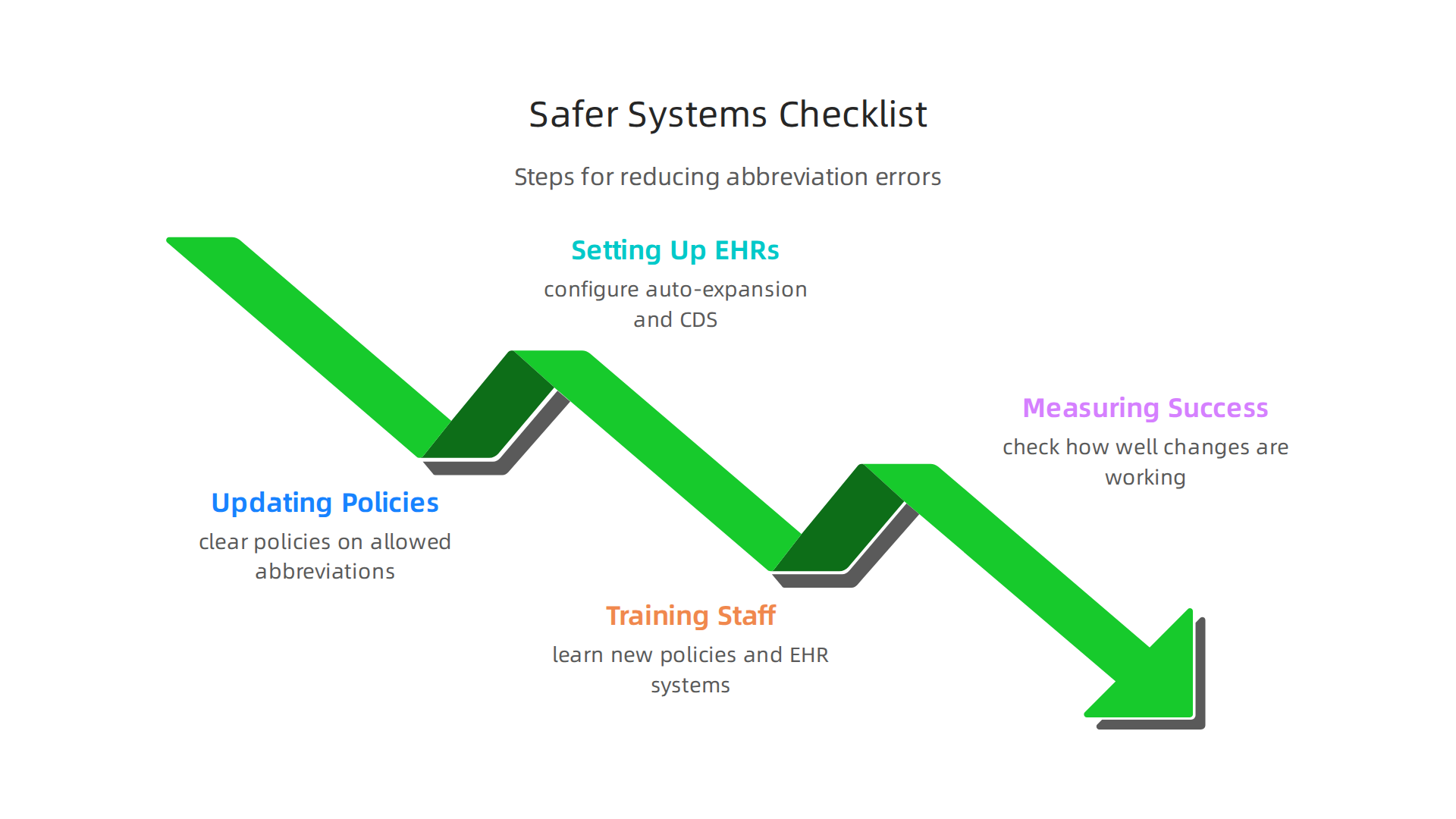
These steps involve setting new rules, making sure computers are set up right, and training every person who works in healthcare. It’s like building a strong bridge: you need good plans, good materials, and skilled builders.
Updating Policies and Rules
First, hospitals must have very clear policies about which medical abbreviations are allowed and which are forbidden. These rules help everyone know what to do. Hospitals also need a strong plan for how to oversee these rules. This is called clinical governance. It means leaders regularly check to make sure safety protocols are being followed and that the hospital is always trying to get better at patient care. Organizations can use tools like the NABH Documentation Checklist 2026 to guide their training needs and keep good records.
Setting Up Electronic Health Records (EHRs)
Next, the hospital’s electronic health record (EHR) systems need to be set up perfectly. This means configuring the auto-expansion features to work for all common abbreviations, and making sure the Clinical Decision Support (CDS) systems flag any risky terms. For example, if someone types "medical abbreviations qhs," the system should be ready to expand it or warn the user. Properly embedding these tools into the EHR can greatly improve the quality of care and make workflows smoother, as highlighted in guides about embedding Clinical Decision Support in the EHR. This setup helps ensure clarity for terms like "lmp medical abbreviation" or "avm medical abbreviation" too.
Training All Healthcare Staff
The most important part is teaching everyone. Doctors, nurses, and other staff must learn the new policies and how to use the updated EHR systems. Training should be ongoing, not just a one-time thing.

It helps staff understand why certain abbreviations are dangerous and how the new technology helps. Regular workshops and reminders keep everyone sharp. Proper education is a core part of advancing medical assistant training program develop skilled healthcare professionals and ensuring they understand safe practices.
Measuring Success and Making Changes
Hospitals also need to check how well these changes are working. They can look at data to see if fewer errors are happening. If they find that many staff members are still using a forbidden abbreviation, they can offer more training or adjust their systems. This ongoing review helps hospitals continuously improve and provide the best possible contemporary care. It’s all about making sure that every step taken helps create safer and clearer communication in healthcare. For a broader look at improving system safety, exploring resources on clarifying medical abbreviations for safer health tech systems can be very helpful.
Summary
This article explains why a modern medical‑abbreviation reference matters, using the example of qhs — a Latin‑derived shorthand meaning