


Why a reliable guide to medical abbreviations matters for health tech leaders
Medical abbreviations are meant to save time in busy healthcare settings. Doctors, nurses, and other professionals use them daily to write down important information quickly. Think about common ones like "ac medical abbreviation" which means "before meals," or "bid" for "twice a day." While these shortcuts are helpful, they can also cause big problems. When abbreviations are unclear or used incorrectly, they can lead to confusion, mistakes in patient care, and even harm.
In 2026, with health technology moving faster than ever, the risk of misunderstanding these short forms is even greater. Imagine a digital health system trying to understand a doctor’s notes, or a new team member trying to read an old patient record. If the abbreviations aren’t clear, critical information can get lost. Studies even show that many clinical notes use at least one abbreviation, which highlights how common and important they are for communication in healthcare. Healthcare centers often have specific lists of approved and unapproved medical abbreviations to help reduce these risks, as some can be quite dangerous if misunderstood [1]. For instance, an abbreviation like the "once a day medical abbreviation" "q.d." has been flagged for posing serious patient safety risks because it can easily be mistaken for other instructions. You can learn more about these issues and how to avoid them in our guide about the patient safety risks from q.d. abbreviation.
This issue affects many people in the health tech world. Healthcare executives need to make sure their systems are safe. Clinicians and digital health teams rely on clear information for patient care and data analysis. And buyers of new medical software need to know that these tools can handle medical language without errors. Even a simple medical examination form needs to be perfectly clear. That’s why having a trustworthy resource for understanding these abbreviations is so important.
This guide will help you navigate the world of medical abbreviations. We will give you clear definitions, a wide-ranging table of common abbreviations, and important notes on specialty uses. We will also share best practices for safety and offer tips for how to put these ideas into practice within your Electronic Health Record (EHR) systems and company rules. Our goal is to make sure that health tech leaders like you have the knowledge to improve patient safety and make healthcare clearer for everyone.

Keeping up with all the rapid changes in health tech, including tricky details like medical abbreviations, can feel overwhelming.
Stay informed about the broader world of technology and its impact on healthcare.
The AI Newsletter Worth Reading
What ‘AC’ Means (and Why Single Abbreviations Are Tricky)
Keeping up with all the rapid changes in health tech, including tricky details like medical abbreviations, can feel overwhelming. Let’s look at one common abbreviation: "ac." While the "ac medical abbreviation" commonly stands for "before meals" in patient prescriptions and care plans, especially from its Latin root "ante cibum," it’s a great example of why short forms can be confusing.
The problem with very short abbreviations, like single letters or two-letter codes, is that they can mean many different things depending on where you see them. For instance, the letter ‘A’ by itself can stand for "abnormal," "abortion," "absolute temperature," or even "absorbance" in various medical documents [Dorlands Dictionary of Medical Acronyms and Abbreviations]. This makes it super important for everyone in healthcare, from doctors to software developers, to be very careful. If a system or person reads "AC" and thinks of something else, like "anterior chamber" (part of the eye) instead of "before meals," it could lead to mistakes. We saw a similar issue with the "once a day medical abbreviation" "q.d.," which can easily be misread.
In a hospital or clinic, you might see the "ac medical abbreviation" on a patient’s medication list, telling them when to take their pills. You could also find it on a medical examination form when a doctor notes certain conditions related to meal times. Health tech leaders need to make sure that their Electronic Health Record (EHR) systems and other digital tools can correctly understand "ac" and other similar abbreviations in all these different situations.

This helps prevent mix-ups and keeps patients safe. If a software system incorrectly understands "ac," it could schedule treatments at the wrong time or give bad advice.
That’s why clear communication and smart systems are so important. Having a shared understanding of terms helps everyone. You can learn more about making sure medical abbreviations are clear in health tech systems by reading our guide on clarifying medical abbreviations for safer health tech systems. Whether it’s a simple instruction or a complex "osis medical term" meaning a condition, getting it right is key for good patient care.
We just talked about how medical abbreviations can be confusing and lead to big problems if not understood correctly. Because it’s so important for everyone to be on the same page, we’ve put together a helpful guide. Think of it as a special dictionary to make sure common medical short forms are clear.
This next part of our guide will show you a big table with many common medical abbreviations, from A to Z. Each row in the table will give you:
- The Abbreviation: The short form, like the "ac medical abbreviation" or the "once a day medical abbreviation" (q.d.).
- What it Means: The full words the abbreviation stands for, like "before meals" for "ac."
- Where You See It: The usual places you would find this abbreviation, such as on a patient’s chart, a prescription, or a "medical examination form."
- Special Notes: Any extra details, like if the term is only used in a certain medical field or if it’s a part of a bigger word, like an "osis medical term" root. This helps you understand when and where it is safe to use. You can find many general lists of these types of terms, for instance, in resources like MedlinePlus’s guide to Some Common Abbreviations.
How to Use This Table for Better Health Care
This table is not just for reading; it’s a tool to help you make better decisions.
For Doctors, Nurses, and Clinical Teams:
When you see an abbreviation, especially one you’re not sure about, check this table. It helps confirm the right meaning. This is very important for patient safety. For example, knowing exactly what "ac medical abbreviation" means helps make sure a patient takes their medicine at the correct time. If you misread an abbreviation like "q.d." (once a day), it could lead to medication errors. Our article on Why the Q.D. Medical Abbreviation Poses Patient Safety Risks talks more about why this is so important.
For Health Tech Leaders and Software Buyers:
If you are buying new computer systems for a hospital or clinic, this table can help you. You can use it to make sure the new software can understand all these abbreviations correctly. This means the computer system should be able to:
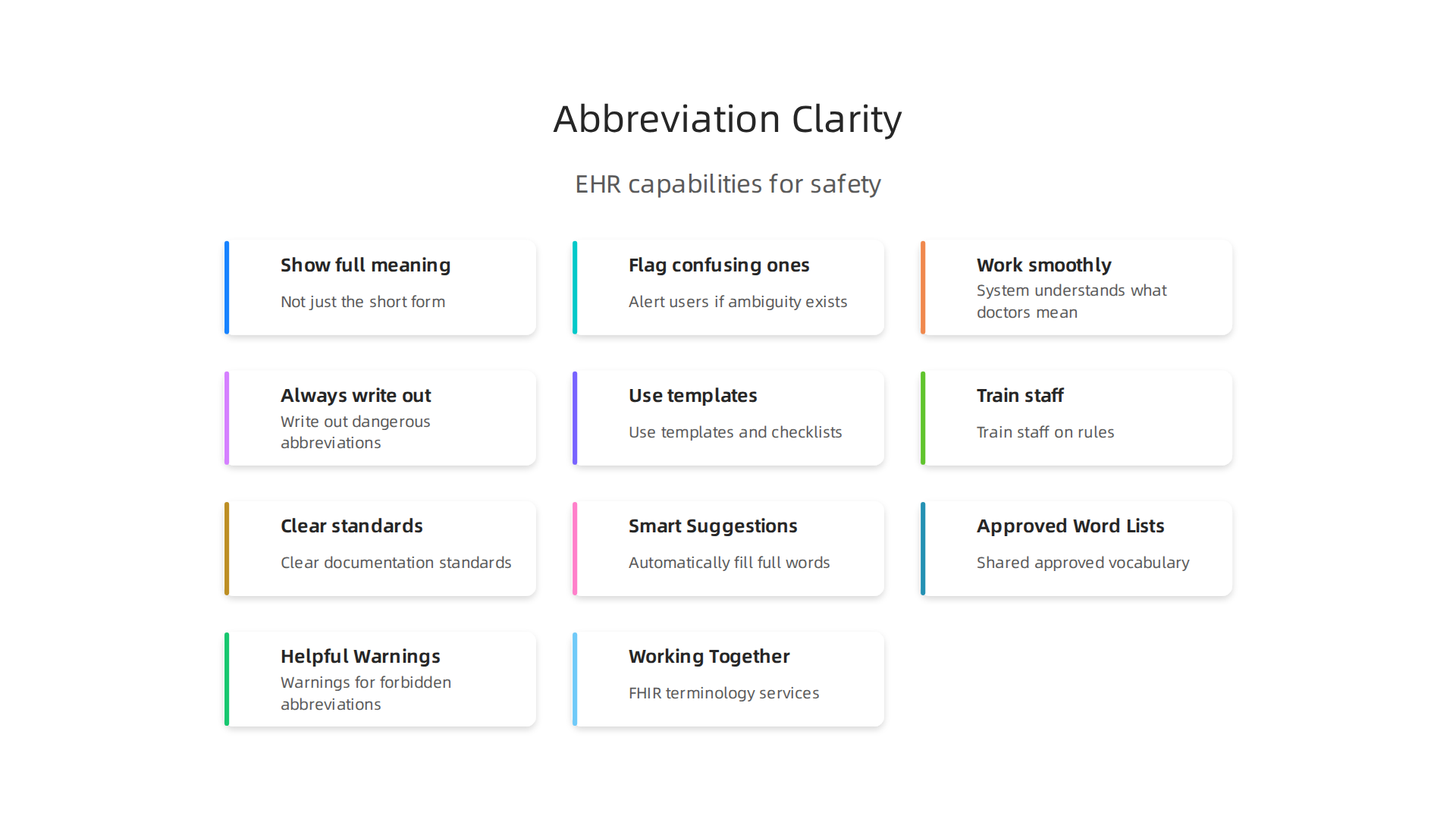
- Show the full meaning: Not just the short form, so there is no confusion.
- Flag any confusing ones: Alert users if an abbreviation might have more than one meaning.
- Work smoothly with doctors: Allow medical staff to put in short forms but make sure the system always knows what they mean.
By using this table, health tech companies can build better tools, and hospitals can make sure their digital records are always clear and safe for patients.
To stay on top of all the new tools and changes in healthcare technology, including how AI is making things better, you’ll want to read The AI Newsletter Worth Reading. It gives clear daily updates that can help you navigate these complex topics.
Different kinds of doctors and medical teams often use their own special short forms. For example, what an abbreviation means in a heart doctor’s office might be different from what it means in an emergency room. This is because each medical field has its own special words and ideas.
Think about doctors who care for hearts (cardiologists), doctors who treat cancer (oncologists), or the fast-paced teams in Emergency Medicine. Each of these fields uses abbreviations that make sense to them, but might confuse someone from another area. For instance, "AC" could mean "Acute Care" in one setting or "before meals" for the ac medical abbreviation on a patient’s medication chart.
This is why understanding abbreviations by their specific medical area is so important.
Why Specialty Abbreviations Matter So Much
When doctors from different specialties like cardiology, oncology, or emergency medicine work together, they need to be extra careful.

A word or short form that means one thing to a heart specialist might mean something totally different to an emergency doctor. This can cause big problems, like giving the wrong medicine or treatment.
For example, abbreviations used in heart care often describe specific heart conditions or tests. The Abbreviations – Cardiology Explained guide gives many examples. Similarly, emergency teams have their own fast ways to write things down, which you can see in resources like the EMS Clinical Abbreviations list. Even units in a hospital have special names, like "Hem-Onc" for a unit that treats blood disorders and cancer, as explained in the Glossary of Acronym Definitions.
For Health Tech Companies and Software Makers:
If you make computer programs for hospitals, you must think about these differences. Your software should be smart enough to know which abbreviation means what, depending on the doctor’s specialty.
Here’s how health tech can help:
- Smart Systems: Make sure the software can tell when an abbreviation like "AC" is used in cardiology versus a general patient care setting.
- Warning Signals: If an abbreviation could mean two things, the system should give a warning. This helps stop mistakes on a medical examination form.
- Easy for Doctors: The program should let doctors type in their usual short forms but then show the full meaning to avoid confusion. This is vital for patient safety and clear communication, as discussed in articles like The Dangers of Medical Abbreviations and Solutions for Patient Safety.
By building smart systems, health tech companies can help doctors and nurses understand each other better, no matter their medical field. This makes patient care safer and clearer for everyone. Learning how to properly interpret these terms is key for everyone in healthcare, and you can find more insights on this in our guide to Clarifying Medical Abbreviations for Safer Health Tech Systems.
When medical abbreviations get mixed up, the results can be very serious. Errors from abbreviations can lead to big problems for patients, like getting the wrong medicine or treatment. This is not just a small mistake; it can harm people and cause major headaches for hospitals and their leaders, including legal and compliance teams.
Think about it: a doctor writes a short form, and another nurse or doctor reads it the wrong way. This misunderstanding can have very real dangers. Studies show that abbreviations are behind a significant number of medication errors. For example, between 2004 and 2006, almost 5% of all reported medication errors in the U.S. were due to using abbreviations that were not clear enough. That’s a lot of errors! One study in critical care even found that abbreviations contributed to as much as 13% of medication errors in those very sensitive settings, where patient conditions are often severe and time is critical. This shows how The hidden danger of abbreviations in critical care can be quite high.
Some abbreviations are especially risky. For instance, writing "QD" for "once daily" can be very confusing, as it looks a lot like "QID" (four times daily) or "OD" (once daily or right eye).
This can lead to a patient getting medicine far too often or not often enough. In fact, using "QD" for once a day medical abbreviation was the most common medical abbreviation error in one period, making up 43.1% of all abbreviation-related errors. This problem with "QD" is so serious that it even has its own warning about patient safety risks.
Other examples of dangerous abbreviations include using "U" for "units" (which can be mistaken for a zero or "4"), or "MS" which can mean either Morphine Sulfate or Magnesium Sulfate. These sorts of unclear shortcuts make it harder for medical staff to know exactly what they need to do. Many groups, like the ISMP Canada, have put together a Do Not Use: List of Dangerous Abbreviations, Symbols, and Dose to help prevent these kinds of mistakes.
For hospitals and clinics, these errors aren’t just about patient health. They also open the door to legal issues and can damage trust with patients. Clinical leaders and legal teams must make sure that everyone understands and follows clear rules about what medical abbreviations can and cannot be used. This protects both patients and the healthcare system.
Staying up-to-date on all things health tech, including patient safety measures, is crucial.
The latest insights into AI and technology trends shaping the healthcare sector can be found in The AI Newsletter Worth Reading.When medical abbreviations get mixed up, the results can be very serious. Errors from abbreviations can lead to big problems for patients, like getting the wrong medicine or treatment. This is not just a small mistake; it can harm people and cause major headaches for hospitals and their leaders, including legal and compliance teams.
Think about it: a doctor writes a short form, and another nurse or doctor reads it the wrong way. This misunderstanding can have very real dangers. Studies show that abbreviations are behind a significant number of medication errors. For example, between 2004 and 2006, almost 5% of all reported medication errors in the U.S. were due to using abbreviations that were not clear enough. That’s a lot of errors. One study in critical care even found that abbreviations contributed to as much as 13% of medication errors in those very sensitive settings, where patient conditions are often severe and time is critical. This shows how The hidden danger of abbreviations in critical care can be quite high.
Some abbreviations are especially risky. For instance, writing "QD" for "once daily" can be very confusing, as it looks a lot like "QID" (four times daily) or "OD" (once daily or right eye). This can lead to a patient getting medicine far too often or not often enough. In fact, using "QD" for once a day medical abbreviation was the most common medical abbreviation error in one period, making up 43.1% of all abbreviation-related errors. You can learn more about how the q d medical abbreviation poses patient safety risks in a dedicated guide.
Other examples of dangerous abbreviations include using "U" for "units" (which can be mistaken for a zero or "4"), or "MS" which can mean either Morphine Sulfate or Magnesium Sulfate. These sorts of unclear shortcuts make it harder for medical staff to know exactly what they need to do, as discussed in research on unsafe abbreviations. Many groups, like the ISMP Canada, have put together a Do Not Use: List of Dangerous Abbreviations, Symbols, and Dose to help prevent these kinds of mistakes.
For hospitals and clinics, these errors aren’t just about patient health. They also open the door to legal issues and can damage trust with patients. Clinical leaders and legal teams must make sure that everyone understands and follows clear rules about what medical abbreviations can and cannot be used. This protects both patients and the healthcare system.
Staying up-to-date on all things health tech, including patient safety measures, is crucial. Get clear daily AI updates from The AI Newsletter Worth Reading.
To keep patients safe and avoid errors, healthcare teams must follow clear rules for writing things down. It is much better to avoid many common medical abbreviations. Instead of using shortcuts, always write out the full words. This helps everyone understand exactly what is meant, leaving no room for mistakes.
For example, instead of writing "QD" for how often a medicine should be taken, which is a common once a day medical abbreviation but also a source of confusion, always write "once daily." This simple change can stop big problems. Similarly, for timings, instead of using the "ac medical abbreviation" to mean "before meals," simply write "before meals." For complex terms, like a condition ending in an "osis medical term," always spell it out fully on a medical examination form to make it clear.
Many studies have shown that using full words helps greatly. For instance, sometimes adding a simple "SHORT" or "LONG" to medicine names on records helped nurses give the right medicine more often, stopping errors before they happened. This kind of clear writing is key to Avoiding Potential Medication Errors Associated with Non ….
Here are some helpful steps for healthcare teams in 2026:
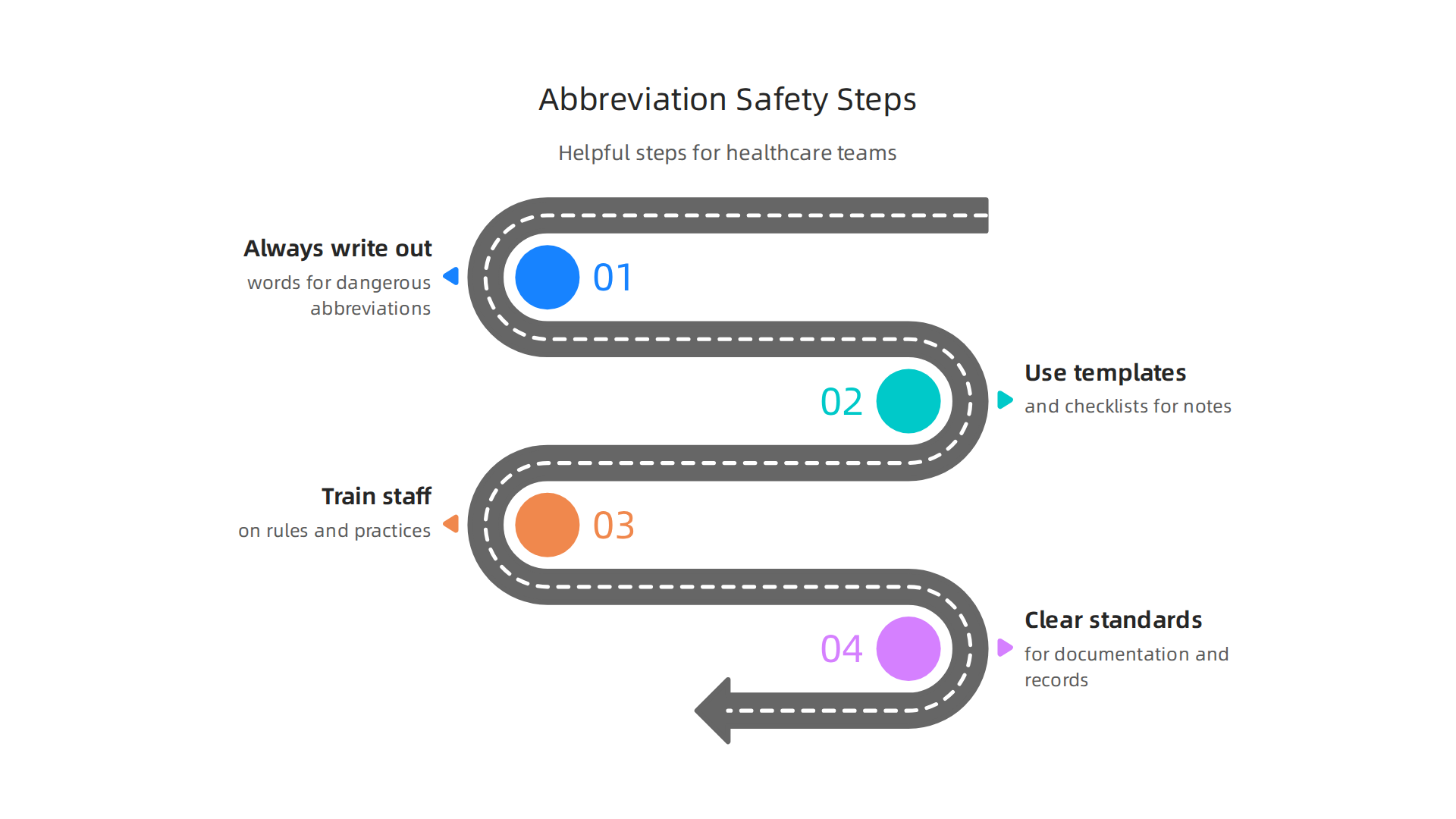
- Always write out words for dangerous abbreviations. If an abbreviation is on a "Do Not Use" list, never use it.
- Use templates and checklists. These tools can remind staff to write out full words and double-check their notes.
- Train staff regularly. Make sure everyone knows the latest rules and best practices for writing down patient care information. Training helps them understand why these rules are so important for keeping patients safe.
- Use clear documentation standards. Whether it’s a patient chart or a medical examination form, every piece of paper or digital record needs to be easy to understand.
By following these best practices, healthcare providers can make sure their messages are always clear, which helps to medical abbreviations boost patient safety and clinical accuracy. This makes things safer for everyone.
Using full words instead of shortcuts helps a lot. Now, let’s look at how modern computer systems in healthcare can also make things safer. We’re talking about Electronic Health Records (EHRs). These systems can be designed to stop mistakes with abbreviations before they happen.
Integrating Abbreviation Standards into EHRs and Clinical Workflows
In 2026, healthcare computer systems, called EHRs, have smart ways to help doctors and nurses write clearly. This means less confusion and more patient safety.
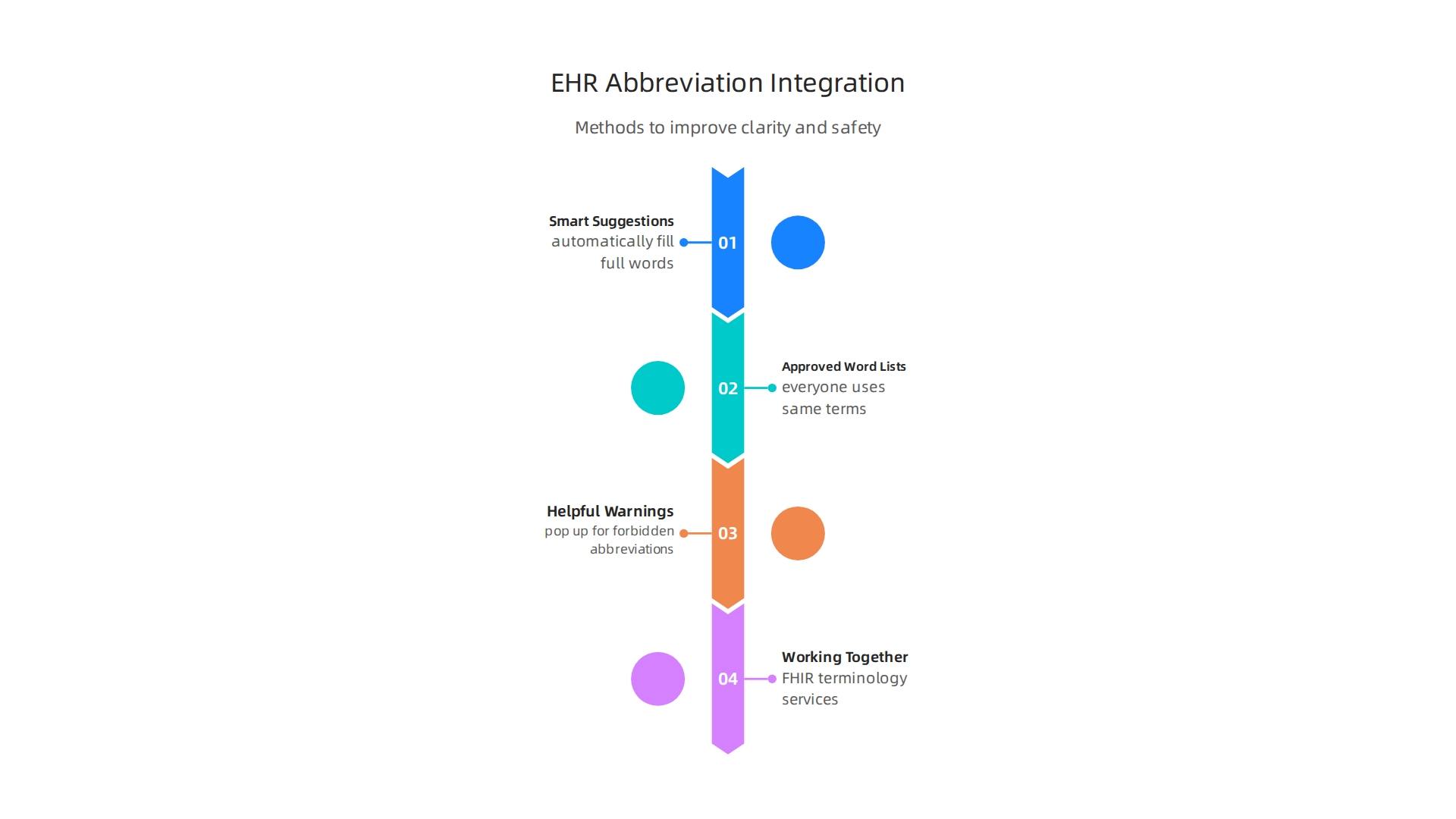
- Smart Suggestions and Expansion: Imagine you type a common shortcut like "ac medical abbreviation" into the EHR. A good system can quickly suggest "before meals" or even automatically fill it in for you. This helps busy staff use the full, correct words every time. It can do the same for a "once a day medical abbreviation" like "QD," changing it to "once daily." This simple feature makes sure important instructions are never misunderstood.
- Approved Word Lists: EHRs can use special, approved lists of medical words. These lists, known as structured vocabularies, make sure that everyone uses the same terms for the same things. For example, if there’s a specific "osis medical term," the system guides users to write it out fully and correctly. This keeps patient records very clear and exact. Tools like the Fast Healthcare Interoperability Resources (FHIR) help different systems use these standard words. FHIR is a way for healthcare computer systems to talk to each other using common language, making sure that what one system understands, another system understands too FHIR® – Fast Healthcare Interoperability Resources® – About.
- Helpful Warnings (Decision Support): Modern EHRs have "smart helpers" built in. If someone tries to use a forbidden abbreviation, the system can pop up a warning. It might say, "Please write out ‘before meals’ instead of ‘ac’." This kind of instant help guides staff to follow the safety rules without slowing them down too much. Using these helpful warnings in EHRs is key for clearer records. To learn more about how technology can make medical terms clearer, check out our guide on clarifying medical abbreviations for safer health tech systems.
- Working Together (FHIR Terminology Services): For many different healthcare systems to work well together, they need to speak the same language. This is where FHIR terminology services come in. These services help link all the standard medical terms so that when a patient’s information moves from one clinic to another, the medical words mean the same thing everywhere. This ensures that every entry, whether on a screen or a medical examination form, is universally understood. These kinds of services are important for managing medical terms across many systems FHIR Terminology Services: SNOMED, LOINC, ICD-10 & ….
When hospitals look to buy new EHR systems, the teams that choose these systems should make sure they have these safety features. And the people who design how these systems look and work should make them easy to use, so writing things out fully becomes the simplest option.
Want to stay informed about how AI and technology are changing healthcare? Get clear daily AI updates from The AI Newsletter Worth Reading.
When we talk about safer patient care, having smart computer systems is just one part of the puzzle. The other big parts are the rules hospitals follow and how their staff learn these rules. This means clear policies, good training, and checking to make sure everyone is doing things right.
Training, Policies, and International Variations
Hospitals and healthcare groups have very important rules about medical abbreviations. These rules are put in place to keep patients safe.
- Clear Policies and "Do Not Use" Lists: Every hospital needs clear rules on which abbreviations are okay to use and, more importantly, which ones are not. These "Do Not Use" lists are very important. For example, some common shortcuts like "QD" (once daily) or "U" (unit) can be easily confused with other things, so they are often on these banned lists. Groups like the Joint Commission have "Do Not Use" lists to help hospitals make patient care safer Do Not Use List/Prohibited Abbreviations – Joint Commission. This means if someone wants to write about an "ac medical abbreviation," they should write "before meals" instead.
- Training for All Staff: It’s not enough to just have a list. All medical staff, from doctors to nurses and everyone in between, need to be taught about these rules.

They learn what abbreviations are allowed and which ones should be written out fully. This training should happen often, especially when new rules or confusing terms come up. For instance, staff need to know why a "once a day medical abbreviation" like "Q.D." is dangerous and should be replaced with "daily" or "once a day." If you want to dive deeper into why this specific abbreviation is risky, learn more about why the Q.D. medical abbreviation poses patient safety risks.
- Regular Checks and Feedback (Audits): Hospitals regularly check patient records to make sure staff are following the rules. These checks, called audits, help find any mistakes or times when banned abbreviations were used. When mistakes are found, staff get helpful feedback to learn and improve. For example, some hospitals watch for the use of prohibited abbreviations during chart reviews and ask staff to write out the full words COMMUNITY HOSPITALS OF INDIANA, INC. Audits are often done regularly, sometimes every six months, to make sure everyone stays on track Do Not Use Abbreviations Policy Guide.
- Keeping Rules Fresh (Continuous Improvement): The world of medicine changes, and so do the ways we talk about it. Hospitals need to review their abbreviation rules every year. This makes sure the rules are always up-to-date and still help keep patients safe. This helps in making sure all terms, even an "osis medical term," are recorded clearly.
How Rules Can Change Around the World
It’s also good to know that abbreviation rules can be different in various countries. While many places agree on the general idea of avoiding risky abbreviations, the exact "Do Not Use" lists or approved terms might vary. For example, a hospital in one country might have slightly different rules than a hospital in another. This is why groups like Joint Commission International (JCI) work to create common safety standards that can be used worldwide, even if specific lists differ JCI Standard MCI.13 – Use of standardised symbols and abbreviations. This helps make sure that when patients move or their records are shared, everyone understands what’s written on their medical examination form. The goal is always the same: clear communication for the best patient care.
Summary
This article explains why a reliable guide to medical abbreviations is essential for health tech leaders, clinicians, and software buyers. It covers how common short forms like "ac" (before meals) and "q.d." (once daily) can be misread, the specialty-specific meanings that increase risk, and real patient-safety data showing how abbreviations contribute to medication errors. The guide describes a practical A–Z table format (abbreviation, meaning, use, special notes) and shows how clinicians can use it to confirm meanings. It also explains how modern EHRs should handle abbreviations—smart expansion, approved lists, warnings, and FHIR terminology services—and why policies, training, and audits are critical. Readers will learn steps to reduce errors, implement system safeguards, and adopt clear documentation practices that improve safety and interoperability.